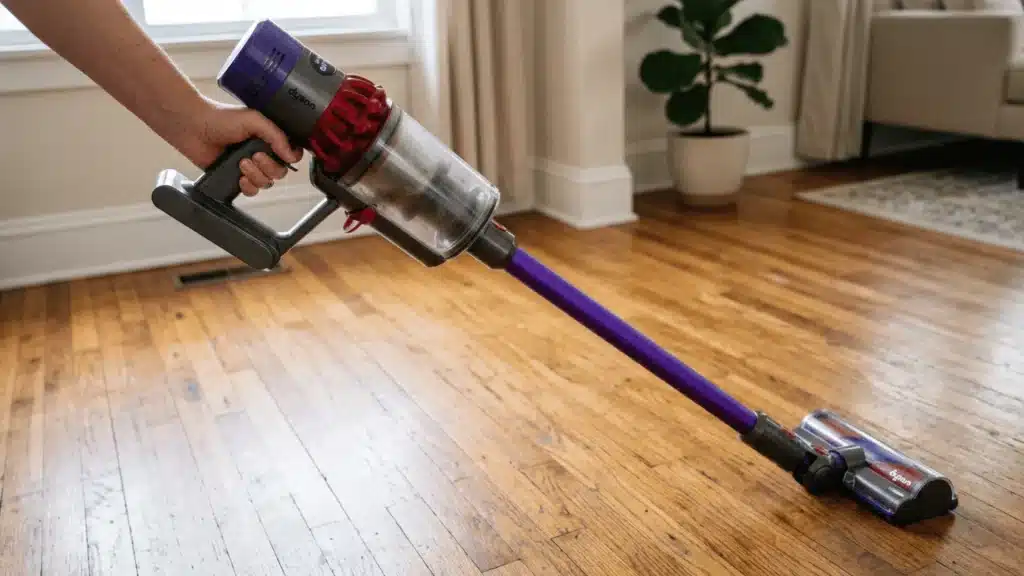
Ever wondered if a vacuum that launched years ago can still keep up with your pet’s all-time shedding even today? The Dyson V7 Animal is one of Dyson’s earlier cordless stick vacuums, designed specifically for homes with pets.
It promises strong suction, lightweight handling, and tools tailored for picking up pet hair from carpets, furniture, and tight spaces.
But today, with newer models like the V8 and V10 widely available, the real question is simple: does the Dyson V7 Animal still make sense, or has it become outdated?
This review breaks down real-world performance, pet hair handling, battery life, limitations, and value for money to help you decide whether it’s still worth buying.
What is the Dyson V7 Animal Designed for?
The Dyson V7 series comes in multiple variants, but the V7 Animal is primarily box-designed for pet hair removal from carpets, where its motorized brush effectively lifts embedded fur.
The V7 Animal weighs just 2.32 kg, holds 0.54 liters of debris, and delivers up to 100 AW of suction in Max mode. It includes a direct-drive cleaner head for deep carpet cleaning and a mini motorized tool for upholstery and stairs.
The V7 series comes in multiple variants that share the same motor and battery, so performance across the range is consistent. The differences are in what each version includes:
- Motorhead version: Comes with basic cleaning tools and does not include a specialized pet hair attachment, making it more general-purpose.
- Animal version: Includes a mini motorized tool that is specifically designed to lift pet hair from upholstery, stairs, and tight fabric surfaces.
- Total Clean version: Adds accessories, making it more versatile for whole-home cleaning across a wider range of floors and surfaces.
Features of Dyson V7 Animal at a Glance
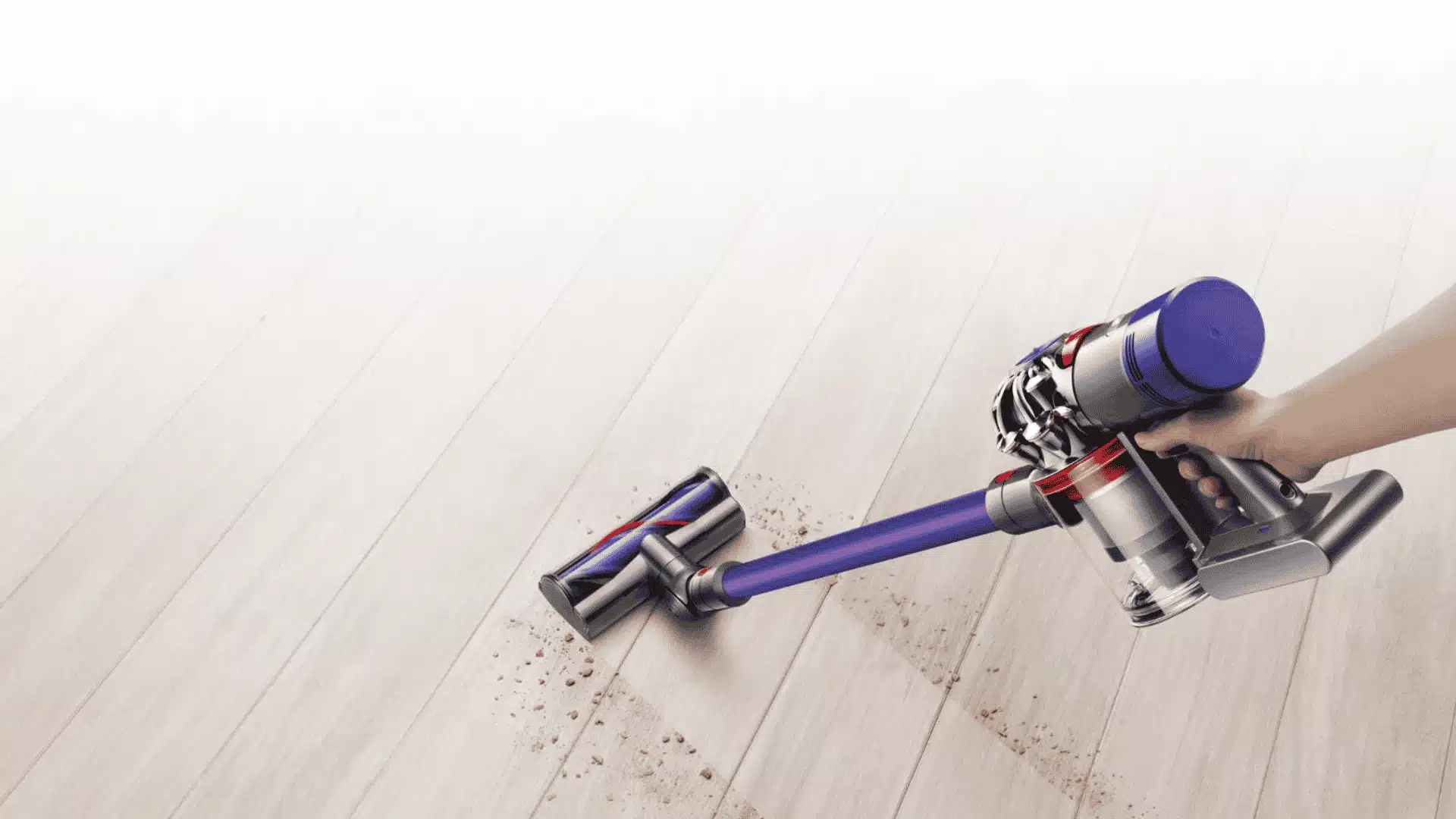
Here’s a quick breakdown of the key specifications that define the Dyson V7 Animal’s real-world performance, usability, and suitability for everyday home cleaning.
1. Suction Power
The Dyson V7 Animal delivers 21 AW in standard mode, designed for routine cleaning tasks such as dust, crumbs, and light debris. The two-level system makes it flexible, though Max mode can be best used for short intervals.
Switching to Max mode boosts suction to 100 AW, which is enough to lift embedded pet hair from low- to medium-pile carpets.
This two-level system makes it flexible, though Max mode is best used in short intervals due to battery drain.
2. Runtime
In standard mode, the vacuum offers up to 30 minutes of runtime, which is generally enough to clean a small or medium-sized home in one go.
However, in Max mode, the runtime drops to around 6 minutes, making it suitable only for quick, targeted cleaning rather than full-home sessions.
3. Weight
Weighing just 2.32 kg, the Dyson V7 Animal is designed for easy maneuverability. It feels light in hand, making it convenient for cleaning stairs, ceilings, furniture, and tight corners.
The lightweight build is one of its biggest advantages, especially for users who prefer quick, effortless daily cleaning.
4. Dustbin Capacity
The vacuum comes with a 0.54-liter dustbin, which is compact yet efficient for quick cleanups and everyday messes.
Pet owners with heavy-shedding breeds will likely find themselves emptying it multiple times during a full-home session, especially during seasonal coat changes.
While it can hold a decent amount of dirt for its size, pet owners may find themselves emptying it frequently, especially during full-home cleaning sessions or heavy shedding periods.
5. Charging Time
A full charge from empty takes approximately 3.5 hours.
Because the battery is non-removable, that downtime is built into the ownership experience. The V7 works best for planned cleaning sessions rather than spontaneous back-to-back use throughout the day.
6. Cleaning Modes
It features two cleaning modes: Standard and Max. The simplicity of these two modes makes the vacuum easy to use, with no complex settings.
Standard mode is optimized for everyday cleaning with balanced performance and battery life, while Max mode delivers higher suction for stubborn dirt and pet hair.
7. Filtration
The V7 Animal uses a washable lifetime filter designed to capture fine dust, allergens, and pet dander.
It can be rinsed with water and reused, reducing long-term maintenance costs.
The EPA’s guidance on indoor particulate matter recommends vacuuming carpets and furniture weekly (sometimes more often) to keep allergen levels in check, making the V7’s filtration approach a practical choice for allergy-prone households.
How Does It Handle Pet Hair?
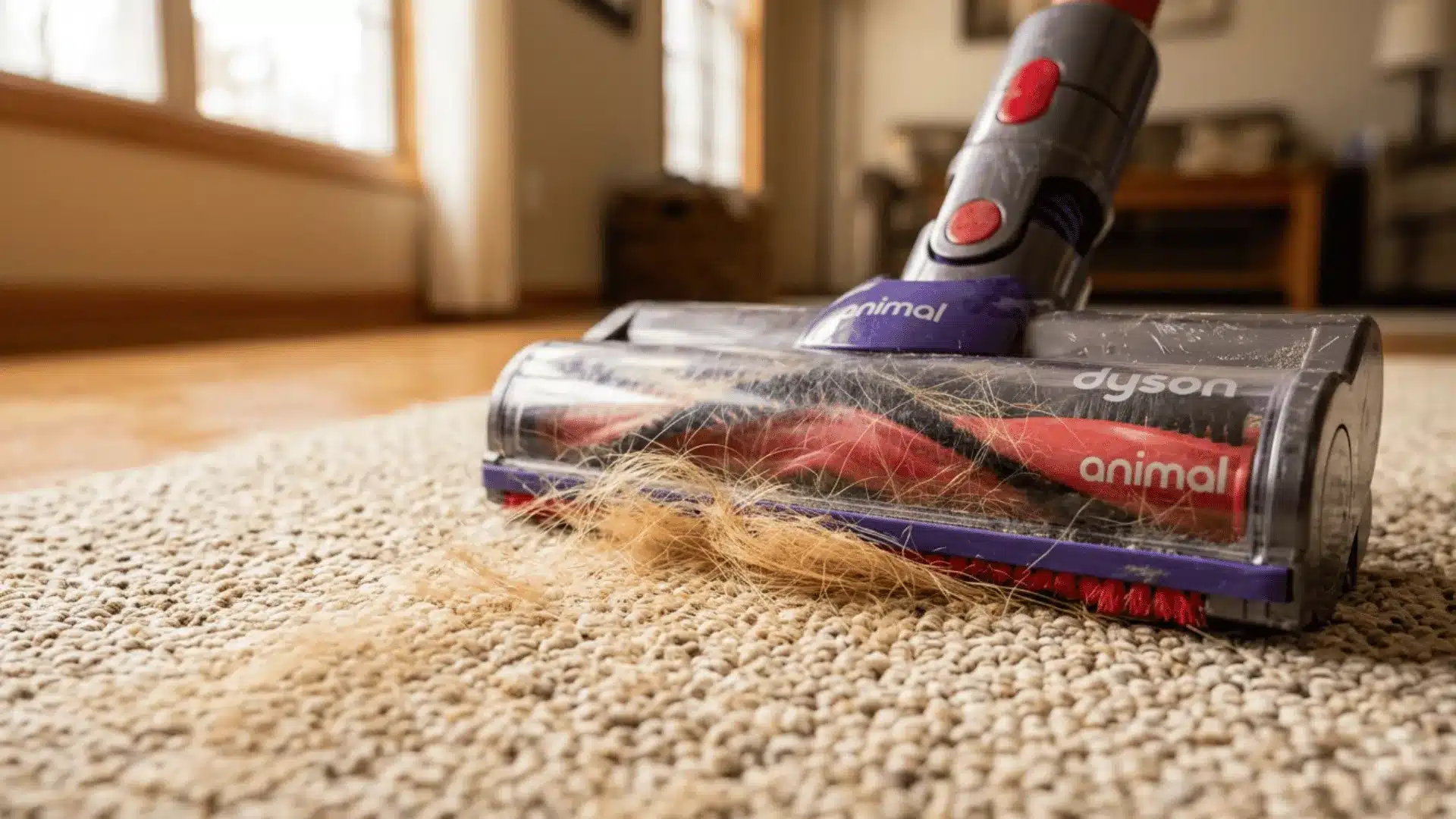
The Dyson V7 Animal performs well at cleaning up pet hair thanks to its direct-drive cleaner head and mini motorized tool, which together help lift embedded fur from carpets, upholstery, and tight spaces.
On carpets, the motorized brush bar agitates fibers to pull out deeply trapped hair, making it effective for low- to medium-pile surfaces.
The mini motorized tool is especially useful for furniture, stairs, and car interiors, where pet hair tends to cling stubbornly to fabric.
It handles everyday pet shedding well, but in homes with heavy shedding, the small dustbin fills quickly and needs frequent emptying. This is where the Dyson V7 Animal still performs surprisingly well.
The EPA’s resource on biological pollutants and indoor air quality notes that routine vacuuming of carpets is one of the most effective ways to reduce biological contaminant buildup at home.
Dyson V7 Animal vs V8 vs V10: Key Differences
The V7, V8, and V10 sit in different tiers of Dyson’s cordless lineup, and the differences become clearer when you compare them side by side.
| Feature | Dyson V7 Animal | Dyson V8 Animal | Dyson V10 Animal |
|---|---|---|---|
| Max Suction | 100 AW | 115 AW | ~150 AW |
| Runtime | Up to 30 min | Up to 40 min | Up to 60 min |
| Dustbin Capacity | 0.54 L | 0.54 L | 0.76 L |
| Weight | 2.32 kg | ~2.55 kg | ~2.59 kg |
| Design Type | Compact cyclone layout | Improved airflow system | Inline cyclone system |
| Best Suited For | Light daily cleaning, small homes | Regular household use | Larger homes, deeper cleaning needs |
The V10’s inline cyclone design, introduced starting with that generation, routes airflow in a straight line from the floor head through the motor to the bin, which improves suction efficiency compared to the V7’s compact cyclone layout.
This is worth understanding if you are deciding how much the gap between models actually matters in practice.
For households also weighing automated daily maintenance against a stick vacuum, our roundup of the best robot vacuum and mop combos covers models that handle routine floor cleaning hands-free.
Dyson V7 Animal Price and Value for Money
Dyson V7 Animal sits in the budget-to-mid-range segment of Dyson’s cordless lineup, and its price in the US typically reflects its older generation status rather than its performance alone.
The Dyson V7 Animal usually ranges from $200 to $400, depending on whether you buy it new, refurbished, or on sale. Refurbished units often drop to the lower end, making them the most cost-effective option.
However, the purchase price is only part of the total cost. There are a few additional long-term expenses to consider, like filter maintenance, battery replacement, electricity cost, and accessory wear and tear.
Buying Refurbished
Dyson sells certified refurbished units directly through its own website and through Amazon Renewed, both of which typically include a warranty.
Third-party refurbished units from other sellers carry more risk.
For a vacuum at this price tier today, a certified refurbished V7 Animal at around $150 to $180 represents genuinely strong value, given that the core motor and filtration system in the V7 still outperform many cheaper alternatives from other brands.
Common Problems and Real User Complaints
The most commonly reported issues and complaints from Dyson V7 Animal users based on long-term usage and real-world experience:
- Trigger fatigue: Holding the trigger continuously can become uncomfortable during longer cleaning sessions.
- Hair wrap on the brush bar: Pet and human hair can get tangled in the roller, requiring regular manual cleaning.
- Suction drop if not maintained: Dirty filters or blocked airflow can noticeably reduce performance.
- Charging downtime: With a non-removable battery, users must wait 3.5 hours for a full recharge before resuming cleaning.
- Less effective on hard floors: Some users report that larger debris scatters rather than being picked up directly by the device on bare surfaces.
Pros and Cons of the Dyson V7 Animal
Here’s a quick, honest breakdown of where the Dyson V7 Animal performs well and where it starts to show its age in 2026.
| Pros | Cons |
|---|---|
| Lightweight and easy to handle for daily cleaning | Short 6-minute runtime in Max mode limits deep cleaning |
| Strong performance for pet hair on carpets and upholstery | Small 0.54L dustbin fills quickly in pet-heavy homes |
| Mini motorized tool works well on furniture and stairs | Outdated compared to newer Dyson models (V8, V10) |
| Simple design with easy maintenance | Not ideal for large homes or long cleaning sessions |
| A washable filter reduces ongoing maintenance costs | Struggles more on hard floors with larger debris |
| More affordable than newer Dyson models | A non-removable battery reduces flexibility |
If you are already leaning toward a step up from the V7, a detailed side-by-side breakdown of the Dyson V8 and V11 covers how those two models compare on runtime, suction, and cleaning depth across floor types.
Maintenance Tips to Extend Lifespan
Regular maintenance is key to keeping the Dyson V7 Animal performing at its best and ensuring long-term suction power and battery health.
- Clean the filter monthly: Wash under cold water and allow at least 24 hours to dry fully before reinserting. Never put it back damp.
- Empty the dustbin early: Do not wait for it to reach capacity. Emptying when it hits two-thirds full prevents blockage and maintains airflow.
- Clear the brush bar after each session: Hair builds up faster than expected, especially with long-haired pets. A seam ripper or scissors makes removal quicker.
- Check the wand and cleaner head for blockages: A partial block in the wand causes more suction loss than most users expect. A quick visual check takes seconds.
- Use Max mode sparingly: Frequent Max mode use accelerates battery wear. Save it for embedded debris and carpets, and run Standard for most sessions.
- Recharge before fully draining: Topping up after each use rather than waiting for a full drain extends battery lifespan over time.
- Store indoors away from heat: Heat exposure degrades lithium batteries faster. A cool, dry indoor location is ideal.
These habits also apply broadly to how smart appliances simplify tasks at home when given consistent care.
Dyson V7 User Experience Review
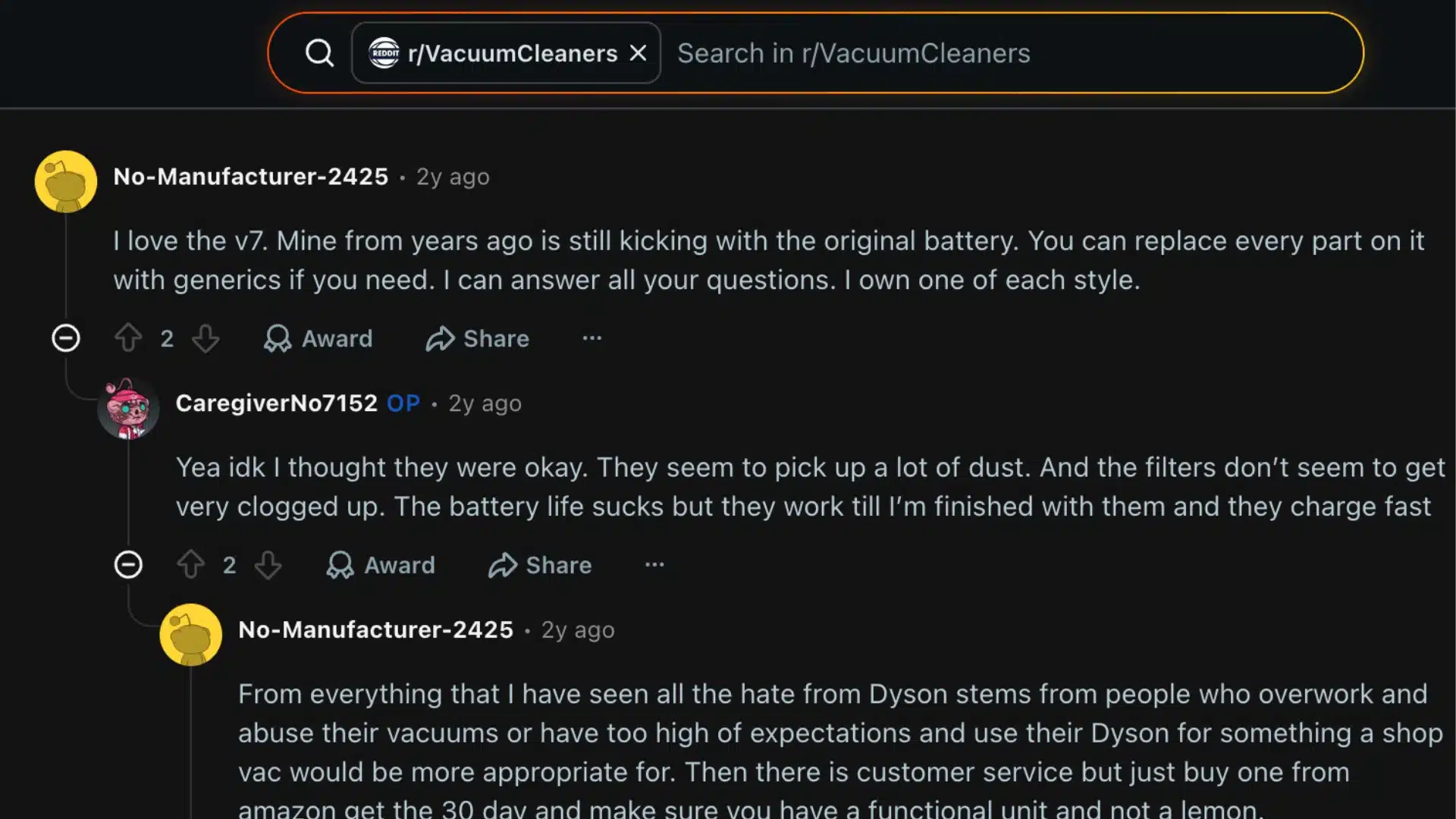
Reddit users describe the Dyson V7 as a reliable cordless vacuum that continues to perform well even after years of use. The vacuum is considered easy to maintain, thanks to washable filters and simple upkeep
It is praised for strong everyday cleaning performance, easily handling dust and routine messes with convenience while maintaining consistent suction and smooth operation across different floor types.
Users also appreciate its repairability and the availability of replacement parts, making it simple to maintain, fix minor issues, and extend the vacuum’s lifespan without needing a full replacement.
A few owners mentioned keeping the V7 Animal for 4-5 years with only a battery replacement, which at around $50 to $70 is considerably cheaper than buying a new machine. That repairability point is genuinely worth factoring into the total cost of ownership.
Many also highlight good battery durability, with some reporting that long-term battery life holds up better than expected, even after regular use.
Overall, Reddit feedback indicates that the Dyson V7 is a dependable, practical, and long-lasting cordless vacuum for everyday home cleaning.
Who Should Buy the Dyson V7 Animal?
The Dyson V7 Animal makes the most sense for a specific type of buyer, and it is less suited to others.
- Small home users: Ideal for people living in apartments or small- to medium-sized homes who need quick, easy daily cleaning.
- Pet owners with light to moderate shedding: Works well for removing pet hair from carpets, sofas, and upholstery without requiring heavy deep cleaning.
- Budget-conscious buyers: Suitable for those seeking Dyson performance at a lower price than newer models.
- Quick-clean users: Best for people who prefer short, frequent cleaning sessions instead of long deep-clean routines.
- Secondary vacuum users: Great as a backup or support vacuum alongside a main corded or more powerful cleaner.
It is less suitable for larger homes with multiple rooms, owners of heavy-shedding breeds who clean daily, or anyone who wants to avoid charging interruptions mid-session.
Conclusion
The Dyson V7 Animal is no longer the newest cordless vacuum, but that does not automatically make it a bad purchase today.
If your home is smaller and your cleaning routine focuses on pet hair, dust, furniture, and everyday messes, it can still get the job done without costing as much as newer models.
I would look at it most seriously when found on sale or as a certified refurbished unit, where the value becomes much easier to justify.
You should also think about how often you clean, because larger homes and longer sessions may benefit from a newer Dyson model.
For many buyers, the V7 Animal remains a practical balance of performance, convenience, and affordability.
Have you used the Dyson V7 Animal, or are you deciding between other models? Tell us, share with us in the comments below.
Frequently Asked Questions
Can You Use the Dyson V7 Animal to Clean a Car Interior?
Yes, the mini motorized tool included with the V7 Animal works well for car interiors. It fits into seat gaps and fabric surfaces and lifts embedded pet hair effectively.
The vacuum’s cordless design and lightweight frame make it practical for reaching across seats without a nearby power outlet.
Is the Dyson V7 Animal Compatible with Dyson V8 or V10 Accessories?
Most Dyson V7 accessories are not cross-compatible with V8 or V10 tools. The attachment fitting is similar in shape, but Dyson designed each generation around its own toolset.
Aftermarket adapters exist, but they are unofficial and may affect suction seal performance.
How Loud is the Dyson V7 Animal Compared to a Standard Vacuum?
The V7 Animal is noticeably quieter than most full-size corded vacuums and quieter than the V6 it replaced. In standard mode, it produces less noise than a typical conversation.
Max mode is significantly louder but still within the range most users find manageable for short bursts.
Does the Dyson V7 Animal Work on Thick or High-Pile Rugs?
The V7 Animal can clean high-pile rugs, but with limitations. The direct-drive head may struggle to glide smoothly on very thick pile, and suction can feel reduced as the head sinks into the fibers.