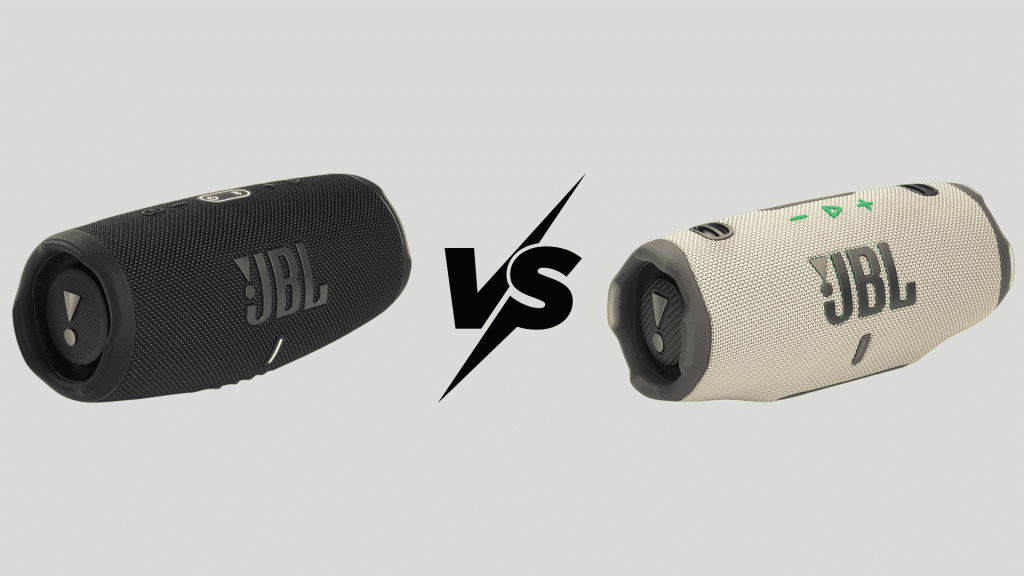
If you’ve been on the hunt for a portable speaker, you’ve probably seen the buzz around the JBL Charge 5 and Charge 6.
Choosing between the two can be tricky, especially with so many features and specs to consider.
In this post, I’m going to break down the differences so you can see which one fits your needs better. We’ll look at design, sound quality, battery life, connectivity, and even what users are saying online.
I’ll cover the highlights that make each speaker unique and the areas where they’re similar. By the end, you’ll have a clear idea of which model might be worth your money.
Whether you care about louder bass, longer playtime, or just want to see what the community prefers, this guide has you covered.
JBL Charge 5 vs Charge 6: Design, Build, and Portability Compared
The Charge 6 is bigger and noticeably heavier than the Charge 5.
The Charge 5 weighs 0.96 kg (2.1 lbs), while the Charge 6 weighs 1.37 kg (3 lbs). That’s a meaningful difference if you plan to carry it by hand all day.
The most visible addition on the Charge 6 is a detachable carry handle. You can use it as a loop or a traditional grip, and you can remove it if you prefer a cleaner look.
Both speakers use fabric grills and feel well-made. The Charge 6 also redesigned the base. The Charge 5 had thin silicone strips underneath that had a tendency to peel over time.
The Charge 6 replaced those with a wider, flat base that sits more securely on flat surfaces. The passive radiators on the Charge 6 are larger and more pronounced.
JBL also moved the button layout on the Charge 6 to two rows, separating playback controls from power and pairing controls.
It’s a small change, but it makes the controls easier to use by feel. The volume buttons on the Charge 6 also double as track-skip controls with a double press, something the Charge 5 can’t do.
The Charge 6 is rated for drops from 1 meter, but the Charge 5 has no drop rating.
Sound Quality and Volume: JBL Charge 5 vs Charge 6
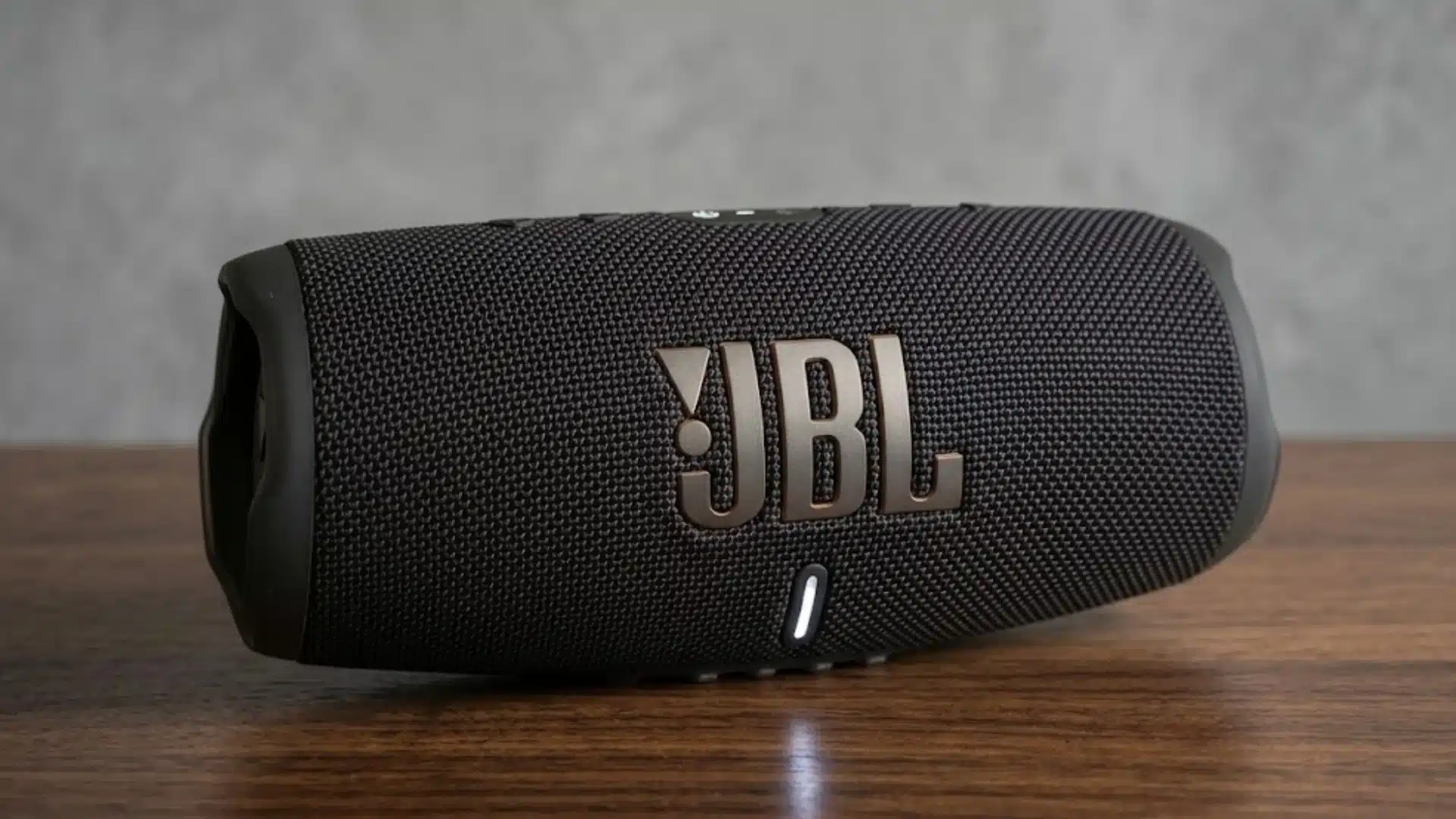
Both speakers use the same driver layout: a 52 x 90 mm racetrack woofer paired with a 20mm tweeter. The hardware is nearly identical.
The power difference comes from amplification: the Charge 5 runs 30W to the woofer and 10W to the tweeter (40W total), while the Charge 6 pushes 30W to the woofer and 15W to the tweeter (45W total).
The bass on the Charge 6 hits a bit deeper. In testing by reviewers, the Charge 6 can reach down to around 56 Hz, vs roughly 60 Hz on the Charge 5.
That difference is small on paper but adds a bit more physical punch on bass-heavy tracks.
The Charge 6 also has AI Sound Boost, which analyzes audio in real time and adjusts output to reduce distortion at high volumes.
The Charge 5 doesn’t have this. At moderate volume, the two speakers sound close. Push the volume up, and the Charge 6 holds together better.
That said, some listeners prefer the Charge 5’s sound. The Charge 5 has a more natural, unprocessed character that works well for vocals and acoustic music.
The AI processing on the Charge 6 is noticeable to some ears, and not everyone loves it.
If you’re still exploring your options, our guide to Bluetooth speakers for superior sound quality covers more picks worth considering.
JBL Charge 5 vs Charge 6: Battery and Charging Features
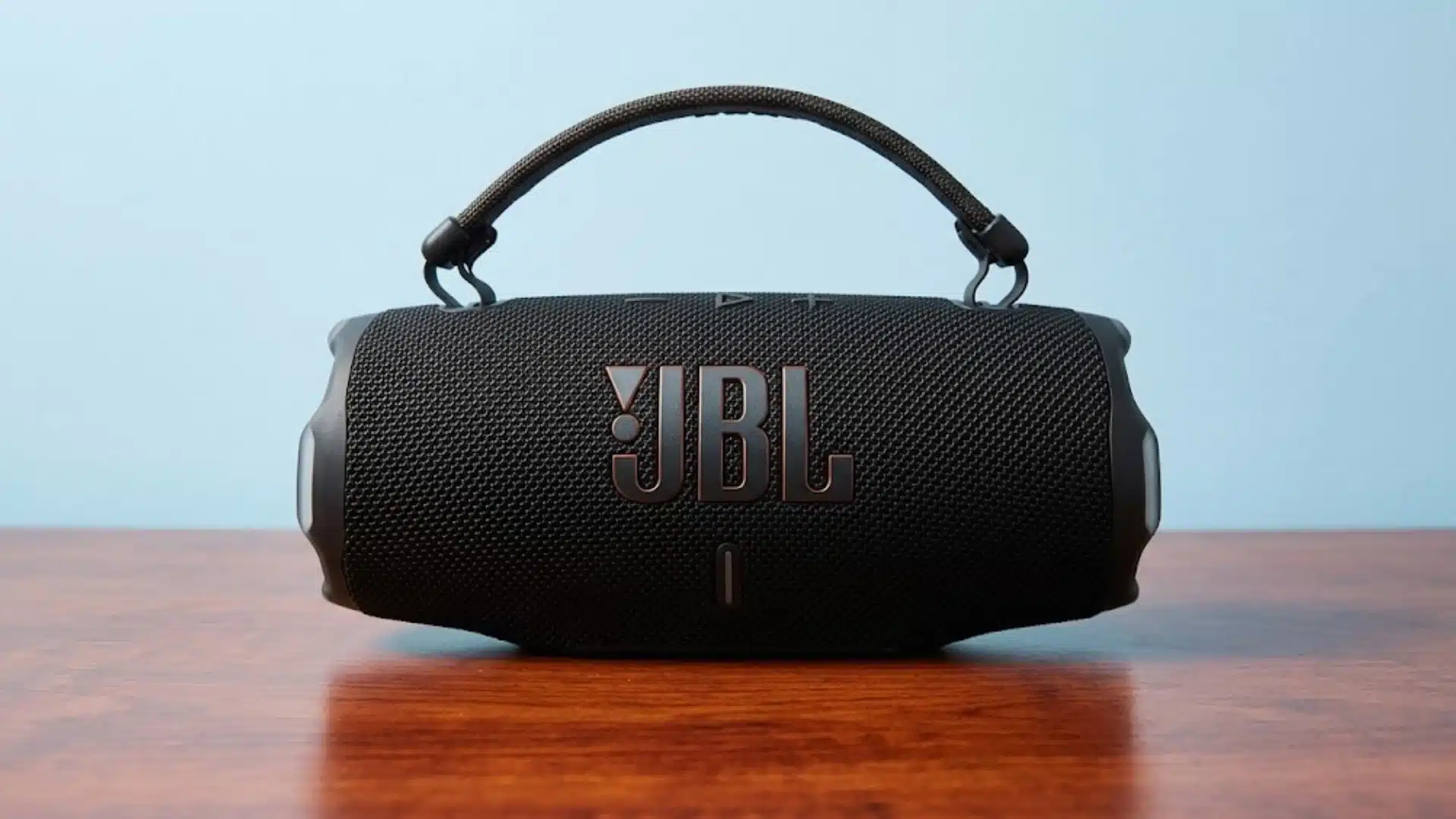
The Charge 5 gets up to 20 hours of playback on a full charge. The Charge 6 gets 24 hours at standard playback, and up to 28 hours with Playtime Boost mode on.
Playtime Boost tightens the bass response a bit to save power, but the trade-off is worth it if you need the extra runtime.
Charging speed is where the gap gets bigger, as the Charge 5 takes around 4 hours to fully charge, while the Charge 6 supports USB-C Power Delivery and fast charging: 10 minutes of charging gives you about 150 minutes of playback. Full charge takes roughly 3 hours.
Both speakers can charge your phone via USB, which is handy when you’re away from an outlet.
The Charge 5 has a USB-A port for this; the Charge 6 uses USB-C for both charging and audio input.
JBL Charge 5 vs Charge 6: Connectivity and Extra Features
The Charge 6 uses Bluetooth 5.4 while the Charge 5 uses Bluetooth 5.1. Both support multipoint, meaning you can stay connected to two devices at once and switch between them without re-pairing.
That gives a slightly better connection and steadier range when you move around. You can walk a fair distance away and still keep the music playing without breaks.
The Charge 5 uses JBL PartyBoost, which lets you link compatible speakers in the Charge 5-era lineup.
The Charge 6 switched to Auracast, a newer standard that’s more flexible and supports up to 100 compatible speakers and works with other brands, but is not backward-compatible with PartyBoost.
There are no built‑in voice assistants on either model, so you won’t get voice control straight from the speaker.
However, both work smoothly with your phone’s assistant when connected. App support is solid, too.
Through the JBL app, you can tweak settings, update firmware, and see battery info. These extras make using the speakers more flexible and user-friendly overall.
Reddit Opinions on JBL Charge 5 vs Charge 6
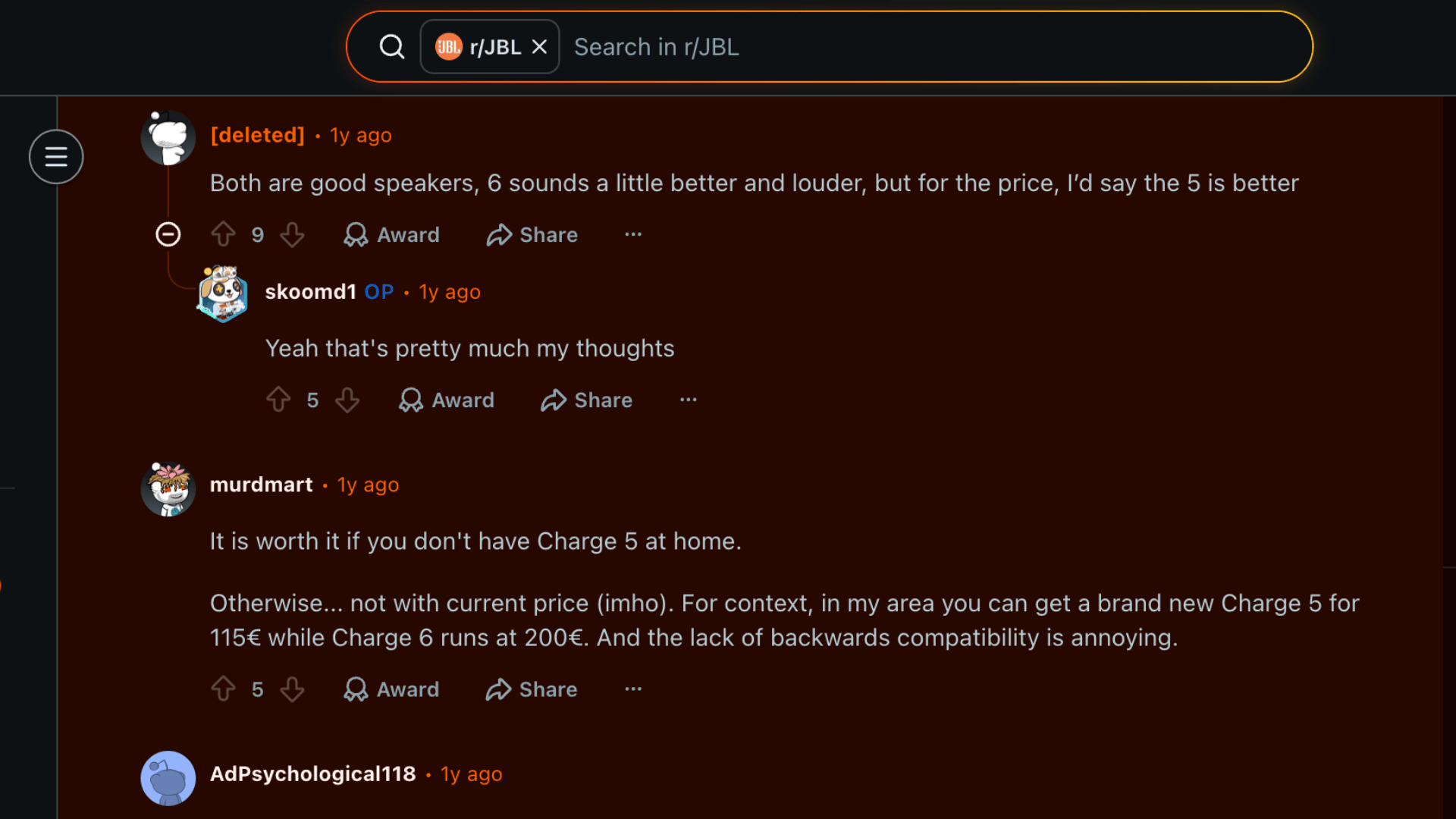
When you check out what people are saying on Reddit, opinions about the JBL Charge 5 vs Charge 6 are mixed but insightful.
Some users feel both speakers are solid, though the Charge 6 has slightly better sound and louder volume.
Others who own both say the Charge 6 is a clear upgrade, offering more EQ options, deeper bass, and clearer highs.
However, price matters; several users recommend picking the Charge 5 if it’s cheaper, since the improvements in the Charge 6 are mostly in bass and volume, which may not justify the extra cost for everyone.
Overall, the community agrees that both speakers perform well, but your choice often comes down to budget, personal sound preference, and how much you value the extra features in the Charge 6.
Choosing Between JBL Charge 5 and Charge 6
This guide helps you quickly see which speaker fits your needs based on budget, features, portability, and audio preferences.
| Who Should Buy the Charge 5 | Who Should Buy the Charge 6 |
|---|---|
| You already own JBL speakers that use PartyBoost and want them to stay linked | You’re buying your first JBL Charge series speaker |
| You want a lighter speaker for carrying around all day | Battery life and fast charging are priorities for you |
| You’re on a tighter budget and don’t need fast charging or lossless audio | You use your speaker in or near water often and want the extra protection |
| You prefer a more natural, unprocessed sound signature | You want to play lossless audio over USB-C |
| You already own a Charge 5, and it’s working fine | You like to customize sound through a detailed EQ in the app |
Price and Value of JBL Charge 5 vs Charge 6 Explained
Price is one of the main things people look at when choosing a speaker. The Charge 6 is usually priced between $149-$169. The Charge 5 tends to be a bit cheaper, from about $129-$149.
On paper, the difference does not look huge, but it can matter when you are shopping on a budget.
If you care most about sound quality, louder output, and slightly better features, many users think the higher price of the Charge 6 is worth it.
That extra cost gives you the newer model with stronger performance and a bit more bass and clarity.
On the other hand, if you find a good deal on the Charge 5, it still delivers solid sound and features for less money.
In terms of value for money, it comes down to how much you want the latest upgrades versus saving cash.
Conclusion
After looking at design, sound, battery, connectivity, and community opinions, the main differences between the JBL Charge 5 and Charge 6 are clear.
The Charge 6 is slightly bigger, louder, and has deeper bass with more clarity in highs. It also offers a bit more battery life and improved Bluetooth connection.
The Charge 5 is lighter, a little cheaper, and still delivers strong sound, making it a solid choice if you’re watching your budget.
So, which one should you pick? If you want the latest features, louder volume, and stronger bass, the Charge 6 is the way to go. But if you find a good deal on the Charge 5, it’s still a great speaker.
What do you think: do you lean more toward performance or value? Drop your thoughts in the comments; I’d love to hear your experience!
Frequently Asked Questions
Can the JBL Charge 5 or Charge 6 Be Used Underwater?
No, neither speaker is designed for underwater use. They are water-resistant, meaning they can handle splashes, rain, or a brief drop in water, but full submersion could damage them.
Do These Speakers Support Multi-Device Connection at the Same Time?
Both charge 5 and charge 6 allow pairing with multiple devices, but only one device can play audio at a time. Switching between devices is easy via Bluetooth.
Can the JBL Charge 6 Connect to Non-Jbl Speakers?
Yes, using standard Bluetooth, the Charge 6 can connect to other brands for audio playback. However, PartyBoost linking only works with other JBL PartyBoost-compatible speakers.