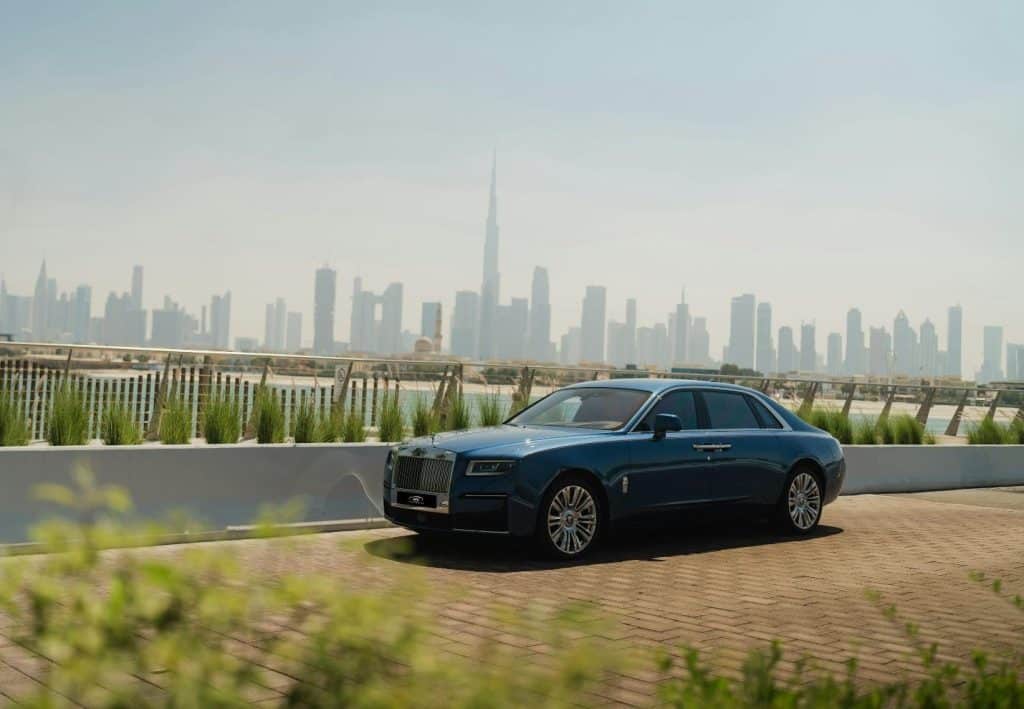
A luxury car is not only a means of transportation but also something made to perform in terms of power, provide comfort, and have the level of craftsmanship unmatched by any other type of vehicle. This is what companies such as Audi, BMW, Mercedes-Benz, and Lexus do: use modern technologies in their designs, apply high-quality materials and build luxury cars.
The fact that luxury cars are more difficult to maintain stems from this sophistication because maintaining them requires knowledge of sophisticated software, electronics, and components of these cars.
When Features Became Non-Negotiable Perks
Adaptive suspensions, turbocharged engines with variable-geometry turbines, and climate-control units offering multi-zone temperature adjustment – these used to be the hallmarks of the premium end of the market. Today, they’re almost taken for granted among all types of luxury cars.
What has piled up on top of them? Hybrid drivetrains, remote software updates, camera- and radar-based safety technology, and the computing modules controlling their every move.
None of these operates in isolation. Today’s luxury cars feature transmissions, suspension calibrations, torque management functions, and multimedia systems that are constantly exchanging information. In some cases, an error in one system may appear as another issue in a totally different part of the car. While your basic scan tool can give you some superficial codes, its diagnostic capabilities don’t go much deeper than that.
The Gap Between The Car’s Health Status and The Owner’s Expectations
People tend to think that there are only two categories for a warning light: either a critical issue that needs immediate attention or an insignificant matter that is resolved by itself. Indeed, people are pleased to see that the light is switched on and off as soon as everything is fixed.
In reality, however, the light turns on only to notify about a fault code and then is turned off since the vehicle continues its operations even without any critical issues – possibly due to the activation of an alternative module. This code should be read by a person who is aware of its meaning for the corresponding platform.
Specific diagnostic programmes designed by manufacturers have more capabilities than generic solutions on the market. These programmes allow checking each module separately and comparing sensor outputs and calibrations against normal performance. Specialised mechanics working with specific platforms get used to their behaviour and become more efficient at diagnosing abnormalities.
Parts, Tolerances, and Why They Are Connected
The case for aftermarket components usually starts with price. For straightforward vehicles, the trade-off is sometimes acceptable. For luxury vehicles built to tight engineering tolerances, the risk tends to be higher than it looks.
Braking systems are a useful example. High-end vehicles use brake pad compounds chosen to match the specific characteristics of their callipers, rotors, and braking software. Non-genuine pads can alter pedal feel, produce more noise, and in some cases cause uneven rotor wear over time.
The change is often gradual rather than immediate, which is part of what makes it easy to overlook. The same principle carries through to suspension components, fluid specifications, sensors, and electronic modules, parts that are engineered to work as a matched system, where substituting one element can affect the behaviour of others.
Warranty coverage is worth understanding carefully here. Manufacturers generally cannot void an entire warranty simply because a non-OEM part was used, and consumer protections in Australia and most comparable markets prevent that. What they can do is deny coverage for damage that is directly attributable to that part.
In practice, this means that using non-genuine components introduces a layer of ambiguity around claims that would not exist otherwise, particularly for complex systems where cause and effect can be difficult to separate.
What Your Car Is Actually Trying to Tell You
Modern luxury vehicles are set up to flag problems early. Intermittent hesitation under acceleration, a vibration that comes and goes, connectivity that drops occasionally, steering that feels marginally different on particular roads.
These kinds of symptoms are easy to dismiss, but they are usually patterns rather than random events. They tend to indicate something in the early stages of wear, which is also when addressing it is simplest and least expensive.
The complication is that intermittent issues are hard to reproduce on demand. A workshop with live data logging capability can monitor multiple systems during an actual drive and capture anomalies that would never appear in a stationary bay scan.
That capability is one of the more practical reasons to choose a workshop with genuine specialist experience in the vehicle you drive, rather than one that handles a broad range of makes and models.
Getting the Economics Right
Specialist servicing costs more than a general service, and that is worth being straightforward about. The relevant question is what the comparison actually looks like over the life of the vehicle. A cooling system component identified during a scheduled inspection is a contained job. Left undetected until it fails, it can create secondary damage that costs considerably more to address. That pattern plays out across many common luxury vehicle repair scenarios.
Resale value follows a similar logic. A documented service history with appropriate specialist care is meaningful to buyers of luxury vehicles, who are generally informed about what proper maintenance looks like. A patchy or inconsistent history tends to be reflected in offers, sometimes significantly.
For Audi owners in Melbourne, accessing the right standard of care comes down to finding workshops familiar with these platforms at a technical level. Quality Audi service Melbourne means technicians who understand the diagnostic architecture, work with genuine components, and know what to look for during scheduled maintenance, which is what keeps these vehicles performing as they should across years of ownership.
How Electrification Elevates Standards Even Further
The hybrid and electric luxury cars bring in an element of complication which is not something that a general mechanic shop can solve. Issues involving high-voltage power, battery management software, and calibrations for regenerative braking are all skills that are best left to the experts, along with the right diagnostic tools for these jobs.
For example, if a car’s battery cannot achieve the distance it should be able to reach, or there are issues with the car communicating effectively with the charging station, this can be a serious problem that must be solved using proper software and diagnostics provided by the automakers.
With more luxury cars incorporating some degree of electrification, the difference between a trained specialist and a general shop becomes ever clearer.
Ownership Comes at a Higher Price Than What It Costs to Buy
In the context of luxury car ownership, there are several decisions to make, one of which is servicing the car. It is clear that cars that receive specialised care in terms of servicing tend to operate better and preserve their value well compared to cars that have not been serviced.
It must be stated here that the technology used in cars today is only growing more advanced, thus bringing us to a point where there remains a question of who can actually maintain such a car.