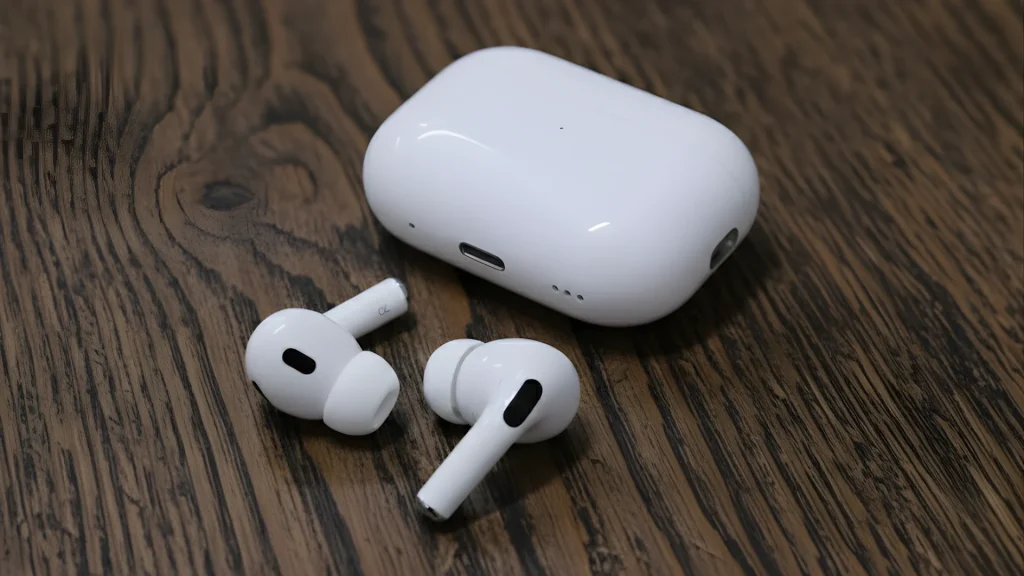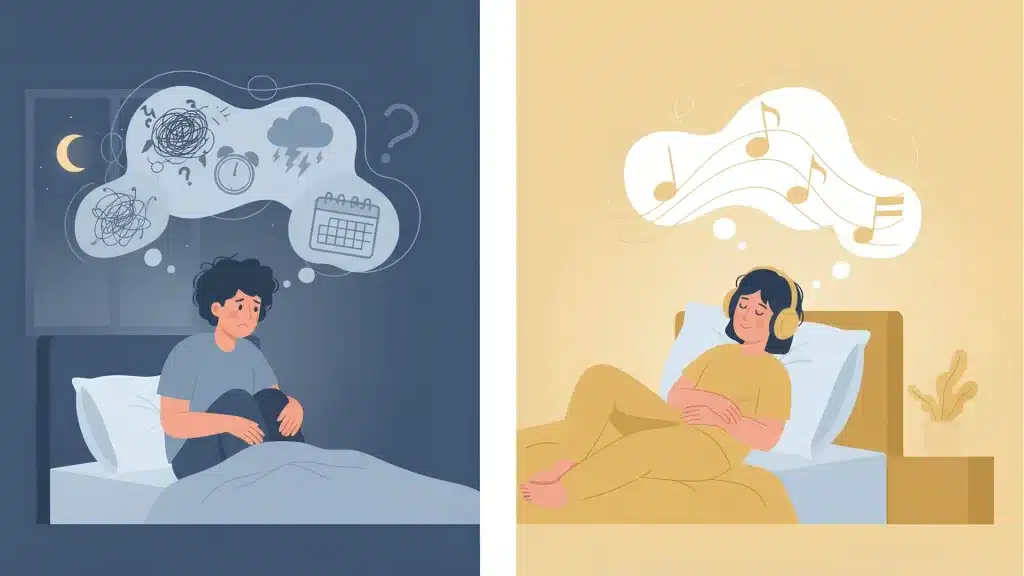
It is midnight, you have been lying there for 40 minutes, and your thoughts are doing what they always do: looping, cataloging, worrying about tomorrow.
The room is quiet, but not really; there is the hum of traffic two streets over, a partner breathing just a little too loudly, the occasional muffled sound from the apartment above.
So you reach for your headphones, put on something familiar, and everything slows down. I have been there more times than I care to count.
What started as a one-off fix became a nightly habit I did not think much about until I noticed how many other people were doing the same thing, and how differently each of them managed it.
Sleeping with headphones is far more common than most people admit. This blog pulls together real community takes, honest risk context, and practical guidance for making it work.
Why Do People Sleep with Headphones at Night?
Many people sleep with headphones because they need control over their sound environment.
A major driver is noise from traffic, neighbors, or shared spaces, which makes it hard to achieve silence. Headphones provide a consistent audio layer that blocks distractions and supports sleep.
Research from StudyFinds shows that about 38% of Americans rely on background noise to fall asleep, with younger generations most likely to use it.
Anxiety is the second major driver, and it is bigger than most coverage of this topic acknowledges.
When someone lies in silence with a brain that will not stop generating its own content, a podcast or audiobook gives it something external to follow. The internal noise quiets, and that alone can make a meaningful difference.
Research published in Noise and Health found that many young people sleep with headphones specifically to calm racing thoughts at bedtime, with audio becoming a consistent part of their nightly routine.
Tinnitus is another common reason. The persistent ringing or buzzing that affects millions of people becomes unbearable in a silent room.
Low-level sound played through headphones masks it just enough to make sleep possible.
For anyone already tracking sleep patterns with wearables, comparing data with and without audio can reveal just how much difference it makes for noise-sensitive sleepers.
What Real Users Say About Sleeping with Headphones?
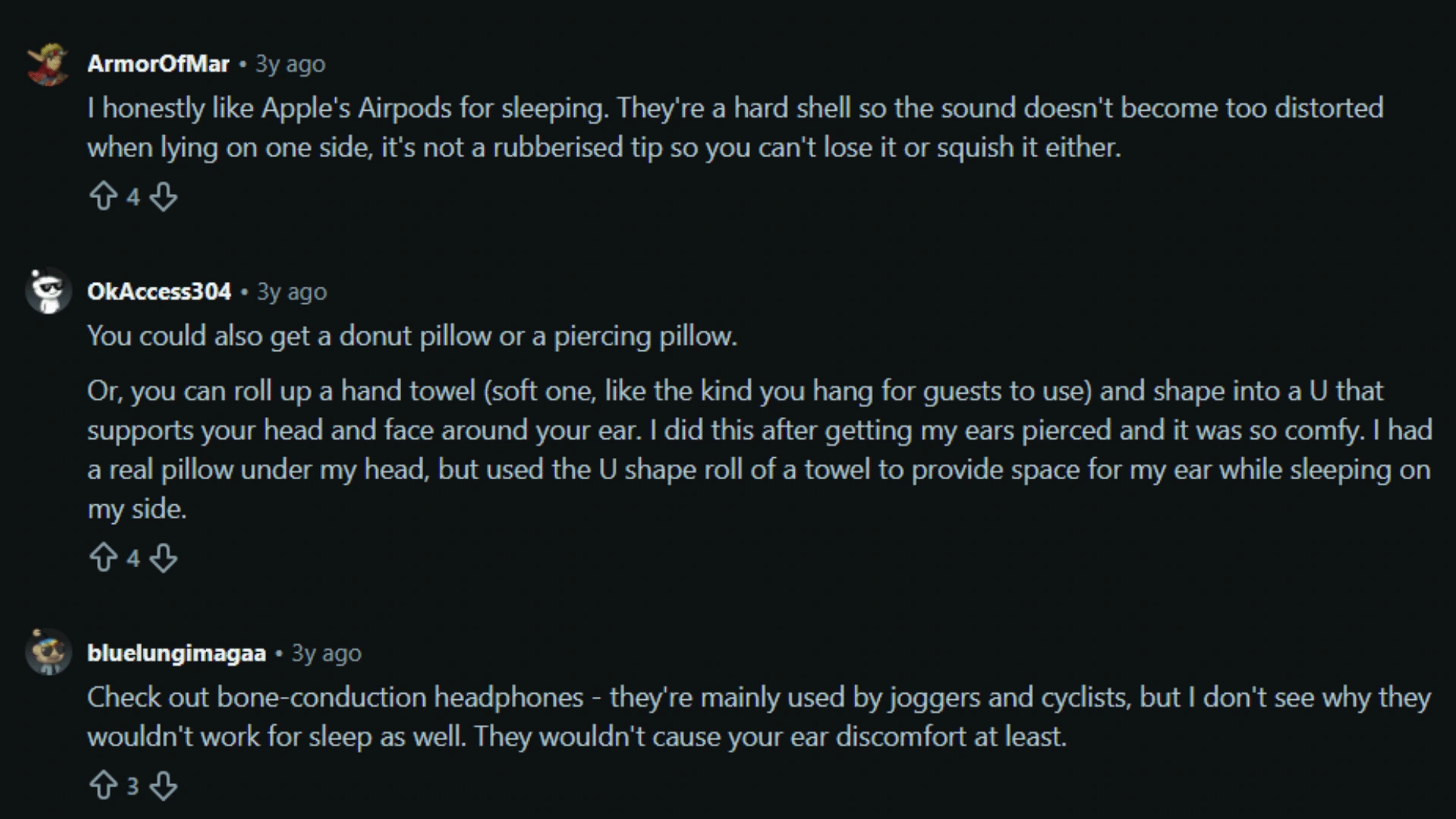
Reddit discussions show how this habit actually works in real life, not just in theory.
The user experience most people recognize involves dealing with multiple disruptions at once: a snoring partner, discomfort from side sleeping, and tinnitus or traffic noise layered on top.
To tackle that, many users suggest headband-style sleep headphones or Bluetooth sleep masks because they avoid ear pressure.
Others mention small earbuds or adjusting pillows to create space, showing that the physical setup matters as much as the device itself.
A pattern across these threads is that most people adapt their environment rather than wait for a single perfect solution.
Some accept lower audio quality if it helps them fall asleep faster, while others cycle through different headphone types until they find what works.
There is also real awareness around risks. Several users point out hearing concerns and recommend keeping the volume low.
Others note that underlying issues like snoring or sleep disruption may need proper attention rather than being permanently masked.
Risks of Sleeping with Headphones You Should Know
Sleeping with headphones carries some risks, but they are often exaggerated. Most issues depend on volume, device type, and how often the ears get a break.
Hearing damage is the biggest concern. A study in Noise and Health found that about 10% of adolescent users reach 90-100 dB even during sleep, a level that can gradually harm the cochlea’s hair cells.
That said, the risk mainly affects those using high volumes. Listening at lower levels, around half the device’s maximum, is far less concerning.
Keeping playback at around 50% of the device’s maximum puts most users well below the threshold where damage becomes a real concern.
Ear infections are more common with in-ear buds. Using them after a shower can trap moisture in the ear canal, creating a warm environment where bacteria can grow.
I generally advise cleaning earbuds after each use and taking occasional nights off both for ear health and to keep the habit from becoming rigid.
Side sleepers may deal with pressure and discomfort. Earbuds pressed between the ear and pillow can cause soreness or irritation, while over-ear headphones can press uncomfortably against the head.
Safety is another factor. Noise-canceling headphones can block important sounds, such as alarms or someone calling out, reducing awareness during the night.
Note: If you experience ear pain, hearing changes, or signs of infection from sleeping with headphones, stop use and consult a healthcare provider before continuing.
Best Types of Headphones for Sleeping Comfortably
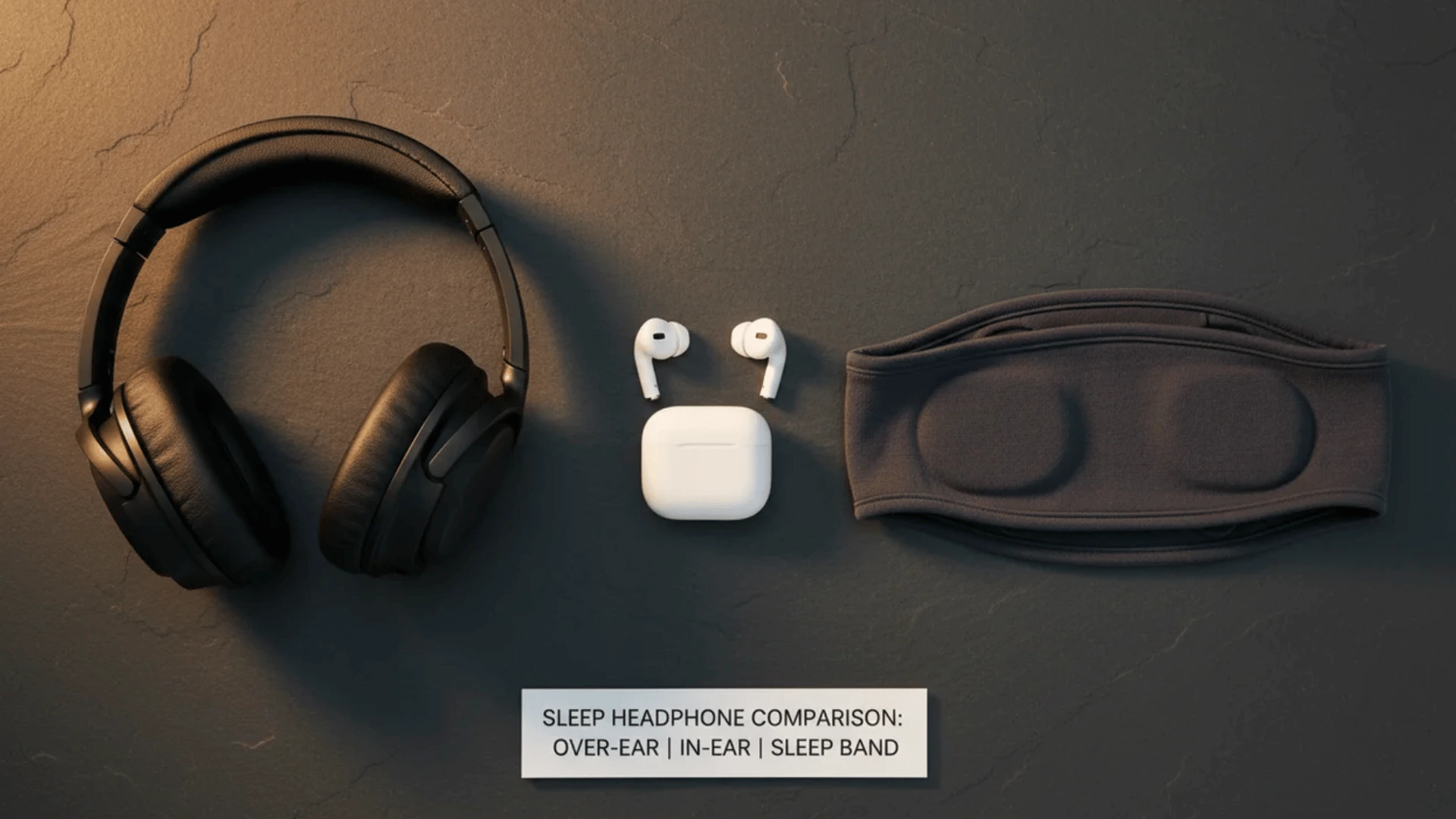
Different headphone types affect comfort and sleep quality in different ways. The right choice depends on sleep position, movement during the night, and long-term usability.
- Over-ear limitations: Works reasonably well for back sleepers, but side sleepers often struggle with the bulk pressing into the pillow, leading to discomfort and interrupted sleep. Frequent movement during the night makes this an ongoing issue for most users.
- Durability concerns: Continuous pressure from the pillow can strain earcup components and internal wiring over time. With nightly use, this can shorten the lifespan of the headphones, especially if they are not designed to handle prolonged compression.
- In-ear discomfort: Feels fine at first, but prolonged side sleeping can lead to soreness, pressure buildup, and irritation in the ear. After several hours, many users report waking up due to discomfort rather than staying asleep.
- Easy to lose: Small earbuds tend to slip out during sleep, get tangled in sheets, or fall off the bed. In some cases, they can be difficult to find in the morning, adding inconvenience to nightly use.
- Headband advantage: Flat, thin speakers embedded in soft fabric eliminate pressure points. The design stays secure even when turning during sleep, making it more reliable for people who change positions frequently throughout the night.
- Hygiene and battery: Most headbands are washable, which helps maintain cleanliness with daily use. Bluetooth models usually offer 10 to 24 hours of battery life, ensuring uninterrupted playback throughout a full night without needing frequent charging.
- Best for side sleepers: The flat design prevents pressure against the ear, making it far more comfortable than bulky headphones or in-ear buds. Many users report better sleep quality after switching to this style.
- Smart setup pairing: Combining audio with dim lighting and a slightly cooler room temperature can strengthen the body’s sleep cues. Using a headband within this setup helps create a consistent and calming nighttime routine
A headband used consistently within that kind of setup becomes part of a broader bedtime wind-down routine rather than just a noise blocker.
How to Sleep with Headphones Safely?
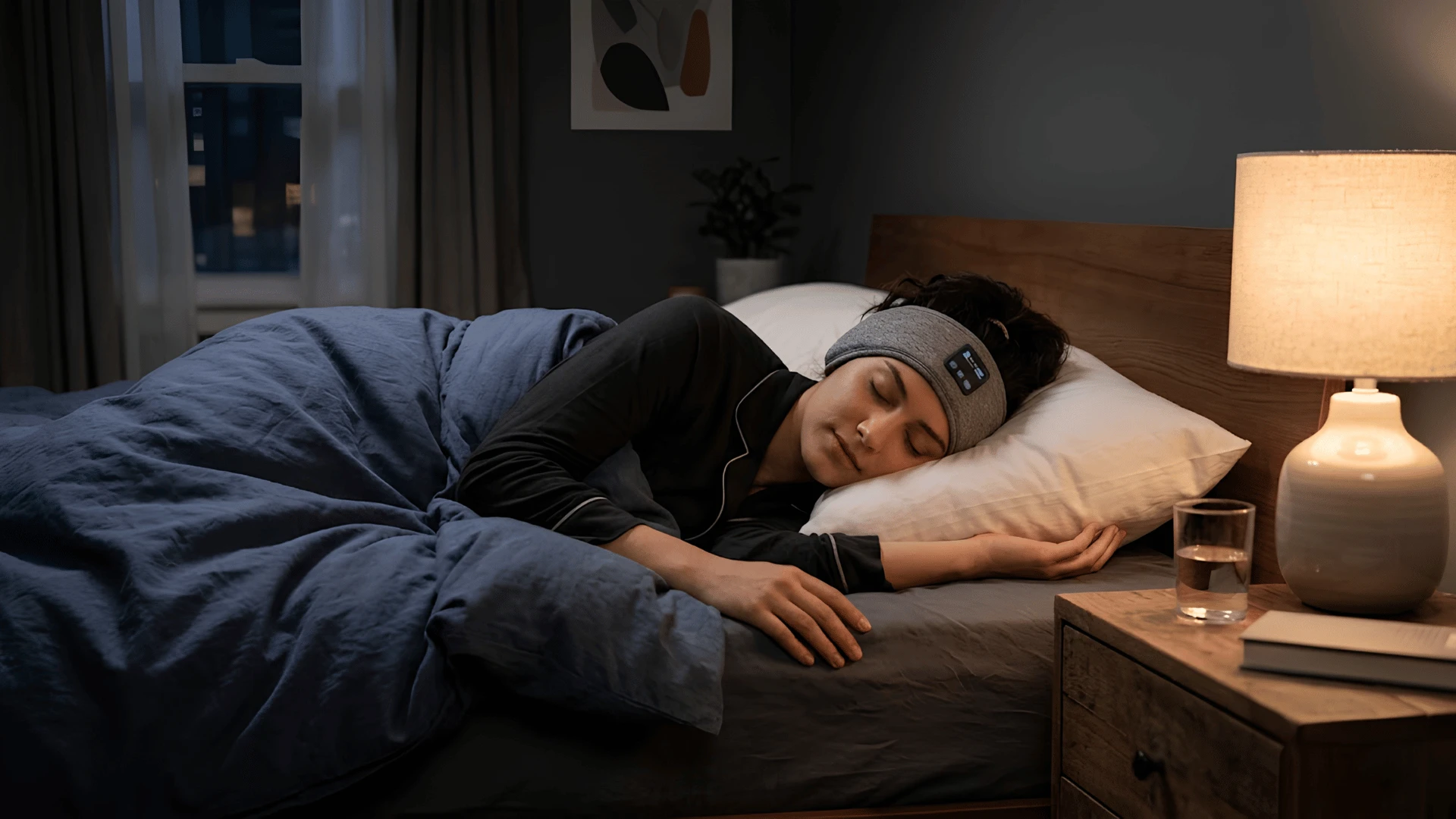
Volume is the variable that matters most. I recommend keeping the playback at roughly half the device’s maximum, low enough that someone lying next to you cannot hear it.
The National Institute on Deafness and Other Communication Disorders confirms that sounds at or below 70 dB are unlikely to cause hearing loss, even with extended exposure. Most personal devices at half volume sit comfortably below that level.
Set a sleep timer. The goal is to fall asleep, not to run audio all night. Most podcast apps and music platforms have a built-in timer.
Use it if you are using a dedicated sleep device, many auto-detect when you fall asleep and reduce playback or switch to passive mode.
Clean your devices. For in-ear bud users, wiping the ear tips after each use and letting the device air out significantly reduces bacterial buildup.
Take nights off; if audio is genuinely helping, there will be no resistance to skipping it occasionally.
If the thought of sleeping without it produces real anxiety, that is worth paying attention to, not because the headphones are causing harm, but because a sleep habit that cannot flex is a fragile one.
Avoid noise-canceling mode if you need to hear alarms, a baby, or anything else happening in your home overnight.
For a detailed look at how sleep-specific earbuds handle comfort and noise masking over a full night, the Ozlo Sleepbuds review walks through real-use performance in detail.
When Headphones Are Not Enough for Better Sleep?
Headphones can support better sleep in noisy or stressful situations, but they are not a complete answer for ongoing insomnia or deeper sleep-related challenges.
- Short-term relief: Helps block noise, manage distractions, and create a calming sleep environment during temporary disruptions, such as stress or irregular schedules.
- Not a full solution: Audio alone cannot fix chronic insomnia, especially when issues like anxiety, low sleep drive, or inconsistent routines are involved.
- CBT-I effectiveness: Cognitive behavioral therapy (CBT-I) for insomnia targets negative thought patterns and habits, offering a proven approach beyond simple sound-based aids.
- Underlying causes matter: Ignoring root problems while relying solely on headphones may delay proper treatment and make sleep issues harder to resolve over time.
- Best use case: Works well as a supportive tool alongside healthy sleep habits, not as a replacement for addressing deeper sleep concerns.
If you are dealing with ongoing sleep difficulties, speaking with a sleep specialist or healthcare provider is the most reliable next step.
Conclusion
Sleeping with headphones works for many people. It blocks noise, gives the brain something to follow rather than generating its own worries, and, over time, builds a reliable association between audio and rest.
The habit is not inherently harmful; in this case, volume matters more than duration.
Headphone type matters more than most people realize, and side sleepers in particular benefit from switching to a headband-style headset rather than tolerating standard earbuds pressed into a pillow all night.
The risks are manageable, keep volume at or below half the device’s maximum, clean your gear, set a sleep timer when you can, and turn off noise cancellation if you need to stay aware of your surroundings.
If this habit has been working for you for years, you are likely doing it right.
If you are relying on it to outrun anxiety that never fully settles, it may be worth getting curious about what else could help alongside it. Headphones are one part of the picture.
What do you actually listen to when you are trying to fall asleep? Drop your go-to in the comments. There is always a good recommendation buried in those threads.
Frequently Asked Questions
What is the Best Audio Content to Listen to While Sleeping with Headphones?
Most sleep researchers recommend low-stimulation content that keeps the brain gently occupied without demanding active attention.
Brown noise, rain sounds, and nature ambiance work well for masking environmental noise without pulling focus.
Slow-paced audiobooks and sleep-specific podcasts are popular because they give the brain something external to follow without being engaging enough to keep you awake.
Can You Use Bluetooth Headphones Safely Overnight?
Yes. Bluetooth devices emit non-ionizing radiofrequency radiation at levels considered safe for consumer use, and no published research has linked overnight Bluetooth exposure to health risks.
The more practical concerns are battery heat during extended use and physical fit. Choosing a model designed for sleepwear makes the biggest difference in long-term comfort.
How Long is Too Long to Sleep with Headphones in?
There is no universal limit, but ear health professionals generally suggest giving the ears regular breaks, especially with in-ear styles.
Using a sleep timer to cut playback after 60 to 90 minutes reduces overall exposure without disrupting the habit.
Do Children and Teenagers Face Higher Risks from Sleeping with Headphones?
Yes. Developing ears are more sensitive to sound, and teens tend to listen at higher volumes than adults.
Headband-style headphones are safer than in-ear buds for younger users because they reduce ear pressure and are compatible with volume-limiting features.
Setting a device-level volume cap before bedtime is one of the simplest ways to reduce risk for this age group.