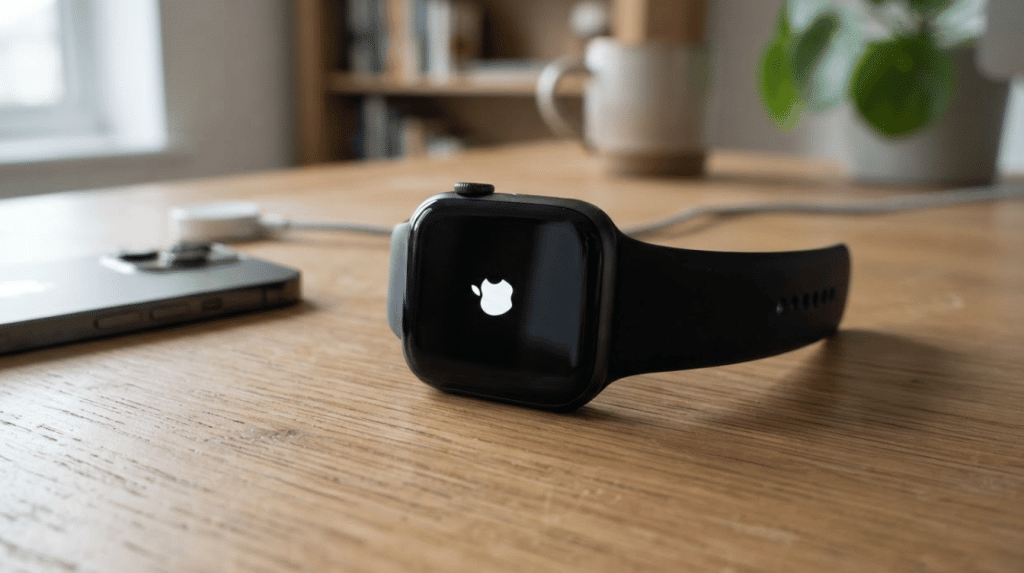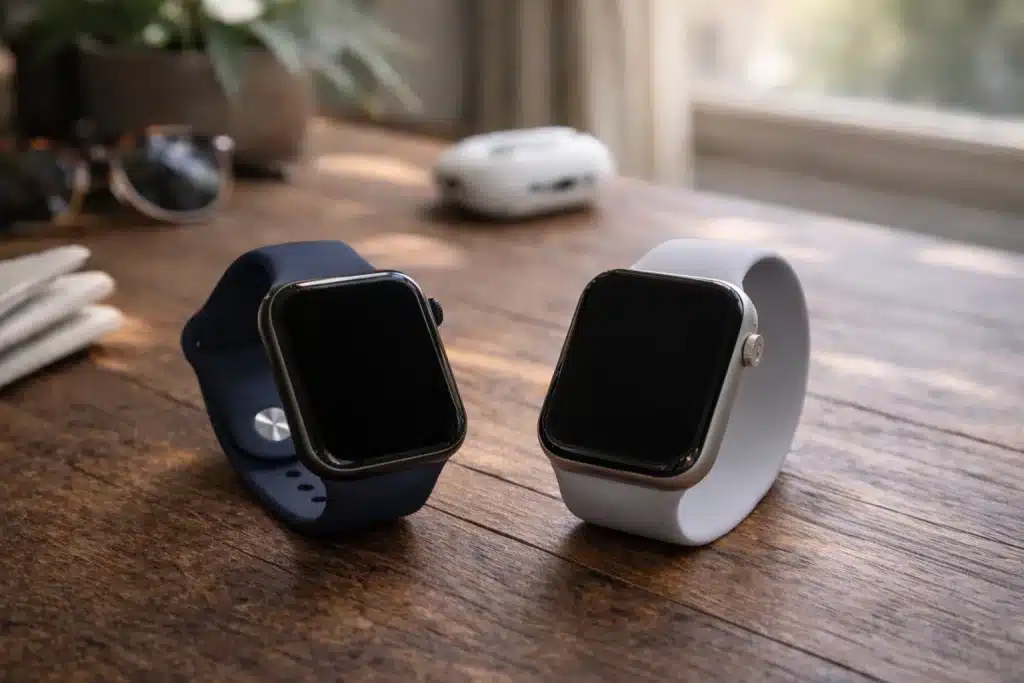
I spent way too long staring at Apple’s band options the first time I picked an Apple Watch. Two names kept coming up again and again. The Sport Band and the Solo Loop. Both looked similar.
Both cost the same. But they feel completely different on your wrist. That confusion is real, and if you are here, you probably feel it too.
The Sport Band vs. Solo Loop debate comes down to fit, material, and how you actually use your watch day to day. One stretches on like a rubber bracelet.
The other clasps into place with a secure pin system.
Small difference on paper, big difference on the wrist. Stick around, and the choice gets a lot easier than it looks right now.
What Are the Sport Band and Solo Loop?
Apple offers a variety of bands, with the Sport Band and Solo Loop among the most popular.
The Sport Band, available since 2015, is made of firm rubber and features a pin-and-tuck closure, fitting a wide range of wrist sizes.
In contrast, the Solo Loop, introduced in 2020, is a seamless silicone band that requires precise measurement for the right size.
Both bands are $49 from Apple, compatible with all current Apple Watch models, and come in seasonal colors.
Apple also sells the Sport Loop, which uses woven nylon instead of rubber and works differently from both bands covered here. That is where the similarities end.
From here, the differences start adding up fast.
Material and Build Quality
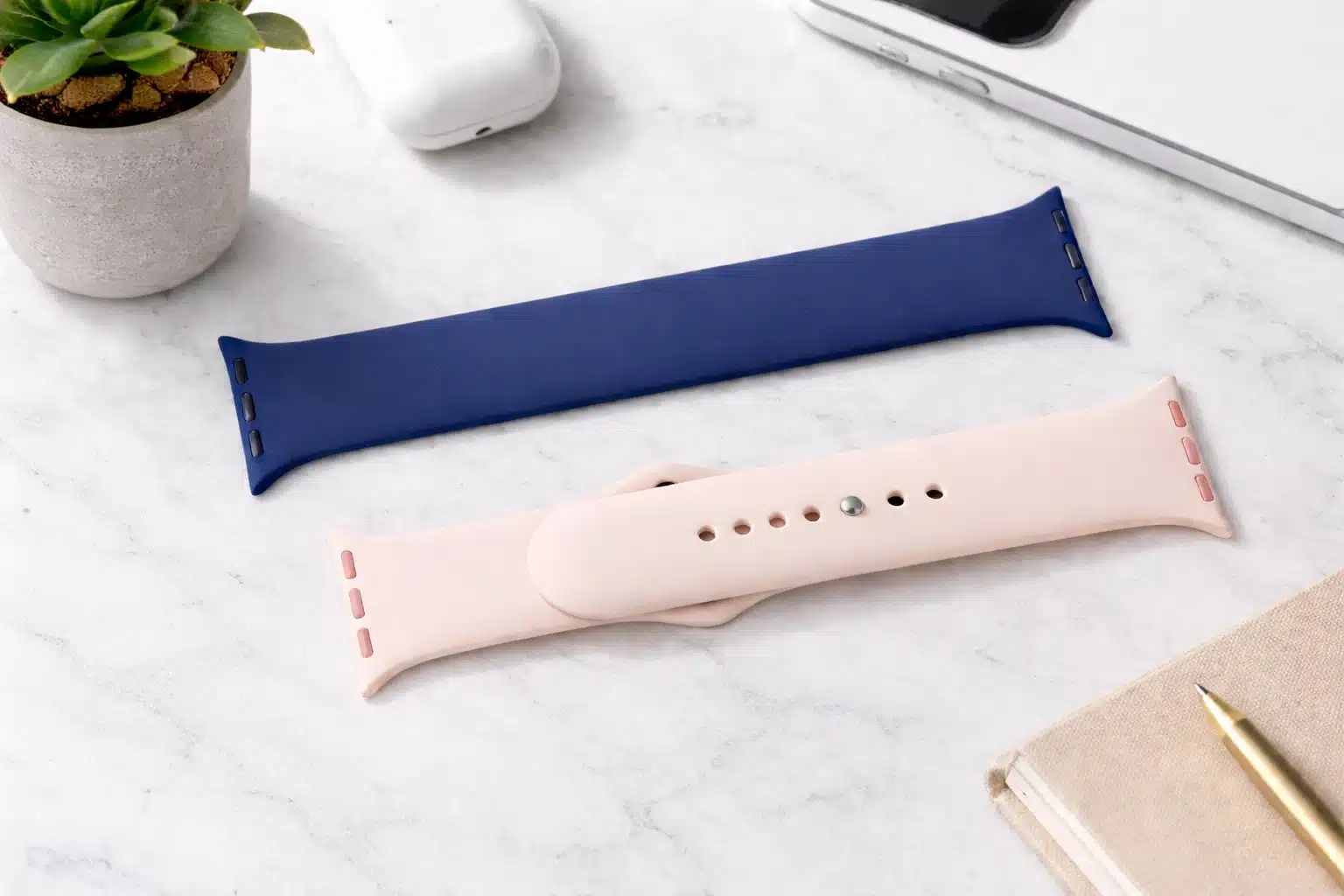
The Solo Loop is crafted from liquid silicone rubber, providing a soft, thin, and almost weightless feel against the skin.
Apple designed it as a single continuous piece, eliminating any clasps, buckles, or moving parts for a seamless experience.
In contrast, the Sport Band is made from fluoroelastomer, a denser, firmer synthetic rubber, resulting in a thicker band.
It features a pin-and-tuck closure for a secure fit, making the Sport Band a sturdier option that can better withstand everyday wear and tear.
Comfort and Daily Wear
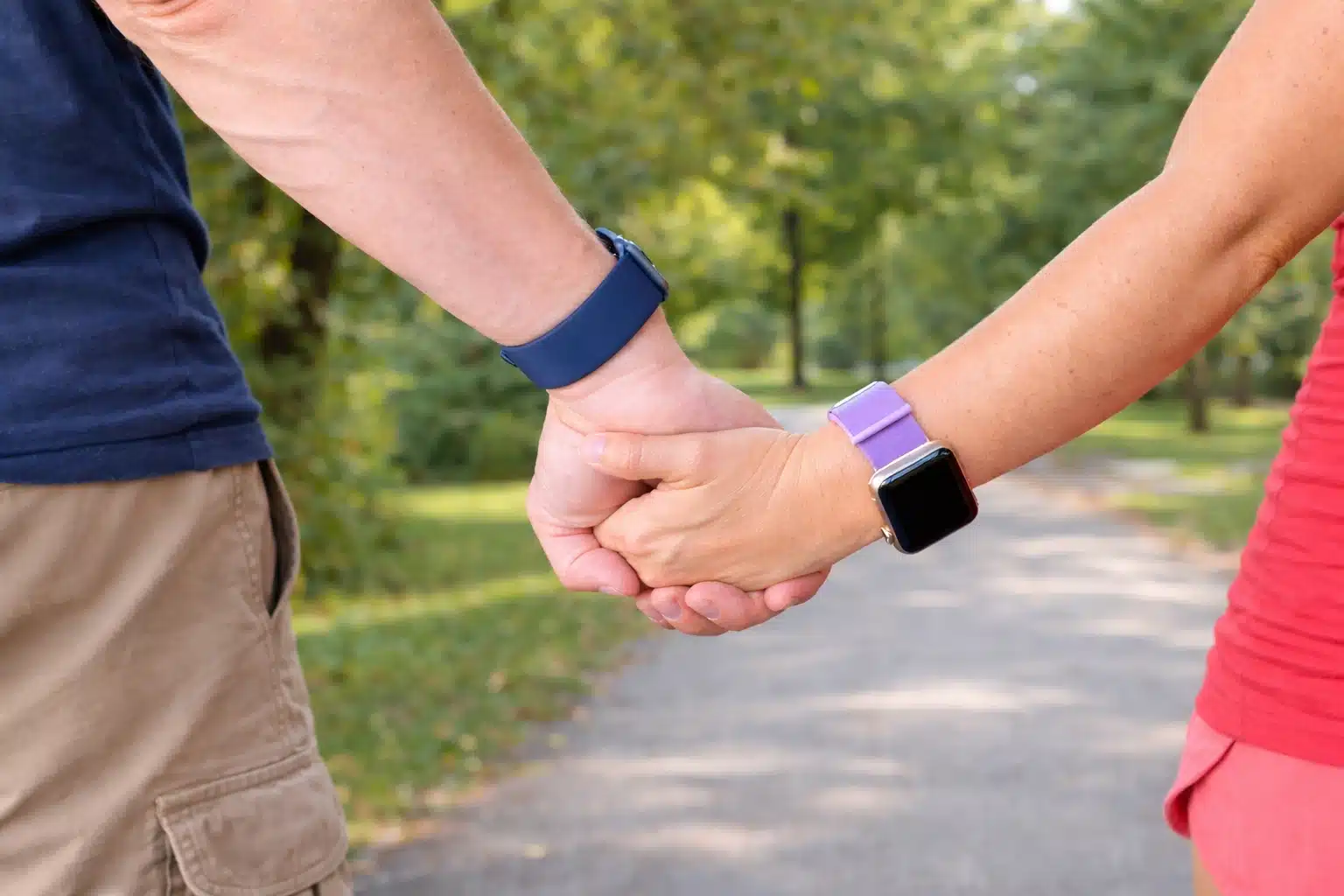
The Solo Loop offers a second-skin feel with even pressure, while the Sport Band is thicker but adjustable, providing flexibility for various activities and comfort preferences.
How does the Solo Loop Feel?
The Solo Loop sits flush against the skin and distributes pressure evenly across the wrist.
Many users describe it as feeling like a second skin. There is no buckle bump underneath, which makes typing and resting the wrist on flat surfaces more comfortable.
The catch? Sizing needs to be exact. A slightly wrong size leads to a band that is either too tight or slides around loosely.
This raises questions for people who wonder if the Sport Loop and the Sport Band will work across all sizes.
How does the Sport Band Feel?
The Sport Band has a slightly thicker profile, and the pin-and-tuck closure adds a small bump on the underside.
But it also gives full control over how tight or loose the band sits. For workouts or long hours at a desk, the ability to adjust on the fly matters.
In the Sport Band vs Solo Loop comfort comparison, the Solo Loop wins on feel, but the Sport Band wins on flexibility.
Sizing and Adjustability
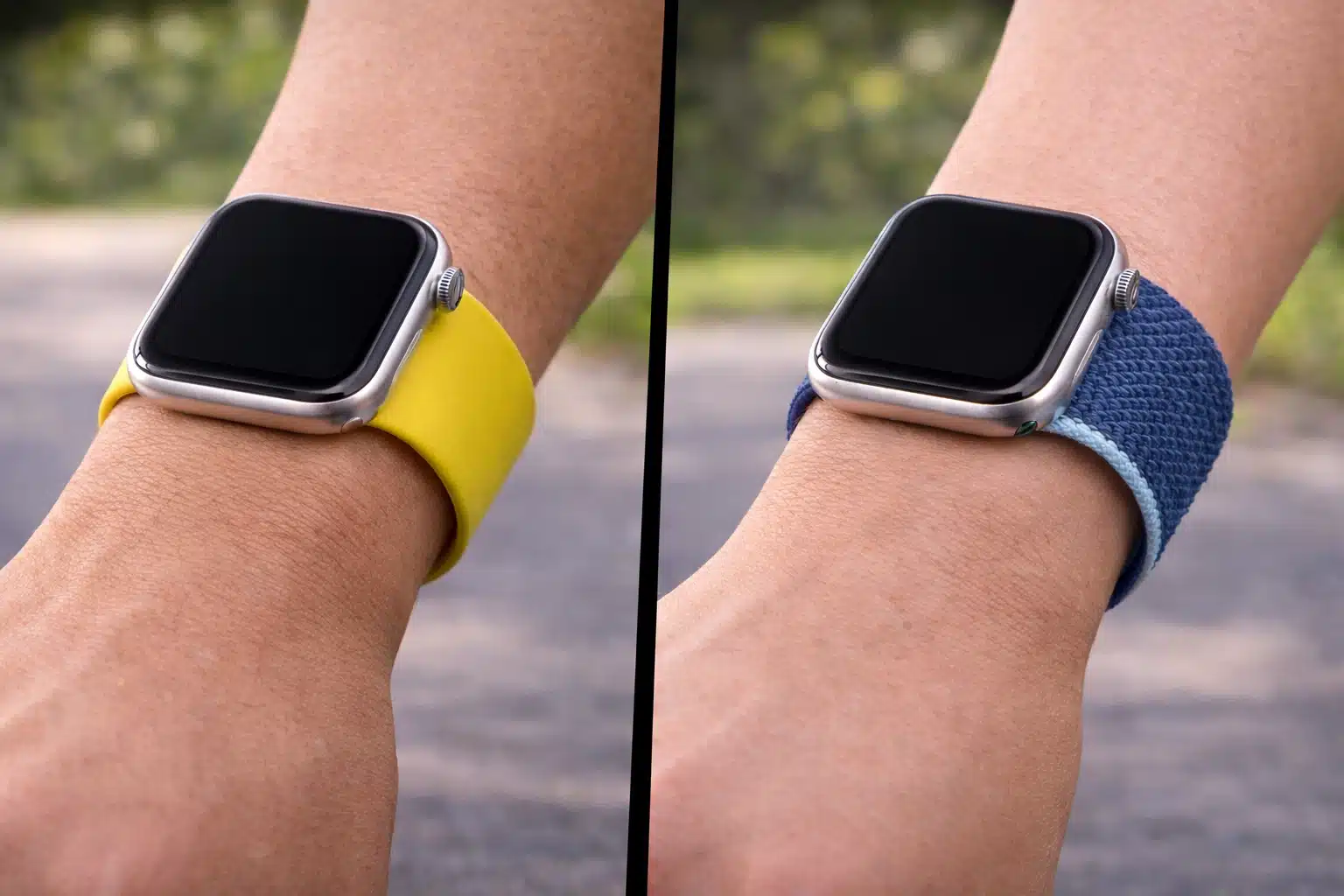
This is the biggest practical difference between these 2 bands.
- Solo Loop: Available in 12 fixed sizes. Apple provides a printable sizing tool, but getting the right fit often takes trial and error. Wrist size can change with heat, exercise, or time of day.
- Sport Band: Ships in S/M and M/L sizes, each with multiple pin holes. One band works across a range of wrist sizes without any guesswork.
The Sport Band vs Solo Loop sizing gap means the Sport Band is far more forgiving. If a wrist tends to swell during workouts or summer heat, the Sport Band adjusts accordingly.
Durability and Longevity
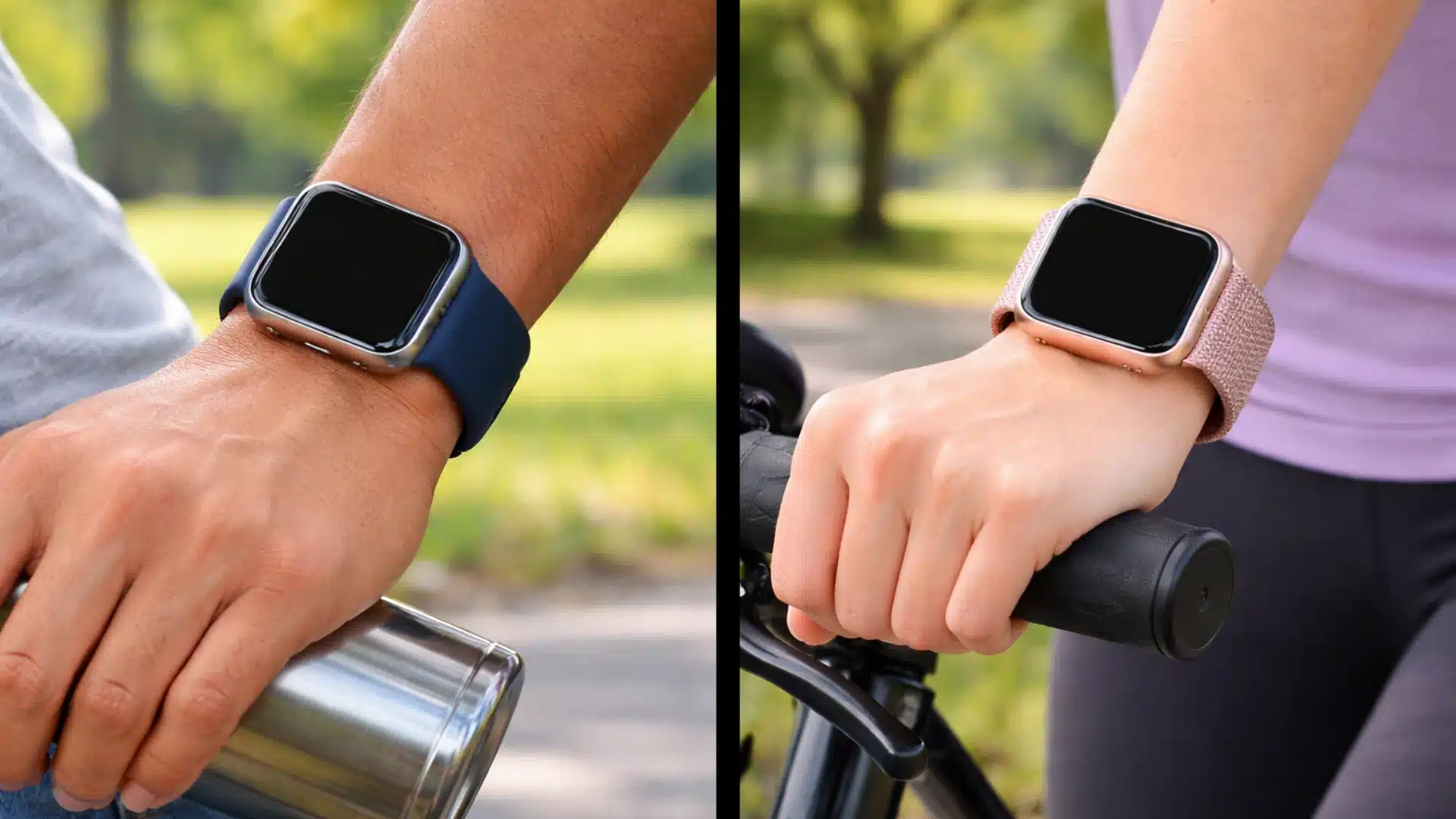
The Sport Band holds up significantly better over time.
Its fluoroelastomer material resists stretching, staining, and cracking, even after months of sweat and daily wear. Cleaning it only requires soap and water.
The Solo Loop feels great out of the box, but the silicone can stretch and lose its shape after 6 to 12 months of regular use.
Some users on the forums reported their Solo Loop snapping entirely after several months.
One member said, “My solo loop snapped after 6 months.” While another noted, “A sports band will last you many years.” If longevity is a priority, the Sport Band vs Solo Loop comparison leans heavily toward the Sport Band.
Style and Color Options
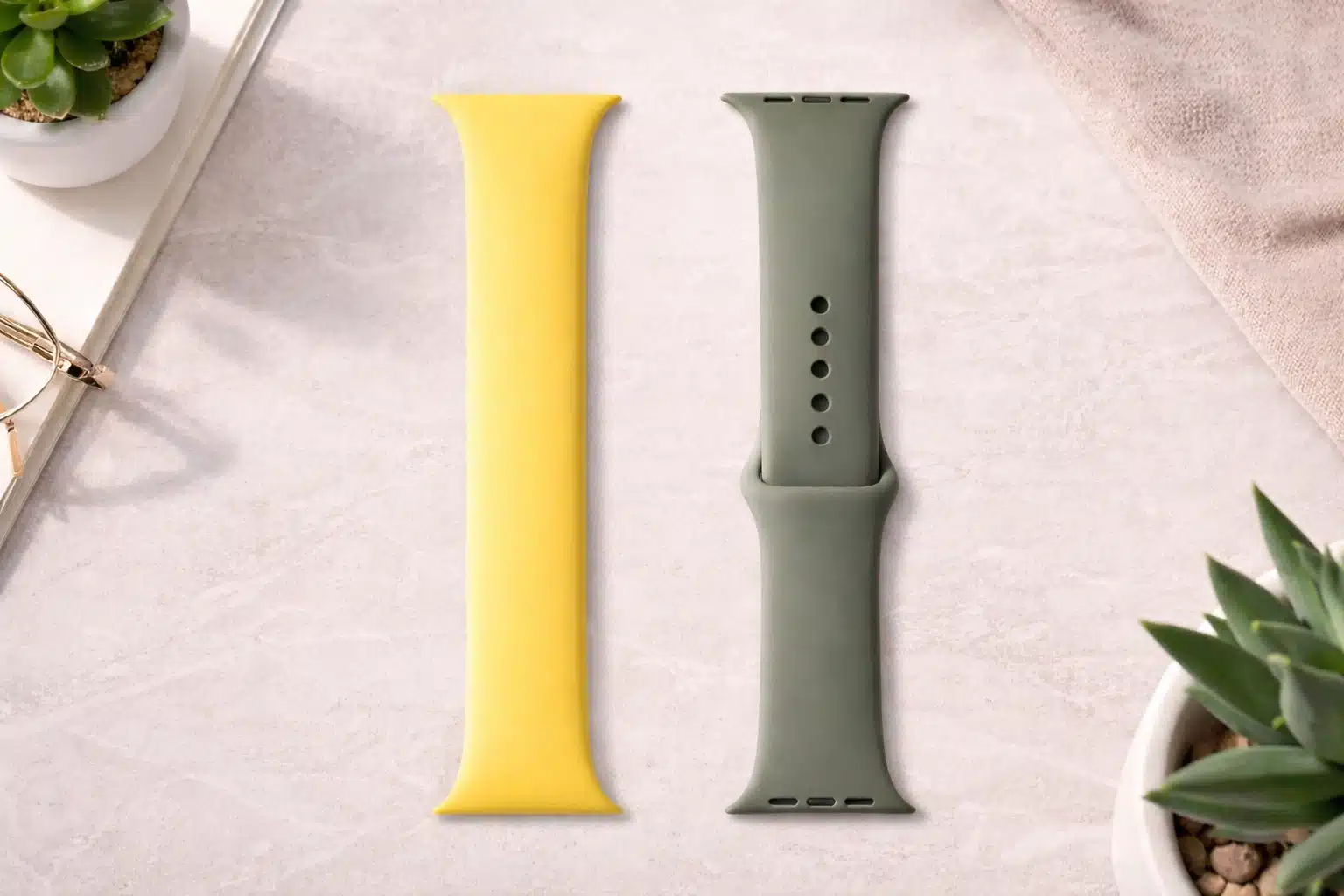
Both bands come in a strong lineup of colors, and Apple refreshes the palette with each season. The Solo Loop often gets trendier shades like Northern Lights, Periwinkle, and Peony.
The Sport Band sticks to classic tones like Black, Starlight, and Product Red, with seasonal additions like Aquamarine and Tangerine for Spring 2025.
The Solo Loop’s clean, unbroken look gives off a bracelet-like feel that blends well into both casual and professional settings.
The Sport Band’s closure and textured finish lean more toward an active, sporty vibe.
Pricing and Value
Both bands retail at $49 on Apple’s official store, but their long-term value differs.
The Solo Loop’s snug fit lacks adjustability, which may require users to buy multiple bands as wrist sizes change, increasing costs over time.
In contrast, the adjustable Sport Band accommodates a range of wrist sizes without additional purchases.
Its versatile design offers reliability and durability, making it the more cost-effective option for consumers seeking comfort and practicality in smartwatch accessories.
Overall, the Sport Band is a smarter choice for long-term use.
Quick Comparison
Short on time? This Sport Band vs Solo Loop side-by-side breaks down every key difference at a glance.
| Feature | Solo Loop | Sport Band |
|---|---|---|
| Material | Liquid silicone rubber | Fluoroelastomer |
| Closure | None (stretch-on) | Pin-and-tuck |
| Sizes | 12 fixed sizes | S/M and M/L (adjustable) |
| Best For | Casual wear, clean look | Workouts, swimming, daily use |
| Durability | May stretch in 6-12 months | Lasts years with proper care |
Conclusion
I keep both bands in rotation, and honestly, most Apple Watch owners do the same.
The Sport Band vs Solo Loop decision is not about which one is better overall. It is about which one fits the way you live. One gives comfort with zero bulk.
The other gives durability with full adjustability.
If the day involves workouts, swimming, or anything high-energy, the Sport Band handles it all without loosening or wearing down.
If the day is more about the office, errands, or casual wear, the Solo Loop sits lighter and cleaner on the wrist.
Either way, $49 gets a solid band from Apple. Grab the one that matches your daily routine, wear it for a few weeks, and swap later if needed.
Which one are you selecting for your Apple Watch, Sport Band, or Solo Loop? Tell us in the comments below.
Frequently Asked Questions
Does the Solo Loop Pick Up Dust and Lint?
The liquid silicone surface attracts lint and dust, but a damp cloth easily cleans it. The Sport Band’s firmer fluoroelastomer surface has this issue less frequently.
Can the Solo Loop Be Used for Swimming?
The Solo Loop is water-resistant and safe for pool and ocean use, but the Sport Band is preferred for water activities as it dries faster and is more durable over time.
Do Both Bands Fit All Apple Watch Models?
Both the Solo Loop and Sport Band work with any Apple Watch model as long as the case size matches. The same applies to the Sport Loop and Sport Band across all sizes.