I spend most of my professional life making sure people feel something the moment they walk into a space that the layout makes sense, the flow feels natural, and nothing creates unnecessary friction.
So when I started paying closer attention to games, I noticed something familiar: the same invisible forces that make or break a live event are quietly at work in every game you’ve ever played. They just go by different names.
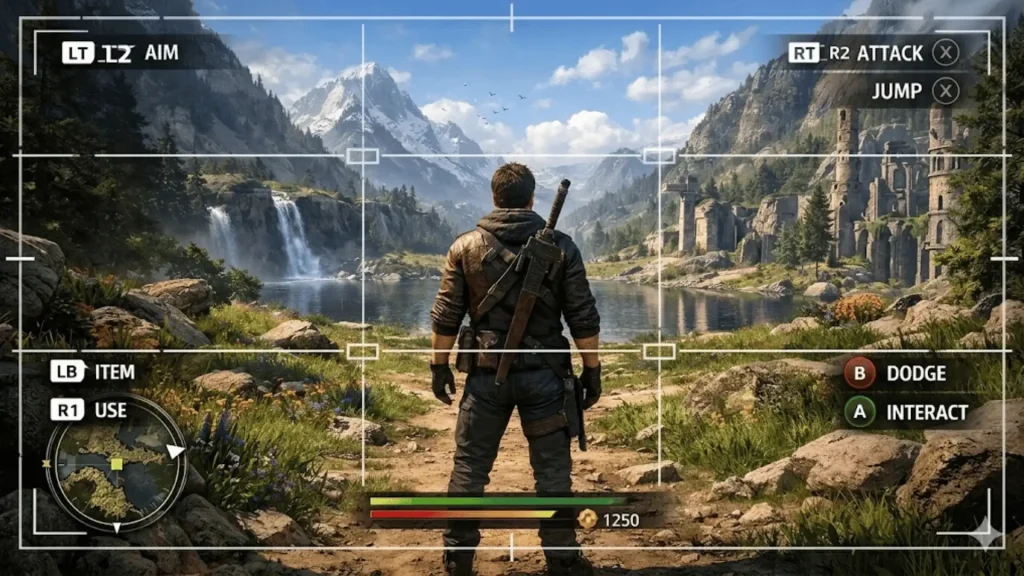
Those forces are the 3 C’s: Camera, Character, and Controls. Most players never consciously notice them, but they feel them instantly.
Nine times out of ten, one of the 3 C’s is the culprit. This guide unpacks what they are, how they interact, and why getting them right changes everything.
Why the 3 C’s Matter More Than Graphics?
The 3 C’s in Games: Camera, Character, Control refer to the core systems that define how a player interacts with a game world.
- The camera controls what the player sees
- Character defines how the player exists in the world
- Control determines how the player interacts with everything
Think of it this way: Character means what you can do. Camera, how you see it, and controls how you trigger it.
A smooth camera helps prevent disorientation, responsive controls build trust between the player and the game, and a well-designed character makes movement feel natural and consistent.
But even minor friction in movement or perspective can instantly break engagement.
Players start second-guessing actions, which breaks immersion, and this friction hits hardest for players who are still building reflexes, including those wondering if they can become a pro gamer and go competitive later in life.
The 3 C’s in Games: Camera, Character, Control
Many players assume that graphics or storyline define a great game, but in reality, the 3 C’s have a much stronger influence on how enjoyable a game feels.
1. Camera: The Player’s Eyes
The camera is how players understand the world. It controls visibility, awareness, and comfort.
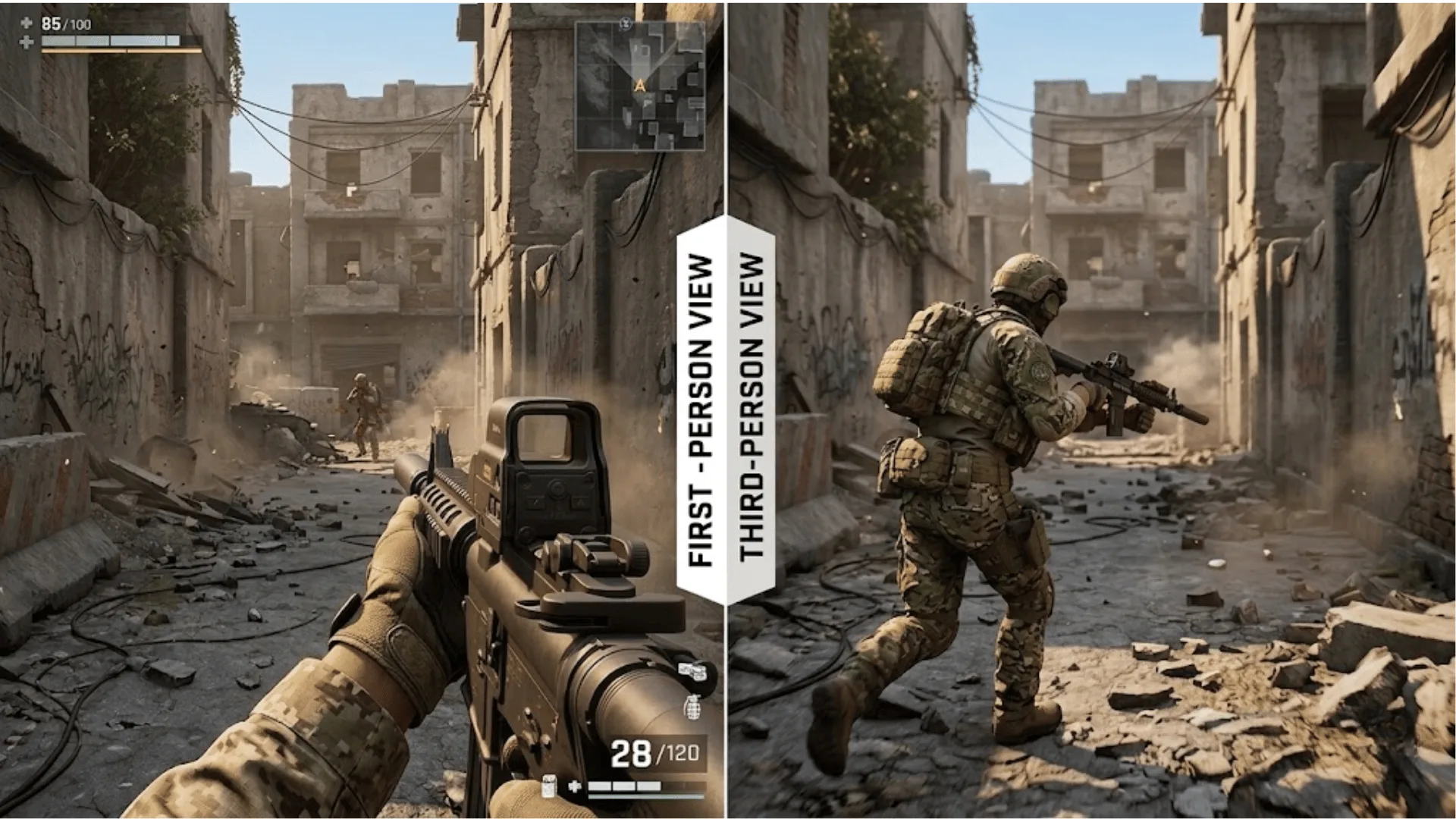
Game cameras come in several types, each shaping how players experience the world.
A first-person view places players directly in the character’s perspective for stronger immersion, while a third-person view provides better spatial awareness by showing the character within the environment.
A top-down view supports strategy and control by providing a broader view of the surroundings.
Dynamic or cinematic cameras use trigger-based zooms, pans, and angle shifts to highlight key actions, making them common in story-driven 3D games.
A good camera in a game ensures smooth movement without jitter, maintains clear visibility during action scenes, and intelligently adjusts in tight spaces.
Games like God of War handle camera transitions carefully, keeping players focused without distraction.
2. Character: The Player’s Presence
It’s the emotional anchor that connects the player to the world, and players don’t need to love the character; they just need to feel invested in them.
Character design brings together several core elements that shape players’ experiences in a game.
Collision and physics behavior ensure interactions feel natural and consistent. Abilities and progression play a key role in long-term engagement, giving players a sense of growth over time.
Finally, personality and visual identity create a lasting impression, allowing even a silent protagonist to feel recognizable and memorable.
A strong character design makes movement feel intentional, and a weak one feels floaty or stiff.
Character design goes far beyond just visual appeal. In games like UndergrowthGameLine, which focus on strategy and exploration within a dense forest setting, a character is defined just as much by what they can do as by how they look.
3. Control: The Player’s Power
Controls are where trust is built or lost. If a player presses a button, the game must respond exactly as expected.
Think of controls like a movie soundtrack when they’re working, you don’t notice them at all. They make everything feel right by never getting in the way.
Good controls are defined by how naturally and reliably a player can interact with a game. Immediate response time ensures actions feel responsive, while consistent input behavior builds trust in every command.
Logical button mapping makes controls intuitive, reducing the learning curve. Design should also match the platform, since what works well on a controller may not translate smoothly to keyboard and mouse, and mobile requires its own approach.
Finally, accessibility plays a crucial role by offering inclusive options, so more players can engage comfortably.
How do the 3 C’s Work Together?
The true impact of the 3 C’s comes from their coordination.
Camera, character, and control are interdependent, each supporting the other to create a smooth gameplay experience.
A responsive character feels incomplete without clear camera angles, and precise controls rely on both for accuracy. When one element falls short, the entire system feels disconnected.
Just like navigating a crowded space with poor visibility and limited movement, misaligned 3 C’s quickly lead to player frustration.
Practical Tips to Improve the 3 C’s in Games
Small design gaps in core gameplay elements often lead to early disengagement. Improving the 3 C’s can directly impact player retention and completion rates.
- Refine camera behavior: Test camera angles during intense gameplay moments to ensure visibility stays clear and responsive, reducing frustration.
- Optimize character movement: Align character responsiveness with game pacing so movement feels natural and consistent, making gameplay smoother and more enjoyable across different scenarios.
- Simplify and standardize controls: Keep controls intuitive and predictable. Early player feedback helps identify confusion, allowing developers to adjust inputs for better usability and long-term engagement.
- Use cross-team alignment and early testing: Maintain a shared 3 C framework across teams and use early prototypes with QA checklists to catch issues quickly.
Conclusion
The 3 C’s won’t always be the first thing you notice about a game, but they’re almost always the reason a game feels right or feels off.
Like the invisible architecture of a well-run event, they work best when nobody’s thinking about them.
Master them, and everything else you build gets to shine. Ignore them, and even the most ambitious game risks falling flat at the most fundamental level.
There’s a lot more to unpack within each C than any single guide can cover, and honestly, the most interesting conversations happen when real players and creators start sharing what they’ve noticed.
Which of the 3 C’s do you think is most often overlooked, and which game do you think gets all three absolutely right? Drop your thoughts in the comments below.