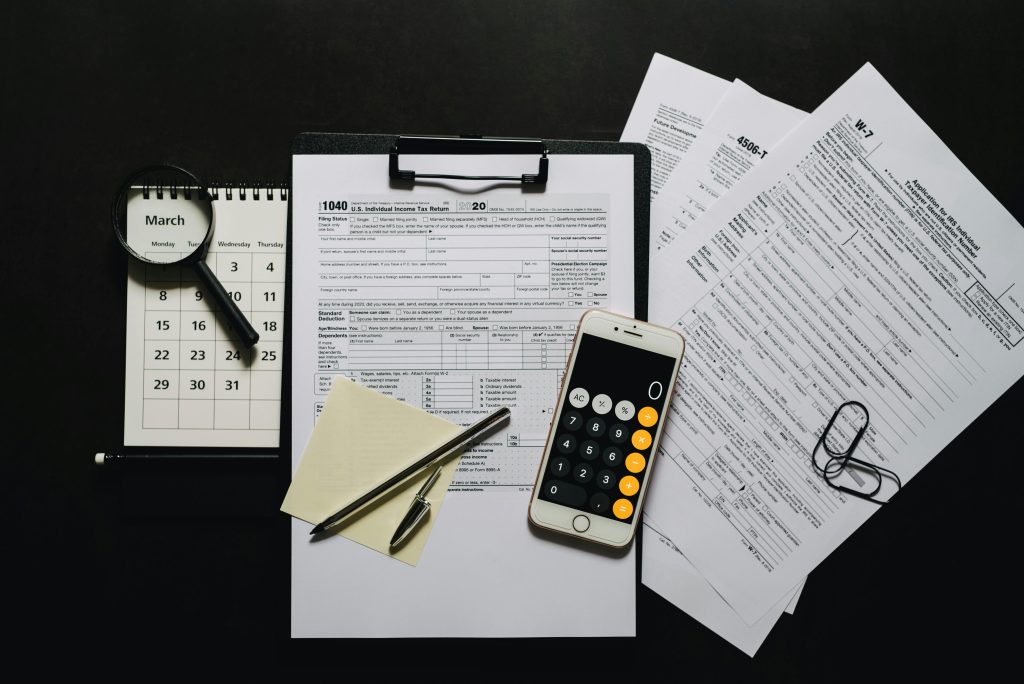
Your accounting software completes a bank reconciliation before your coffee cools. It flags three unusual entries, prepares a variance note, and waits for your approval.
That scene can feel efficient and unsettling at the same time.
So, will AI replace accountants? Current evidence does not indicate that the profession is disappearing, but it does show that repetitive duties are being reduced and accounting positions are changing. Recording transactions is only one part of the work.
Interpretation, business knowledge, communication, and accountability still matter when the numbers do not tell the full story.
The effect will vary by position, making it important to separate duties that technology can assist with from complete roles that still require qualified people.
How AI Arrived at the Accounting Desk
Accounting automation began long before generative AI appeared. Spreadsheets, bank feeds, optical character recognition, cloud platforms, and rules-based systems have reduced hours of manual recordkeeping.
Recent AI-enabled systems can extract information from documents, identify patterns, answer questions about connected financial data, and prepare initial drafts.
Unlike older software that follows fixed instructions, newer models can work with less structured material, including invoices, contracts, emails, and written accounting policies.
Adoption differs across the profession. Large firms may develop private systems trained on internal resources.
Smaller practices may use features included in commercial accounting platforms because developing private systems requires additional money, data, and technical support.
Cost, source-data quality, security requirements, software compatibility, and client needs also affect how quickly a firm adopts these systems.
Will AI Replace Accountants Completely?
Current evidence does not indicate that AI will remove the accounting profession. It is more likely to reduce predictable processing and change the balance of responsibilities within many positions.
| Work Software May Handle | Work People Still Lead |
|---|---|
| Transaction categorization | Resolving unclear entries |
| Invoice data extraction | Managing supplier disputes |
| Standard reconciliations | Investigating unexplained balances |
| Routine report preparation | Interpreting financial results |
| Initial anomaly detection | Assessing possible fraud |
| Draft tax calculations | Applying fact-specific tax rules |
| Document summaries | Approving consequential decisions |
An accounting position contains several duties, and those duties do not carry the same automation potential.
Removing data entry from a position does not remove the need for investigation, communication, approval, or management oversight.
The difference becomes clearer when these accounting duties are considered separately. Some already fit automated workflows, while others depend heavily on evidence and individual circumstances.
Accounting Tasks AI Can Assist With

Predictable duties using consistent data are the strongest candidates for AI assistance. Each application serves a different purpose and still depends on reliable source records.
1. Data Entry and Classification
Software can extract dates, amounts, supplier names, payment terms, and tax details from invoices or receipts. It can then suggest ledger categories, identify possible duplicates, and send uncertain items for checking.
This reduces typing and document sorting without requiring the system to make every classification independently.
2. Invoice and Payment Processing
Accounts payable systems can compare invoices with purchase orders and delivery records. They may flag missing approvals, identify repeated invoices, and schedule authorized payments.
Staff can concentrate on disputed charges, supplier questions, suspected fraud, and exceptions that do not match the company’s normal purchasing process.
3. Reconciliation and Bookkeeping
Automated tools can match bank activity with ledger entries, prepare recurring journals, and locate differences between records.
They are particularly effective when descriptions and amounts follow consistent patterns.
Timing differences, mixed transactions, missing documents, and unauthorized activity require further examination before the accounts can be closed.
4. Reporting, Tax, and Audit Support
AI-enabled accounting systems can assist with preparing standard statements, organizing tax documents, summarizing accounting rules, drafting variance explanations, and testing transaction sets.
Audit teams may also use them to compare documents or identify entries that deserve closer inspection.
In limited outreach conducted mainly with larger audit firms and several companies, the Public Company Accounting Oversight Board found that generative AI use was still in at early stages.
Its staff report said current uses focused largely on research, administrative work, initial drafts, and less complicated reconciliations.
These applications can shorten the first stage of accounting work. Their output still depends on the quality of the source information and the controls surrounding its use.
Why Accountants Still Matter
Accounting includes responsibilities that require judgment, accountability, and direct communication. Software can support these duties, but it cannot independently assume the obligations attached to them.
Professional Judgement
Accountants assess materiality, estimates, revenue recognition, asset values, and unusual agreements. They must connect accounting requirements with the facts surrounding each transaction before deciding how it should be reported.
Legal Responsibility
Software cannot hold a license, issue a public-company audit report, or accept liability for an incorrect filing. Under PCAOB auditing standards, the auditor must issue the written report and express the audit opinion.
Client Communication
Accountants explain cash shortages, rising costs, tax decisions, fraud concerns, and restructuring options. They translate financial information into practical terms based on the client’s circumstances and business needs.
These duties show why faster processing does not equal the replacement of the accounting profession.
Human involvement remains necessary when financial work requires interpretation, approval, and accountability.
Accounting Roles Facing the Most Change
Task changes will differ among accounting positions. The following comparison identifies activities that may be affected without assigning unsupported risk scores to entire careers.
| Accounting Role | Work Most Likely to Change |
|---|---|
| Data-entry clerk | Manual transaction entry and document sorting |
| Accounts payable clerk | Invoice matching and repeated approval checks |
| Bookkeeper | Categorization, reconciliation, and standard reports |
| Staff accountant | Initial preparation before senior review |
| Tax preparer | Standard document organization and draft calculations |
| Auditor | Document comparison and initial transaction testing |
| Management accountant | Report preparation and variance summaries |
| Forensic accountant | Large-data screening before investigation |
| Controller or CFO | Report drafting and information collection |
These examples describe duties rather than predicting that an entire position will disappear.
Two people with the same title may also perform different work depending on the employer, industry, seniority level, and software used.
Example of an AI-Assisted Month-End Close

One possible month-end workflow shows how software and accounting staff may divide responsibilities. The exact sequence will depend on the company’s systems, approval structure, and internal controls.
- Transactions are imported and categorized.
- Invoices are matched with purchase orders and payments.
- Missing documents and unusual balances are flagged.
- An accountant investigates the flagged items.
- Adjustments and accounting estimates are reviewed.
- AI prepares an initial variance summary.
- The accountant checks the calculations and reasoning.
- Management receives a verified explanation.
- The responsible person approves the final close.
A 2026 Journal of Accounting Research study titled Human + AI in Accounting: Early Evidence from the Field, by Jung Ho Choi of Stanford University Graduate School of Business and Chloe Xie of Massachusetts Institute of Technology Sloan School of Management, examined survey responses from 277 accountants and transaction data from 79 small and medium-sized businesses.
Greater AI use was associated with supporting more clients, completing monthly closes 7.5 days sooner, and shifting time away from routine data entry.
The researchers also found that accountants sometimes relied too heavily on incorrect classification suggestions.
The findings show measurable time savings but also identify a reason for continued checking. A faster close is only useful when the underlying entries and explanations remain reliable.
What AI Means for New Accountants

New accounting staff have traditionally learned by completing reconciliations, checking documents, testing transactions, and preparing reports.
As software completes more routine tasks, firms may need fewer hours to complete this type of work.
That shift may create a training problem if junior employees receive fewer opportunities to practice these duties.
They still need to understand double-entry bookkeeping, financial statements, internal controls, tax rules, and audit evidence before they can assess automated results correctly.
New hires could receive analytical assignments earlier, but that does not remove the need to learn the underlying principles.
Someone who accepts every software suggestion may miss an incorrect classification, unsupported estimate, or control failure.
Firms may therefore need structured exercises to teach junior employees how to investigate exceptions and to support their decisions with appropriate evidence.
The Accounting Job Outlook Through 2034
Predictions that assign a fixed date to the end of accounting should be treated carefully. Technology adoption, regulation, firm budgets, and economic conditions are too uncertain for an exact timetable.
Current U.S. figures do not indicate that the profession is disappearing. The U.S. Bureau of Labor Statistics projects 5% growth in employment for accountants and auditors from 2024 to 2034. It also estimates approximately 124,200 openings each year on average during that period.
The same agency projects a 6% decline in employment for bookkeeping, accounting, and auditing clerks. It states that software has automated many routine clerk duties, allowing fewer employees to complete the same amount of work.
These projections support a mixed outlook. Demand for accountants and auditors may continue even as some clerical positions decline or take on more analytical responsibilities.
Accounting is one example of a profession where AI-resistant career skills continue to matter, even as software takes over more repetitive work.
Skills and Steps for Working with AI
Accounting knowledge must now be paired with the ability to assess automated work. Practical preparation begins with knowing which skills remain useful and applying them during controlled testing.
Skills That Remain Valuable
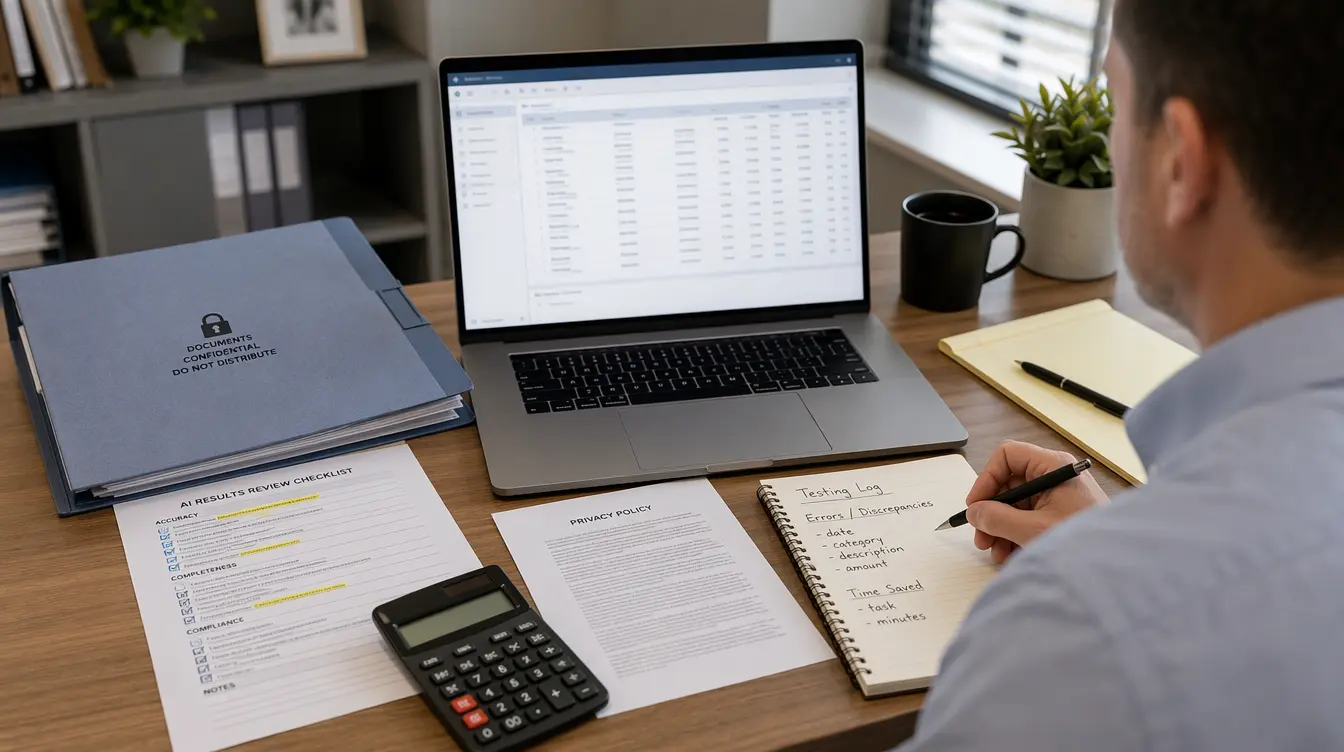
Working well with AI requires more than knowing how to use a new tool. Accountants need core financial knowledge and the ability to assess whether automated output is complete, accurate, and appropriate for the situation.
- Accounting fundamentals: Understand how transactions affect ledgers and financial statements.
- Output verification: Check calculations, sources, assumptions, and missing facts.
- Professional skepticism: Question results that appear incomplete or inconsistent.
- Data literacy: Assess source quality and locate unusual patterns.
- Communication: Explain findings clearly to clients and managers.
- Sector knowledge: Apply financial rules to actual business operations.
- Control awareness: Understand permissions, approvals, audit trails, and separated duties.
- Ethical judgment: Protect records and follow applicable requirements.
These skills help accounting staff decide when a system’s answer is supported and when additional evidence is needed.
Practical Steps to Prepare

Preparation is most effective when it starts with a small, controlled task instead of broad adoption. This gives accounting teams time to check accuracy, set responsibilities, and address data-handling concerns before relying on a tool for important work.
- List repeated tasks that consume the most time.
- Check which approved tools can assist with them.
- Test one limited use case with non-sensitive data.
- Compare the result with original records.
- Record errors, missing facts, and time saved.
- Assign checking and approval responsibilities.
- Review vendor storage and deletion terms.
- Retain evidence showing how important outputs were checked.
- Follow workplace and data-handling policies.
- Reassess the process when the tool changes.
The National Institute of Standards and Technology provides a generative AI risk profile covering reliability, privacy, security, monitoring, and human oversight.
Start with controlled testing rather than immediate dependence. A tool is useful only when its results can be checked, and its risks remain manageable.
The Bottom Line for Accountants
So, will AI replace accountants? Current evidence points to changing responsibilities rather than the end of the profession, although some clerical positions may decline.
Technology can process large volumes of information quickly, but speed does not provide judgment, legal accountability, or client trust.
Accountants who understand the rationale behind each entry can identify unsupported results and explain how financial decisions affect real people or businesses.
Students and practitioners should strengthen verification, communication, controls, and sector knowledge as they learn approved tools.
Start with one routine task this week, test an available feature, compare its output with the source records, and record where your review changes the result.
That exercise can show where technology helps and where human expertise remains necessary.
Frequently Asked Questions
Should Small Firms Purchase New Automation Software?
Small firms should first identify a measurable problem, such as slow invoice coding or overdue reconciliations. A limited trial, clear pricing, dependable support, and compatibility with existing systems matter more than selecting the product with the longest feature list.
Can Clients Refuse Automated Processing?
A client’s options depend on the engagement agreement, privacy notice, applicable law, and type of information processed. Firms should explain material automated uses and offer another method when contracts, professional duties, or data rules require informed consent.
What Should a Vendor Contract Include?
A contract should address data storage, access permissions, retention periods, deletion, security incidents, service availability, output ownership, and responsibility for errors. It should also explain what happens to client information after the firm stops using the product.