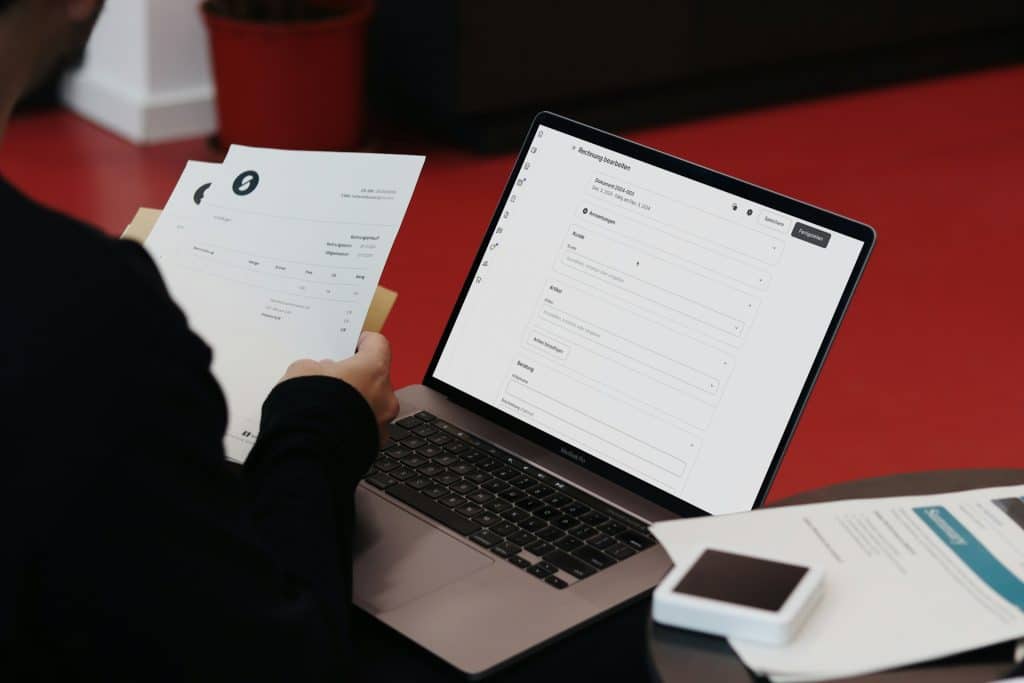
Tire shops are busy and bustling with cars going in and out, just like any other vehicle repair shop.
Flat repairs, rotations, swaps, seasonal rushes. These are some of the commonly sought-after services customers ask for. On busy days, the bays barely cool down. But there’s one part of the operation that often runs at a completely different speed.
Invoicing.
In a lot of tire shops, billing still happens “after.” After the car leaves. After the rush dies down. After someone has time to sit at the desk. That gap between service and payment seems small in the moment, but over time, it quietly squeezes cash flow.
And most shop owners feel it without immediately knowing why.
The shop moves fast, but the paperwork doesn’t
In a tire shop, speed is the product. Customers expect to be in and out. That’s why delays at checkout feel worse here than in other auto businesses.
Manual invoicing usually means:
- Writing things down during the job
- Re-entering details later
- Printing or emailing invoices after the fact
Nothing is technically “wrong” with this. It just doesn’t match how the shop actually runs.
When billing lags behind the work, payment stops being part of the same moment. It becomes something customers deal with later. And later almost always means slower.
The cash flow problem rarely looks dramatic at first
This is what makes manual invoicing tricky. There’s no single moment where everything breaks.
Instead, small delays stack up.
An invoice goes out the next day instead of right away.
A customer forgets they still need to pay.
A follow-up gets missed during a busy week.
Individually, none of these feels like a crisis. But together, they turn completed work into money that shows up late or sometimes needs chasing.
That’s not lost revenue, but it is delayed revenue. And delayed revenue is what makes cash flow feel unpredictable.
Where manual invoicing causes friction behind the scenes
Invoices don’t get created while the job is still fresh
In many shops, invoicing happens in batches. End of day. End of shift. End of the week.
By then:
- The customer is gone
- The urgency is gone
- Details rely on memory instead of context
What should be a clean handoff between service and payment turns into a separate task. And separate tasks get postponed.
Errors creep in because the shop is busy, not careless
Manual invoicing is error-prone, especially during peak hours. Not because staff aren’t paying attention, but because tire shops run on speed.
Common issues show up fast:
- A disposal fee gets missed
- Labor time isn’t recorded correctly
- A price is typed from memory, not the system
When customers question invoices, payment pauses. Even a simple correction adds friction and pushes cash flow out further.
Follow-ups depend on someone remembering
This is a big one.
Manual systems rely on people noticing unpaid invoices and doing something about it. In a busy shop, that rarely happens consistently.
Nobody likes chasing payments. So unpaid invoices sit. Customers assume it’s not urgent. And suddenly last week’s work is still unpaid.
Tire shops feel this more than most auto businesses
Delayed invoicing hurts every service business, but tire shops feel it faster.
Why?
- Lower ticket sizes mean volume matters
- Seasonal rushes create billing backlogs
- Walk-in customers are harder to track later
If five invoices get delayed in a week, that’s annoying. If fifty do, that’s a real cash flow issue.
Margins in tire work don’t leave much room for delays. Money needs to move as fast as the cars do.
Faster invoicing usually fixes cash flow without “doing more”
This is where many shop owners hesitate. They assume improving invoicing means more software, more steps, or more headaches.
In reality, it’s often the opposite.
When invoicing happens at the moment the job is closed, several problems disappear at once:
- Customers pay while the service is still top of mind
- Errors drop because details are fresh
- Follow-ups become automatic, not awkward
That’s why many shops move toward auto repair invoicing software. Not because it’s flashy, but because it removes delays between work done and money collected.
Modern invoicing tools are designed to fit into the flow of a shop day, not interrupt it. Invoices, payments, and reminders happen as part of the same process, instead of being separate tasks someone has to remember later.
Customers actually prefer faster billing
This part surprises some shop owners.
Customers don’t want to think about invoices later. They want clarity and closure. Pay, get the receipt, move on.
When billing is immediate and digital:
- There’s less confusion about charges
- Fewer disputes come up later
- The shop looks more professional
Fast invoicing doesn’t just help cash flow. It makes the experience smoother for everyone involved.
Small changes that make a big difference
You don’t need to rebuild the entire operation to fix invoicing delays. Most improvements come from tightening a few key moments.
Simple changes that work:
- Close the invoice as soon as the job is finished
- Use standardized pricing for common tire services
- Send invoices digitally instead of printing them later
- Offer easy payment options
- Let reminders run automatically instead of manually
None of these slows the shop down. They usually speed it up.
Conclusion
Manual invoicing often feels harmless, but over time it quietly slows tire shop cash flow. When billing takes longer, so does the payment. Investing in invoicing technology bridges the gap between job completion and payment processing so shops get paid sooner, and keep cash moving at the pace the business actually runs.