The Multi-Billion Dollar Gap Between Consumer Expectations and Event Reality
Buyers today exist inside an entirely frictionless bubble. Elite applications spanning digital finance, high-frequency commerce, and ride-sharing have permanently rewired our baseline for cognitive load. On the other side of the aisle, enterprise event registration software frequently forces buyers through an archaic gauntlet of multi-page form fields and sluggish payment gateways. Let’s be real—the math here is brutal.
Traditional event registration forms convert at roughly 35% to 60% of landing page traffic. That massive drop-off highlights a catastrophic systemic failure when you stack it against optimized consumer funnels. Handsets generate roughly 60% of all web traffic, yet they trap a miserable 30% of actual revenue. Industry veterans call this structural nightmare the mobile revenue gap. Demand isn’t the problem here; desktop-era UX colliding with a six-inch screen is what actually kills the transaction.
Death by Data Dump: Why Static Intake Bleeds Margins
Bloated static forms are the primary instigators of these abysmal conversion rates. Organizers greedily demand dietary restrictions, networking preferences, and demographic data all at once before a user even pulls out their credit card. Every single additional input field demonstrably degrades the probability of a sale.
Smart consumer platforms demand the absolute bare minimum upfront—think name, email, and a tokenized Apple Pay ping. Everything else gets harvested days later via quick in-app prompts or post-sale surveys. Organizations that ditch static walls for progressive flows regularly see completion rates rocket from 30% up to 65%.
Conversational intake interfaces push this even further. Artificial intelligence can mask backend complexity behind a natural dialogue, a tactic that routinely lifts qualified completions by 30% to 50% for high-ticket B2B events. Micro-interactions matter immensely during these flows.
Users experience severe cognitive dissonance if a CVV input field is rendered ten characters wide, causing them to pause and question the system’s security.
The Velocity Mandate and the Wallet Bypass

Speed dictates everything after the initial data capture. A load time slipping from four seconds to five triggers immediate abandonment for 53% of mobile buyers. Frankly, platforms relying on manual credit card entry are just hemorrhaging cash. Digital wallets processed half of all global e-commerce volume in 2026, making them an absolute operational necessity.
A simple tap on that Apple Pay button completely bypasses the nightmare of a 3DS challenge. Device-level biometrics combined with network tokens push these payments through a staggering 65% faster than someone awkwardly typing numbers on a glass screen.
You eliminate the physical typing of billing addresses entirely. Merchants who prioritize these streamlined vectors record mobile conversion spikes of up to 58%, alongside a 52% drop in post-capture dispute rates. The raw Card Verification Value and Primary Account Number never reach the merchant’s servers anyway.
Scaling High-Stakes Architecture: The Jackpocket Standard
Payment tokenization solves only half the battle; that localized security means nothing if your entire infrastructure collapses the moment tickets go on sale. Users who download a digital lottery app expect military-grade security combined with instantaneous purchase confirmation, regardless of network congestion.
A platform like Jackpocket managed to map physical assets to digital orders by scaling their servers to absorb a 100x traffic spike during a massive billion-dollar jackpot. Their backend crew leaned heavily on serverless functions and aggressive edge caching to pin load times below 2.5 seconds. That raw performance sustained a rock-solid 6% conversion rate while the internet melted down around them.
The crazy part is they pulled this off while running a unified wallet system across several different properties. Peak-day transaction volumes surged by 38% simply because they ditched manual entry. Engineers also baked in automated instant payouts for any balance under the legal reporting threshold.
That specific architecture pushed out 3.2 million rapid deposits worth nearly $98 million in just twelve months. Event software must mirror this exact elasticity and instant gratification loop to manage sudden ticket drops and immediate refund processing without crashing the servers.
Cryptographic Identity and the Death of the Password
Returning attendees face an entirely different nightmare when trying to retrieve their tickets: the dreaded “forgot password” loop. Silicon Valley killed this exact problem years ago by trashing shared secrets and pivoting hard into FIDO2 passkeys. A ticket purchase now triggers the buyer’s phone to generate a unique public-private key pair in the background. That private key gets entombed inside the hardware security module of the physical device.
The act of pulling up a digital badge later just requires a silent cryptographic ping from the server, which the phone signs locally with a thumbprint or face scan. A phishing attack becomes technically impossible since keys will not sign challenges from spoofed domains. Microsoft telemetry shows passkey sign-ins are three times faster than legacy passwords, yielding a massive 987% increase in adoption where offered.
For exclusive corporate summits requiring high-security background checks, integrating telecom APIs like CAMARA takes this further. A quick check of line tenure directly with mobile operators instantly blocks burner phones and synthetic identities without forcing users through a clunky SMS OTP delay.
Look closer and you realize eKYC digitizes onboarding entirely, verifying government IDs via 2D barcodes and live selfie geometry in seconds to satisfy AML compliance without killing the conversion.
Queueing Theory and the Brutal Reality of the Gate
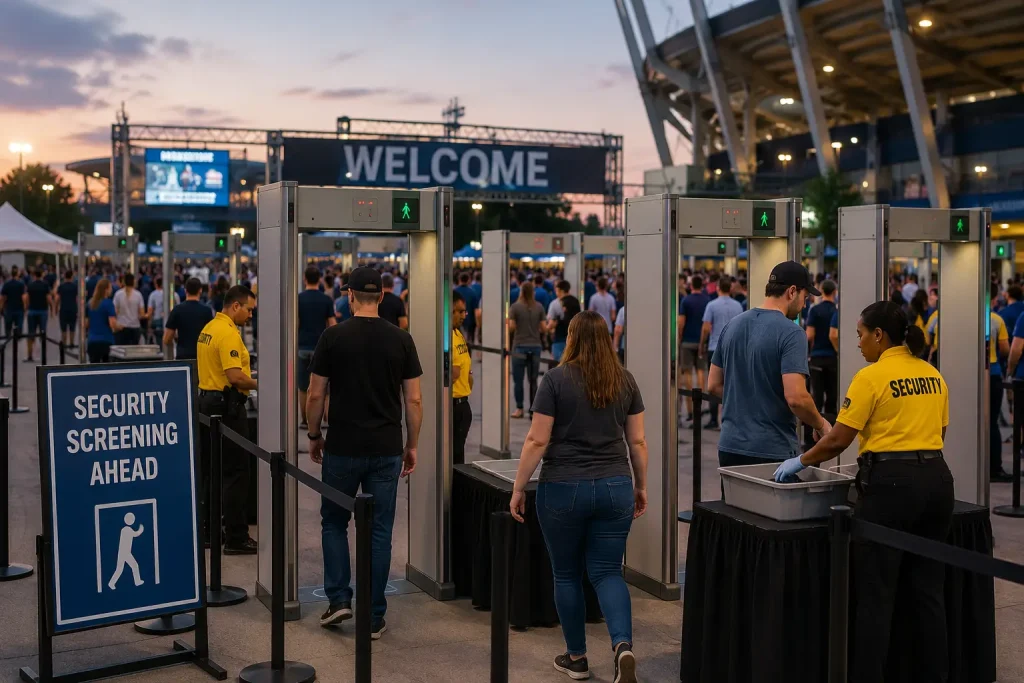
All this seamless digital architecture slams into a brick wall if the physical check-in process fails. Manual desk lookups cost conferences roughly 8 to 12 minutes of cumulative wait time for every 100 attendees. The reality is, if you want to eliminate that angry, snaking line in the lobby, operational planners have to apply A.K. Erlang’s queueing theory models (specifically M/M/1 and M/M/c architectures) to fix the bottleneck.
The math is non-negotiable; if your arrival rate outpaces your service capacity, wait times scale exponentially toward infinity. You cannot fix this physical reality with paper lists or basic tablets.
The only viable escape route is maximizing throughput via dynamic QR codes and self-service kiosks. A well-calibrated kiosk equipped with an on-demand thermal printer shrinks the interaction down to under 20 seconds. This exact setup reliably processes 55 guests every 15 minutes. Bad actors constantly exploit static PDFs by screenshotting barcodes to scalp tickets on secondary markets.
Platforms like Ticketmaster weaponized dynamic digital tickets (SafeTix) to generate fresh barcodes every 15 seconds. Because the visual pattern is constantly changing, photocopies and unauthorized duplicates are rendered completely useless at the scanner.
Escaping the Monolithic Legacy Trap
Behind the scenes, the rollout of PCI DSS 4.0 creates a terrifying liability for platforms that mismanage financial data. The act of storing raw card numbers triggers hundreds of rigorous compliance controls, including strict e-commerce script monitoring to block Magecart attacks.
Smart event platforms utilize network tokenization and hosted iframes to shrink their compliance footprint down to a basic SAQ A level. Raw financial data simply bypasses their systems via a secure proxy.
Yet, the event industry remains largely trapped by monolithic legacy vendors. Software behemoths offer massive feature depth but saddle planners with three-month learning curves, deeply nested menus, and punitive per-registrant pricing structures. Alternatively, basic ticketing marketplaces lack the backend logic required for complex B2B routing.
Sophisticated event marketers are actively ditching these bloated systems for composable, API-first microservices. A composable stack stitching together a headless CRM, a tokenized payment gateway, and a conversational registration engine delivers the exact velocity modern consumers demand.
Any reliance on closed legacy systems isn’t just a technical compromise anymore; it is an active decision to alienate your most profitable attendees before they even reach the venue.