When emergencies hit, every second matters, and quick decisions often determine whether rescue teams find missing people in time.
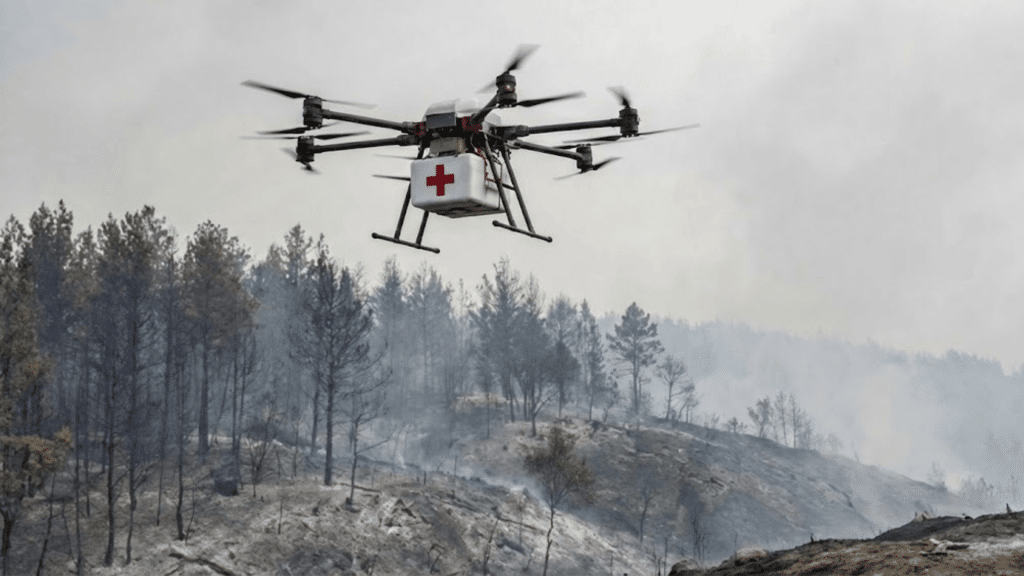
I have seen search-and-rescue drones help teams scan wide areas during floods, fires, and accidents without sending people into dangerous areas.
These drones are built for public safety work and feature specialized features to support emergency response.
I will be telling you how these drones are used, what makes them different, and why agencies rely on them.
But before my recommendations, let’s see what makes these drones unique and the advantages of using them in rescue operations.
You will see how these tools fit into modern public safety and emergency response plans used by teams today & innovations coming for tomorrow.
What Are Search and Rescue Drones?
Search and rescue (SAR) drones are unmanned aircraft built for emergency response, helping first responders find and assist people during disasters and serious accidents.
These systems differ from consumer drones because they focus on endurance, long missions, and safe operation in harsh weather and hazardous environments.
Most SAR drones carry thermal cameras, zoom sensors, and real-time video links that send clear data back to command teams.
They also use precise GPS, obstacle avoidance, and automated flight tools so crews can search complex areas without adding danger.
Compared to ground teams or helicopters, these drones can scan wide areas faster, cost less to operate, and reduce risk to responders.
As battery life and onboard software improve, SAR drones have become core public safety tools rather than hobby flying devices.
How Search and Rescue Drones Are Used in Emergencies?
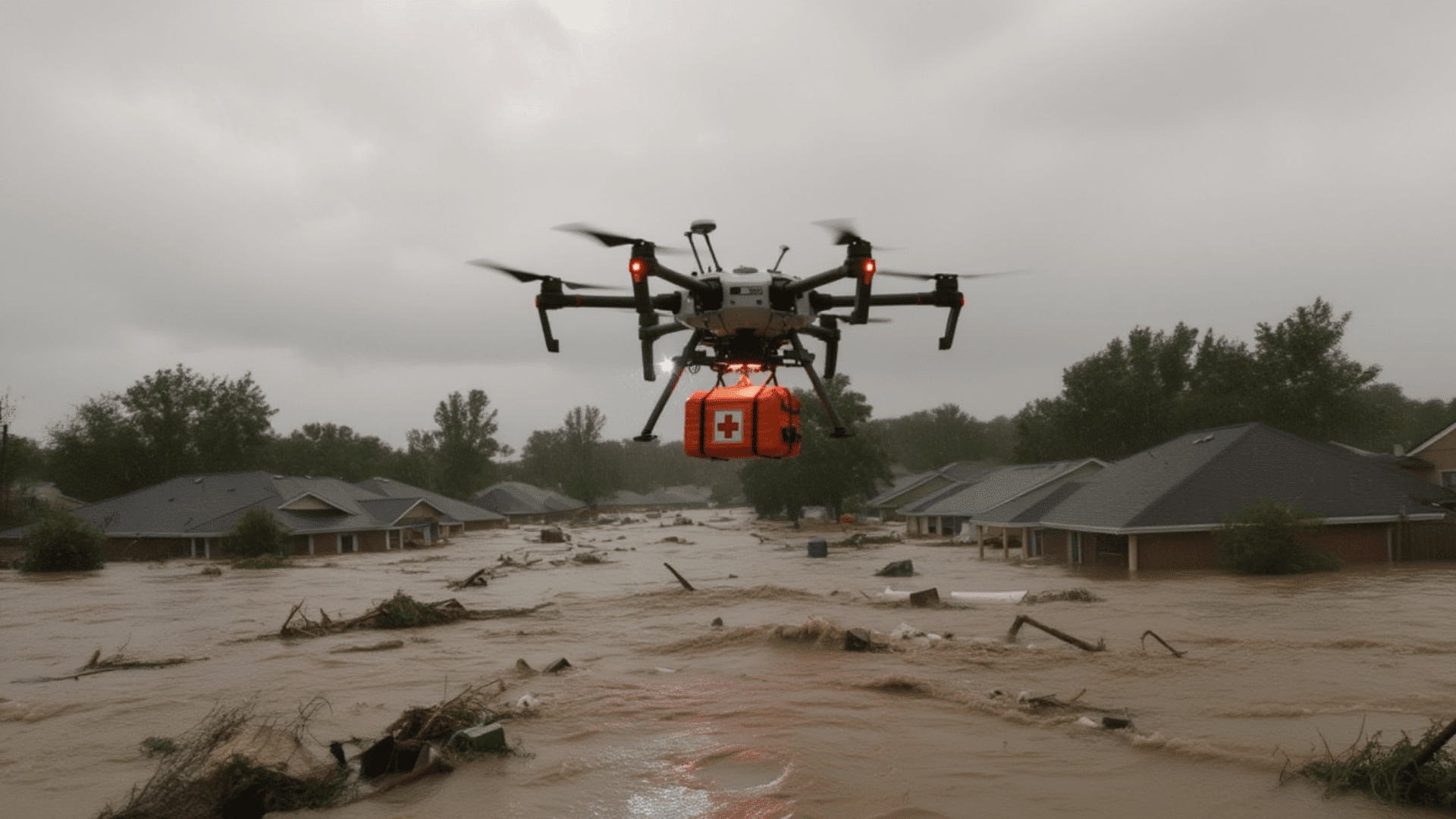
During emergencies, SAR drones give teams fast eyes in the sky, helping leaders understand damage, risks, and survivor locations quickly.
- They search large areas like forests or cities, using thermal cameras to spot body heat at night or through smoke.
- Live video feeds reach command centers instantly, allowing teams to plan routes, send help, and avoid unsafe zones during active incidents.
- In floods or mountains, drones drop supplies like radios or medical kits when vehicles or helicopters cannot reach victims safely.
- They also scout dangers such as fires, weak structures, or spills, helping crews stay clear before entering risky scene areas.
By speeding searches and lowering danger, SAR drones help responders act faster, smarter, and calmer when lives depend on time.
Top Search and Rescue Drones for Public Safety
Here are some of the top-rated search and rescue drones that public safety teams rely on for stable flight, strong sensors, and dependable emergency performance.
1. DJI Matrice 30 Series
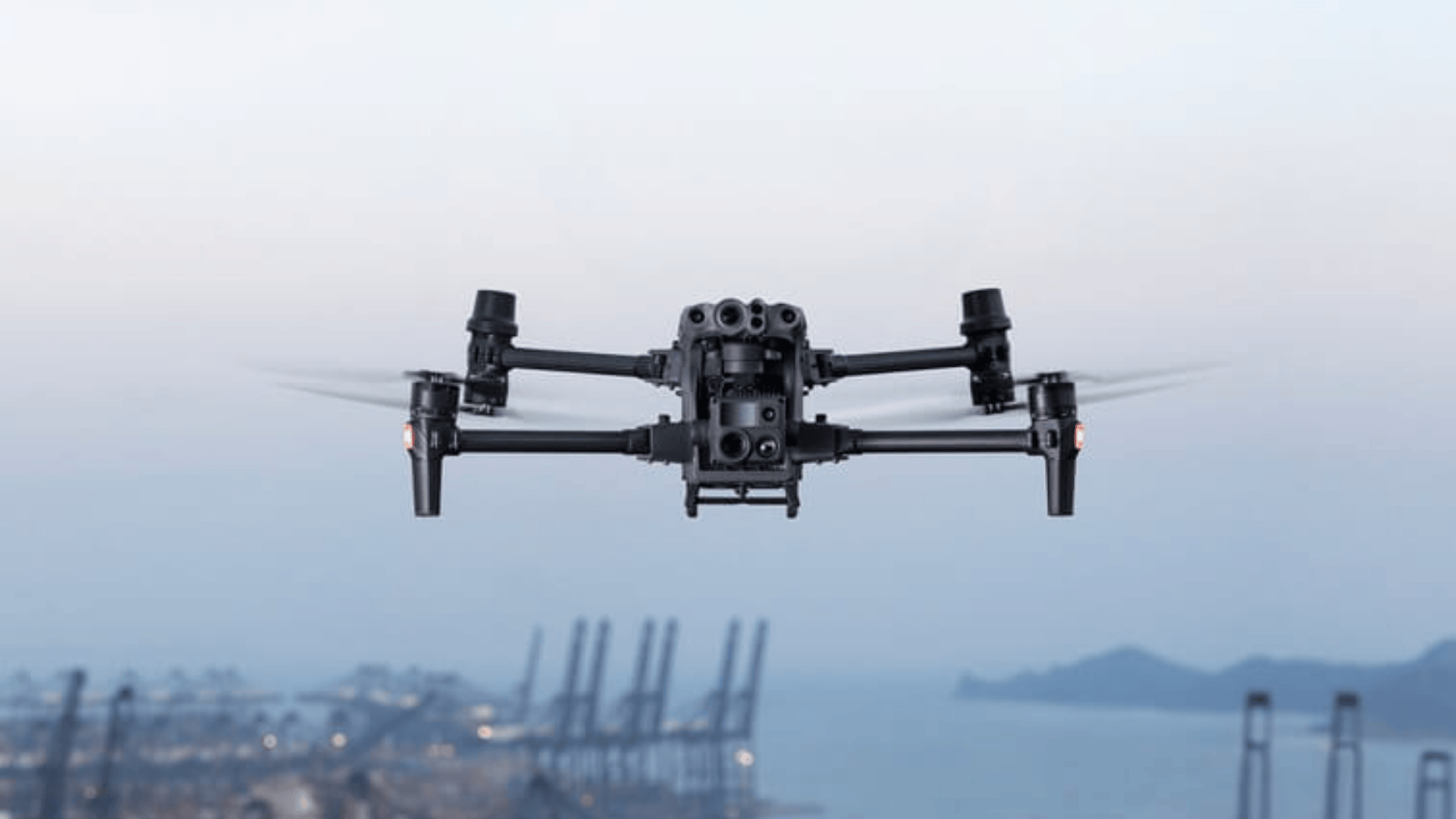
Price: $10,500
The DJI Matrice 30 Series is widely used by public safety agencies that need a compact but durable drone for emergency response work.
Its design supports rapid deployment, making it suitable for time-sensitive search operations in urban and remote environments.
Many rescue teams rely on it for coordinated missions where stable communication, secure data handling, and fast setup matter more than portability alone.
Key Features of DJI Matrice 30 Series:
- Laser rangefinder for accurate distance measurement and precise location tagging during search operations.
- IP55-rated airframe built to operate in rain, wind, dust, and temperature-heavy environments.
- LTE transmission backup support to maintain control and video links in complex terrain.
2. Autel EVO II Dual 640T
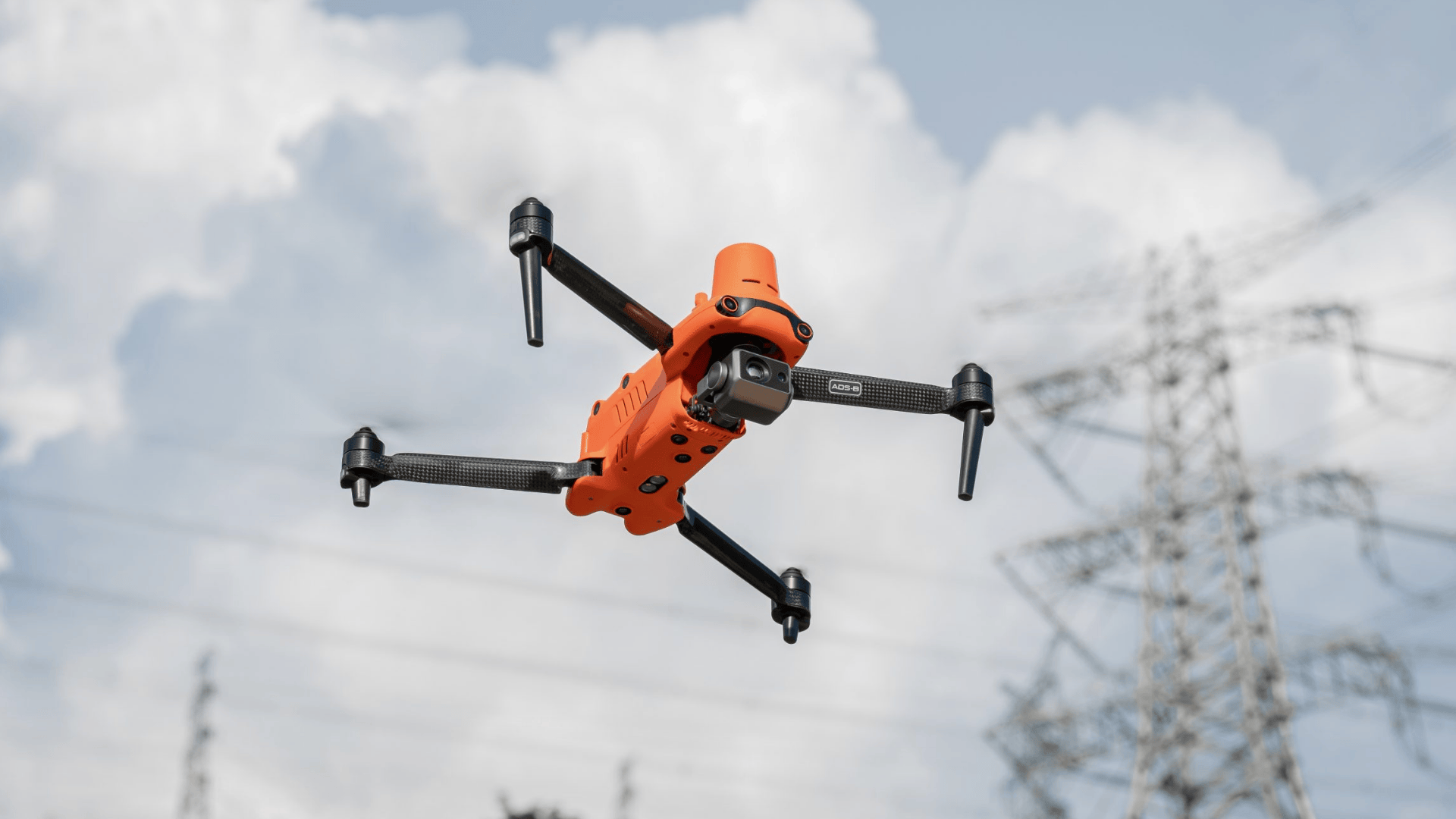
Price: $4,799
The Autel EVO II Dual 640T is used by public safety teams that need thermal search capability in a compact and easily transportable drone.
It fits well into rapid response workflows where teams must launch quickly and gather aerial data without complex setup.
The drone is commonly used for short to mid-range search missions, perimeter checks, and early scene reviews where speed and thermal visibility are required.
Key Features of Autel EVO II Dual 640T:
- Dual thermal and visual camera system with radiometric temperature measurement support.
- 360-degree obstacle avoidance using multiple sensor groups for safer flight.
- Long transmission range supporting extended search coverage in open environments.
3. Parrot Anafi USA
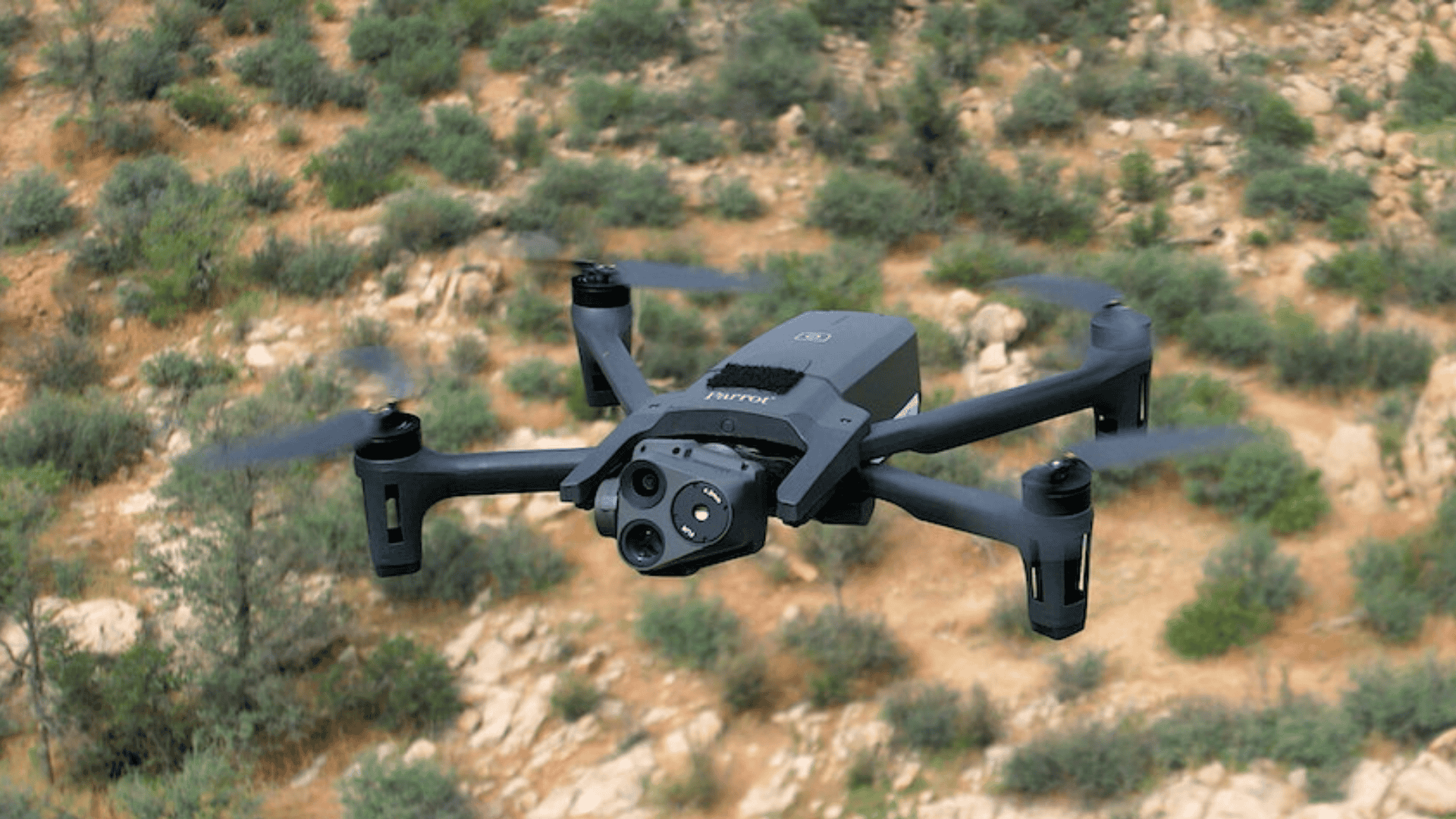
Price: $7,000
The Parrot Anafi USA is built for government and public safety agencies that require secure data handling and rapid field deployment.
Its lightweight frame makes it easy for responders to carry, launch, and recover during active operations without extra transport support.
The drone is commonly used for perimeter checks, damage reviews, and early scene assessments where quiet operation, data control, and fast setup are required.
Key Features of Parrot Anafi USA:
- FLIR thermal imaging system paired with a high-zoom electro-optical camera.
- NDAA and TAA compliance supporting government and federal agency use.
- Advanced data encryption with zero automatic data sharing by default.
4. Skydio X10
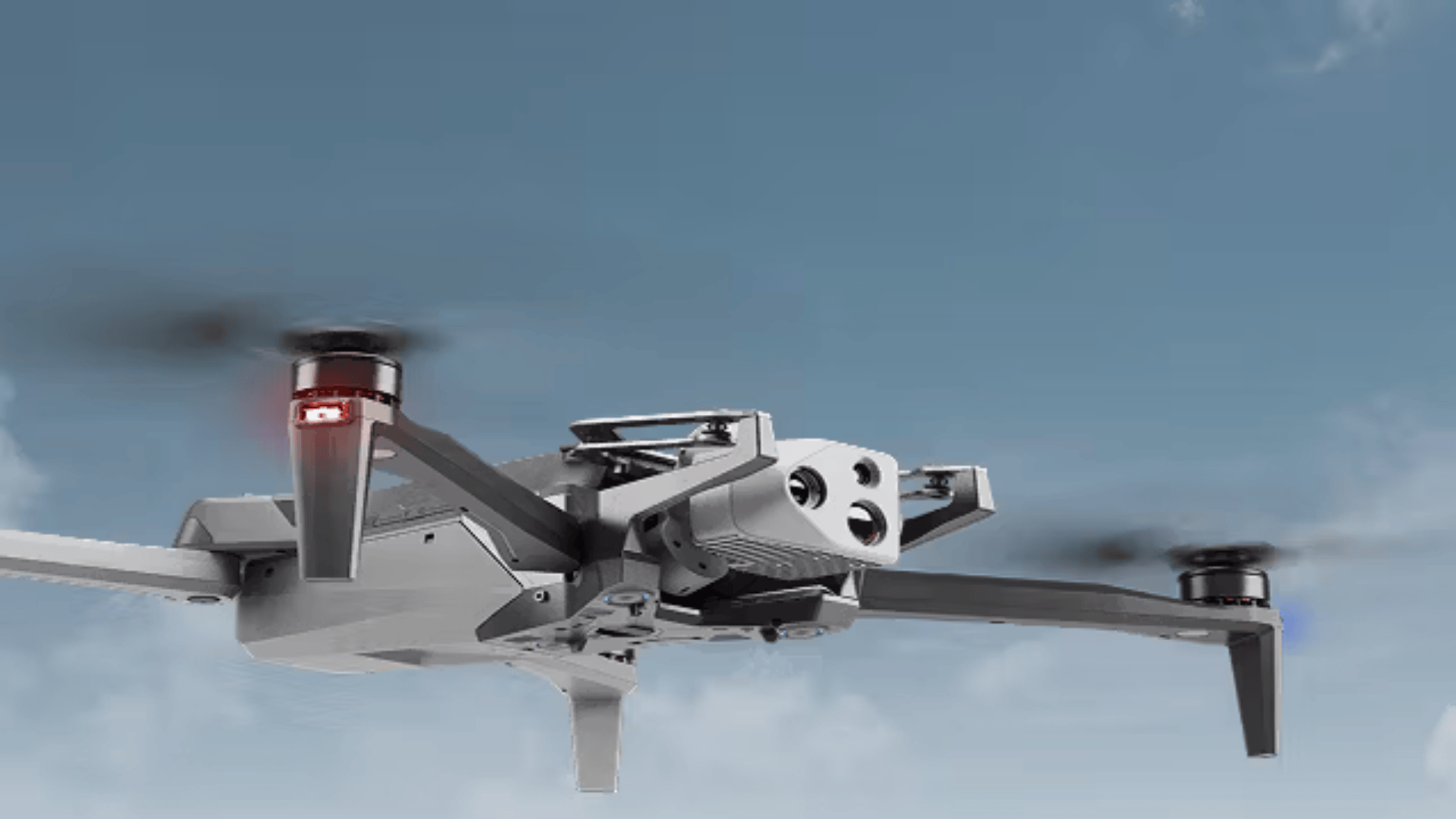
Price: Custom, starting around $15,000–$25,000
The Skydio X10 is used by public safety teams that operate in dense, cluttered, or indoor environments where manual flying is difficult.
It is commonly deployed for search operations in cities, industrial sites, and enclosed spaces where obstacles are constant.
Agencies rely on it to maintain stable flight and visual coverage during stressful situations, especially when the pilot’s attention must stay focused on decision-making.
Key Features of Skydio X10:
- Advanced autonomous movement control powered by onboard AI processing.
- High-sensitivity radiometric thermal camera for night and low-visibility searches.
- Support for remote and browser-based operations beyond local controller use.
5. Autel EVO Max 4T V2
Price: $7,999
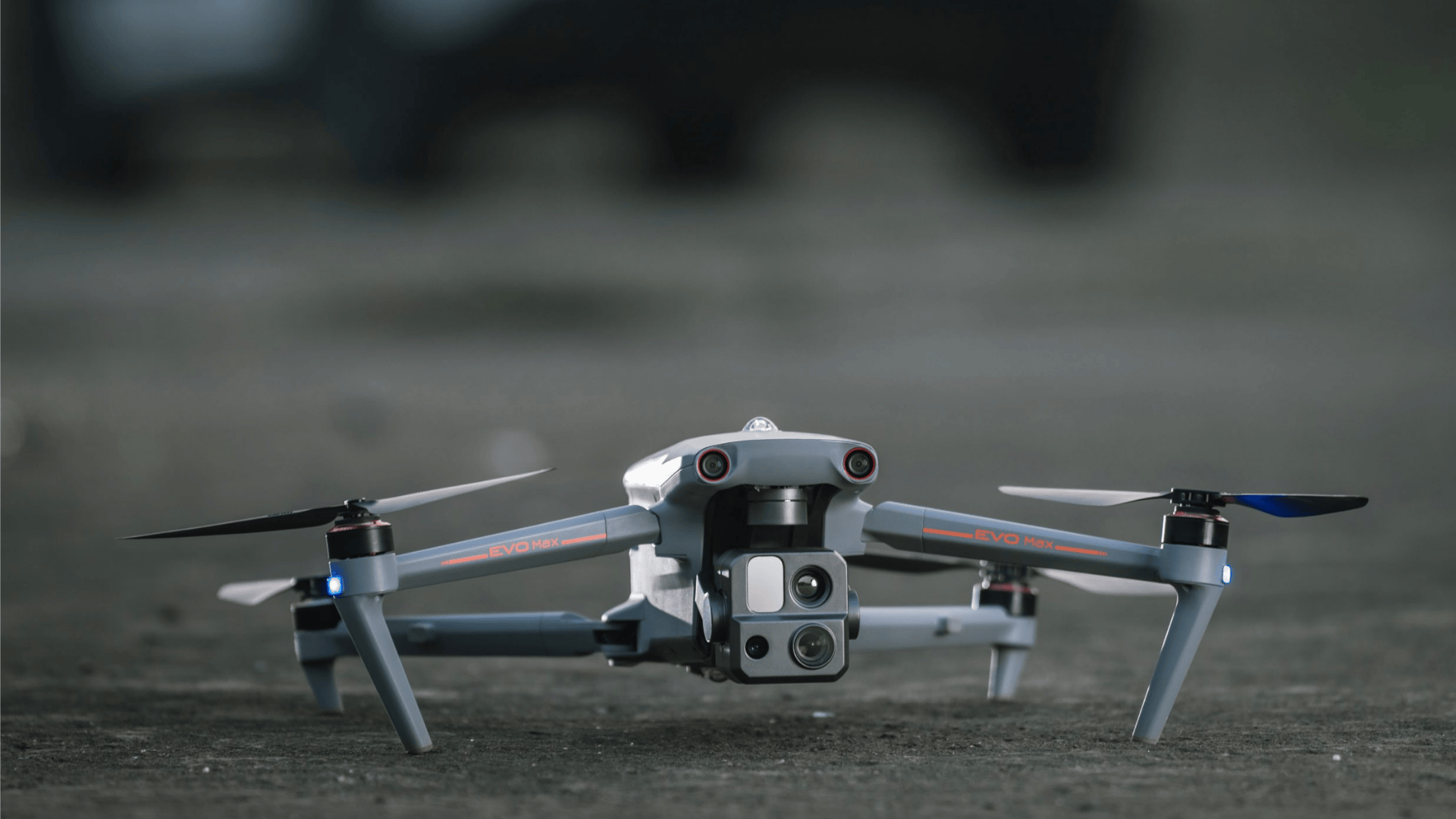
The Autel EVO Max 4T V2 is built for agencies that require strong autonomy and thermal detection without relying fully on a satellite path.
It is commonly used in search missions involving forests, mountains, and built-up structures where signal conditions vary.
Public safety teams value it for its ability to maintain stable flight while identifying people, vehicles, and heat sources from a distance.
Key Features of Autel EVO Max 4T V2:
- Autonomous flight system designed to operate in GNSS-limited environments.
- Integrated thermal camerawith laser rangefinder for accurate target positioning.
- Secure multi-band transmission system with encryption for sensitive operations.
Key Features to Look for in a Search and Rescue Drone
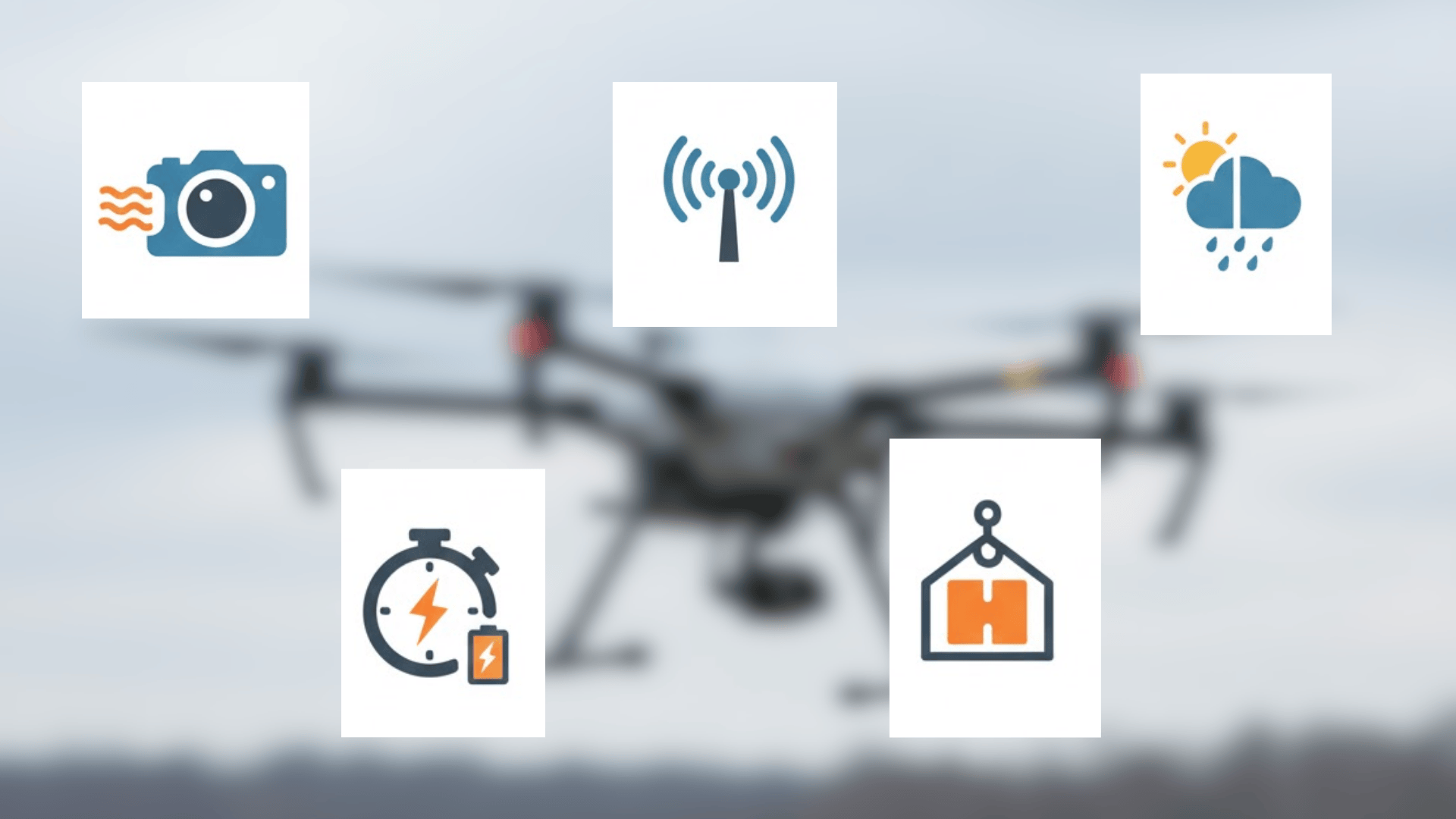
When choosing a SAR drone, focus on features that help responders work faster, stay safe, and avoid mistakes during high-pressure emergency scenes.
- Thermal and zoom cameras help spot people through darkness, smoke, trees, or debris, making them very useful during night searches.
- Long flight time with quick battery swaps allows teams to keep searching without constant stops, which is important in large or remote areas.
- Strong signal range and real-time video links keep crews connected, so decisions come from live visuals instead of delayed or unclear information.
- Obstacle avoidance sensors help drones fly safely around buildings, trees, wires, and rough terrain without crashing during complex missions.
- Weather resistance lets drones operate in wind, light rain, or dust, which often shows up during storms, floods, and wildfire responses.
- Payload support allows carrying lights, speakers, or supply droppers, helping teams communicate or assist victims before ground crews arrive.
When these features work together, a SAR drone becomes a dependable tool that supports teams instead of creating extra problems during emergencies.
Pros and Cons of Using Drones in SAR Operations
Search and rescue drones play a major role in modern emergency response by improving speed, visibility, and overall coordination during complex rescue situations, but they also come with some limits.
| Pros | Cons |
|---|---|
| Covers large areas fast and reduces search time | Limited battery life affects long missions |
| Keeps responders away from dangerous locations | Signal or system failures can ground drones |
| Costs less to operate than helicopters over time | High upfront cost for equipment and training |
| Provides clear real-time thermal and visual data | Weather can reduce flight stability and image quality |
| Supports scouting, delivery, and communication tasks | Flight rules can delay use in some areas |
| Multiple drones can work together on large scenes | Privacy concerns may create legal challenges |
When used with training and planning, the benefits often outweigh the downsides during real emergency situations.
Accessories and Add-Ons for Search and Rescue Drones
The right accessories help SAR drones stay useful across different rescue scenes, allowing teams to adjust fast without delaying missions.
- Extra batteries and multi-port chargers support longer searches by allowing quick swaps instead of stopping flights to recharge.
- Loudspeakers and strong LED lights help teams talk to victims and guide them safely, especially during night or low-visibility conditions.
- Payload drop kits and winch systems allow delivery of medical kits, radios, or flotation gear when ground access is slow or unsafe.
- High-gain antennas and signal boosters improve control range, keeping video and commands stable in forests, hills, or dense urban areas.
- Protective cases and propeller guards reduce damage during transport and rough landings, helping drones stay ready between missions.
- Software add-ons like motion or heat detection tools assist pilots by flagging possible survivor signs during long and tiring search operations.
With these add-ons ready, SAR drones stay flexible and dependable during different emergency situations.
Regulations and Legal Considerations for SAR Drone Operations
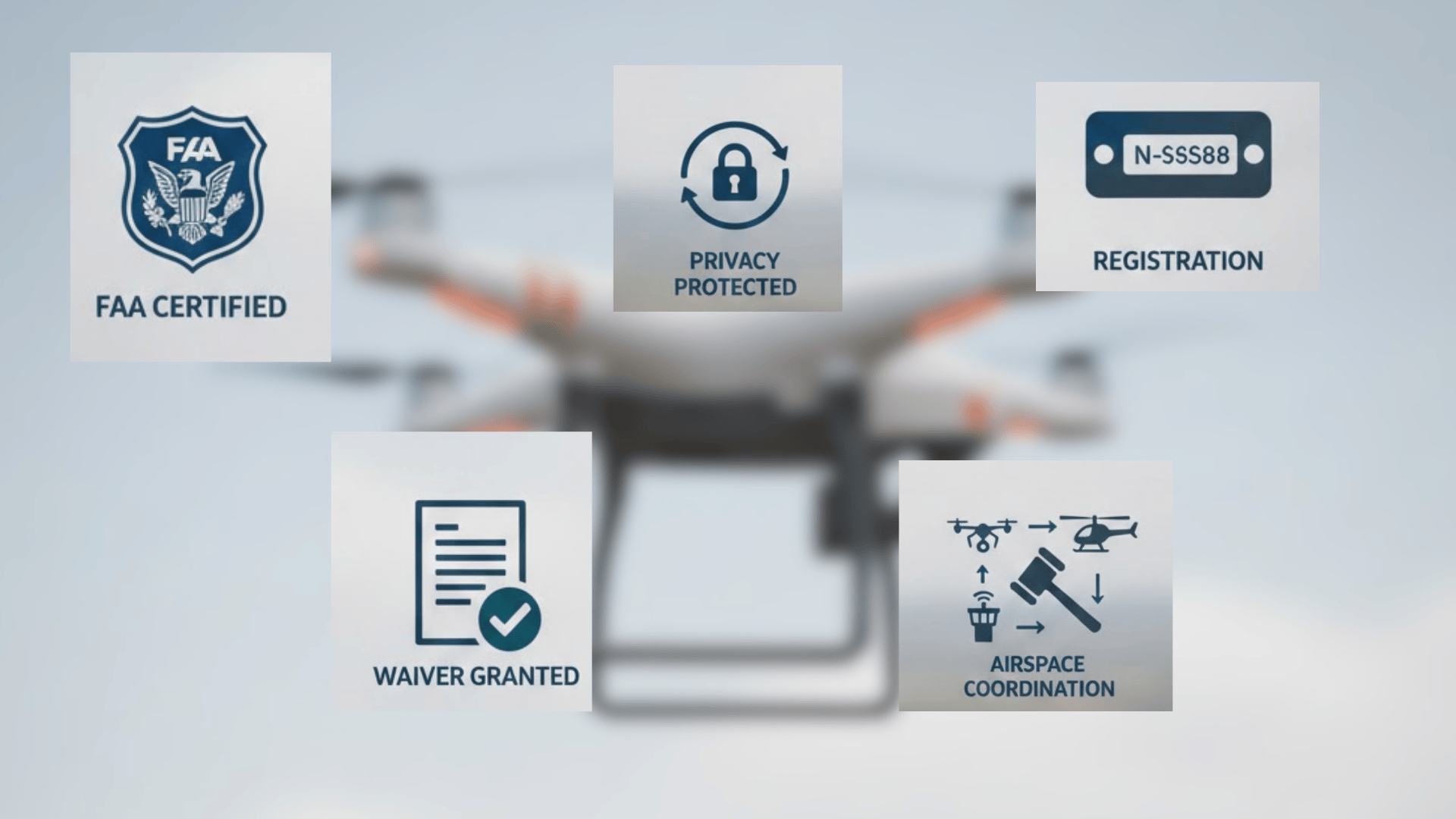
Search and rescue drone operations in the United States are regulated mainly by the Federal Aviation Administration (FAA) to ensure safe and lawful use.
Most public safety drone flights follow Part 107 rules unless emergency exemptions apply during life-threatening situations.
- Remote pilots must hold FAA certification and operate registered drones under 400 feet with visual line-of-sight limits.
- Flights over people, at night, or beyond visual range require FAA waivers or a Certificate of Authorization.
- Drones over 0.55 pounds must be registered, and accidents causing injury or major damage must be reported within 10 days.
- Privacy rules require limited data collection, secure storage of footage, and compliance with state surveillance laws.
- Coordination with manned aircraft is required during active disaster response operations.
Following these rules helps agencies deploy SAR drones without delays, penalties, or operational conflicts.
Future Trends and Emerging Technologies in SAR Drones
Search and rescue drones are advancing through improved automation, onboard processing, and sensor accuracy that reduce reliance on constant pilot input.
New onboard computing systems now process thermal and visual datadirectly during flight, allowing faster identification of possible survivors in complex environments.
Multi-drone coordination is becoming more common, with connected drones sharing data to cover larger areas without needing separate control teams.
These systems improve search efficiency by maintaining coverage even if one drone loses signal or must return early.
Battery development is also improving, with longer flight times and hybrid charging options supporting extended missions in remote locations.
Additional sensors like multi-spectral imaging and structure mapping tools are expanding drone use beyond visual searches into damage assessment and hazard detection.
Conclusion
SAR drones have become a real part of emergency response, helping teams act faster while reducing risk during dangerous situations.
I believe their value goes beyond tools, since they support better decisions, clearer visibility, and safer planning when lives depend on quick action.
You can see how public safety agencies now rely on these drones to support searches, assess damage, and guide crews without delay.
As technology continues to improve, training, planning, and responsible use will matter just as much as hardware during rescue operations.
With the right approach, SAR drones can continue supporting teams and communities during critical moments that demand speed and care.
Do you think search and rescue drones should be standard tools for every response team, or should their use remain limited? Tell us, share with us in the comments below.