You can read specs all day, but real answers come after months of carrying a camera everywhere you go.
In this Fujifilm X100VI review, I share how it performs in everyday use, from quick street shots to travel photography.
I’ll be telling you about real-world image quality, autofocus performance, low-light results, battery life, and whether this compact camera is worth your money.
If you are considering buying the Fujifilm X100VI or upgrading from the X100V, you deserve clear, simple answers before deciding.
But before we get into the details, let us start with what actually makes this camera different in everyday use and why so many photographers are talking about it.
About Fujifilm X100VI
The Fujifilm X100VI is a compact, fixed-lens camera built for everyday photography, especially for street and travel photography.
A leaf shutter supports quiet shooting and can help with flash at faster shutter speeds. It suits candid scenes and daylight portraits.
In-body image stabilization is a key upgrade, improving handheld results in low light and adding steadiness for quick video clips.
The signature hybrid viewfinder offers both optical and electronic viewing, allowing a classic rangefinder-style feel or a modern EVF preview.
Its appeal centers on portability, color science, and a streamlined shooting experience.
Key Features of Fujifilm X100VI
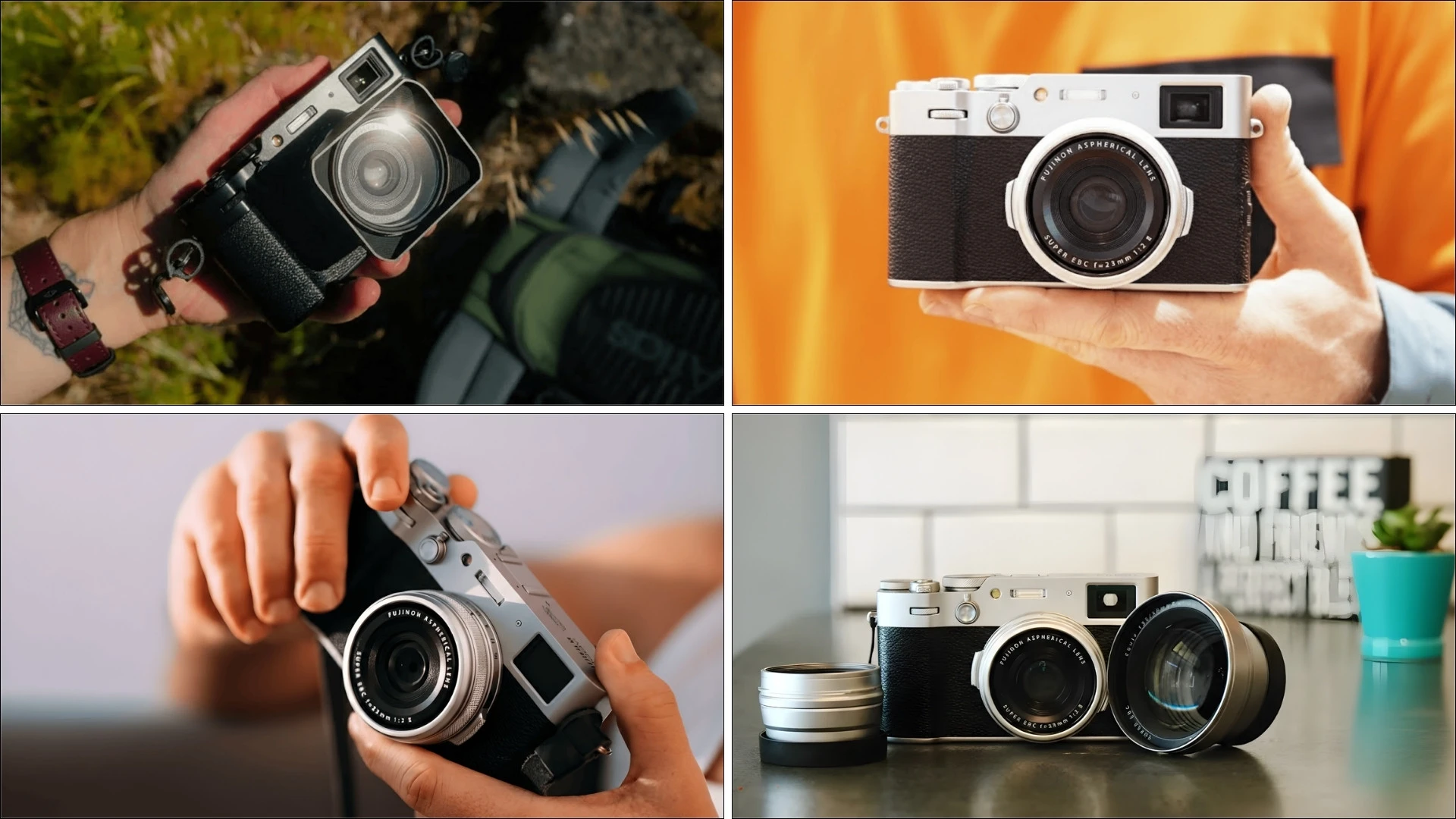
A practical look at how the camera performs across image quality, low light, autofocus, handling, and workflow in this Fujifilm X100VI review.
1. Image Quality in Real Scenes
Photos look crisp and detailed, with plenty of room to crop when framing isn’t perfect. Highlights and shadows hold up well in mixed lighting, making street scenes and travel shots easier to manage.
The fixed 23mm f/2 lens keeps output predictable across sessions, which helps maintain a consistent style.
For portraits, subject separation can look good at closer distances, while wider scenes stay clean and sharp.
2. Low-Light Results and Stabilization
Handheld shooting improves noticeably in dim streets, indoor rooms, and evening events, thanks to stabilization that keeps images steadier at slower shutter speeds.
This advantage matters most for everyday photography, where tripods aren’t practical.
Noise stays controlled at moderate ISO levels, and detail remains strong when exposure is kept in check.
Motion is still motion; moving subjects can blur, so shutter speed choices remain important. Overall, low-light confidence feels higher for casual handheld work.
3. Autofocus Speed and Keeper Rate
Autofocus performs well for daily subjects such as people, pets, and street moments, especially with a sensible focus area size and face/eye detection when needed.
Single AF tends to feel dependable, while continuous tracking can be more hit-or-miss in busy scenes. Low-light focus is generally capable, though contrasty targets help results stay consistent.
The best outcomes often come from keeping settings simple and avoiding overly complex tracking expectations.
4. Handling, Controls, and Responsiveness
The camera feels designed for quick shooting, with direct controls that make exposure changes fast without digging through menus.
The compact body encourages frequent carry, which increases real-world use and helps build familiarity over time.
The hybrid viewfinder adds flexibility: the electronic viewfinder supports accurate framing and exposure preview. Startup and general responsiveness feel suitable for candid photography, where timing matters.
5. JPEG Workflow, Film Sims, and Consistency
Straight-out-of-camera JPEGs are a major strength, offering pleasing color and contrast with minimal effort.
Film simulations and recipes make it easy to match a mood to a scene, keeping output consistent across travel, street, and family photos.
In a Fujifilm X100VI review, this matters because time spent editing can drop sharply when settings are dialed in.
RAW remains useful for difficult lighting or heavy adjustments, but many shoots can stay JPEG-first.
Best Uses for Different Photography Styles
The X100VI suits photographers who prefer a simple, carry-anywhere camera that handles everyday scenes with ease.
- Street Photography: Compact build and quiet shooting help capture candid moments smoothly.
- Travel Photography: Lightweight setup with high-resolution files for flexible cropping and quick sharing.
- Everyday & Family Photos: Fast handling and pleasing JPEGs support spontaneous, natural shots.
- Portraits: Strong for environmental portraits and close-range subjects; less ideal for tight headshots.
- Low-Light Scenes: Stabilization improves handheld shots indoors and at night, with sensible shutter-speed choices.
Best for a consistent, carry-light setup; zoom and fast action needs may suit another option beyond this Fujifilm X100VI review.
Long-Term Feedback of Fujifilm X100VI
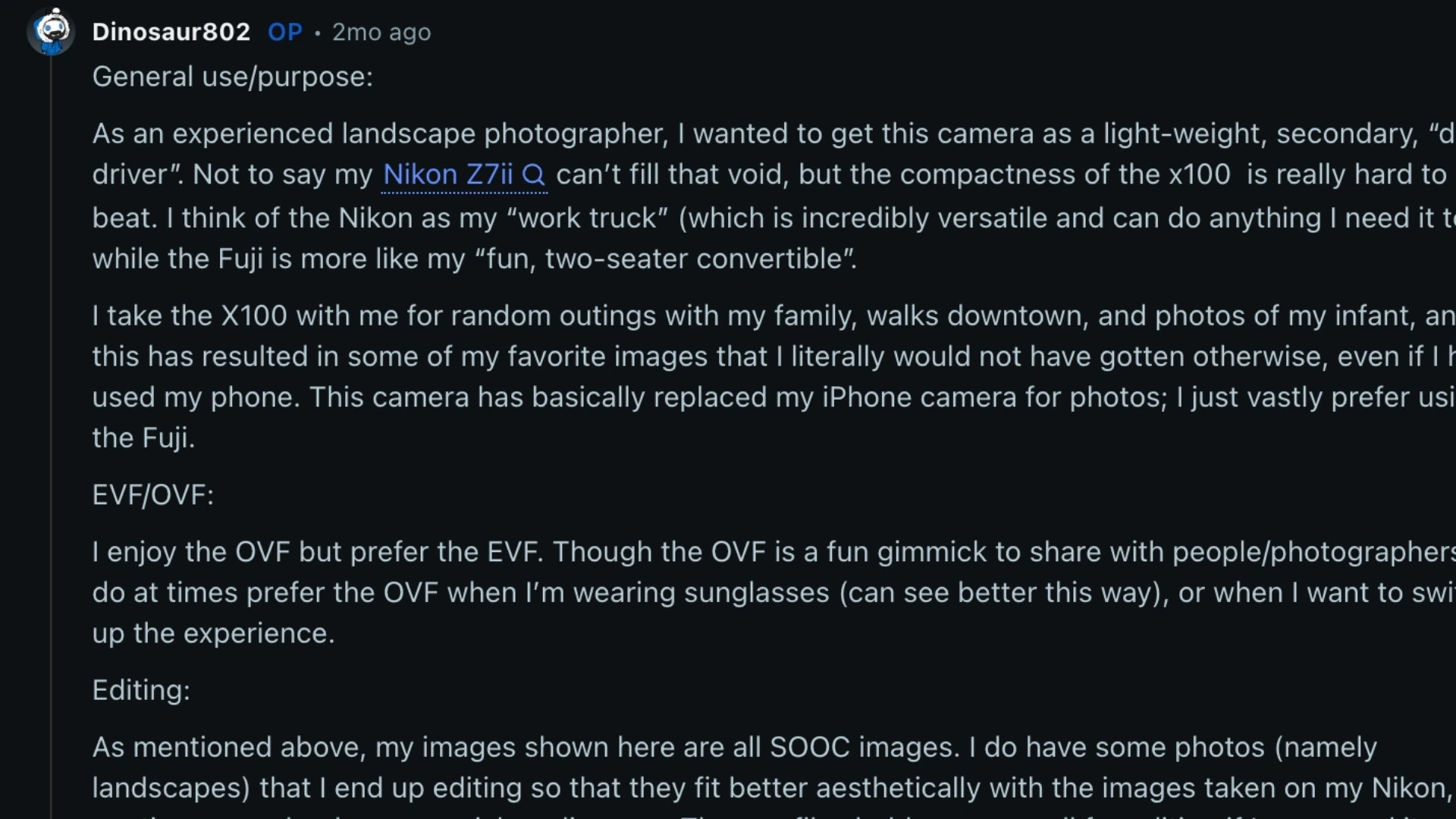
On online communities like Reddit, users often show long-term impressions that highlight how the X100VI fits into real life, not just a checklist of features.
As a lightweight “daily driver,” it tends to get picked for family outings, city walks, and quick moments that might otherwise be missed, largely because carrying it feels effortless.
Straight-out-of-camera JPEGs get consistent praise, with film recipes making it easy to switch looks without spending time editing later.
The hybrid viewfinder experience also stands out, though the electronic viewfinder is commonly preferred for accuracy and ease.
While the optical option stays a fun change of pace in certain situations, like bright daylight. Built-in ND gets described as handy for occasional creative shots.
Add-on converters can expand flexibility: the wide converter suits landscapes, and the tele converter helps isolate subjects with nicer background blur.
Autofocus can feel inconsistent unless focus area or eye detection settings are tuned.
Pros and Cons of The Fujifilm X100 Vi
A simple, compact camera, the Fujifilm X100VI review highlights its portability and powerful performance, but not without its limitations.
| Pros | Cons |
|---|---|
| Compact and easy to carry | No zoom flexibility |
| In-body stabilization improves low-light | Autofocus can be inconsistent |
| Great JPEG quality out of the camera | Not ideal for fast action shots |
| The hybrid viewfinder offers versatility | Fixed lens limits framing options |
| Well-built and durable | Less suited for tight portraits |
Is the Fujifilm X100VI Worth It?
Value depends on shooting style and how often the camera will be carried.
For street, travel, and everyday photography, the fixed 23mm f/2 lens keeps things simple and encourages consistent framing.
While the high-resolution sensor adds helpful cropping room. Strong JPEG output and film simulations reduce time spent editing, making quick sharing easier.
IBIS improves handheld performance in dim interiors and evening scenes, supporting real-life shooting without a tripod.
The main trade-off is flexibility: no zoom, limited subject compression for tight portraits, and less confidence for fast action compared with interchangeable-lens options.
For photographers who want one premium compact that stays in regular use, portability and simplicity can outweigh the limits.
Conclusion
The Fujifilm X100VI review tells us that this camera feels less like a tool for chasing specs and fits more into daily life.
I noticed that when a camera is small and simple, I carry it more, and you likely will too.
The fixed lens keeps choices clear, while image quality stays strong enough for prints, crops, and serious work.
It may not replace every system, but it builds steady habits and sharper framing over time. For street and travel photography, that consistency matters more than flashy features.
If you are deciding whether this camera matches your style, think about how you shoot most days, not rare moments.
What kind of scenes do you shoot most with a compact camera: street, travel, portraits, or daily life? Tell us, share with us in the comments below.