I remember the panic of figuring out if my kid could handle standing at a live show.
It sounds fun until you think about the noise, the crowd, and those marathon sets that seem never to end. So, can a 12-year-old stand at a concert? The short answer is yes.
But it depends on the venue, the crowd, and how well you plan. Most concerts expect the audience to stand for long stretches, and that gets tough for younger fans quickly.
This blog breaks down everything from picking the right seats to protecting hearing, staying safe in a packed crowd, and what other parents actually experienced on concert night.
Standing at a Concert Is Different for Kids
Attending a concert with a 12-year-old requires consideration of their stamina and height, as they tire faster and may struggle to see.
Concerts typically last 1.5 to 2.5 hours for the headliner, with total events running 3 to 4 hours.
Choose comfortable footwear, like boots or sneakers, and consider arriving after the opening act if the headliner is the main focus.
Bringing a lightweight crossbody bag with water and snacks, and selecting an aisle seat can enhance the experience and make restroom access easier.
Knowing how long concerts last helps families plan around energy levels and bedtime.
Best Venue and Ticket Types for Young Concertgoers
Not all concert settings work the same for a 12-year-old who plans to stand at a concert. The venue type and ticket category play a huge role in how the night goes for younger attendees.
1. Assigned Seating vs General Admission
| Factor | Assigned Seating | General Admission (GA) |
|---|---|---|
| Spot | Guaranteed reserved seat | No reserved spot; first-come, first-served |
| View | Clear sightline to the stage | Shorter fans are often stuck behind taller adults |
| Crowd pressure | Low; personal space maintained | High; tightly packed standing-room-only floor |
| Comfort | Option to sit during slow moments | Standing the entire show with no breaks |
| Best for a 12-year-old? | Yes, mid to lower-level seats are ideal for a first concert | Not recommended for younger or shorter fans |
2. Outdoor Amphitheaters and Arenas
Amphitheaters and large arenas rank as the safest options for younger attendees.
Stadium seating, trained security staff, and clearly marked exits make these venues ideal for families. Many amphitheaters also enforce noise curfews around 10 or 11 PM.
Smaller clubs and bars often carry age restrictions of 18+ or 21+ and feature tight, standing-room-only layouts.
A 12-year-old standing at a concert in a packed club faces far more crowd pressure than at a spacious arena.
3. Check the Venue Policy Before Buying Tickets
Every venue has its own age policy, and it changes from show to show.
Always check the event listing on Ticketmaster, Live Nation, or the venue’s own website before buying anything. Some shows labeled “all ages” still have rules requiring minors to be accompanied by an adult.
A quick phone call to the box office can clear up any confusion and save a wasted trip.
Hearing Protection and Crowd Safety
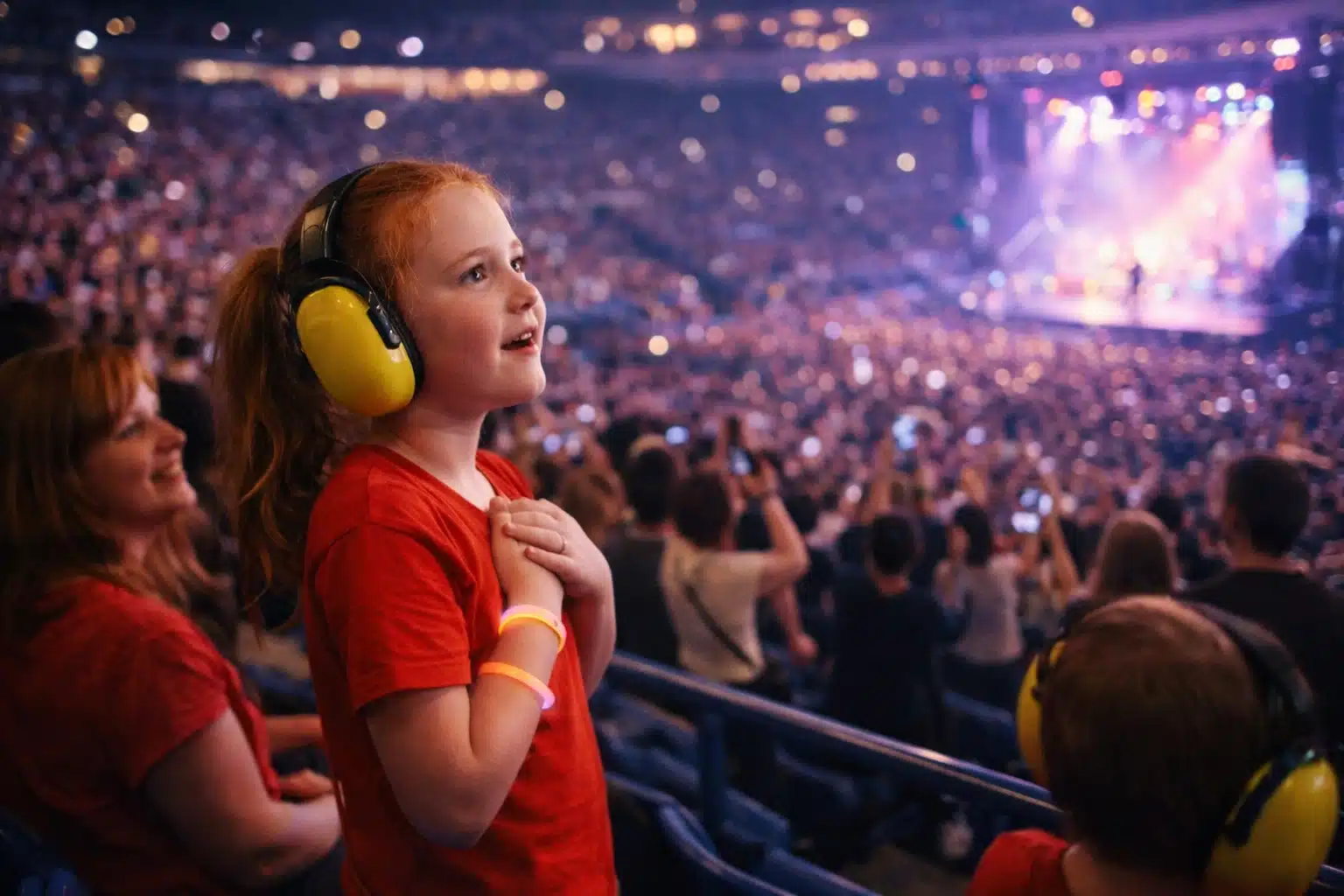
Live concerts can reach 90-120 decibels. The NIDCD states that sounds at or above 85 dB may cause hearing loss, putting a 12-year-old at a concert without ear protection at risk of permanent damage.
- Preparation for Safety: Before leaving, pack earplugs or earmuffs for hearing protection, charge phones for live location sharing, and set a meeting point in case anyone gets separated during the event.
- Venue Awareness: Upon entering the venue, locate security staff for assistance and familiarize yourself with the exits to ensure you and your family are prepared for any emergencies.
Preparation keeps the focus on the music rather than on the risks.
Quick Tips to Prepare a 12-Year-Old for Standing
Getting a young fan ready for their first standing concert takes just a few simple steps. A little preparation goes a long way toward a smooth night.
- Talk about the crowd beforehand: Let the kid know it will be loud and packed, and that people may bump into them accidentally.
- Dress smart: Layers work best because venues swing between hot and cold as the night goes on. Prioritize comfort and age-appropriate concert outfits that allow free movement and keep feet protected.
- Eat a full meal before arriving: Venue food is overpriced, and lines run long.
- Set behavior expectations early: Agree on rules about staying together and spending money at the merch table before entering.
- Leave before the encore: The final song or 2 are not worth the crushing crowd with a tired kid in tow.
After the First Concert: What Comes Next
A successful first show often sparks a love for live music that grows fast.
Once a 12-year-old can stand at a concert with a parent, the next milestones come naturally with age. By 14 or 15, many teens feel ready for larger festivals with multi-stage setups and longer hours.
Around 16, most US venues allow teens to attend shows without a parent, though policies vary by city and event.
The progression from a seated arena show to a full GA floor experience happens gradually as confidence, stamina, and crowd awareness build over the years.
Starting with a safe, well-planned first concert gives kids the foundation to enjoy live music responsibly as they grow older.
Conclusion
So, can a 12-year-old stand at a concert? Absolutely.
It takes the right venue, solid ear protection, and a bit of planning. Skip the general-admission floor for the first show and grab mid-level assigned seats instead.
Pack earplugs, comfortable shoes, and a fully charged phone.
I think live music creates memories that stick with kids and parents for life. The key is setting up a great time without ignoring the real stuff, like crowd safety and hearing health.
Start planning your kid’s first concert night today and turn it into something they will talk about for years. You will not regret it.