You can make the best choice for your education when you understand the exact financial and academic differences between studying from home and sitting in a classroom.
Both methods offer distinct advantages, but the numbers show a massive gap in total expenses and student retention. Looking at reliable data helps you decide which path fits your budget and your specific learning style.
Many students feel overwhelmed by the intense pressure of choosing the right format for their future careers.
When study burnout strikes, wanting to pay a service to write my essay online becomes a tempting short-term solution to buy back free time. However, setting up the right learning environment from day one prevents that academic exhaustion before it even starts.
By the end of this guide, you will know exactly how much money you can save by staying home. You will also understand where a physical classroom provides an undeniable edge for specific careers and degree paths.
Comparing Average Yearly Undergraduate Expenses
| Expense category | Digital bachelor’s program | On-campus bachelor’s program |
| Average yearly tuition | $12,216 | $18,981 |
| Room and board | $0 (living at home) | $14,411 |
| Books and supplies | $1,000 | $1,250 |
| Total base yearly cost | $13,216 | $34,642 |
Source note: Cost data adapted from the Education Data Initiative.
Analyzing the True Financial Differences of Base Tuition
You save an average of $6,765 on tuition alone each year by choosing a digital classroom over a physical campus. The Education Data Initiative reports that the average digital undergraduate year costs significantly less than a traditional academic year. Meanwhile, on-campus students pay roughly $18,981 just for tuition and university fees.
This massive financial gap happens because digital programs do not have to maintain massive physical facilities. Universities pass these overhead savings directly down to the digital student. When weighing online learning vs in person learning, base tuition is usually the primary deciding factor.
However, out-of-state tuition rules can sometimes complicate these base numbers. Some public universities charge digital students the out-of-state rate regardless of where they actually live. You must always check the specific residency policies of your chosen program before enrolling.
Exploring the Hidden Costs of Living on a Traditional Campus
Living in a physical dormitory adds roughly $14,411 to your annual college bill. When you study from your living room, you eliminate these extreme housing expenses completely. This housing cost represents the biggest financial burden for most traditional university students.
Traditional campuses also require you to pay for mandatory student services that you may never use. You often pay hundreds of dollars for recreation center access, campus transit, and athletic fees. You cannot opt out of these charges even if you never attend a single football game.
You also have to budget heavily for daily transportation if you live off-campus.
These hidden commuting fees quickly drain your monthly budget:
- Semester parking permits
- Daily commuting fuel
- Routine vehicle maintenance
- Public transit passes
Clarifying Degree Completion Rates and Dropout Realities
Traditional on-campus students graduate at significantly higher rates than their fully digital peers. Many software blogs claim digital formats boost retention by 60%, but this only applies to short-term memory of multimedia modules. When looking at actual degree completion, physical classrooms perform much better.
The National Center for Education Statistics indicates that fully digital bachelor’s programs often see dropout rates 10% to 15% higher than traditional programs.
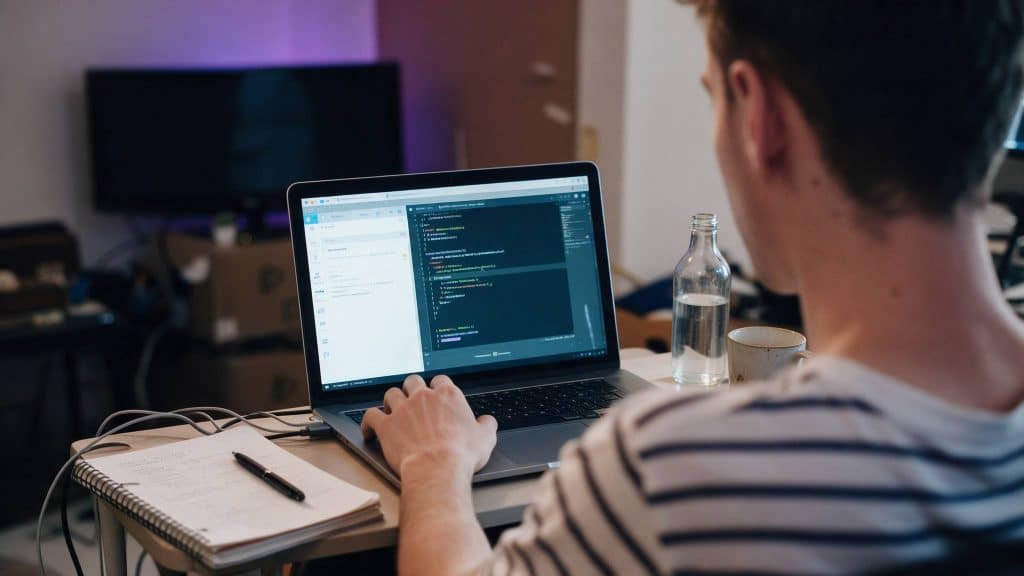
This happens because studying at home requires intense self-discipline that many young students have not developed yet. Without a physical professor checking attendance, it becomes easy to fall behind.
The lack of physical accountability leads to higher overall course dropouts for online degrees. You must be deeply motivated to push through difficult coursework without a physical peer group beside you.
Academic Completion and Dropout Risks
| Metric evaluated | Fully digital programs | Traditional on-campus programs |
| Average bachelor’s completion rate | 54% | 68% |
| First-year dropout risk | High | Moderate |
| Built-in student accountability | Low (self-guided) | High (attendance taken) |
Source note: Metrics adapted from the National Center for Education Statistics and Research Institute of America module data.
Examining the Unique Advantages of Traditional Campus Life
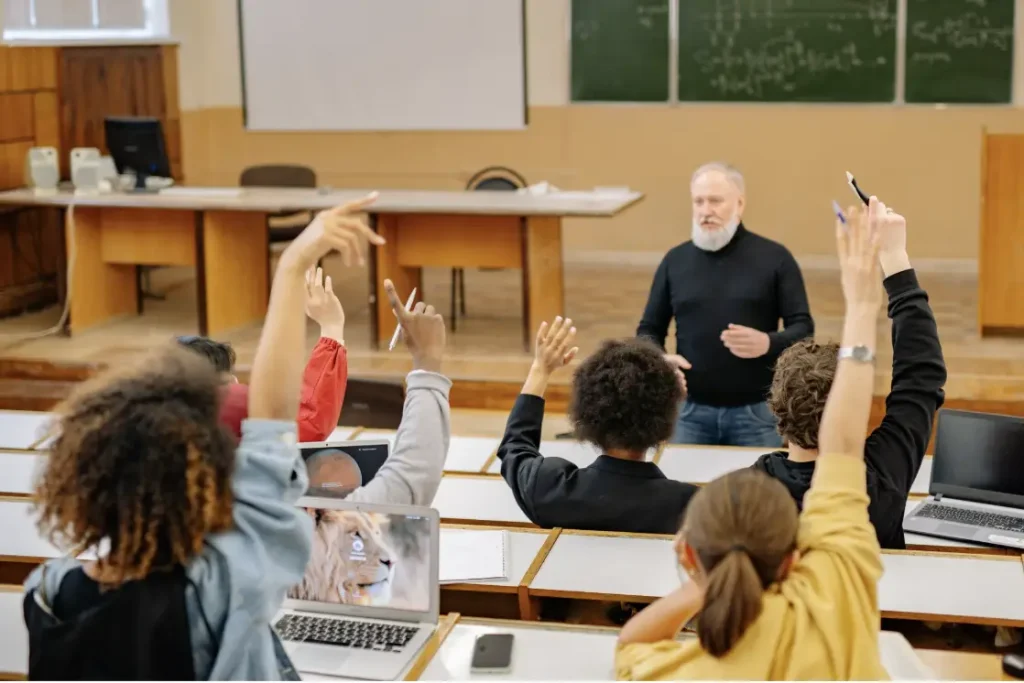
Sitting in a physical classroom provides immediate feedback from professors and spontaneous collaboration with your peers. A major draw of the traditional college experience is the real-time interaction you get with subject matter experts. You can raise your hand to clarify a complex topic instantly before the lecture moves on.
The benefits of in-person learning go beyond just getting academic help from teachers. You build a highly structured daily routine when you have to physically attend morning lectures. This built-in schedule naturally prevents the extreme procrastination that plagues many remote students.
Furthermore, traditional campuses offer immense resources right outside the lecture hall doors. You get immediate access to physical libraries, writing centers, and health clinics. These centralized support systems make it much easier to succeed when you face unexpected academic hurdles.
Understanding Networking Advantages in Physical Spaces
A traditional campus forces you into organic, face-to-face interactions that often lead to lifelong professional connections.
Digital discussion boards simply cannot replicate the authentic bonding that happens after a difficult physical lecture. When people ask why is in-person learning better than online, the answer always points directly to organic networking.
Tutor Angela, a blog writer for the DoMyEssay essay writing service, highlights this exact networking dynamic in her articles. She holds a BA in Political Science and a Juris Doctor, and she credits physical law school classes for her strongest professional contacts.
She notes that the casual conversations before and after class are where the most valuable networking actually happens.
You also get to know your professors on a much more personal level by visiting their offices. Shaking a professor’s hand and attending their physical office hours builds deep trust. That trust often turns into powerful letters of recommendation for graduate school or lucrative early career jobs.
Analyzing Hands-On Labs and Clinical Requirements

Physical classrooms excel in teaching hands-on skills and providing immediate, tactile feedback that digital screens simply cannot offer.
Certain degree paths absolutely require a physical presence to truly master the complex material. The benefits of in person learning appear clearly in laboratory environments where equipment safety is paramount.
You cannot learn to draw blood, perform dental hygiene, conduct a chemistry experiment, wire a circuit, or weld a joint through a video screen.
Physical campuses provide the millions of dollars in infrastructure needed for these highly specialized skills. Understanding the benefits of in person learning vs online formats requires looking at these practical, non-digital requirements.
Even in humanities courses, physical presence can spark significantly better debates. Real-time arguments force you to think on your feet and defend your positions instantly. This pressure builds public speaking skills that digital forums do not test.
Evaluating Outcomes for Adult and Non-Traditional Learners
Working adults overwhelmingly succeed in digital programs because they can seamlessly balance coursework with their full-time jobs. For a 35-year-old parent, commuting to evening classes after a full workday is often impossible. Digital degrees open massive doors for people who could never participate in traditional schooling.
When analyzing educational options for older students, convenience always wins. You do not have to quit your job or hire an expensive babysitter just to earn a digital degree. This flexibility drastically reduces the financial anxiety of returning to school later in life.
- Ability to study late at night
- Zero daily commute times
- Easy access to recorded materials
- Ability to travel for work while studying
Examining Corporate Employer Perceptions of Digital Degrees
In 2026, corporate employers respect digital degrees from accredited universities just as much as traditional ones. The historical stigma surrounding digital education has completely vanished over the last few years. Hiring managers care deeply about your skills and your portfolio, not the geographical location of your classroom.
Employers recognize that earning a degree while working full-time shows incredible time management skills. You actually prove your work ethic by juggling these adult responsibilities successfully. A digital degree from a state university holds the exact same weight as its on-campus equivalent.
However, you must ensure your chosen digital program holds proper regional accreditation. Unaccredited digital diplomas will still trigger red flags during a corporate background check. Always verify a school’s accreditation status before paying any tuition fees.
Breaking Down Student Satisfaction Levels for Both Formats
Surveys show that the vast majority of digital graduates feel their education was equal to a traditional classroom experience.
When evaluating in person learning vs online learning satisfaction levels, digital graduates report incredibly high approval. They feel they received a rigorous education without dealing with unnecessary campus fluff.
A recent BestColleges survey found that 96% of digital graduates would recommend their specific format to others. Furthermore, 93% of these digital graduates expect a positive return on their financial investment.
Examining the in person vs online learning debate reveals that financial peace of mind drives much of this satisfaction.
Physical campus students also report high satisfaction, but they frequently regret their massive student loans. You have to carefully weigh the fun of college life against decades of heavy debt.
Student Satisfaction and Graduation Perspectives
| Survey question | Digital learner response | Traditional learner response |
| Would recommend their format | 96% | 87% |
| Expect positive financial return | 93% | 85% |
| Felt prepared for the workforce | 89% | 91% |
Source note: Survey results gathered from BestColleges and national college satisfaction surveys.
Exploring Social Dynamics for Extroverted and Introverted Students
Extroverted students thrive in physical classrooms because they naturally feed off the energy and social cues of their peers. Outgoing students feel that in person learning provides the absolute best environment for direct socialization. They learn best by talking, debating, and interacting physically with their surrounding environment.
Conversely, introverted students often produce their absolute best academic work when studying in a quiet, controlled home environment.
Digital programs remove the exhausting social performance required by traditional campus life. Quiet students can dedicate all their energy to mastering the material instead of navigating complex campus dynamics.
Online forums also allow introverts to carefully formulate their thoughts before speaking up. In a fast-paced physical classroom, the loudest students usually dominate the conversation. Digital discussion boards level the playing field for every personality type.
Reviewing the Challenges of Rigid Physical Classrooms
The rigid schedules of physical campuses force students to mold their entire lives around their designated class times. Traditional college schedules are notoriously inflexible and deeply unforgiving to working students. If a course required for graduation is only offered on Tuesdays at 2 PM, you have to attend it or delay graduation.
You also lose countless hours to commuting, parking, and walking across massive concrete campuses. That lost time could be spent studying, working a part-time job, or simply resting. In a digital setting, your commute is the ten seconds it takes to open your laptop.
Furthermore, physical classrooms expose you to constant, uncontrollable distractions during lectures.
These common physical campus distractions include:
- Loud hallway chatter
- Uncomfortable wooden lecture desks
- Poor classroom fluorescent lighting
- Room temperature issues
Analyzing Environmental and Time Impacts of Modern Education
Digital classrooms use roughly 87% less energy per student than traditional physical campus environments. Comparing online learning vs in person efficiency is not just a financial debate; it is an environmental one. Digital instruction drastically reduces the carbon footprint of the higher education sector.
When analyzing in-person learning realities, physical campus infrastructure requires immense energy to heat, cool, and light. Studying from home eliminates daily tailpipe emissions from thousands of commuting students every morning. Universities can also scale down physical building operations when coursework moves online.
For eco-conscious students, staying home is genuinely the greenest choice you can possibly make. You completely avoid printing hundreds of pages of paper syllabi and physical worksheets.
Comparing Environmental and Time Impacts
| Impact category | Digital instruction | Traditional physical campus |
| Average weekly commute time | 0 hours | 4 to 8 hours |
| Campus energy footprint | Extremely low | Exceptionally high |
| Paper waste generation | Minimal (cloud-based) | High (printed exams/syllabi) |
Source note: Footprint estimates based on Department of Transportation commute averages and campus sustainability reports.
Final Thoughts on Making the Correct Educational Choice
Your final decision must perfectly balance your personal learning style against your financial reality and career goals. Understanding online learning vs in person learning outcomes requires a deep, honest look at your own self-discipline. There is no single correct answer for every university student in the world.
If you are highly disciplined and want to save money, digital instruction is an incredible option. If you absolutely need in-person accountability and hands-on labs, you must go to a physical campus. Do not let anyone shame you for choosing the academic path that works for your life.
In 2026, both formats lead to valid, highly respected university degrees. Employers care much more about your actual technical skills than the format of your classroom. Make the choice that sets you up for long-term professional success without destroying your bank account.