The biggest surprise about owning an electric car is not the quiet ride or the ability to skip gas stations.
It is realizing that refueling works very differently from a regular car. For many first-time EV buyers, plugging in can feel confusing before they even understand the basics. How long does it take to charge an electric car?
The wait time changes from one situation to another, so there is no single answer that fits every model.
How long a car battery takes to charge depends on where you charge it, what model you drive, the battery size, and outside conditions. How long it takes to charge Tesla models specifically is one of the most common versions of this question.
Once these factors make sense, charging starts feeling less like a problem and more like part of a normal driving routine.
What Affects EV Charging Time
Charging speed is not fixed because several factors interact each time you plug in.
- Battery Size: A bigger battery holds more energy, so it naturally takes longer to fill. For example, a 40 kWh Nissan Leaf will charge faster than an 80+ kWh electric truck on the same charger.
- State of Charge: Charging is usually quickest in the middle range. Going from 20 percent to 80 percent is faster than filling from nearly empty to 100 percent because the battery slows down near the top to protect itself.
- Vehicle Charging Limit: Every EV has a maximum rate it can accept. A car limited to 7 kW will still pull only 7 kW from a 22 kW charger.
- Charger Limit: A slower charger reduces speed even if the car can handle more.
- Temperature: Cold batteries charge slower, though preconditioning can help warm the pack before charging.
Understanding these factors together, rather than looking at any single one, gives a clearer picture of real-world charging times. Knowing your car’s limits and charger type helps you plan trips and daily routines with fewer surprises.
EV Charging Times by Charger Type
| Charger type | Power output | Time to 80% | Full charge time | Range added per hour |
|---|---|---|---|---|
| Level 1 (120V outlet) | 1.4–1.8 kW | 30–40+ hours | 40–50+ hours | 3–5 miles |
| Level 2 (240V) | 6–19 kW | 3–8 hours | 4–10 hours | 20–36 miles |
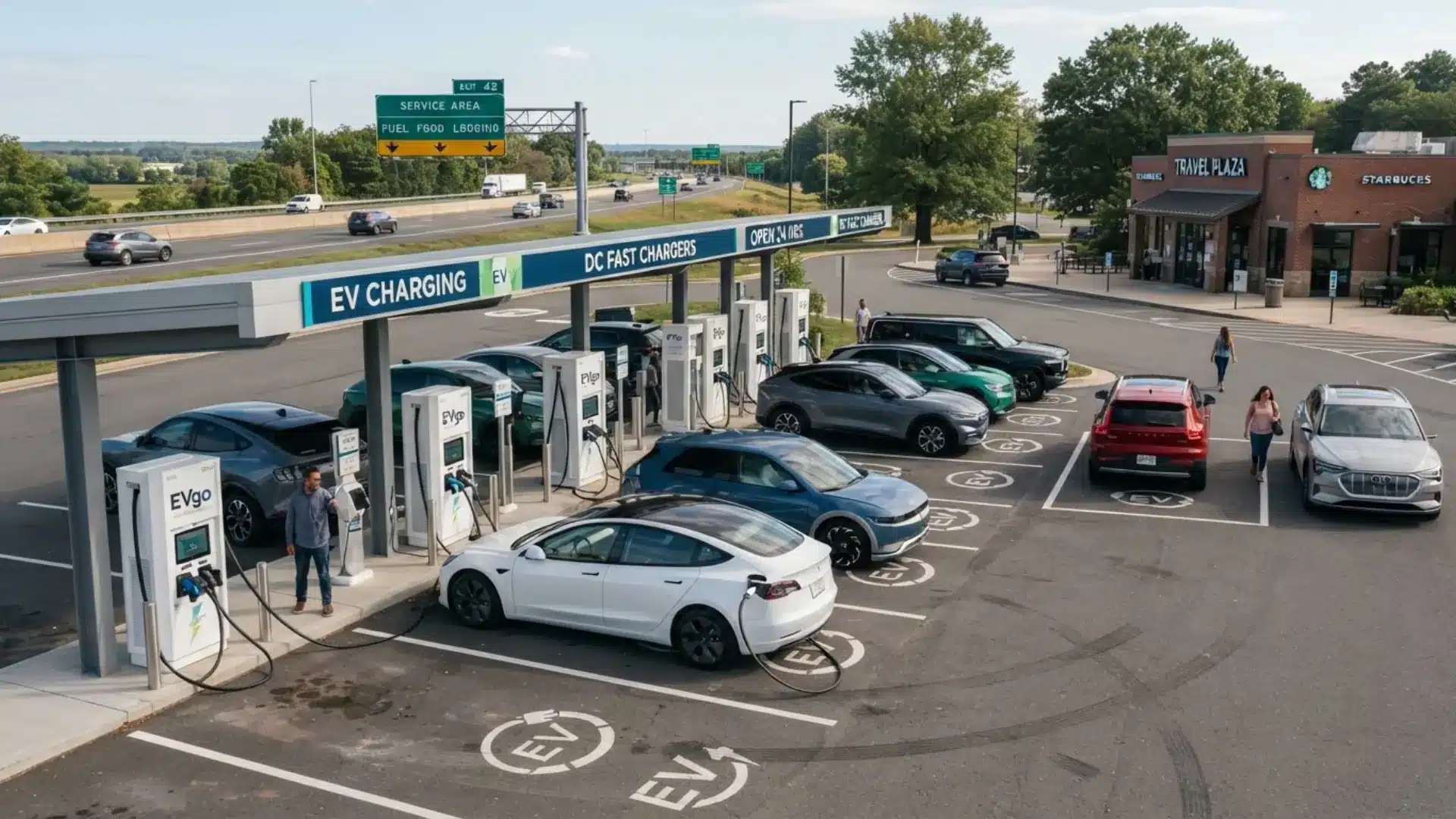
| DC fast charging | 50–350 kW | 20–60 minutes | Not typically used for 100% | 100–300+ miles in 30 min |
Electric car chargers are usually grouped into three levels, and the level you choose has a major effect on charging speed.
1. Level 1 Charging (Standard Household Outlet)
Level 1 charging uses a standard household outlet, so it is the easiest setup for beginners.
You usually do not need new wiring, a special charger, or an electrician. The tradeoff is speed. Since it uses basic home power, a full charge can take one to two days or longer, especially with a larger EV battery.
That makes it a poor fit for drivers who cover long distances every day. Still, Level 1 can work well for short commutes, plug-in hybrids, or people who only use a small amount of range between charges.
If you drive around town and plug in overnight, this simple option may be enough.
2. Level 2 Charging (Home and Public)
Level 2 charging is the most practical choice for regular EV ownership.
It uses a 240-volt circuit, similar to the type used by larger home appliances, and charges much faster than a standard wall outlet.
For most drivers, it turns charging into an overnight habit instead of a long wait. This is why many EV owners install a Level 2 charger at home, especially if they drive daily or have a larger battery pack.
Public Level 2 chargers are also common at offices, shopping areas, gyms, hotels, and parking lots. They are useful when your car is parked for a few hours.
Before installing one, compare the charger’s output, circuit requirements, and cost.
3. Dc Fast Charging (Level 3)
DC fast charging is built for speed, not everyday home use. Instead of sending power through the car’s onboard charger, it delivers direct current straight to the battery.
That is why it can add a large amount of range in a short stop. Drivers mostly use DC fast chargers for road trips, urgent top-ups, or long driving days when overnight stays are not practical.
These chargers need heavy electrical service, so they are found at highway stops, charging hubs, and some public stations rather than normal homes.
They are extremely useful, but they also generate more heat in the battery than slower charging does. For daily use, Level 2 is usually the better routine.
How Long Does It Take to Charge a Tesla
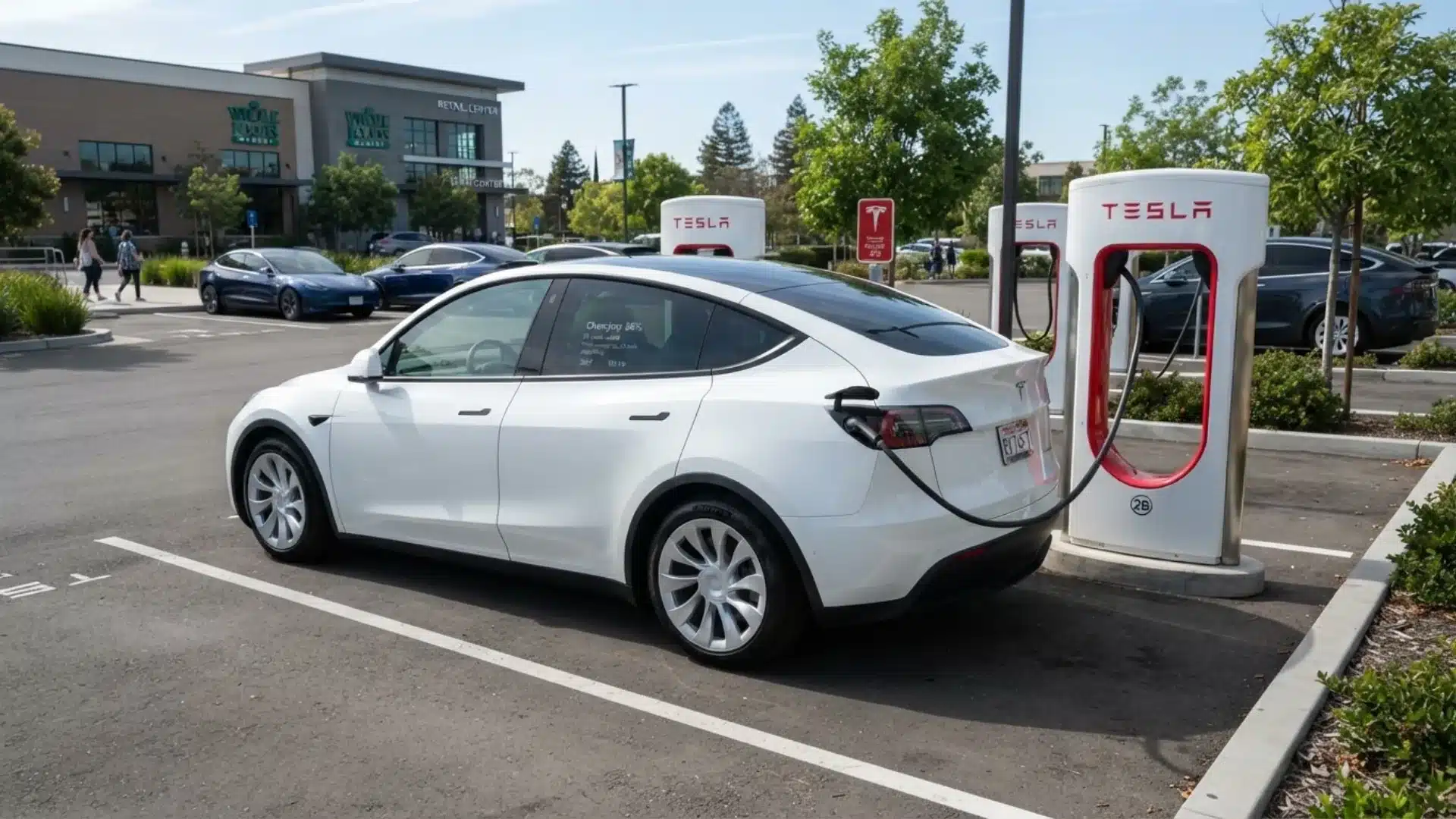
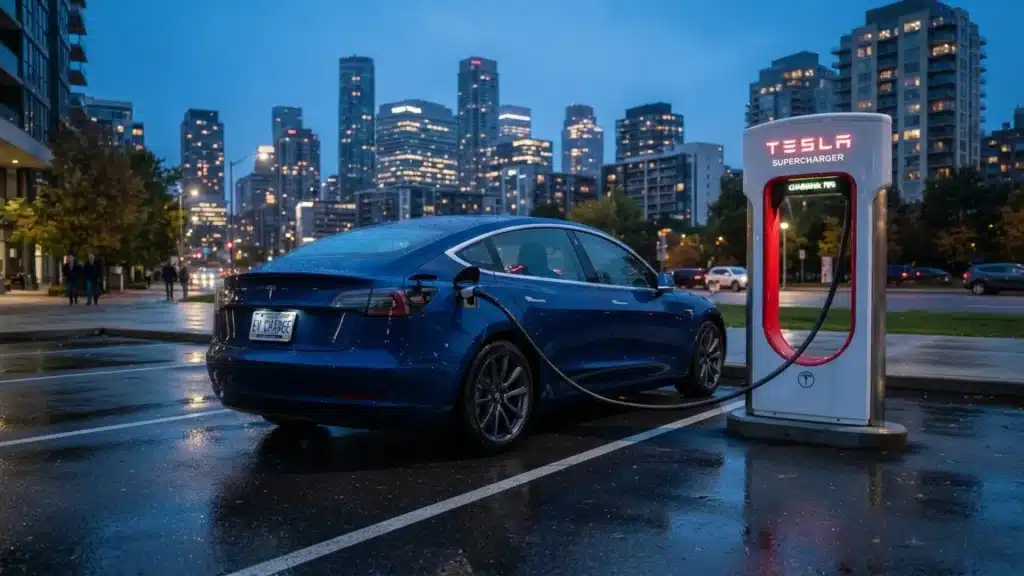
Tesla charging times vary from general EV estimates because its Supercharger network plays a major role. Here is what most owners can expect across the lineup.
- Model 3 and Model Y: A Supercharger can usually charge the battery from low to 80 percent in about 15 to 25 minutes. A home Wall Connector usually takes 6 to 12 hours to fully charge.
- Model S and Model X: Larger batteries take longer to charge; Supercharging to 80 percent often takes 30 to 40 minutes. A Wall Connector usually takes 8 to 12 hours.
- Cybertruck: Expect about 45 minutes at a Supercharger to reach 80 percent, and around 11 to 12 hours on a home Wall Connector.
Tesla says its network can add up to 200 miles in 15 minutes under ideal conditions. These numbers shift slightly with battery health, weather, and charger availability, so treat them as helpful benchmarks rather than fixed guarantees for every drive.
Why Does Charging Slow down after 80%
EV charging slows down after about 80 percent because the battery management system is protecting the battery pack. This happens with every EV, including Tesla models, and it does not mean the charger is weak or broken.
- Faster at Low Charge: Lithium-ion batteries accept power fastest when they are more empty.
- Slower near Full: As the battery fills, internal resistance rises, so the car reduces charging speed.
- Heat protection: Tapering helps lower the risk of overheating and long-term battery wear.
- 80 to 100 Percent Takes Longer: The final 20 percent can feel surprisingly slow, sometimes close to the time it takes to go from 10 to 80 percent.
Best Road Trip Habit: Stop around 80 percent and keep driving. Save 100 percent charges for times when the car can sit longer at home.
Smart Ways to Reduce EV Charging Time
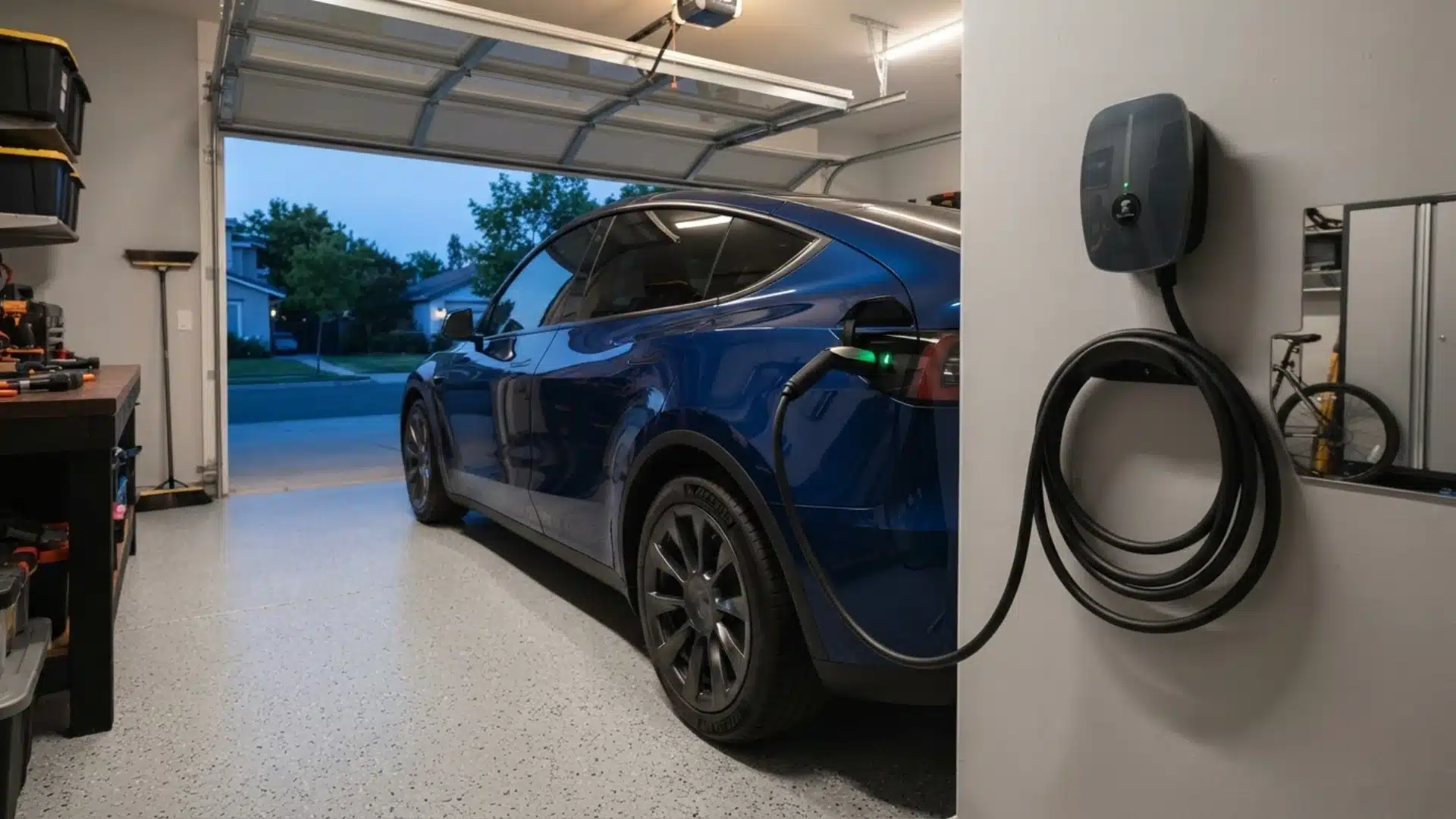
You do not always need a faster charger to save time. A few simple charging habits can make daily EV ownership smoother and more predictable.
- Precondition the Battery: Warm the battery before fast charging, especially in cold weather. Many EVs let you do this through the app or navigation system.
- Limit Daily Full Charges: Keep everyday charging around 80 to 90 percent. Save 100 percent on charging for longer trips.
- Use Off-Peak Hours: Overnight charging can cost less with some utility plans and is gentler for the battery.
- Choose the Right Home Charger: A 32-amp Level 2 charger is enough for most commuters. Bigger setups only make sense for heavy daily driving.
- Build a Routine: Plug in when you park, then let the car charge while you sleep, work, or run errands.
Small adjustments like these add up over time, protecting battery health while keeping your routine simple. Once these habits become second nature, charging feels effortless rather than something you have to plan around.
Final Drive
Charging an EV is less like stopping for gas and more like building a simple routine.
Level 1 works best as a backup or for light daily use. Level 2 handles most everyday driving because it can recharge the car while you sleep. DC fast charging is mainly for road trips, long driving days, or quick public top-ups.
Once you understand where each option fits, how long it takes to charge an electric car no longer feels like a mystery.
How long does a car battery take to charge, or how long does it take to charge Tesla specifically, comes down to the same factors: battery size, charger type, and starting charge level.
Most owners eventually think about it the same way they think about charging a phone: plug in when needed and move on. Have questions about home chargers, public stations, or EV ownership costs? Share them in the comments.
Frequently Asked Questions
What’s the Difference Between a Charging Connector and A Charging Level?
The connector is the physical plug (J1772, CCS, NACS, or CHAdeMO), while the charging level (1, 2, or 3) refers to speed and voltage. Different connectors work with different levels, which is why Tesla owners often need an adapter at non-Tesla stations.
Can I Charge an Electric Car in The Rain?
Yes. Charging equipment, connectors, and vehicle charge ports are sealed and rated for outdoor use in wet weather. Water and electricity sound risky together, but the hardware is built for it.
Do I Need to Upgrade My Home Electrical Panel for Level 2 Charging?
Sometimes. Level 2 chargers typically need a dedicated 40- to 60-amp circuit, and older homes with limited panel capacity may need an upgrade before installation. An electrician can confirm what your panel supports.
How Much Does It Cost to Charge an Electric Car, and How Long Does It The?
Home Level 2 charging is the cheapest option per mile, while DC fast charging costs more per kWh but offers faster charging. The faster the charger, generally the higher the price per mile.