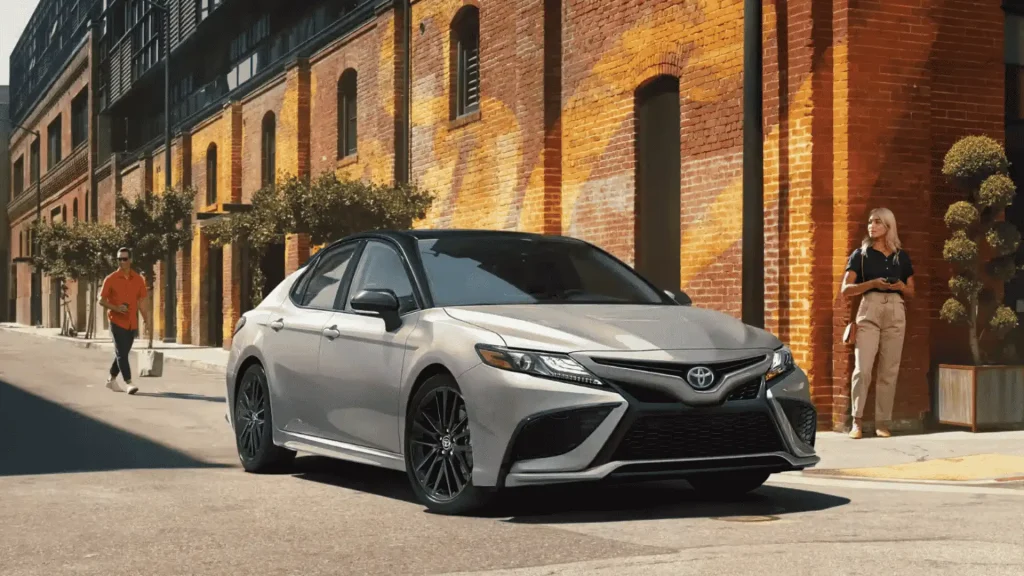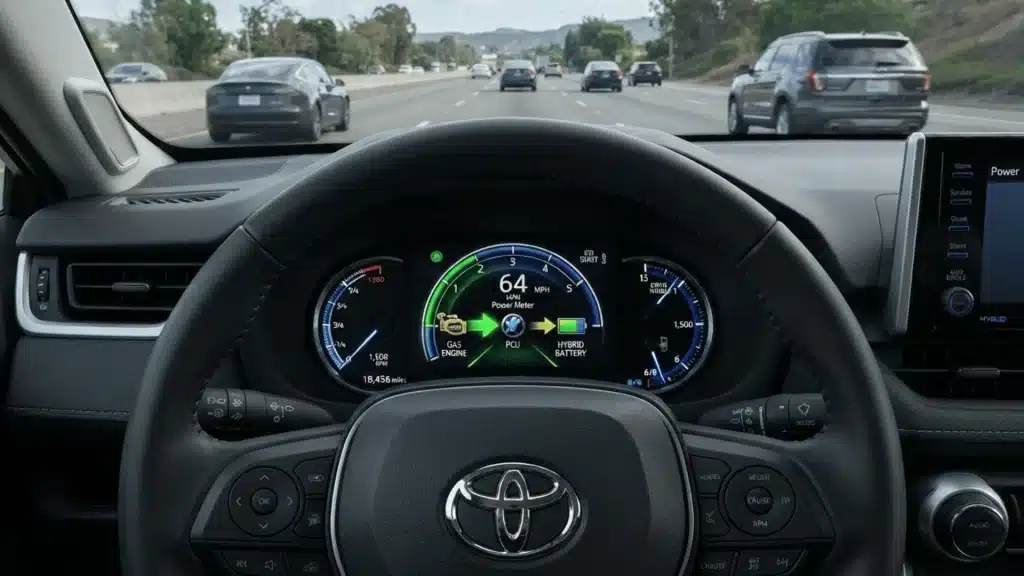
Hybrid cars can feel a little mysterious at first. The engine goes quiet at a stoplight, the car pulls away smoothly, and the battery somehow stays charged without a plug.
That mix of gas and electric power is exactly what makes hybrids different from regular gas cars and fully electric vehicles.
So how does a hybrid car work? Instead of forcing one system to do all the work, a hybrid lets the engine, motor, battery, and computer share the load in smarter ways.
This helps improve fuel economy, especially in city driving, while keeping the familiar range and refueling habits of a gasoline car.
Below is a cover of what a hybrid car is, how it works, types, battery charging, myths, and pros and cons.
What is a Hybrid Car?
A hybrid car combines a traditional gasoline engine with an electric motor and a rechargeable battery pack to improve fuel efficiency and reduce emissions.
Instead of relying entirely on gasoline, it can run on electric power, the gas engine, or both, depending on driving conditions.
The electric motor in a hybrid is smaller than the motor in a fully electric vehicle because it supports the engine rather than replacing it entirely.
During slow city driving, the electric motor often powers the car or assists the engine to save fuel. At higher speeds or during heavy acceleration, the gasoline engine provides most of the power.
A built-in computer constantly monitors speed, battery charge, and power demand, then automatically switches between the motor and engine or combines both to deliver the best balance of performance, efficiency, and fuel economy.
Main Components of a Hybrid Car
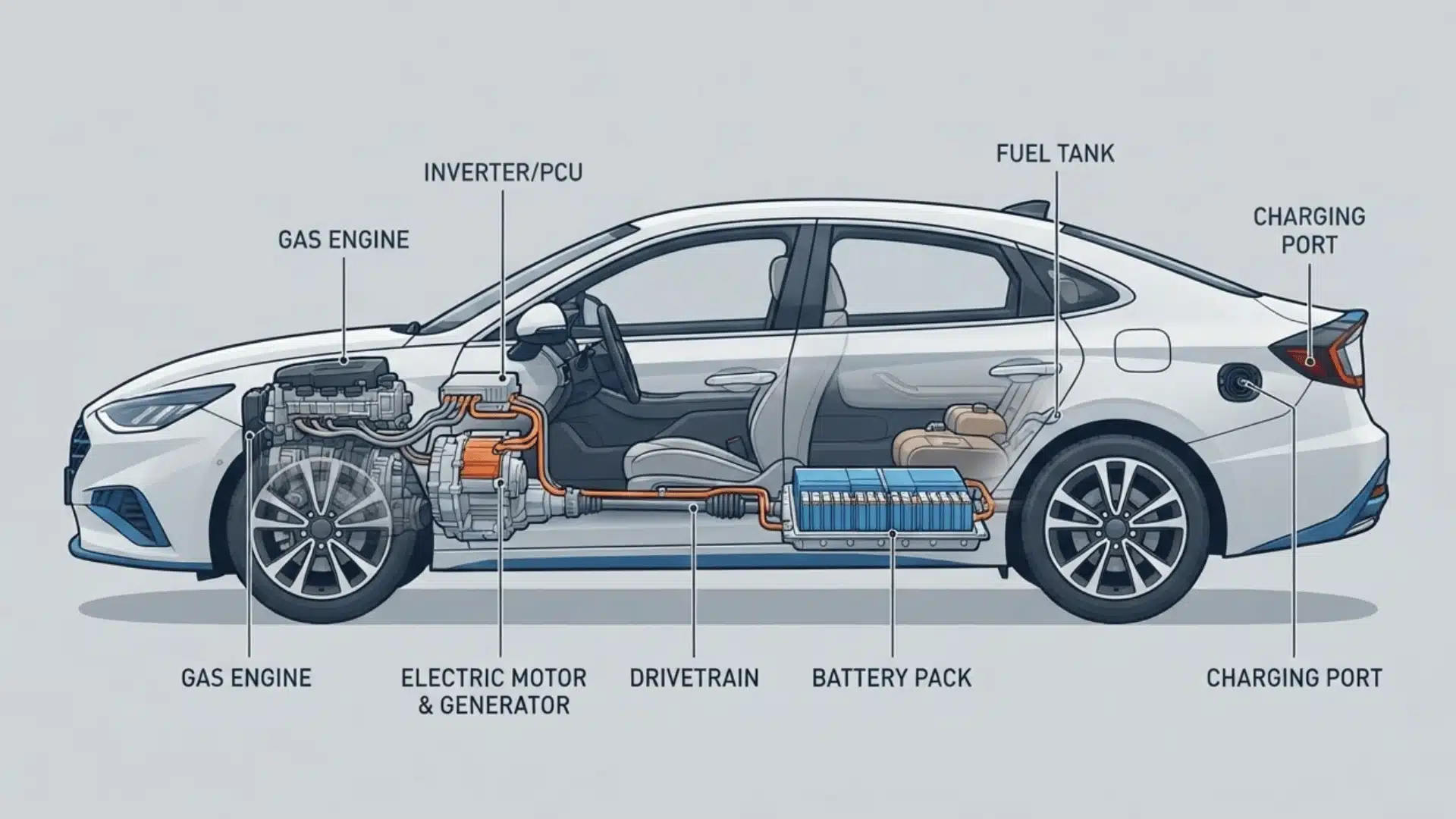
A hybrid vehicle relies on a handful of core parts working in sync:
- Gas engine: A smaller internal combustion engine that shares the workload with the electric system instead of powering the car alone.
- Electric motor: Supplies power at low speeds and gives extra support during acceleration, helping reduce fuel use in daily driving.
- Battery pack: Stores electricity for the motor and recharges while driving, so most hybrids do not need external charging.
- Generator: Converts engine output or captured braking energy into electricity, helping to keep the battery charged while the vehicle is moving.
These parts are not separate accessories. They are wired together so the car’s computer can shift power between them without any input from the driver.
How Does a Hybrid Car Work Step by Step?
The process looks different depending on what the car is doing:
- Startup: Most hybrids begin moving on electric power alone, since it takes less energy to get a car rolling from a stop.
- Low-speed and stop-and-go traffic: The electric motor continues to handle the load, and the gas engine often stays off.
- Acceleration: The gas engine kicks in and works alongside the electric motor for extra power.
- Highway cruising: The gas engine usually takes over, since it is more efficient at steady, higher speeds.
- Braking or coasting: The electric motor switches roles and acts as a generator, sending power back to the battery.
This back-and-forth happens automatically. The electric-car transmission setup in most hybrids makes this handoff feel seamless rather than jerky, since the two power sources are designed to work through the same set of gears.
How Does Regenerative Braking Work in a Hybrid Car?
Regenerative braking is one of the cleverer parts of a hybrid system. In a regular gas car, braking converts kinetic energy into heat, which dissipates through the brake pads and rotors.
A hybrid captures part of that energy instead. When the driver slows down, the electric motor reverses its role and acts as a generator.
It generates electricity from the car’s motion and feeds it back into the battery pack. This process does not fully recharge the battery in one stop, but it helps recover energy that would otherwise be wasted.
In city driving, where stop-and-go traffic is common, regenerative braking can make a noticeable difference.
It reduces fuel use, supports low-speed electric driving, and helps explain why most hybrids do not need to be plugged in regularly.
Why Do Hybrid Cars Save Fuel?
Hybrids do not save fuel with a single trick. It comes from several small adjustments working together across every drive.
- Electric power helps during stop-and-go traffic, when a gas engine alone would waste fuel idling.
- The engine shuts off entirely when the car is stopped, so no fuel burns while sitting at a red light.
- Regenerative braking recharges the battery, recovering energy that would otherwise be lost as heat.
- The electric motor reduces strain on the gas engine during acceleration, so the engine burns less fuel to reach the same speed.
- The onboard computer automatically selects the most efficient power source based on speed, battery level, and driving conditions.
How Does a Hybrid Car Battery Charge While Driving?
The battery in a regular hybrid charges itself while the car is in use, so drivers do not need to plug it in or manage charging manually.
Regenerative braking is the primary source of battery recharge, capturing energy that would otherwise be lost as the car slows down.
When the battery needs extra support, the gas engine can also send power through a generator to top it up. The car’s computer handles these decisions in real time.
It monitors battery charge, driving speed, braking, and power demand, then decides when to use electric power, recharge the battery, or rely more on the gas engine.
This automatic energy flow is one reason hybrid ownership feels very similar to driving a regular gas car every day.
Types of Hybrid Cars
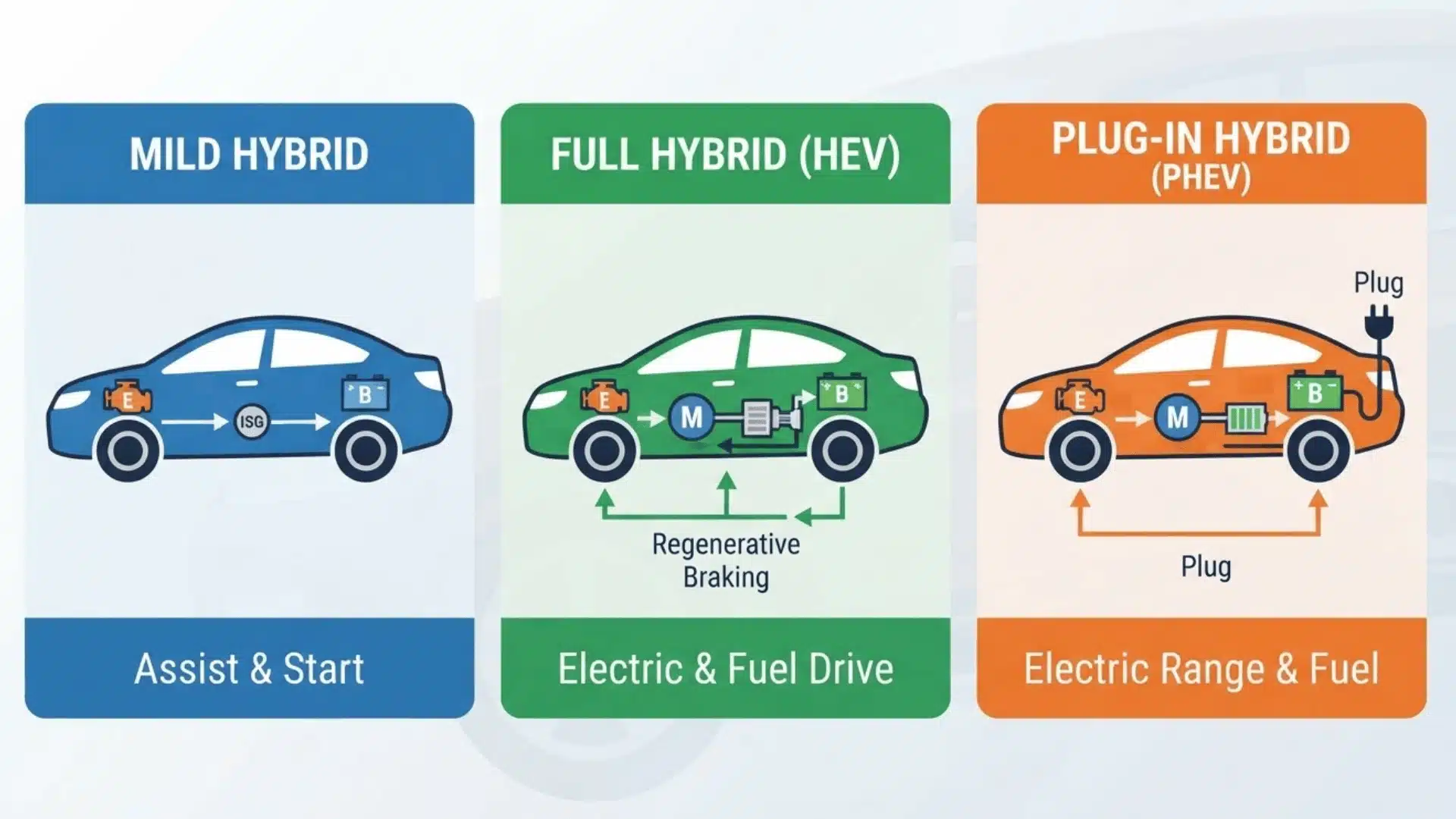
Not every hybrid works the same way. There are three main setups on the market today.
1. Full Hybrid
A full hybrid can run on the electric motor, the gas engine, or both at the same time. This setup gives the car more flexibility in city traffic, where low-speed driving often uses electric power first.
The gas engine takes over when more power is needed, such as during highway driving or faster acceleration. Most well-known hybrid sedans and SUVs use this system.
2. Mild Hybrid
A mild hybrid uses a small electric system to support the gas engine, not replace it. The motor may help during acceleration, restart the engine smoothly after stopping, and reduce fuel use in everyday driving.
However, a mild hybrid usually cannot move the car on electric power alone. It is best understood as a fuel-saving assist system rather than a true electric driving setup.
3. Plug-In Hybrid
A plug-in hybrid has a larger battery than a full or mild hybrid and can be charged from a wall outlet. This allows it to travel longer distances on electricity before the gas engine kicks in.
Many plug-in hybrids offer around 20 to 40 miles of electric range, making them useful for short daily trips while still having gas backup for longer drives.
Hybrid vs Electric vs Gas Cars: Key Differences
Here’s the simple way to compare them before looking at the details: hybrids blend gas and electric power, EVs run fully on electricity, and gas cars rely only on fuel.
| Feature | Hybrid | Electric | Gas car |
|---|---|---|---|
| Power source | Gas engine plus electric motor | Electric motor only | Gas engine only |
| Charging needed | No (except plug-in hybrids) | Yes, regularly | No |
| Typical range | Similar to a gas car (400–600+ miles total) | Often 250–400+ miles | Similar to a hybrid |
| Fuel savings | Better than gas-only, especially in city driving | No gas used at all | Lowest fuel efficiency of the three |
Owners looking into a hybrid car charging setup often assume every hybrid needs a plug. Regular hybrids do not. Only plug-in hybrids do.
Common Myths About Hybrid Cars
Many hybrid myths come from old assumptions, but modern hybrids are easier to drive, maintain, and understand than many people expect.
- Hybrids Are Too Complicated to Drive: A hybrid drives almost like a regular automatic car, with no clutch or manual switch between gas and electric power. The onboard computer handles that transition in the background.
- Hybrid Batteries Always Need Charging: Regular hybrids never need to be plugged in. Their batteries are recharged by regenerative braking and the gas engine. Only plug-in hybrids use an outlet, and even they can run on gasoline when the charge runs low.
- Hybrids Are Not Automatically Slow: Many feel quick in city driving because electric motors deliver instant torque, helping the car move smoothly from a stop with strong low-speed acceleration.
- Hybrid Batteries Fail Quickly: Hybrid batteries are built for long service life and often last 8 to 10 years or longer. Used hybrid buyers should still check the battery warranty and service history.
Most hybrid concerns trace back to outdated information rather than to how these cars actually perform today. A quick look past the myths shows a much simpler, more reliable vehicle than most people assume.
Pros and Cons of Hybrid Cars
Hybrid cars offer better fuel savings, smoother city driving, and lower emissions, but buyers should weigh those benefits against higher prices, battery costs, and limited electric-only range.
| Pros | Cons |
|---|---|
| Better fuel economy | Higher upfront cost than some gas cars |
| Lower fuel use in city driving | Battery repairs can be expensive |
| No charging needed for regular hybrids | Less electric range than EVs |
| Smooth low-speed driving | Highway savings may be smaller |
| Lower emissions than gas-only cars | More complex powertrain |
None of these trade-offs is a dealbreaker on its own. The right choice comes down to how much city driving you do, how long you plan to keep the car, and whether the upfront cost fits your budget today.
Final Thoughts
A hybrid car makes more sense once the gas engine and electric motor are seen as partners rather than separate systems.
That’s really the answer to how a hybrid car works: the battery supports low-speed driving, regenerative braking recovers lost energy, and the gas engine takes over when more power or steady cruising is needed.
That balance is why hybrids can save fuel without asking drivers to change much about daily driving.
For many buyers, the real decision comes down to driving habits, budget, and whether a regular hybrid or plug-in hybrid fits better. A test drive can make those differences much easier to understand.
Have you driven a hybrid before, or are you considering one for your next car? Share your experience, doubts, or favorite hybrid model in the comments below.
Frequently Asked Questions
How Long Does a Hybrid Car Battery Usually Last?
A hybrid car battery usually lasts 8 to 10 years or longer, depending on driving habits, climate, maintenance, and model. Many batteries are also covered by long manufacturer warranties.
Does a Hybrid Car Save More Fuel in the City or on the Highway?
A hybrid usually saves more fuel in city driving because regenerative braking and electric motor assist work best in stop-and-go traffic. Highway savings are often smaller but still useful.
Is a Hybrid Better than a Gas Car for Daily Driving?
A hybrid can be better than a gas car for daily driving if most trips include traffic, short distances, or city roads. It uses less fuel without requiring regular charging.