Sports are changing faster than most fans realize. A match is no longer just about talent and tactics.
Behind every sprint, ticket scan, replay, and crowd movement, technology is shaping the outcome in ways that were impossible five years ago.
That is why following sports tech news matters right now. It tells you where the industry is heading before those changes become the default.
From training rooms to broadcast screens and stadium gates, the organizations pulling ahead are the ones using data to make sharper decisions and run smoother live events.
This guide covers the biggest updates worth knowing in 2026, the patterns behind them, and why they matter for anyone connected to sport or large-scale events.
Latest Sports Tech News Updates
A fast roundup of the biggest developments in sports technology right now, for anyone who needs current industry context.
- AI moves into production: According to the Global SportsTech Report 2026, published by SportsPro and Sportradar, 82% of sports organizations now deploy AI, while 98% plan larger investments within the next 12 months.
- Connected match equipment continues to grow: Adidas added sensor technology to the official FIFA Club World Cup 2026 ball, providing referees and broadcasters with real-time tracking data.
- Video analytics improve decisions: Computer vision now analyzes gameplay frame by frame. AI-assisted VAR and automated ball-strike systems in Major League Baseball’s 2026 season are pushing officiating forward with verified call accuracy.
- Broadcasting becomes immersive: Amazon, YouTube, and ESPN are building single-hub sports platforms with referee cameras, 3D views, and second-screen experiences.
- Wearables reach maturity: GPS trackers, biometric sensors, and smart clothing now measure muscle load, recovery, sleep, and injury risk in near real time.
- Esports tech accelerates: Mordor Intelligence projects the esports market at $5.34 billion in 2026, growing at 4.89% CAGR to reach $6.78 billion by 2031, with analytics tracking reaction time, decision speed, and in-game patterns.
- Sports cybersecurity rises: Connected athlete data, RFID systems, venue platforms, and ticketing tools now make data security a serious operational priority.
- Women’s sports viewership grows: The WNBA averaged 1.3 million viewers per regular-season game in 2025, up 6% year over year. A single Chicago Sky vs. Indiana Fever game drew 2.7 million viewers, the most-watched regular-season game in 25 years, helping secure an 11-year, $2.2 billion media rights deal that kicked off in 2026.
FIFA World Cup 2026: Broadcast Tech Everyone Should Know
The 2026 FIFA World Cup brings the biggest broadcast upgrade football has seen, with smarter cameras, sharper officiating tools, and richer viewing angles across every stadium.
With 48 teams, 104 matches, and billions of viewers, FIFA is using technology that changes how fans watch pressure, speed, decisions, and match drama.
1. Spider Cameras and Multi-Angle Coverage
Source: TVBEurope
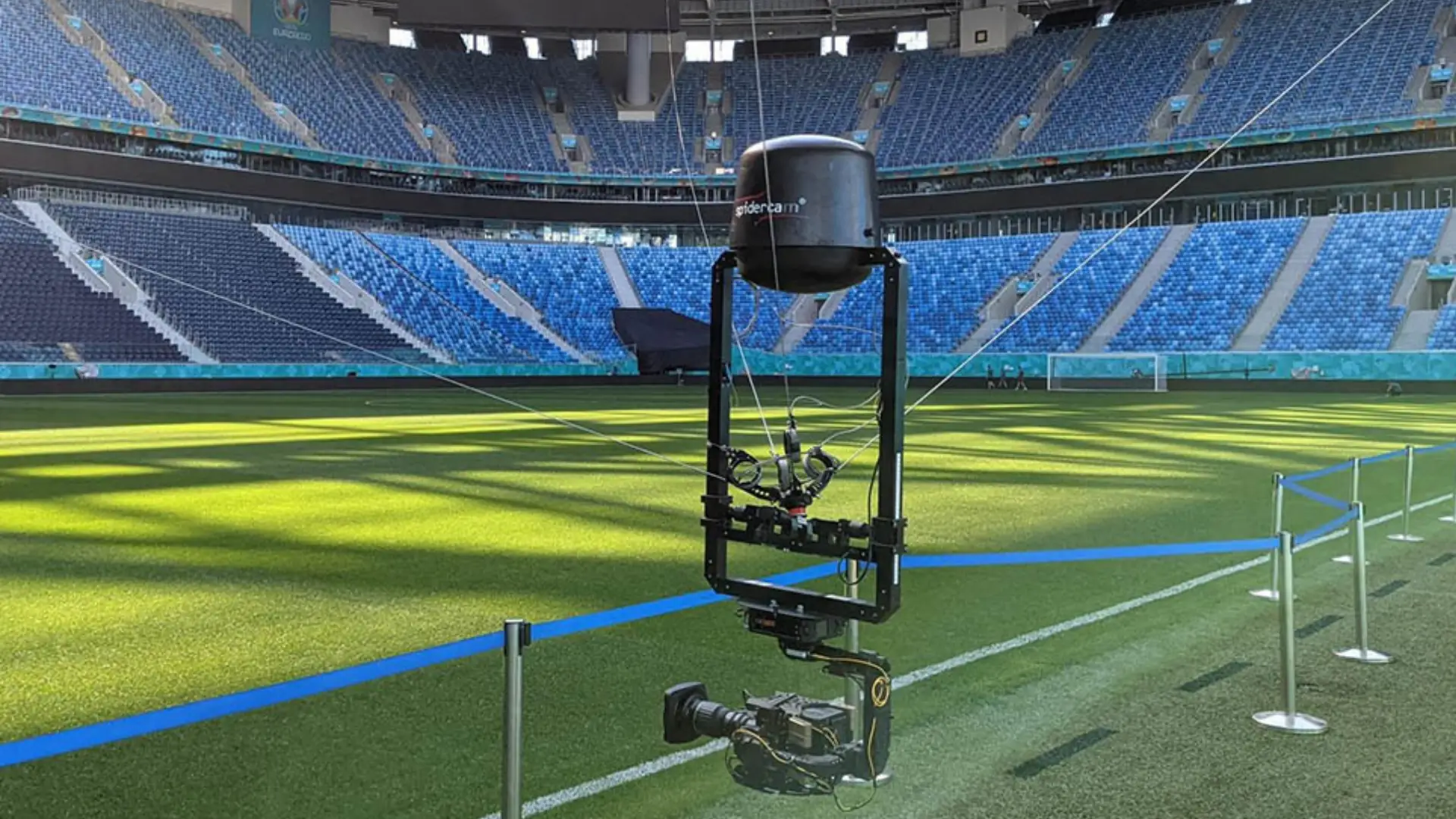
Each match uses around 45 to 50 cameras, including pole, cable, 360-degree, and gyro-stabilized spider cameras.
These rigs move above the pitch from cables fixed around the stadium, giving smooth overhead shots at high speed.
They are useful during penalties, set pieces, and celebrations because they show space, pressure, and player movement in ways standard broadcast cameras cannot capture.
2. Referee Body Cameras

Source: BBC
Every referee wears a small headset-mounted body camera, giving fans a pitch-level view of major moments. FIFA first tested this at the 2025 Club World Cup before using it across all 104 World Cup matches.
Lenovo supports the setup with AI stabilization to reduce motion blur, with processing handled at the Dallas International Broadcast Center.
The footage is available as an optional broadcast angle, not a standard feed on every platform.
3. Hawk Eye and Semi-Automated Officiating
Source: Hawk-Eyes
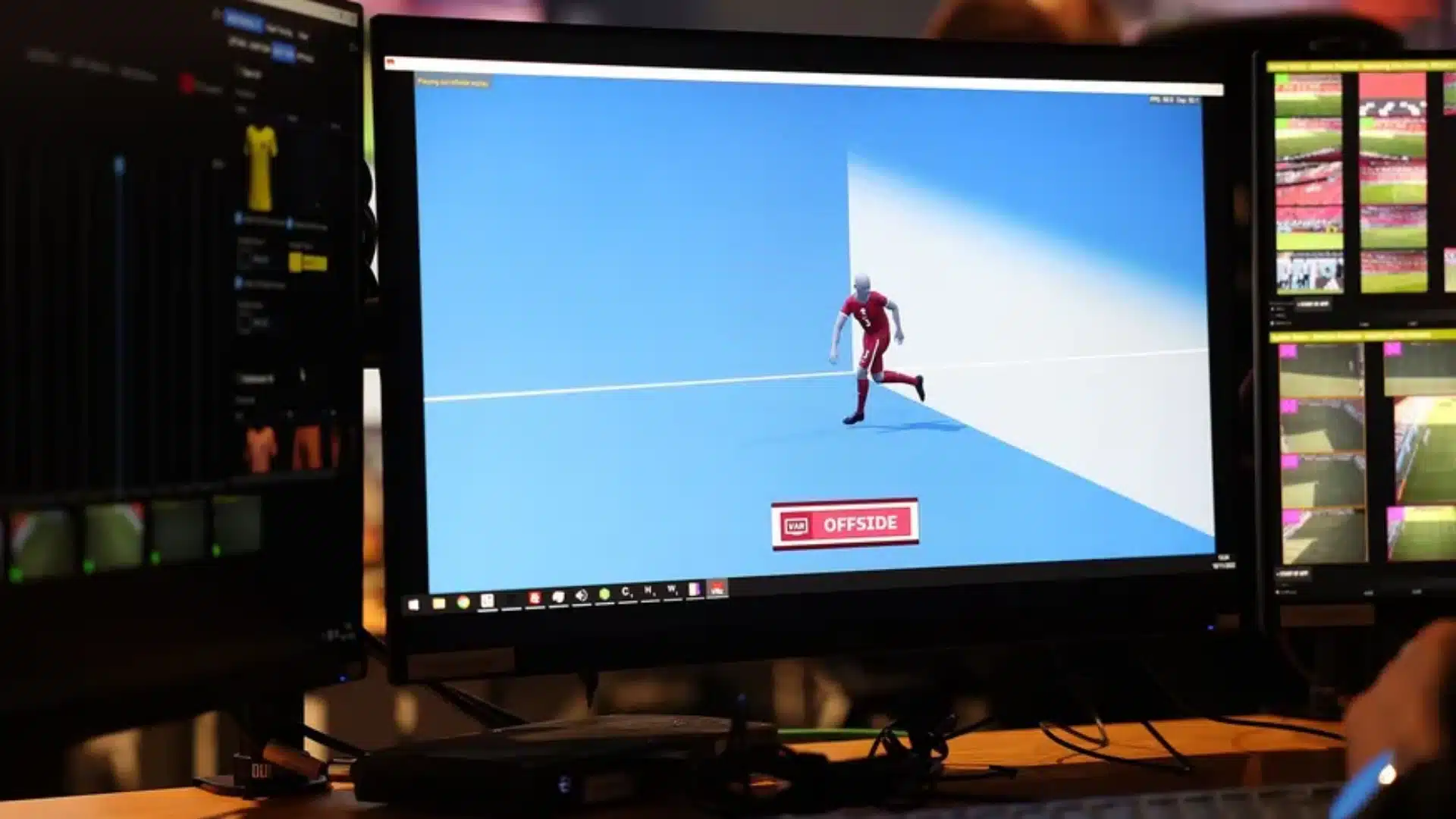
Sony’s Hawk Eye system supports goal line checks, VAR, semi-automated offsides, and last touch calls for corners or goal kicks.
Multi-camera computer vision tracks player limbs and ball movement in real time, creating huge match data for officials.
Human referees still make all final calls. The technology gives them faster, more precise evidence, which reduces review delays and helps broadcasters explain close decisions clearly to viewers.
4. AI-generated 3D Player Avatars

Source: Africa Soccer
Before the tournament, players were scanned to create accurate 3D digital avatars. FIFA and
Lenovo uses these models in offside replay animations, showing exactly where a player’s body was in relation to the defensive line.
This helps fans understand tight calls with clearer visuals. It is mainly an officiating and broadcast support tool, not a consumer feature, but it makes disputed decisions easier to explain on screen.
AI in Sports Operations
AI is now part of daily sports operations, not just a reporting tool.
Teams use it to study player performance, scout talent, predict injury risk, price tickets dynamically, and manage fan communication at scale.
Computer vision scans match footage and cross-reference statistics to identify players across wider markets. Injury models read workload, movement, and recovery data to flag risk before it becomes a problem.
The NFL’s Digital Athlete platform, developed with AWS, uses numerous data points (including video, player position, equipment, and injury reports) to run millions of injury simulations and support prevention planning.
The NBA has a comparable player health program with GE HealthCare and MedStar Health, which conducted research on player joint and musculoskeletal health.
AI also helps front offices adjust ticket prices based on demand, weather, opponent strength, and fan behavior patterns.
On the media side, generative tools produce match recaps, highlight clips, and multilingual content at speed. ESPN now uses AI voiceovers and a vertical video feed modeled on short-form content behavior.
In my work with event operations teams, I see this mirrored in what I see at conferences and expos.
The same logic that powers dynamic ticket pricing in stadiums now applies to session capacity management and sponsor reporting at large professional events.
AI-ready event workflows are already handling registration, access control, and real-time session tracking in ways that were manual two years ago.
Sports Tech Trends Changing the Game
Sports technology is moving across every part of the industry, from athlete preparation to stadium operations and digital viewing.
These trends show how teams protect performance, how venues improve the fan journey, and how broadcasters keep audiences engaged across screens.
1. Wearables and Athlete Performance

Wearables are no longer basic fitness bands. Sensors are now built into shirts, footwear, pads, and training gear, giving teams smaller and more accurate performance tools.
Coaches can track heart rate variability, muscle load, fatigue, recovery, and movement balance throughout the day.
This real-time data helps staff adjust training before small stress becomes injury. Camera-based tracking is increasingly supplementing wearables.
Fixed systems like Hawk-Eye read player movement and biomechanics optically, reducing the need for physical devices in controlled training environments.
2. Smart Stadiums and Fan Experience

Smart stadiums are changing the live fan journey.
Access control, RFID tracking, cashless payments, crowd analytics, and fan apps now work together inside one connected venue system.
Mobile ticketing and facial recognition reduce entry delays, while stronger 5G and WiFi support live stats, AR-style views, and instant updates.
According to the Global SportsTech Report 2026, 57% of sports executives believe enhanced 5G and WiFi will transform the in-stadium experience, and 78% say data analytics is the innovation with the greatest on-field opportunity over the next five years.
3. Sports Broadcasting and Digital Viewing

Sports broadcasting is moving beyond a standard live feed.
Streaming platforms are becoming primary destinations for sports. YouTube’s Sunday Ticket package, Amazon’s rights investments, and ESPN’s all-in-one app push have made this a live competition in 2026, not a future projection.
Broadcasts now layer in real-time stats, tactical overlays, second-screen tools, and short clips created during the match itself.
Referee cameras, player cameras, 3D replays, and immersive viewing angles give fans perspectives that traditional broadcasts never offered.
Cybersecurity and Data Privacy in Sports Tech
As sports tech becomes more connected, cybersecurity is now part of daily risk planning. Athlete biometrics, ticketing databases, venue controls, payment tools, RFID networks, and broadcast systems all create entry points.
Darktrace reported over 116,000 phishing emails targeting sports organizations between October 2025 and March 2026, per Darktrace’s 2026 sports sector report.
- Athlete data: Performance, health, and recovery records need clear consent frameworks, secure storage, and strict access controls.
- Ticketing platforms: High transaction volume makes payment and account data attractive to attackers during major events.
- RFID and venue networks: Access systems must stay protected from shared or poorly secured connections across temporary venues.
- Vendor systems: Analytics, streaming, and facility partners can expose organizations if security checks are not part of onboarding and renewal processes.
- Shadow AI: Staff using public AI tools to process sensitive athlete reports, contracts, or health data without organizational approval is a growing exposure that most security policies have not yet addressed.
For event professionals tracking how these threats are evolving, staying current on event technology through credible cybersecurity and event tech voices has become part of routine preparation.
What Sports Tech News Means for Event Organizers?
The most useful signal from seven years of working with event operations teams: stadium-grade tools are no longer exclusive to stadiums.
The technology managing 60,000 fans at a match is the same technology event professionals can apply at conferences, expos, fan zones, brand activations, and tournaments.
For teams building the infrastructure to support events at that scale, managing large-scale event crowds requires the same structured approach to check-in, session access, and real-time data that stadium operators have been refining for years.
| Sports venue tech | Event organizer equivalent | What it solves |
|---|---|---|
| RFID wristband access control | RFID badge and wristband tracking | Faster entry, session access, cashless transactions |
| Facial recognition stadium entry | Facial recognition check-in | Eliminates queue bottlenecks at high-volume arrivals |
| Real-time crowd flow data | Live attendee analytics | Staffing decisions, session capacity, sponsor visibility |
| Smart concession ordering | Cashless event payments | Shorter lines, higher spend per head, less cash handling |
| Multi-zone access tiers | Session and area access management | VIP separation, sponsor exclusivity, security compliance |
| Fan engagement apps | Post-event attendee reporting | Sponsor ROI measurement, repeat attendance data |
How Can Event Teams Use Sports Tech Lessons?
The most common mistake event organizers make with technology adoption is trying to solve everything at once.
Professional sports organizations learned early that piecemeal implementation without workflow integration produces data nobody uses. The practical path is more structured:
- Start with one specific problem. Entry speed, session attendance tracking, sponsor reporting, or cashless payments. Pick the friction point that costs the most time or creates the most visible frustration.
- Choose tools built for that problem. A check-in platform should solve the check-in first. Avoid vendor packages that bundle ten features when two are actually needed.
- Train staff before the event, not during it. Most technology failures at live events trace back to inadequate preparation, not the technology itself. Run dry tests with full team involvement at least two weeks out.
- Track live data during the event. Use real-time dashboards to monitor entry rate, session capacity, and queue depth. These signals allow staffing adjustments on the day rather than post-event fixes.
- Use post-event reports for sponsor ROI and future planning. Data on session attendance, dwell time, and engagement paths is more persuasive in sponsor conversations than anecdotal feedback. Numbers close the loop.
Future of Sports Technology

The future of sports technology is moving toward smarter, faster, and more accessible tools.
AI coaching assistants will soon support real-time training decisions, from load planning to tactical adjustments during competition.
Camera-based tracking will reduce the need for wearable devices by reading movement and biomechanics through fixed camera systems.
Stadium apps are becoming more integrated, combining live stats, seat upgrades, food ordering, augmented reality features, and social interaction in a single interface rather than across disconnected tools.
Fans can expect more personalized offers, content, and experiences based on viewing habits and in-venue behavior.
Injury prediction will continue to improve as teams integrate workload, sleep, recovery, nutrition, and other data points.
The biggest shift may be affordability.
Cloud-based platforms are lowering costs, meaning smaller teams, grassroots clubs, universities, and event organizers will soon access tools once reserved for elite professional organizations.
Conclusion
Sports tech news is no longer just about new gadgets or headline-making tools.
It shows how sport, live venues, and fan expectations are being reshaped in real time.
The biggest lesson is simple: technology works best when it solves a real problem, whether that means safer training, faster entry, stronger data, or a better fan journey.
Teams and event professionals do not need to adopt every new tool at once. The smarter move is to choose what improves the experience and build from there.
Which sports technology trend do you think will have the biggest impact on live events? Share your thoughts in the comments.
Frequently Asked Questions
What are the Risks of Using Sports Technology?
Key risks include high costs, privacy exposure, poor integration, weak staff adoption, and vendor failures that can disrupt live operations and damage trust quickly and publicly.
What is the Difference Between Sports Technology and Sports Analytics?
Sports technology includes tools like wearables, cameras, stadium systems, and officiating software. Sports analytics uses collected data to study performance and guide decisions more clearly.
How is Sports Technology Different from Fitness Technology?
Sports technology supports teams, venues, athletes, broadcasters, and live events, while fitness technology mainly tracks personal health metrics like steps, calories, and heart rate.
What Skills are Useful for a Career in Sports Technology?
Useful skills include data analysis, sports science, cybersecurity, software knowledge, event operations, digital marketing, and performance analysis, plus understanding sport and technology.