You lined up the shot: good light, right moment, steady hands. Then the preview shows a soft, slightly blurred frame. The subject did not move. Your hands did.
Tiny hand tremors can ruin photos at slower shutter speeds, especially indoors, at dusk, or on night shoots. I have lost more than a few frames this way, usually when the light was too good to give up on.
That is where IBIS comes in. It helps the camera correct small shakes before they turn into blur.
This guide explains what IBIS is, how it works, how it differs from other stabilization types, and whether it matters for your image shooting style.
What is IBIS in a Camera and How Does It Work?
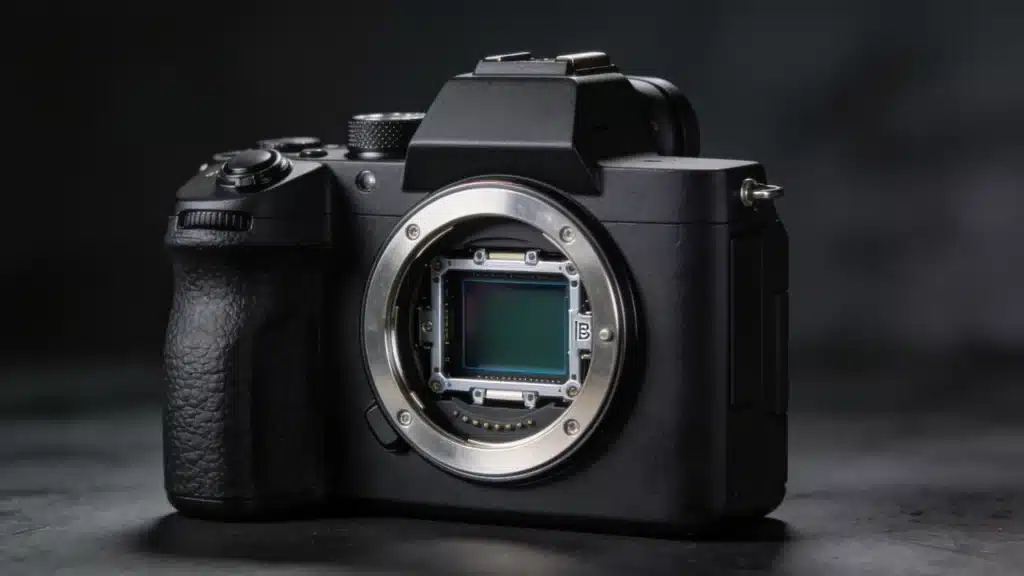
IBIS stands for In Body Image Stabilization. It is a camera body feature that reduces blur caused by hand shake. Instead of moving the glass inside the lens.
The camera processor calculates the correction needed, and small electromagnetic motors or voice-coil actuators shift the sensor in the opposite direction to keep the image steady.
This happens thousands of times per second throughout the exposure.
Because IBIS sits inside the body, it can stabilize any lens you attach, including prime lenses, manual lenses, and older adapted glass that was never designed with stabilization in mind.
That last point matters more than most spec sheets suggest.
Photographers who shoot with vintage 35mm glass or adapted lenses from older systems get stabilization they would otherwise never have access to.
How Does IBIS Correct Different Types of Camera Shake?
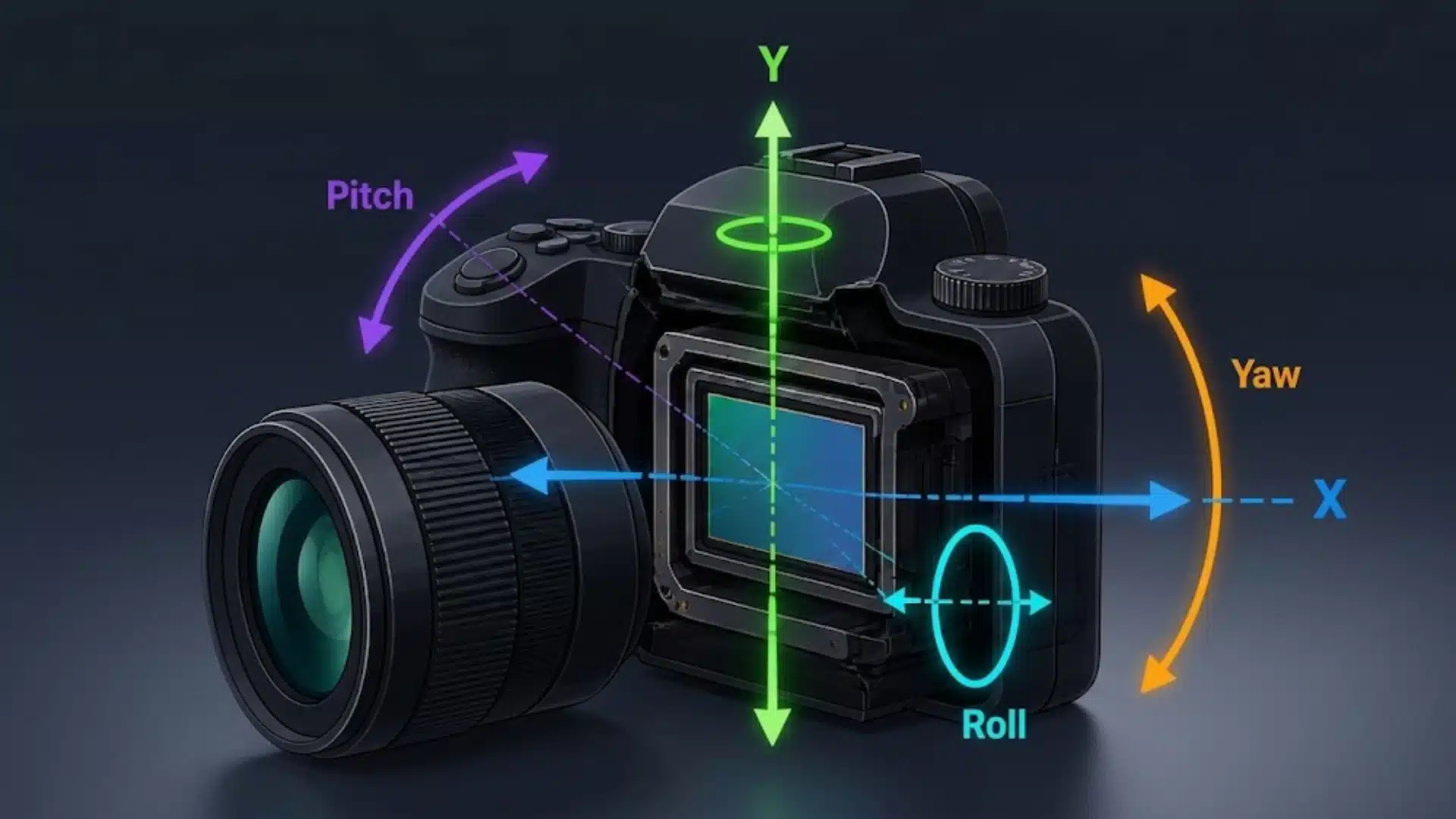
Most current IBIS systems describe themselves as 5-axis stabilization. This means the camera corrects shake in multiple physical directions, not just a single movement.
- Pitch: The camera tilts forward or backward, like a nodding motion. This is one of the most common causes of handheld blur.
- Yaw: The camera turns left or right, like shaking your head no. This movement often appears during handheld still photography.
- Roll: The camera twists around the lens axis. This can affect low-light photos, video clips, and carefully framed handheld shots.
- Horizontal shift: The camera moves side to side without tilting. This becomes more noticeable during macro, close-up, and product photography.
- Vertical shift: The camera moves up or down without tilting. This can affect macro shots, handheld video, and precise close-up framing.
Older systems mainly corrected pitch and yaw. Modern IBIS adds roll and shift correction because a handshake rarely moves in a single direction.
IBIS vs. OIS vs. Digital Stabilization: What Actually Differs
Stabilization can sound simple on a spec sheet, but camera brands use different systems for different situations.
Before choosing a camera or lens, it helps to see how each method behaves in real shooting conditions. The comparison below keeps the differences clear without getting too technical.
| Type | Where It Works | Best For | Weak Point |
|---|---|---|---|
| IBIS | Inside the camera body (sensor-level) | Handheld stills, low-light shooting, old or manual lenses, short video clips | Less effective at very long focal lengths (300mm+) |
| OIS (Optical Image Stabilization) | Inside the lens | Telephoto, wildlife, sports, optimized per focal length | Only works on lenses that include OIS; adds cost per lens |
| Digital (EIS) | Software crop or correction applied post-capture | Casual video, action cameras, vlogging | Reduces the image area and can soften the quality |
IBIS is the most flexible of the three because it stabilizes any attached lens. OIS systems can outperform IBIS at long focal lengths because the stabilization is tuned specifically for that lens.
Some cameras combine both, a setup often called Coordinated IS or Dual IS, where the body and lens communicate to share stabilization work across all five axes.
For photographers shooting events in low light, IBIS makes a particular difference when flash is off-limits and shutter speed is the only variable left to manage.
Do You Need an IBIS in a Camera?
IBIS is worth prioritizing if handheld shooting is part of regular camera use.
It helps most when shooting indoors, covering events, traveling, working in low light without flash, using prime lenses, or adapting older manual lenses. It also makes sense for handheld video when a gimbal is not part of the setup.
IBIS is less critical for photographers who mostly shoot from a tripod, work with stabilized telephoto lenses, or capture fast action in bright light at high shutter speeds.
It may also be easier to skip on a basic entry-level camera if budget matters more than stabilization.
For most photographers working across different lighting conditions and focal lengths, a camera with IBIS rated at five stops or higher gives a practical quality advantage.
The reciprocal rule, which says the safe handheld shutter speed equals 1/focal length, becomes much more forgiving with IBIS in the mix.
One thing worth noting: most DSLRs do not include IBIS at all.
When comparing camera systems, the key differences between mirrorless and DSLR cameras also matter; most DSLRs do not include IBIS at all.
Why is IBIS important for Real Photography and Video?
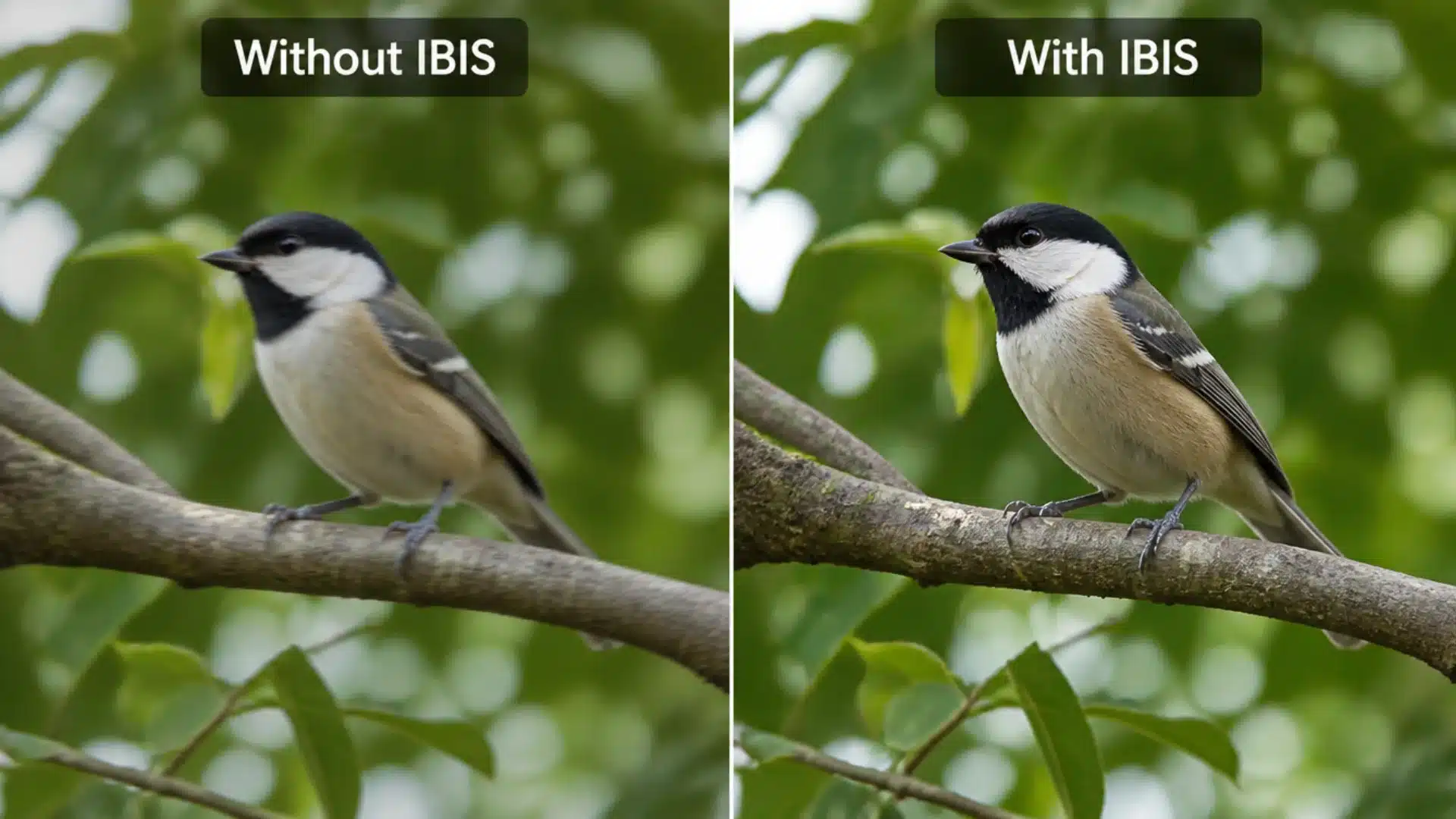
IBIS matters because it gives photographers and video creators more freedom when shooting handheld. From indoor photos to travel shots and casual video clips, IBIS can make the camera feel easier to trust in real shooting conditions.
1. Low Light Shooting
IBIS helps when light is limited and raising ISO would hurt image quality. It allows a slower shutter speed while keeping the camera steadier in your hands.
This can produce cleaner files with less noise in places like restaurants, galleries, events, and indoor venues. When flash is not allowed or would ruin the mood, IBIS gives more room to shoot naturally.
I have shot inside dimly lit spaces where a 50mm lens at f/1.8 put me at 1/8s or slower. Without stabilization, that shutter speed would mean blur almost every time.
2. Prime and Vintage Lenses
Many prime and vintage lenses do not include their own stabilization. I shoot with a couple of adapted manual lenses, and IBIS is the reason they stay in regular rotation rather than sitting on the shelf.
IBIS makes these lenses easier to use by stabilizing the sensor inside the camera body. This is helpful for photographers who enjoy manual lenses, older glass, or compact prime setups.
This is particularly useful for adapted lenses, where the camera and lens may not communicate electronically. IBIS works without that connection because it stabilizes the sensor directly, not the optics.
3. Travel and Street Photography
Travel and street photography often require fast reactions. Carrying a tripod is not always practical when walking through markets, cities, stations, or crowded spaces.
IBIS helps reduce small hand movements while you frame and shoot quickly.
It gives more confidence when capturing sudden moments, evening scenes, or indoor details without adding extra gear. For still photos, it can make lightweight shooting feel easier.
4. Handheld Video
Video shows small camera movements more clearly than still photos. IBIS helps reduce tiny shakes, tremors, and micro jitters during handheld clips.
It will not fully replace a gimbal for walking shots or smooth pans, but it can improve casual video, documentary clips, and B-roll.
Understanding camera settings for event photography is worth studying alongside IBIS, since shutter speed, aperture, and ISO choices all affect how much stabilization you actually need in a given scene.
How to Actually Read IBIS Stop Ratings?
IBIS stop ratings can look simple, but they should not be read as guaranteed results. A higher number usually means stronger stabilization, but actual sharpness depends on focal length, hand steadiness, posture, breathing, fatigue, and shooting conditions.
Each stop doubles the time the shutter can stay open while still aiming for a sharp handheld photo.
| IBIS Rating | Theoretical Max Shutter Speed | Practical Working Speed |
|---|---|---|
| 3 stops | 1/6s | Around 1/10s |
| 5 stops | 1/1.5s | Around 1/4s to 1/6s |
| 7 stops | Around 2.5s | Around 1s to 1.5s |
| 8.5 stops | Around 5s | Around 2s to 3s |
The practical speeds above assume a 70–80% field-use estimate, since manufacturer lab figures are measured under controlled conditions.
Treat stop ratings as useful comparison points between camera systems, not fixed guarantees for your own hands.
Where IBIS Falls Short?
IBIS is useful, but it has limits. It helps reduce camera shake, not subject movement. So, if a person walks through the frame at a slow shutter speed, the person can still appear blurry.
A few limits to keep in mind:
- Moving subjects: IBIS cannot freeze people, pets, cars, or fast action.
- Long lenses: At 300mm and above, lens-based OIS often performs better because it is tuned to that focal length.
- Battery use: IBIS draws extra power because the sensor and motors stay active throughout shooting.
- Tripod shots: Some cameras work better with IBIS turned off when mounted on a stable tripod. Many modern bodies detect tripod use automatically, but it is worth checking.
- Stop ratings: Manufacturer claims are tested under ideal conditions. Real-world results vary by shooter and situation.
Quick Examples of Cameras with IBIS
Many modern mirrorless cameras now include IBIS, but the strength of stabilization varies by sensor size, camera system, and lens pairing. Here are some cameras that use IBIS:
| Camera | Sensor and Resolution | IBIS Rating | Best Fit |
|---|---|---|---|
| Canon EOS R5 Mark II | Full frame, 45MP | Up to 8.5 stops with Coordinated IS when paired with RF lenses | Hybrid photo and video work |
| Nikon Z8 | Full frame, 45.7MP | 6 stops IBIS | Stills, video, wildlife, and action |
| Sony A7R V | Full frame, 61MP | Up to 8 stops IBIS | High-resolution photography and broad lens support |
| Fujifilm GFX100 II | Medium format, 102MP | Up to 8 stops | Large sensor image quality and studio-style work |
| OM System OM 1 Mark II | Micro Four Thirds, 20MP | Up to 8 stops | Compact handheld shooting and travel |
Note: Stop ratings are based on manufacturer specifications, so confirm the latest details on each official product page before buying.
Conclusion
IBIS is not a magic fix, but for handheld shooting across mixed lighting and focal lengths, it changes what is possible.
A studio shooter, a wildlife photographer, and a travel shooter will not value the same features equally, so judge stabilization by your actual shooting style rather than spec sheet comparisons.
Check the body, lens support, video needs, battery life, and real user feedback before buying. For anyone who prefers carrying less gear and shooting quickly, it adds real confidence behind the camera.
The biggest takeaway is simple: judge stabilization by your style, not by spec sheet numbers alone. A camera that fits your habits will always matter more than a headline rating.
Have you used a camera with IBIS yet, or are you planning to buy one? Comment below and share your experience.
Frequently Asked Questions
Should IBIS Be Turned off on a Tripod?
Most modern cameras detect tripod use automatically. Still, turn IBIS off if tripod shots look slightly soft or show odd vibration.
Does IBIS Help in Night Photography?
Yes, IBIS helps night photography by reducing hand shake at slower shutter speeds, keeping ISO lower, and improving still subjects in low light scenes clearly.
Does IBIS Work with Every Lens?
IBIS works with most lenses, including manual and legacy glass. Dual stabilization usually needs a compatible native lens that can communicate with the camera body.
Does IBIS Affect Battery Life?
Yes. The gyroscopes and actuators that power IBIS draw continuous power while the camera is active. During extended shooting sessions, this can noticeably reduce battery life compared to bodies without stabilization.