There’s a difference between having smoke detectors and having them in the right places.
Most homes have at least one, but position it wrong, and you’re either dealing with constant false alarms or, worse, a detector that stays quiet when a fire is actually spreading.
Many homeowners assume that any spot on the ceiling counts. It doesn’t.
The distance from your stove, the airflow from your HVAC vent, and even the slope of your ceiling all affect whether your detector catches smoke early or misses it entirely.
Knowing exactly where to place smoke detectors is what separates a real safety system from one that just looks like one.
Start with the Basics
The National Fire Protection Association (NFPA) is clear on the minimum: a detector inside every bedroom, outside each sleeping area, and on every level of the home, including the basement.
The bedroom requirement catches people off guard.
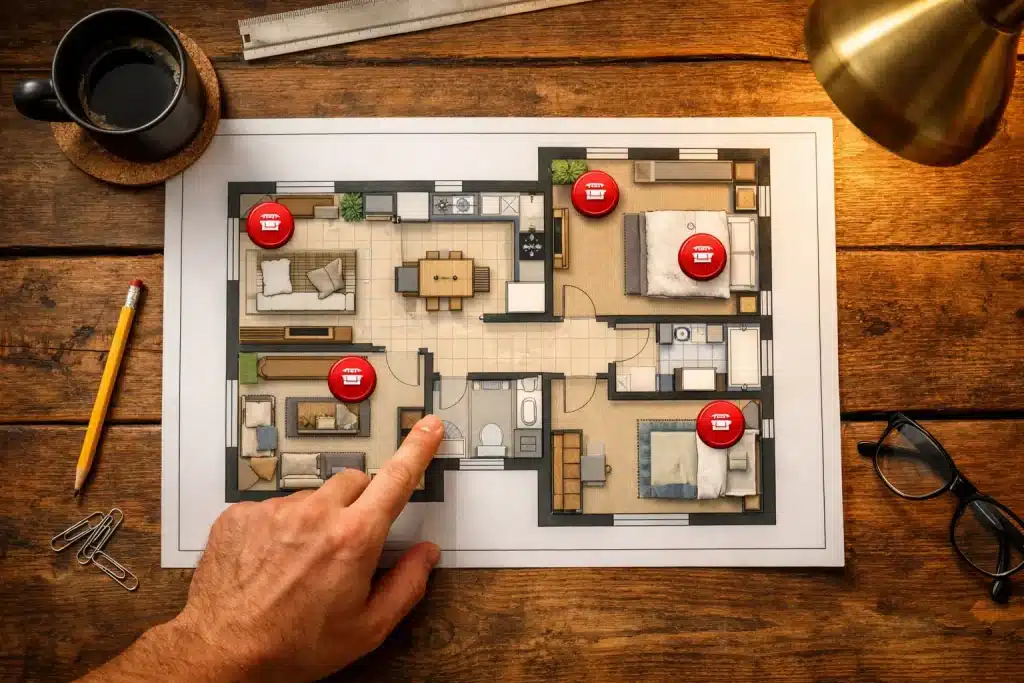
A hallway detector feels like enough, but a closed bedroom door can block smoke and delay the alarm by several critical minutes. Put one inside each bedroom, not just nearby.
If your home has three floors, that’s three separate coverage zones before you even think about individual rooms, and the total count adds up faster than most people expect once you factor in bedrooms and hallways.
Ceiling vs. Wall: The Right Height
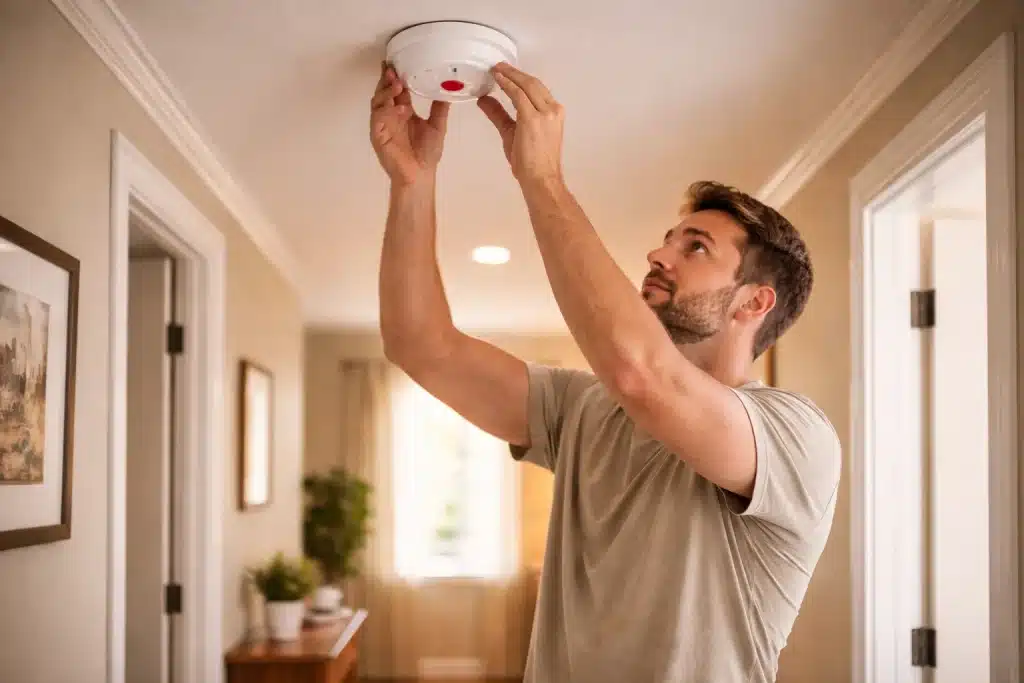
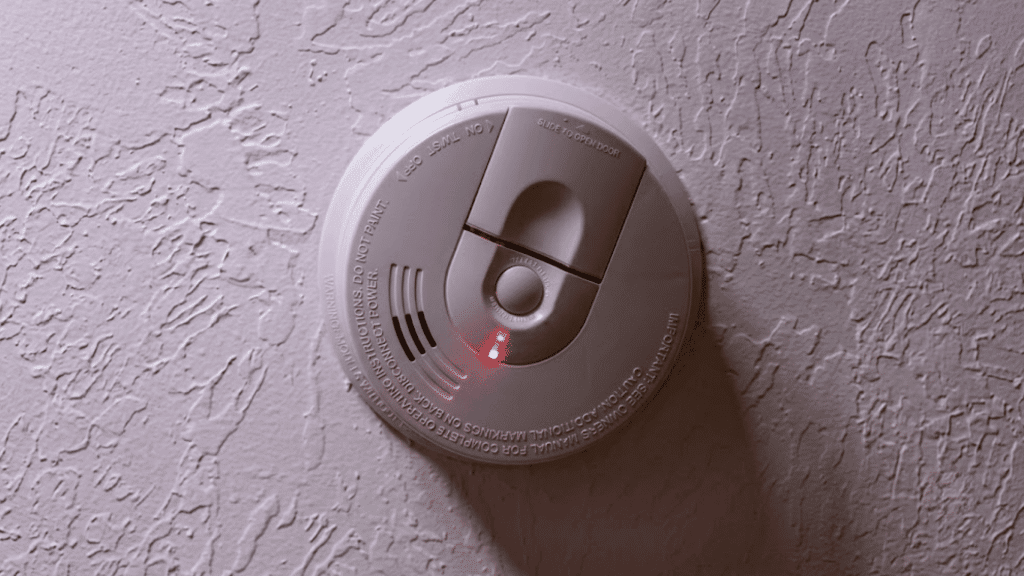
Smoke rises, so ceiling placement is always the first choice. Aim for the center of the room and keep the detector at least four inches from any wall.
Dead air collects in corners, and smoke doesn’t always reach there quickly.
If wall mounting is your only option, position it between four and twelve inches from the ceiling. Any lower and you’re in the zone where smoke concentration is thinner.
For sloped or peaked ceilings, place the detector within three feet of the highest point, but not at the very apex where air tends to stagnate.
Keep Your Distance From the Kitchen
The kitchen is one of the trickier spots. Too close to the stove means constant false alarms, and that leads to the worst habit in home fire safety: removing the battery to stop the noise.
NFPA guidelines call for at least ten feet from any fixed cooking appliance.
In smaller kitchens where that’s not possible, a photoelectric detector is a better fit since it’s less reactive to cooking particles.
If your kitchen flows into an open living area, position the detector on the living room side of the boundary to provide coverage without nuisance triggers.
Hallways, Stairwells, and the Basement
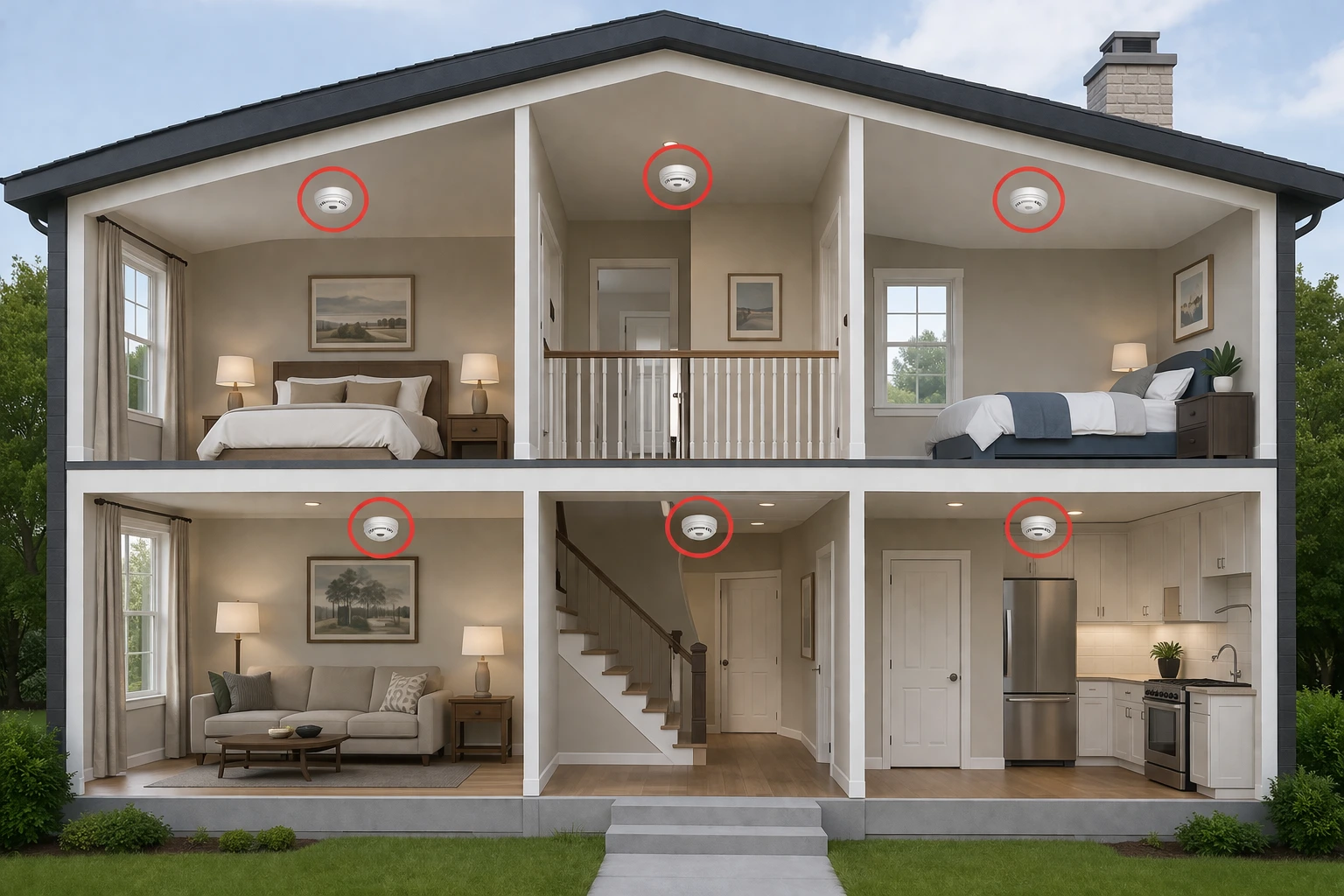
Hallways are natural smoke highways; they connect every room, and smoke moves through them fast. If yours runs longer than 30 feet, put one at each end.
At stairwells, mount a detector at the top, since smoke rises and concentrates there before spreading to upper floors.
For the basement, ceiling-mount it at the bottom of the stairs so it intercepts smoke before it climbs into the main living areas.
Where Not to Install Them?
Placement is as much about avoiding the wrong spots as finding the right ones:
- Near HVAC vents: Airflow pushes smoke away from the sensor. Stay at least three feet from any supply register.
- Bathrooms and garages: Steam and exhaust fumes cause constant false alarms. Use a heat detector in the garage instead.
- Near windows or doors: Drafts disrupt smoke patterns and can prevent detection when it matters.
- Uninsulated exterior walls: Temperature swings damage sensors over time, especially in colder climates.
Open-Concept Homes Need Extra Thought
In open floor plans where the kitchen, living, and dining areas flow together, the room-by-room logic doesn’t apply as cleanly.
Think in terms of smoke travel paths instead. Where would a kitchen fire spread first? Which route leads toward the bedroom hallway or stairwell?
Placement decisions for these layouts should be made before you start pulling cable.
A step-by-step approach to fire alarm installation helps you map the layout before committing to hole locations, especially important when open spaces require more thought than a standard floor plan.
Conclusion
Getting smoke detector placement right isn’t complicated, but it takes more than just picking a random spot on the ceiling.
Focus on covering every floor, each bedroom, and the main paths smoke would travel through your home.
Avoid areas that lead to false alarms or poor detection, and consider how placement fits with your overall setup.
If you are building a full system, placement and wiring should work together for better coverage.
Are you planning your smoke detector layout? Share how you are placing them in your home, or any doubts you have, tell us in the comments below.
Frequently Asked Questions
Should Smoke Detectors Go Inside or Outside the Bedroom?
Both. One inside the bedroom and one in the hallway outside, a closed door can slow smoke enough to cost you critical response time.
Can I Put a Smoke Detector in the Garage?
Standard detectors aren’t recommended there. Exhaust fumes trigger false alarms constantly. A heat detector is the better choice.
How Far Should a Detector Be from an Air Vent?
At least three feet from any supply register and out of the direct airflow path.