When I look at how quickly regulations shift, I know I’m not the only one trying to make sense of what the next update will bring.
That’s why I built this guide to help you walk through the new rules with clarity and fewer surprises.
As I break down the steps I use to track changes, you can follow along and compare them with the systems you already have in place.
I’ll also point out areas that teams often overlook, along with simple ways to prepare before issues show up.
My goal is to make data center compliance feel manageable, even when the guidelines keep moving.
By the end, you’ll have a clear view of what’s changing and how to stay ahead of it.
What is Data Center Compliance?
Data center compliance refers to the set of rules, standards, and security requirements that data centers must follow to protect systems, safeguard information, and maintain reliable operations.
Guidelines that help ensure that facilities manage data responsibly, limit risks, and meet legal or industry expectations.
Compliance covers several areas, including physical security, access control, data storage practices, environmental protections, and ongoing monitoring.
Many organizations rely on frameworks such as ISO, SOC, HIPAA, or PCI, depending on the type of data they handle.
This structured approach keeps data centers aligned with current requirements while preparing them for future updates.
Data Center Compliance Standards You Need to Know
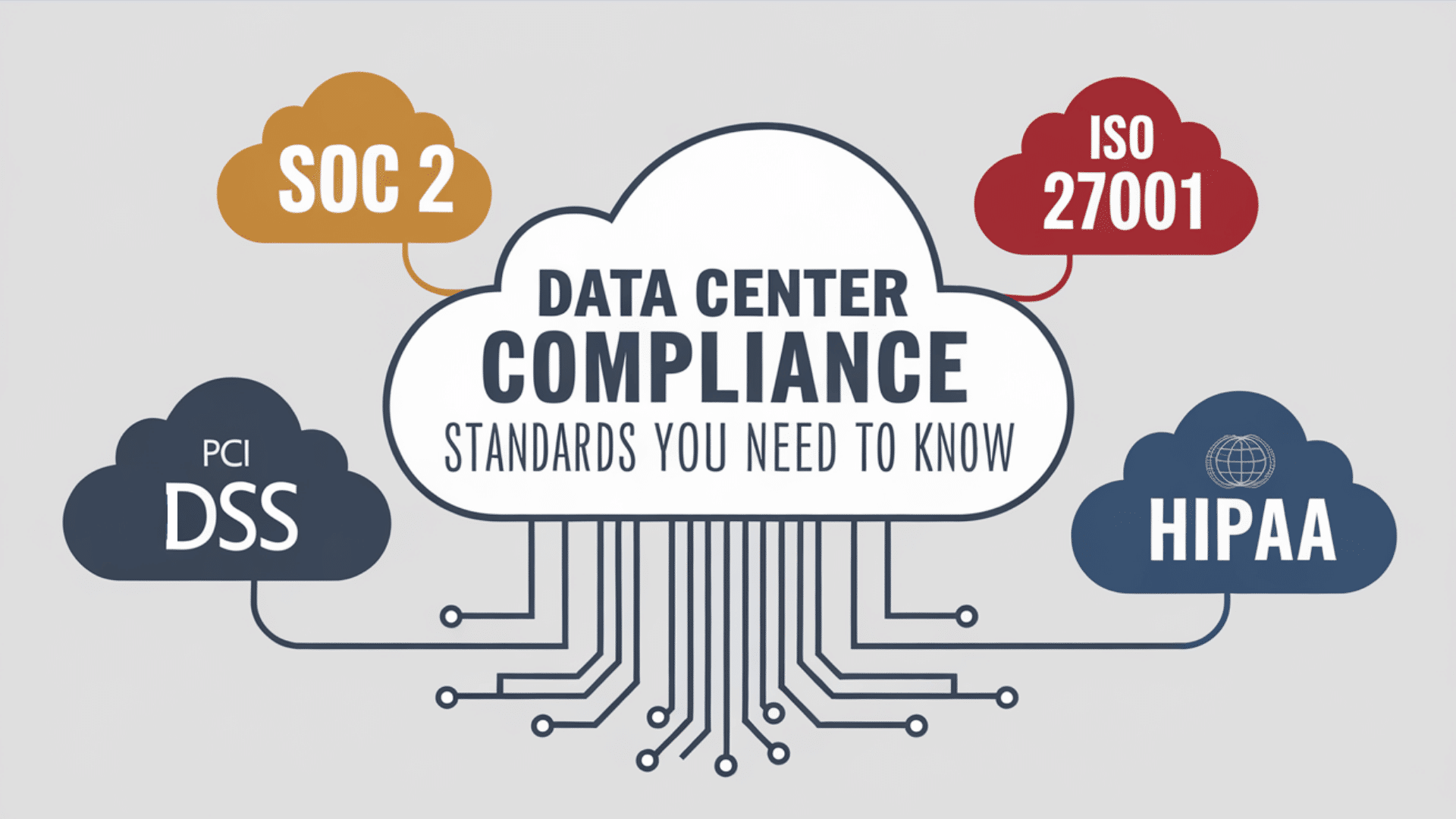
A quick overview of the most critical regulatory standards that guide secure operations, data protection, and industry-specific compliance needs.
1. SOC Compliance
This standard focuses on five core principles that ensure strong security, availability, processing integrity, confidentiality, and privacy across data center operations.
It evaluates how well internal controls protect data and support reliable service performance. Independent audits verify adherence, giving organizations a clear picture of operational risks and strengths.
For service providers, meeting these expectations helps build trust with clients who depend on consistent and secure handling of sensitive information.
2. HIPAA Requirements
Guidelines outline strict safeguards for storing and handling protected health information within digital environments.
HIPAA emphasizes administrative controls, physical protections, and technical measures that prevent unauthorized access or disclosure.
Data centers supporting healthcare organizations must maintain rigorous access rules, secure transmission practices, and thorough documentation.
3. ISO Certifications
Frameworks provide structured methods for managing information security risks and strengthening cloud-based operations.
Specifies precise requirements for establishing, implementing, monitoring, and improving security controls across physical and digital infrastructure.
Certification demonstrates that an organization follows a systematic approach to protecting data while reducing vulnerabilities tied to human error, outdated processes, or environmental risks.
4. Standards for Payment Data Security
The rules focus on safeguarding cardholder information handled by payment systems and supporting infrastructure.
It requires strong authentication practices, controlled network segmentation, continuous monitoring, and strict handling of sensitive financial data.
Encryption, vulnerability scanning, and documented risk-management procedures play central roles in maintaining compliance.
5. Data Protection Regulations
Data centers handling global operations must account for cross-border transfer rules and maintain accountability through documented processes.
Compliance includes using security measures like encryption, access control, and continuous monitoring to reduce exposure.
The expectations help organizations establish responsible data-handling habits while supporting privacy requirements across various international regulatory landscapes.
Top Data Center Compliance Software and Platforms
A quick overview of leading platforms that help organizations automate controls, simplify audits, and maintain ongoing alignment with modern data center compliance requirements.
1. Vanta
Vanta automates evidence collection and delivers continuous monitoring across more than 35 security and privacy frameworks.
It integrates with major cloud providers, identity platforms, and endpoint tools to centralize control management.
Automated alerts highlight gaps before they impact audits, helping teams maintain stronger data center compliance.
Its dashboard offers real-time visibility into security posture, making it easier to track progress, prepare for assessments, and manage recurring requirements across large environments.
2. Sprinto
Designed for fast-moving organizations, this solution provides adaptive automation for SOC 2, ISO 27001, HIPAA, and PCI needs.
More than 100 integrations simplify control mapping, risk assessments, and policy enforcement. It automatically collects evidence, identifies inconsistencies, and generates audit-ready reports.
Central workflows give teams a streamlined view of compliance status, making regulatory tasks more manageable.
Its structured approach reduces manual work and supports scalable security programs for growing data environments.
3. Drata
The platform focuses on continuous monitoring of security controls across frameworks such as SOC 2, ISO 27001, HIPAA, and GDPR.
Cloud integrations pull configuration details directly into the system to validate compliance status in real time. Automated workflows handle evidence collection, gap detection, and remediation tracking.
Its reporting features support teams preparing for external audits, while dashboards offer visibility into ongoing compliance health.
The system strengthens operational readiness by reducing delays tied to manual verification.
4. Secureframe
This solution streamlines end-to-end compliance workflows with automated evidence capture, policy management, and multi-framework support.
It integrates with cloud infrastructure, HR systems, and identity platforms to verify controls continuously.
Dashboards display progress across requirements to help organizations manage complex regulatory environments.
The platform supports data center compliance efforts by simplifying recurring tasks, highlighting vulnerabilities, and organizing documentation needed for audits.
5. SentinelOne
This AI-driven platform provides automated compliance dashboards for PCI-DSS, NIST, SOC 2, and ISO 27001.
It monitors cloud and data center infrastructure in real time, detecting configuration issues and security risks. Automated analysis helps teams assess exposure and track adherence to standards.
Its threat-intelligence features add an extra layer of protection by identifying suspicious activity early.
Centralized reporting supports audit preparation and provides insights needed to maintain consistent regulatory alignment across distributed systems.
6. Hyperproof
This tool enables real-time control checks, automated workflows, and detailed reporting across complex data ecosystems.
It centralizes compliance tasks, making it easier to track responsibilities, document activities, and verify control effectiveness.
Continuous monitoring helps detect failures that may affect data center compliance.
Its customizable templates and integrations support multiple regulatory frameworks, reducing repetitive work.
7. AuditBoard
Built for risk and audit teams, this platform unifies risk assessments, continuous monitoring, and collaboration workflows.
It helps organizations standardize their compliance processes across multiple regulations, improving consistency and visibility.
The system supports tracking of control performance and remediation activities, ensuring that potential issues are addressed promptly.
Its centralized environment improves coordination across departments, making audits more efficient and predictable.
8. Nlyte DCIM
This DCIM solution aligns with federal standards such as DHS CDM and provides detailed audit reporting for infrastructure environments.
It supports change logging, asset tracking, and configuration management to maintain transparency. Veracode-verified security strengthens protection across operational systems.
The platform helps organizations meet regulatory expectations through structured workflows and data-driven insights.
Its compliance-focused features assist teams working to maintain strong oversight of physical and digital infrastructure components.
9. Sunbird Software (DC Track + PowerIQ)
This combined DCIM suite provides monitoring, dashboard analytics, power management, and customizable reporting capabilities.
It helps organizations track capacity, performance, and environmental conditions across facilities.
Compliance reporting tools allow teams to generate documentation tailored to different regulatory needs. Automated data collection ensures accuracy across inventory and power usage.
The platform supports efficient governance by centralizing visibility into infrastructure operations, helping maintain stability and meet regulatory expectations for critical systems.
10. Device42
Device42 offers comprehensive DCIM features for asset management, capacity planning, and configuration tracing.
It maps relationships between hardware, software, and network components to improve transparency across data center operations.
Automated discovery keeps inventories accurate, reducing the risk of gaps that affect audits.
Reporting tools assist with documenting regulatory controls, while power and rack insights strengthen infrastructure planning.
11. XpedITe (RiT Tech)
The DCIM platform supports detailed grey and white space management through advanced 2D and 3D visualization tools.
It tracks assets, power usage, cabling, and environmental factors to maintain operational accuracy and capacity readiness.
Machine learning capabilities assist with forecasting, capacity planning, and compliance-related audits by identifying potential risks early.
Automated insights help organizations manage infrastructure constraints, improve energy efficiency, and maintain accurate documentation for regulatory requirements.
What is the Future of Data Center Compliance Standards?
As regulations expand, organizations will face expectations that include continuous monitoring, real-time reporting, and rapid proof of control effectiveness.
Standards will increasingly emphasize zero-trust security models, resilient cloud architectures, and unified governance across hybrid and multi-region infrastructures.
New frameworks may include AI-based risk detection, sustainability tracking, and stronger supply-chain oversight
With data privacy laws evolving worldwide, compliance programs will need adaptive, scalable systems that support cross-border requirements.
Proactive, data-driven compliance will reshape how organizations secure operations and maintain accountability.
Common Data Center Compliance Challenges
A brief look at the most frequent issues organizations face while managing regulatory expectations, documentation needs, and evolving security requirements.
- Outdated controls: Legacy systems fail to meet new standards.
- Poor documentation: Missing records slow audits and increase risks.
- Access mismanagement: Inconsistent permissions expose sensitive data.
- Limited monitoring: Gaps in visibility lead to unnoticed violations.
- Vendor dependencies: Third-party gaps affect overall compliance.
- Training gaps: Staff unfamiliarity leads to policy violations.
- Incident response delays: Slow reporting increases compliance risk.
- Configuration drift: Systems slowly fall out of compliance over time.
- Incomplete risk assessments: Threats remain unaddressed or underestimated.
Conclusion
As I close this guide, I want the main ideas, tools, and standards discussed here to give you a clearer path through the evolving demands of data center compliance.
Regulations will continue to shift, but staying consistent with monitoring, documentation, and control checks can reduce stress and uncertainty.
This wrap-up brings together the most important points so you can adjust your systems, support your team, and prepare for new requirements with confidence.
Use what you learned here to build a plan that protects your operations and strengthens long-term readiness.
Which compliance areas need the most attention right now?
If you want deeper guidance or help shaping your next steps, drop a comment below and start the conversation.