Currently, 51.4% of American homes use some form of smart home technology, which equates to 77 million homes. This usage is motivated by benefits such as convenience, security, and energy efficiency.
Each of these benefits is the result of multiple advanced technologies. However, artificial intelligence (AI) leads the charge by proactively identifying user needs, assessing data, and optimizing usage.
This article explores how AI amplifies the power of smart homes and what this means for the industry by analyzing the following aspects in detail:
Smart Homes – What AI Brings to the Table
AI brings the smart in smart homes with a range of advanced capabilities extending across common technologies such as smart thermostats, lighting, and security. The most significant ones include:
- Integrated Automation
- Personalized Environment
- Smart Real-Time Monitoring
- Predictive Analytics
Let’s take a look at how.
Integrated Automation
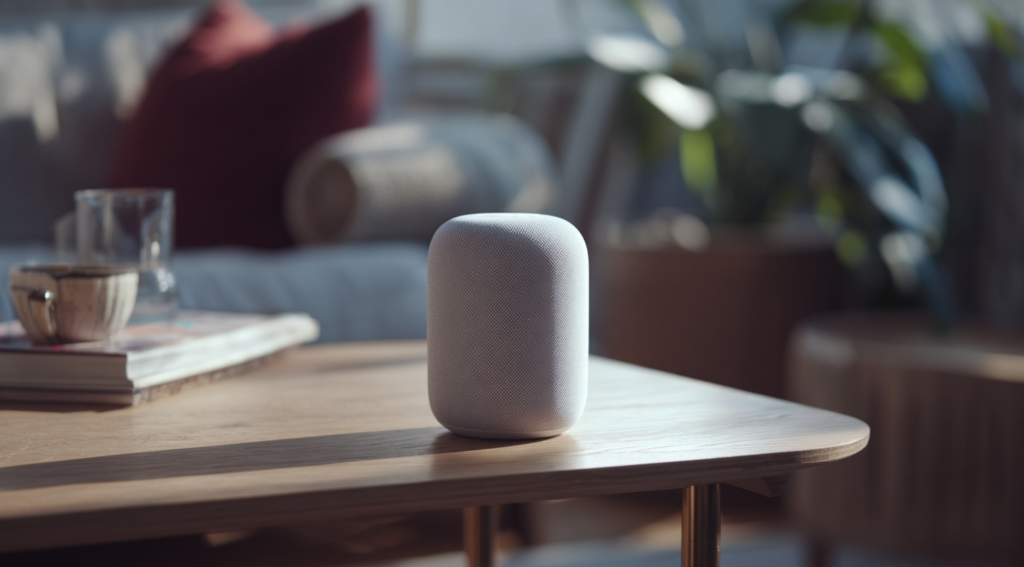
AI-powered smart assistants such as Home Assistant can seamlessly integrate with multiple smart home technologies, centralizing the automation process to a single point.
Through simple voice commands, homeowners can implement standard automations such as making their morning coffee or turning lights off in other rooms. This integrated automation can allow homeowners flexibility, convenience, and efficiency across their daily lives.
Personalized Environment
By analyzing data related to a user’s lifestyle, usage needs, and preferences, AI helps create a home environment tailored to each of these factors across all smart technologies they use.
For example, if a homeowner prefers to come home from work to the lights dim and the temperature warm, AI can communicate with the relevant systems over the internet to implement these settings.
It can also instruct doors to automatically unlock by the time a homeowner reaches their front door. Fast and reliable internet services like Cox Internet unlock even more efficiency for this process.
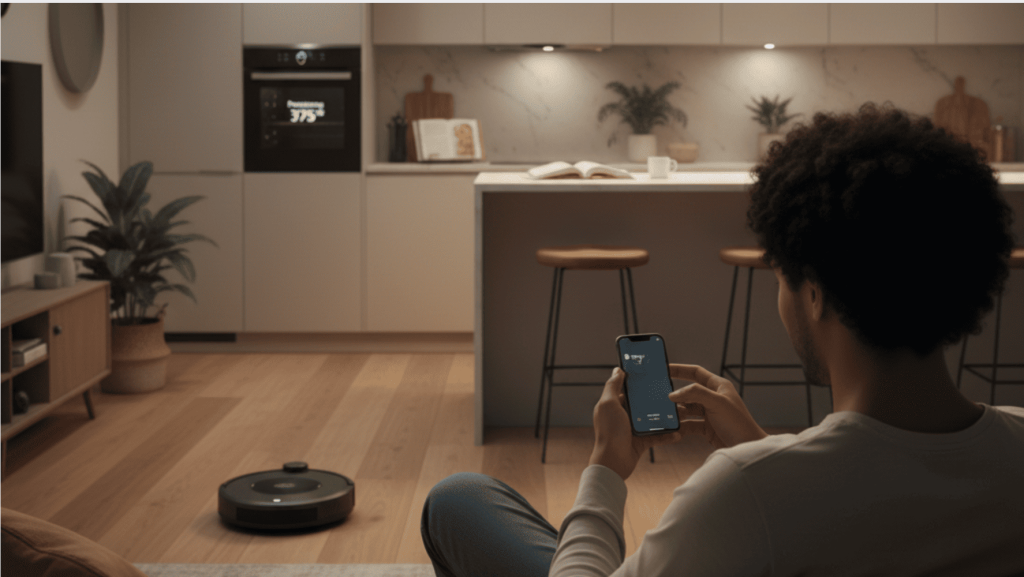
AI can also personalize the user experience with smart appliances such as fridges, washing machines, vacuums, and dishwashers. For example, fridges can suggest recipes with current contents, washing machines can detect fibers, and dishwashers can automatically dispense detergents.
Smart Real-Time Monitoring
This feature is most applicable to smart security systems, as it monitors a property both indoors and outdoors to actively identify threats, alert homeowners, and notify the relevant authorities.
AI-powered features such as facial recognition or behavioral analytics can sound the alarm when they detect a potential intruder, eliminating the chance of the crime developing any further.
Similarly, computer vision and machine learning can differentiate between harmless steam or harmful smoke, and prevent it from expanding by implementing preventive measures.
Predictive Analytics
Predictive analytics refers to AI’s capability to assess internal and external factors to make predictions. Some examples include analyzing weather forecasts to suggest optimal thermostat settings, analyzing machinery runtimes to schedule maintenance, or identifying potential water leaks and shutting off valves.
These capabilities can prevent high costs in the long term. For example, water damage costs homes in America anywhere between $1,383 and $6,379 in restoration charges, and that’s a conservative figure.
They can also help homeowners optimize usage for better energy efficiency. For example, AI can analyze a home’s previous electricity usage, weather patterns, and number of members to forecast future energy consumption.
Each of these advanced capabilities AI offers smart devices has an impact on the future of smart home adoption. There are a few other factors at play as well, and the next section dives into both these aspects in detail.
How AI Will Shape the Future of Smart Homes

The answer lies in three core factors, which are:
- Expansion of Internet Infrastructure
- Improvements in Median Household Incomes
- Advancements in AI Itself
Let’s explore how they’re linked.
Expansion of Internet Infrastructure
Since AI-powered smart devices primarily rely on the internet for communication, the expansion of internet infrastructure will directly impact the growth of smart homes positively. Both internet providers and the government are actively playing a role in this regard.
For example, Cox customer service offers bilingual support in English and Spanish to make it easier for Spanish-speaking homes in the US to set up broadband and related technologies in their preferred languages.
Similarly, the $42 billion BEAD Program is currently in its rollout phase. The program aims to expand high-speed internet access to rural, remote, and underserved areas.
Improvements in Median Household Incomes
The rise in average household incomes is directly linked to a higher use of luxuries such as smart home technology. There has been a 32% rise in household incomes over the past 50 years.
If these incomes continue to rise, homeowners not using any smart devices may be encouraged to use one, and those using one may be encouraged to use multiple, leading to the industry’s growth.
Advancements in AI Itself
The last and most important piece of the puzzle is what AI may offer smart homes in the near future. Some of the most anticipated features include:
- Ambient Intelligence: advanced predictive analytics will enable comprehensive environmental understanding and much lower human input. This will allow AI to blend with the ambience of a home and automatically perform its roles.
- Predictive Wellness: For seniors, AI will constantly monitor and optimize activities based on well-being. This includes features such as passive activity monitoring, gait analysis, and fall detection.
- Advanced Home Robotics: Robots may soon become more advanced in their capabilities, and be able to perform humanlike physical tasks. Similarly, voice assistants may also be able to understand and address complex queries.
AI – Empowering the New Wave of Smart Home Experiences
AI has made significant contributions in accelerating the adoption of smart homes, with features like personalization, automation, and predictive analytics at the forefront.
As the power of AI advances, we can predict a new wave of smart home experiences that are defined by ambient intelligence, predictive wellness, and advanced robotics.