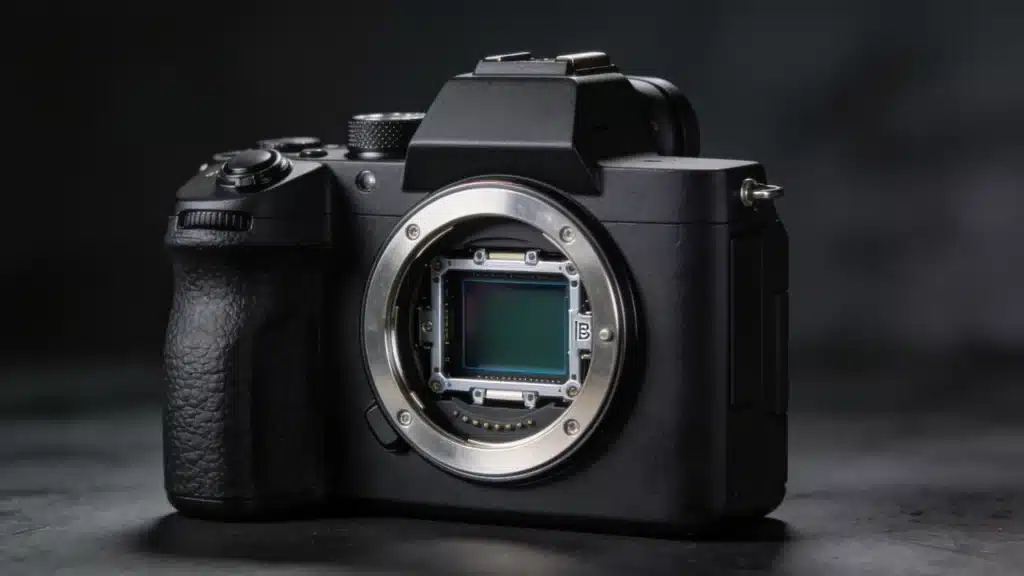
I’ve handled a lot of cameras in the $1,000-$1,500 range, and the Canon EOS R8 sits in a strange and interesting spot.
On paper, its autofocus and image quality rival cameras that cost $1,000 more, which is the kind of spec sheet that gets attention fast.
In practice, Canon made some deliberate cuts to bring the price down, and whether those cuts matter depends entirely on how you shoot.
A travel photographer carrying one card and one battery probably won’t notice most of them. An event shooter who can’t afford to lose a single file will definitely lose one.
I’ve shot with the R8 in both scenarios, and that gap in expectations is really what this review comes down to: what it does well, what it sacrifices, and who it’s actually built for.
Quick Summary about Canon EOS R8
The Canon EOS R8 is an excellent choice for travel photographers, content creators, vloggers, hybrid shooters, and Canon DSLR users looking to upgrade to full-frame mirrorless without paying flagship prices.
Available for around $1,299-$1,499 (body only), it offers outstanding value with the same 24.2MP full-frame sensor and Dual Pixel CMOS AF II system found in the EOS R6 Mark II.
Buyers get uncropped 4K 60 fps video, 40 fps burst shooting, excellent low-light performance, Canon Log 3, reliable subject tracking, a lightweight body, and broad RF and EF lens compatibility.
It is ideal for anyone who prioritizes image quality, autofocus, and video performance over features like in-body image stabilization and extensive weather sealing.
It is not built for sports shooters, wildlife photographers who shoot long bursts, or anyone who needs a second card slot for backup during paid work, since the single UHS-II slot and shallow buffer become limiting in those situations.
About Canon EOS R8
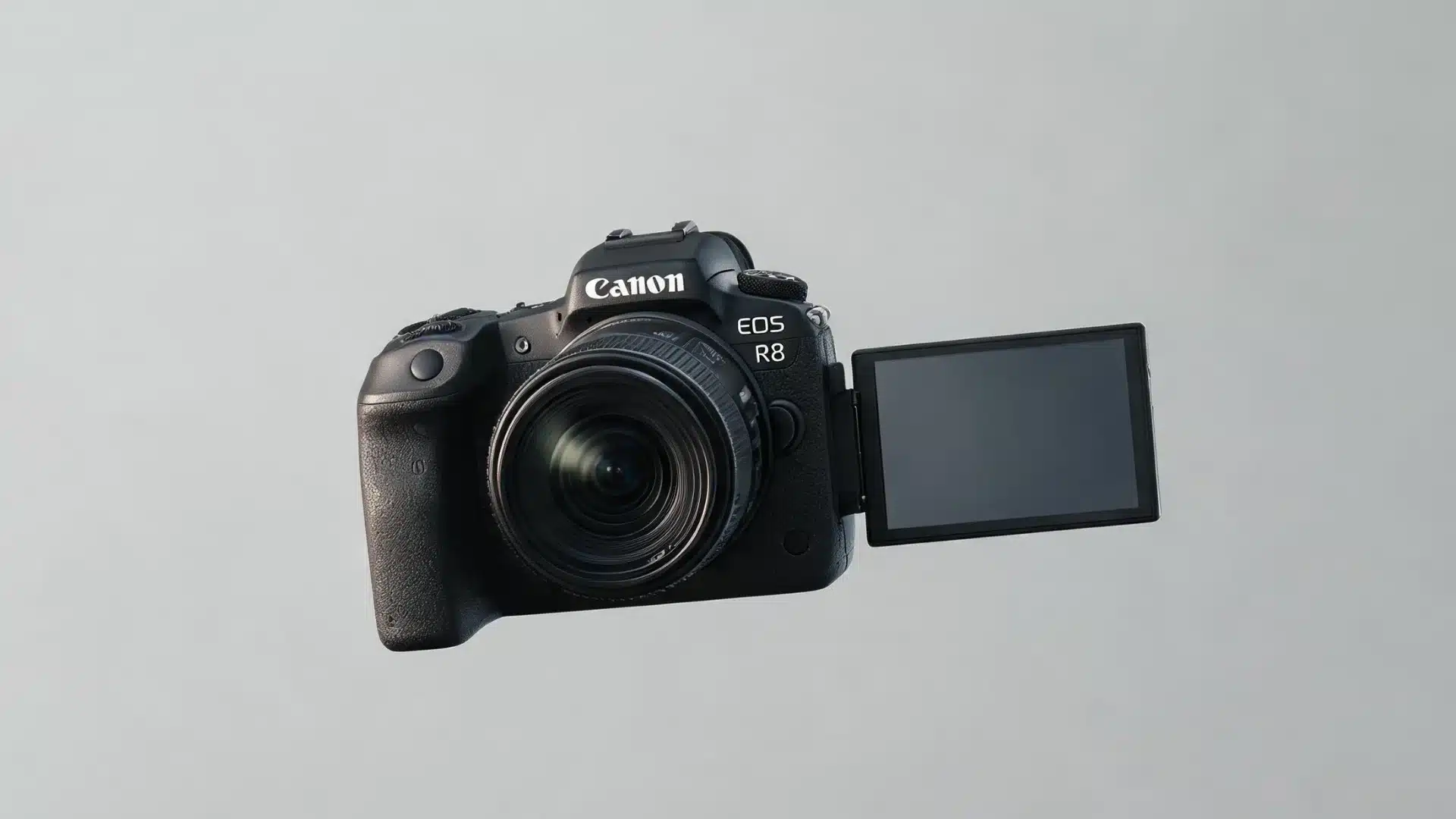
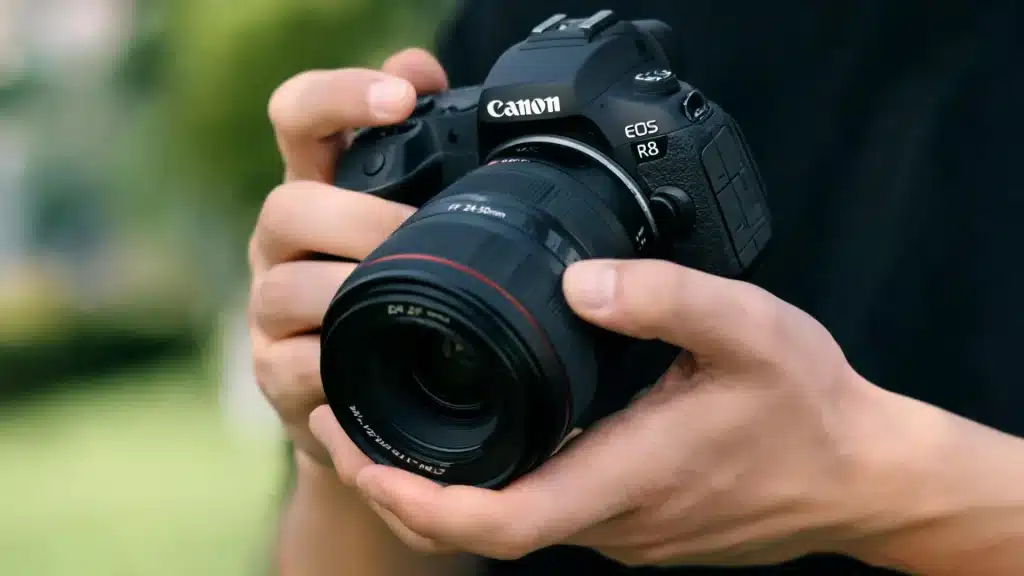
The Canon EOS R8 is a full-frame mirrorless camera that Canon introduced in February 2023.
It’s part of Canon’s RF-mount lineup, positioned above the EOS RP and below the EOS R6 Mark II, making it an entry-level full-frame option.
It’s designed for hybrid creators, travel photographers, content creators, and DSLR users moving up to full-frame without paying for a larger, more expensive professional body.
The EOS R8 launched at a body-only price of $1,499 and now commonly sells for around $1,299 or less.
Canon also sells it as a kit with the RF 24-50mm F4.5-6.3 IS STM lens, which makes for a compact, travel-friendly setup for beginners and enthusiasts.
What’s in the Box?
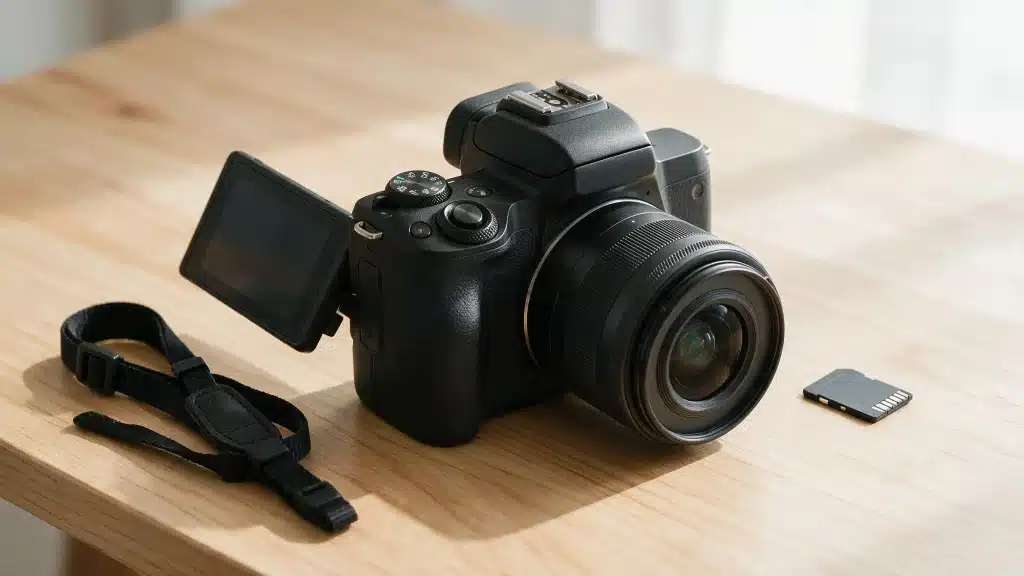
- Canon EOS R8 body with battery and body cap pre-installed.
- RF 24-50mm F4.5-6.3 IS STM lens (kit version only).
- LP-E17 battery.
- LC-E17 battery charger.
- USB-C cable for charging, data transfer, and webcam connection.
- Neck strap with EOS branding.
- Printed quick-start guide (full manual available as a digital download).
Key Features of the Canon EOS R8
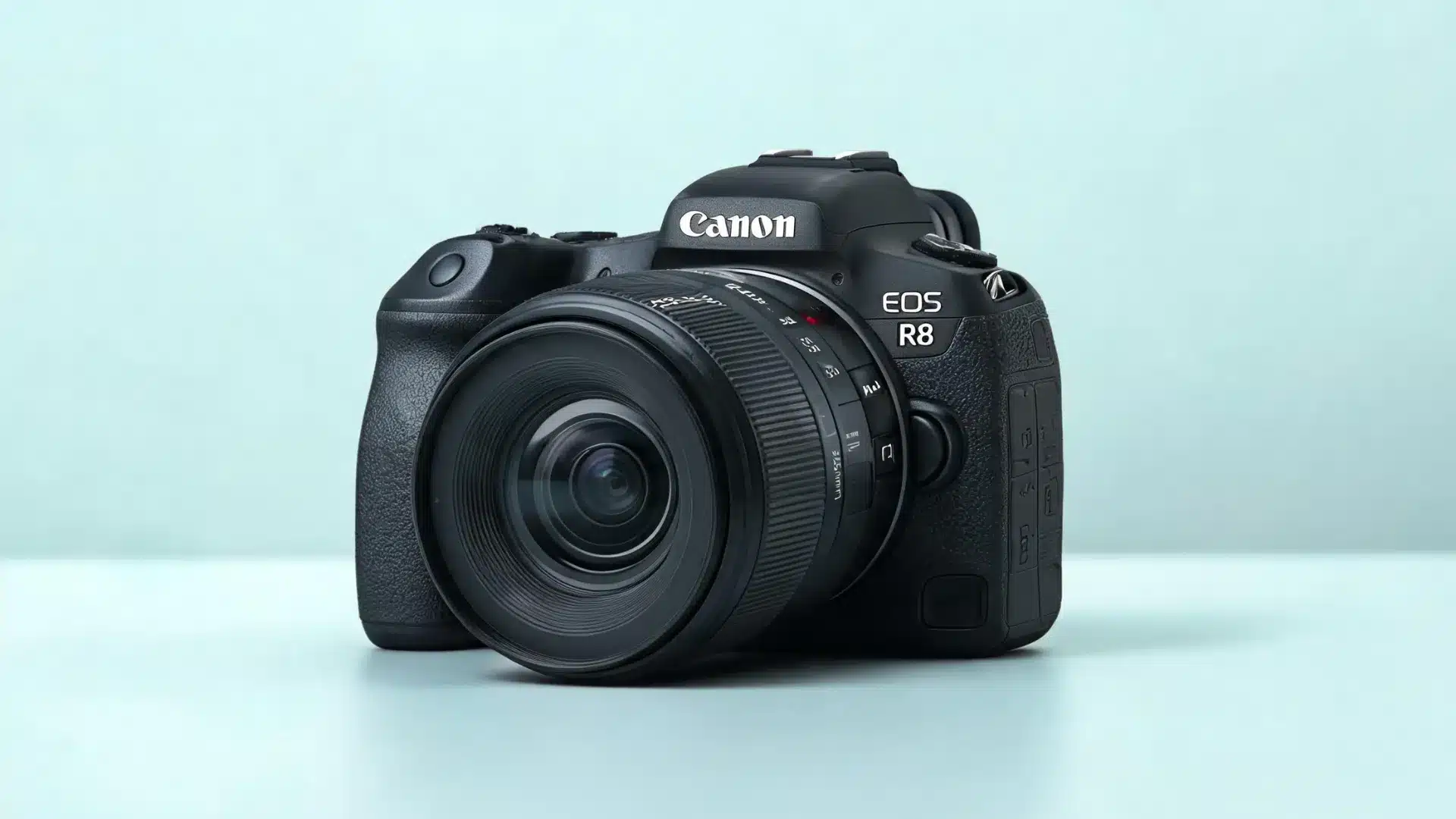
The Canon EOS R8 may be entry-level in Canon’s full-frame lineup, but its feature set feels far more advanced.
1. 24.2MP Full-Frame CMOS Sensor
The Canon EOS R8 features the same 24.2MP full-frame CMOS sensor as the EOS R6 Mark II, delivering excellent image quality without a crop factor.
With a native ISO range of 100 to 102,400, it performs well in both bright and low-light conditions.
The sensor delivers impressive dynamic range, while RAW files retain plenty of shadow detail, making post-processing and exposure recovery much easier.
During a low-light shoot at ISO 6400, I pulled detail back out of the shadows in Lightroom without the noise turning blotchy, which is the kind of recovery I’d normally expect from a more expensive body.
It’s the same sensor behavior I noted when I reviewed the R6 Mark II last year, which says a lot about how much value Canon packed into this lower-priced model.
2. Dual Pixel CMOS AF II
Canon equips the EOS R8 with its advanced Dual Pixel CMOS AF II system, the same autofocus technology used in higher-end models.
It uses deep-learning subject detection to accurately track people, animals, and vehicles while maintaining reliable face and eye detection.
Autofocus remains fast and consistent even when subjects move across the frame, making it one of the strongest autofocus systems available in this price range.
I’ve run eye-detection AF in busy outdoor scenes with people walking in and out of frame, and the focus box held onto the right subject more reliably than I expected from a camera in this price tier.
3. Uncropped 4K 60fps Video Recording
The EOS R8 records uncropped 4K video at up to 60 fps with 6K oversampling, producing sharp, detailed footage. It also supports internal 10-bit Canon Log 3 recording for greater flexibility during color grading.
Native 9:16 vertical video recording is included for social media creators, and the camera can record continuously for up to two hours under supported recording conditions.
The footage holds up well even when I pushed exposure and color in post, though I noticed the camera runs warm during longer 4K sessions, which is worth knowing if you shoot extended interviews or live events.
4. 40fps Continuous Burst Shooting
For action and wildlife photography, the Canon EOS R8 offers continuous shooting speeds of up to 40 frames per second with the electronic shutter.
When rolling shutter effects are a concern, photographers can switch to the electronic first-curtain shutter, which supports continuous shooting at up to 6fps.
This combination provides flexibility for capturing fast-moving subjects in different shooting situations.
Casual and travel shooters rarely hit this limit, but anyone photographing fast wildlife or sports in long sequences will notice it.
5. Vari-Angle Touchscreen Display
The EOS R8 includes a fully articulating 3.0-inch touchscreen that makes shooting from high, low, or front-facing angles much easier.
It is especially useful for vloggers, content creators, and photographers working with creative compositions.
Canon also includes Touch-and-Drag AF, allowing users to move the focus point by sliding a finger across the screen while composing through the electronic viewfinder.
One trade-off worth noting: Canon removed the AF joystick to cut costs, so anyone used to a dedicated joystick on a DSLR or higher-end mirrorless body will need to rely on the touchscreen or the Q menu instead.
Most people adapt within a few shots, but if you shoot quickly through the viewfinder, it’s a real adjustment.
If you’re switching from a DSLR to mirrorless for the first time, expect a short learning curve in handling, not just autofocus.
6. UVC/UAC Webcam Support
The Canon EOS R8 can function as a high-quality webcam through its USB-C connection without requiring a capture card or additional software.
It works with both Windows and macOS and is compatible with popular platforms such as Zoom, Microsoft Teams, OBS, and other streaming applications.
This makes it a practical choice for video calls, livestreams, and online content creation.
7. RF and EF Lens Compatibility
The EOS R8 supports Canon’s RF lens system, giving users access to more than 100 native RF lenses designed for mirrorless cameras.
Existing Canon DSLR users can also continue using EF and EF-S lenses through the Canon EF-EOS R adapter, with autofocus performance remaining nearly identical to native operation.
This provides an easy upgrade path for photographers moving from Canon DSLRs.
Worth noting if you’re coming from another mount: Canon’s RF system remains closed to third-party autofocus lenses, so the budget native lens options that competing mounts offer simply don’t exist yet for the R8.
The EF adapter helps close that gap for existing Canon shooters, but newcomers to the brand have fewer affordable lens choices than they would on some rival systems.
8. Lightweight Design and Comfortable Handling
The Canon EOS R8 is designed for photographers and creators who want full-frame performance in a compact body.
Its lightweight construction (414g body only) makes it comfortable to carry throughout the day, while the deep handgrip provides a secure hold during extended shooting sessions.
A dedicated photo-and-video mode switch simplifies workflow, and the fully articulating touchscreen adds flexibility for both photography and video recording.
After a full day of street shooting, the grip stayed comfortable in a way that heavier full-frame bodies I’ve used did not, even without a strap doing most of the work.
I will say the lack of stabilization shows up more in handheld video than in stills, especially toward the end of a long shooting day when my hands aren’t as steady.
If you want to understand what IBIS actually does before deciding whether you can live without it, it’s worth a quick read.
9. Image Quality and Low-Light Performance
The EOS R8 produces sharp images with excellent dynamic range, natural colors, and clean JPEG output.
Its full-frame sensor keeps image noise under control up to ISO 6400, making it well suited for indoor and low-light photography.
RAW files provide strong editing flexibility, although slight bokeh clipping may appear at very fast shutter speeds when using the electronic first-curtain shutter with wide-aperture lenses, a limitation most users are unlikely to notice.
10. Advanced Video Performance
The Canon EOS R8 combines high-quality video features with an easy-to-use workflow for hybrid creators.
It captures uncropped 4K 60p video oversampled from 6K, supports 10-bit Canon Log 3 recording, and records native vertical video for social media.
Electronic image stabilization works effectively with stabilized RF lenses, while using shutter speeds matched to local power frequencies helps minimize flicker under LED or fluorescent lighting.
Canon EOS R8 vs Other Canon Mirrorless Cameras
Choosing between Canon mirrorless cameras comes down to your budget, shooting style, and the features you actually need.
Here’s how the Canon EOS R8 compares with some of Canon’s most popular full-frame and APS-C models.
| Feature | Canon EOS R8 | Canon EOS R6 Mark II | Canon EOS R10 | Canon EOS RP |
| Approx. Price (Body) | ~$1,299 | ~$2,099 | ~$979 | ~$999 |
| Weight (with battery & card) | 461g | 670g | 429g | 485g |
| Battery Life (CIPA, EVF) | ~220 shots | ~450 shots | ~260 shots | ~250 shots |
| Video Recording | 4K 60p (uncropped, oversampled) | 4K 60p (uncropped, oversampled) | 4K 60p (cropped) | 4K 24p (cropped) |
| In-Body Image Stabilization | No | Yes | No | No |
| Best For | Travel, hybrid creators, full-frame beginners | Professionals, weddings, events, wildlife | Beginners, sports, enthusiasts | Budget full-frame photography |
The Canon EOS R8 is the sweet spot in Canon’s mirrorless lineup, offering flagship autofocus, excellent full-frame image quality, and uncropped 4K video at a much lower price than the R6 Mark II.
If you need professional features like IBIS and dual card slots, the R6 Mark II is worth the upgrade; otherwise, the R8 delivers the best overall value for most users.
Who Should Buy the Canon EOS R8?
I’ve shot weeks-long trips with cameras half this size and others twice as heavy, and the R8 lands in a sweet spot I keep coming back to for my own travel kit.
The R8 makes the most sense for travel and street photographers who want the smallest, lightest full-frame setup possible.
Paired with the RF 24-50mm kit zoom, it becomes a genuinely pocketable full-frame kit that holds up well on long trips.
Hybrid content creators and vloggers also get strong value here, since uncropped 4K 60p, portrait-mode video, 10-bit C-Log, and USB webcam support add up to a capable production camera at a creator-friendly price.
And for budget full-frame buyers chasing image quality and class-leading autofocus under $1,500, nothing else in this price range matches the R8’s AF system.
If you’re still weighing options, I’ve also rounded up other travel-ready camera picks based on what real travelers actually use on the road.
Who Shouldn’t Buy the Canon EOS R8?
- Sports and wildlife photographers who shoot long action sequences, since the single SD card slot and shallow buffer limit sustained high-speed bursts
- Wedding and event photographers who need a second card slot for instant backup during paid shoots
- Anyone who relies on in-body image stabilization, since the R8 has none and depends on stabilized lenses instead
- Photographers who shoot all day without easy access to a charger, given the smaller LP-E17 battery and roughly 220-shot CIPA rating
- Shooters who prefer a dedicated AF joystick, since Canon removed it to cut costs on this model
- Anyone who needs heavy weather sealing for rain or dusty environments, since the R8 only offers minimal protection
Conclusion
The Canon EOS R8 review comes down to how much you value image quality, autofocus, and video over pro body features.
You should consider it if you want full-frame files, fast subject tracking, and strong 4K video without paying R6 Mark II money.
I would not pick it for paid events, long wildlife bursts, or rough weather because the limits are real there.
The missing IBIS, single card slot, and smaller battery matter less for travel, casual portraits, and everyday creator work. For the right shooter, the R8 feels like a smart step into full frame without carrying too much camera.
Would you buy the Canon EOS R8, or spend more for extra features? Tell us, share with us in the comments below.
Frequently Asked Questions
Can You Use the Canon R8 as a Webcam Without Extra Software?
Yes. The Canon R8 works as a plug-and-play webcam over USB using UVC/UAC, so no extra software or HDMI capture card is required. It works directly with apps like Zoom, Teams, and OBS.
What Memory Card Does the Canon R8 Use?
The Canon R8 uses a single UHS-II SD card slot located inside the battery compartment. Canon recommends a UHS-II card for smooth 4K video recording.
Does the Canon R8 Have Weather Sealing?
No. Canon gave the EOS R8 only minimal weather protection, so it isn’t built for reliable use in rain or dusty conditions.