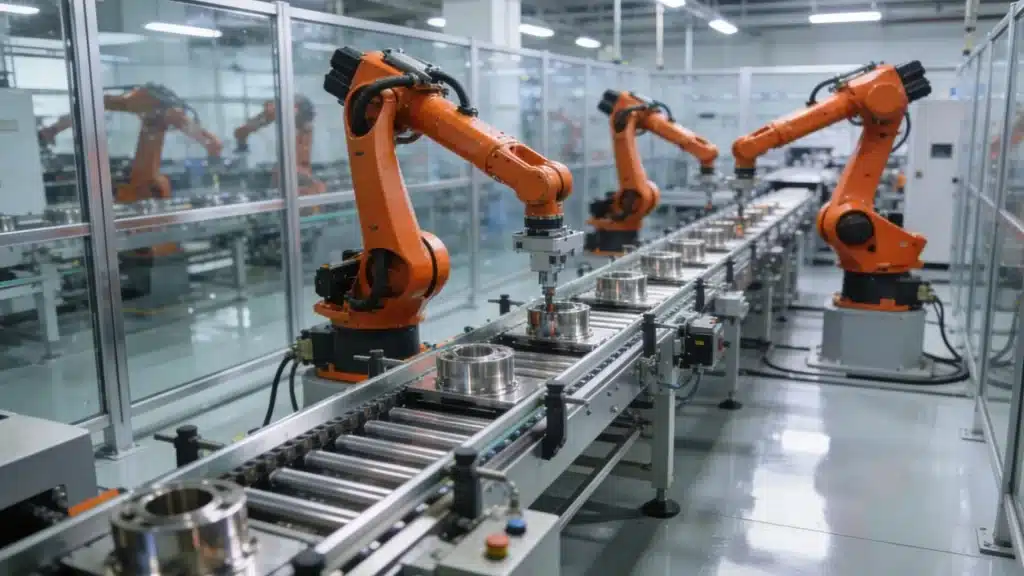
Machines are doing tasks faster than ever, and it is no longer limited to big factories. From small tools at home to systems used by companies, this shift is already part of daily life.
Businesses now rely on smarter setups to handle work that once took hours or even days.
In the middle of all this, robotics and automation play a key role in shaping how tasks get done across different fields.
This blog keeps things simple and clear. It breaks down what these terms actually mean, how they work together, and where they are used.
You will also get a look at how different industries depend on them today and what value they bring. By the end, the topic will feel less complex and more practical to understand.
What are Robotics and Automation?
Robotics is about machines that can perform tasks on their own or with some level of control.
These machines are often built to handle physical work, like moving objects, assembling parts, or helping in medical tasks. They use sensors, motors, and software to carry out actions in the real world.
Automation, on the other hand, is about using systems to complete tasks with little or no human effort.
It does not always involve physical machines. It can be software that manages data, controls processes, or runs repeated tasks in the background.
They often work side by side. A robot may carry out the physical task, while automation controls when and how that task happens.
Still, they are not the same, as one focuses on machines doing actions, while the other focuses on making processes run on their own.
Robotics vs Automation: Understanding the Difference
The terms “robotics vs automation” come up often because the two overlap in most real-world deployments, which makes it easy to conflate them.
A useful way to separate them: robotics without automation still requires someone to schedule or trigger the machine.
Automation without robotics can run entirely in software, with no physical component at all.
A self-driving warehouse cart is robotics. The system that tells it when to move, which route to take, and what to pick up is automation.
Strip out the automation, and the robot needs a human operator. Strip out the robot, and the automation still runs, just without a machine to move goods.
In practice, most modern deployments combine both, which is why the terms are often used together when discussing industrial or enterprise systems.
How Do Robotics and Automation Work Together?
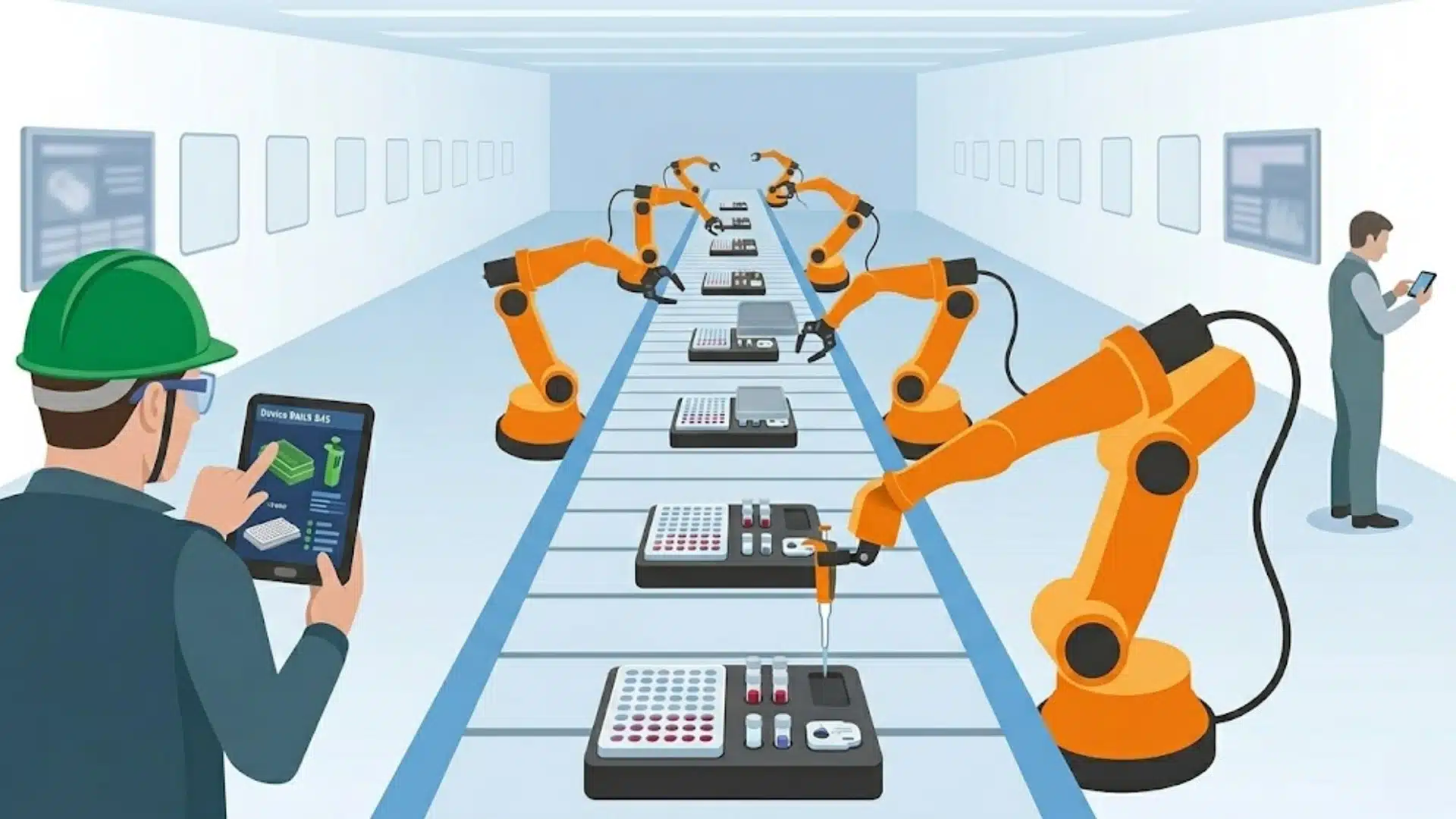
Most robotics and automation systems rely on the same basic structure: sense, decide, act. Sensors gather input from the environment, picking up signals like light, motion, temperature, or position.
That data goes to the software layer, which processes it and determines the next step. Hardware, including motors, arms, or mechanical components, then carries out whatever the software decides.
Data plays a continuous role in this cycle. Systems log what happened, use that data to improve future responses, and flag patterns that may need human review.
Human oversight remains part of most setups. People set the rules, monitor outcomes, and step in when the system hits a situation it was not designed for.
For a broader look at how robotics is used in everyday life, including consumer applications beyond the industrial floor, that context is worth reading alongside this.
Key Applications of Robotics and Automation Across Industries
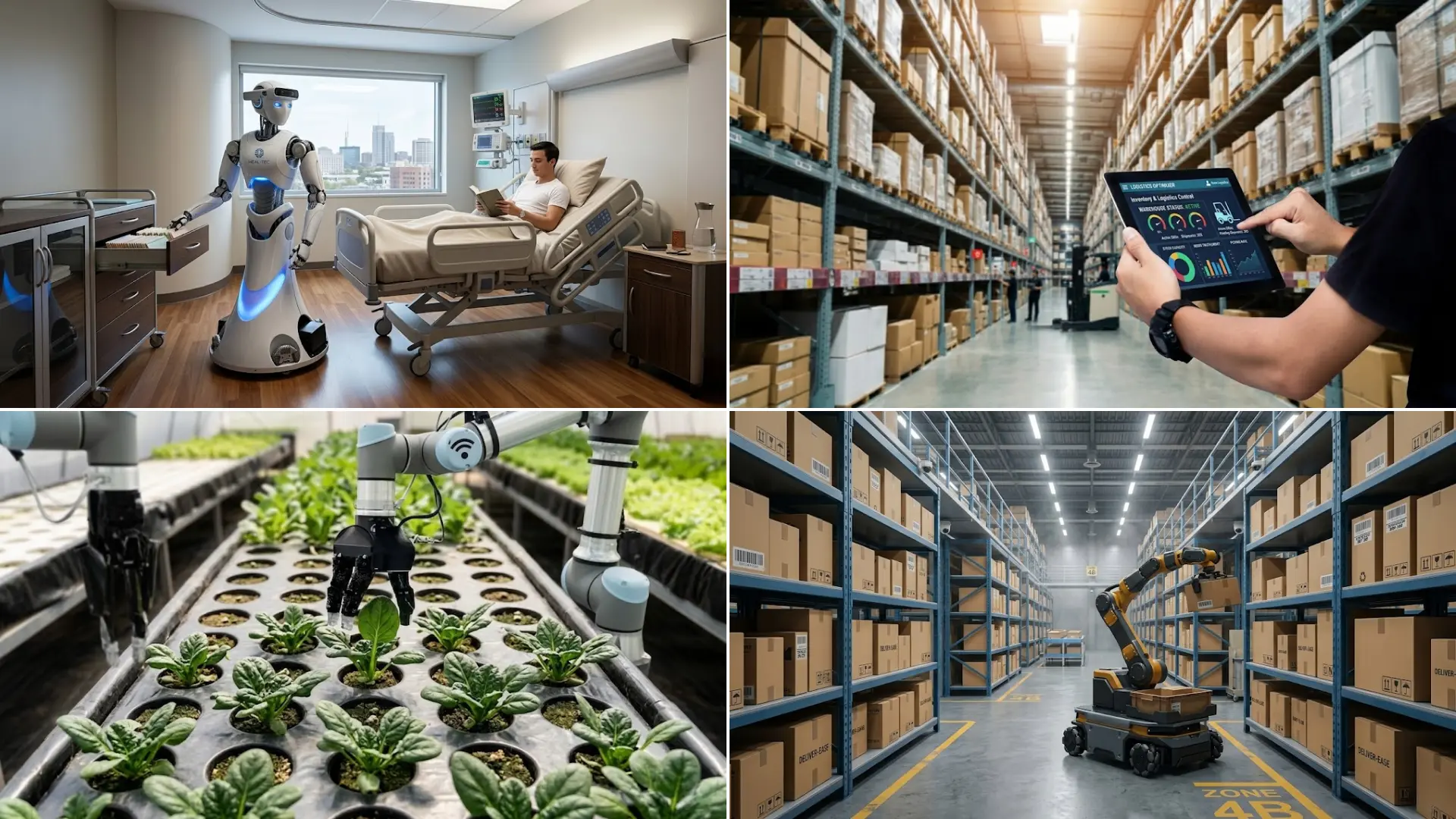
Robots and automated systems are used in many fields today. Their role changes based on the type of work and the industry’s needs.
1. Manufacturing
Manufacturing is one of the most common places where these systems are used. Robots help on assembly lines by placing, joining, or moving parts with steady accuracy.
They also support quality checks by spotting defects that may be missed during manual review. Packaging becomes faster because machines can pack, seal, and label products at a fixed pace.
Material handling also becomes easier, as machines can lift, shift, and move heavy items across factory floors with less risk to workers.
Collaborative robots, or cobots, are now common in mid-size manufacturers, working alongside humans rather than replacing them entirely.
2. Healthcare
In healthcare, robots and automated tools help make care faster and more accurate.
Surgical robots assist doctors with fine, controlled movements during complex procedures, reducing the margin for error in operations that require precision at a small scale.
Lab testing systems can handle samples, run checks, and process results more quickly. Patient support tools help with movement, monitoring, or basic care tasks.
Medicine delivery systems also help hospitals move drugs and supplies to the right place. This saves time for staff and helps reduce mistakes in busy settings.
3. Logistics and Warehousing
Logistics and warehousing depend on speed, tracking, and smooth movement.
Automated sorting systems route packages by destination, size, or priority. Picking robots locate and retrieve items from shelves, enabling faster order fulfillment.
Inventory tracking systems keep records updated, so businesses know what is in stock and what needs to be refilled.
Delivery support also improves through route planning, loading systems, and tracking tools that keep goods moving with fewer delays.
For a closer look at how these systems work at scale, this guide to automated warehouse systems breaks down the full setup.
4. Agriculture
Agriculture uses these systems to reduce waste and improve planning across the growing cycle. Crop monitoring tools can check plant health, growth, and field conditions.
Automated watering systems give crops the right amount of water based on soil needs. Harvesting machines help collect crops faster and reduce the amount of manual labor needed.
Soil and weather-tracking tools also help farmers make better decisions about planting, watering, and harvesting. This supports better output and helps manage resources with more care.
5. Retail and Customer Service
Retail and customer service use automation to handle daily tasks more smoothly.
Self-checkout systems handle payment without a cashier. Automated chat tools handle common service questions at scale, routing complex cases to human agents.
Inventory systems track product levels and trigger restocking alerts before shelves run low.
Order processing also becomes easier because systems can confirm purchases, update inventory, and send order details quickly. This helps stores serve customers faster and manage routine work better.
Why Robotics and Automation Matter?
The business case for robotics and automation comes down to a few consistent outcomes across industries:
- Save time: Machines can handle repeated tasks faster than manual work, which helps teams finish more in less time.
- Reduce repeated manual work: Routine jobs like sorting, packing, checking, and moving items can be handled by systems.
- Improve accuracy: Automated systems can follow set steps with fewer mistakes, especially in tasks that need steady results.
- Support safer work environments: Robots can handle risky, heavy, or tiring jobs, which helps reduce harm to workers.
- Handle large demand: Businesses can manage more orders, products, or services without slowing down too much.
- Let workers focus on better tasks: When machines handle basic work, people can focus on planning, problem-solving, and customer needs.
Benefits and Limits of Robotics and Automation
These systems can improve daily work while also bringing cost, training, maintenance, and safety challenges.
| Benefits | Limits |
|---|---|
| Faster output helps teams complete more work quickly | High setup costs can be hard for small businesses |
| Better consistency keeps results steady across repeated tasks | Skilled people are needed to manage these systems |
| Lower error rates help reduce common work mistakes | Maintenance issues can slow work when systems fail |
| More support for workers makes hard tasks easier | Job role changes may affect daily worker duties |
| Safer task handling reduces risk in heavy work | Privacy and safety concerns need careful control |
The Future of Robotics and Automation
The direction these technologies are moving is toward systems that adapt, not just execute.
One major shift is the growing use of AI, which helps machines learn from data and improve how they perform tasks. This leads to better decision-making and more flexible systems across industries.
Connected factory environments, where machines share data in real time and adjust processes together, are already operational in large-scale manufacturing.
In healthcare, tools are improving to support doctors with better precision and faster results. Workplaces are expected to become safer as machines take over risky and physically demanding tasks.
At the same time, new job roles are being created. There is a rising need for people who can manage, maintain, and design these systems. Routine, repetitive roles are the most exposed to automation.
But design, maintenance, oversight, and complex problem-solving roles are growing as a direct result of these systems being deployed.
For a grounded look at which roles hold up well, the breakdown of careers that remain safe to automation is worth reading alongside this.
Common Myths About Robotics and Automation
Many people misunderstand how these systems work. These myths often create confusion and fear, even though the reality is more practical and balanced.
- All jobs will be replaced: Most roles change, not disappear, as machines handle routine tasks while people focus on thinking and decision making
- Only big companies can use it: Many small businesses also use simple systems that are affordable and easy to manage
- Machines never make mistakes: Systems can still fail or give wrong results if the data or setup is not correct
- It works without human input: People are still needed to monitor, control, and improve how systems perform
- It is too complex to understand: Basic concepts are simple, and many tools are designed for easy use without deep technical knowledge
Conclusion
These technologies are already part of how work gets done today. They help businesses handle tasks faster, reduce pressure on workers, and improve overall output.
From factories to healthcare and even daily services, their role keeps growing with time. Still, they are not just about replacing people.
They work best when they support human effort and make tasks easier to manage.
In the middle of this shift, robotics and automation continue to shape how industries move forward without removing the need for human thinking and control.
The focus is on balance, where machines handle routine work, and people focus on better decisions. So the real value lies in how these tools are used, not just in having them.
What do you think about this shift in industries? Drop your thoughts in the comments below.
Frequently Asked Questions
What Skills are Needed to Work With Automated Systems?
Basic skills include understanding software tools, problem-solving, and system monitoring. Technical roles may need coding, data handling, or machine operation knowledge.
General operations roles need less technical depth, but benefit from understanding how systems behave and what normal versus abnormal output looks like.
Can Small Businesses Use Robotics and Automation?
Yes. Many entry-level tools are available at low cost and do not require custom development.
Small businesses often start with software automation, automated invoicing, customer follow-ups, or inventory alerts, before moving to physical systems.
The barrier to entry has dropped considerably over the past five years.
How Long Does It Take to Set up These Systems?
It depends on the complexity of the system and the environment in which it is being installed. Simple software automation can be configured and running within days.
Physical robotics installations in a manufacturing or warehouse setting typically take several weeks to months, including testing, integration with existing systems, and staff training.