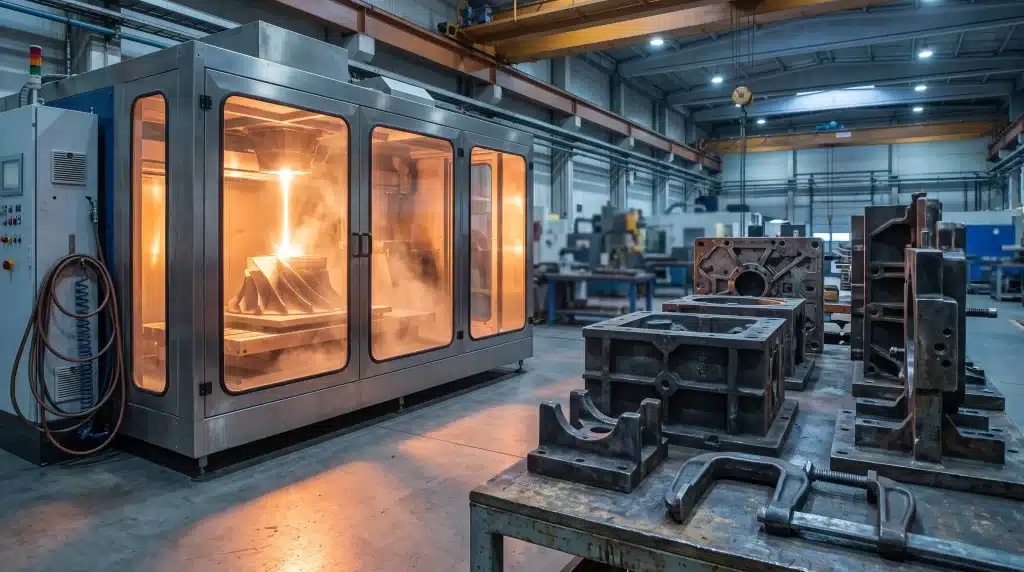
These days, artificial intelligence goes beyond machines in factories. Instead of separate programs working alone, smart systems now combine learning algorithms with automated tasks.
One moment you see manual steps; next, everything connects through intelligent design. Machines sort complex information without constant human direction.
Progress comes not from single devices but from linked networks adapting over time. Thinking capabilities emerge where only rigid rules existed before. Where exactness matters most, machines deliver reliability beyond human reach. This shift reveals deeper patterns in how smart tools transform tasks.
Accuracy improves when automated processes take over routine duties, and efficiency grows as digital workflows replace manual steps. Data stays intact because system errors drop sharply.
The workplace evolves without dramatic announcements, just steady gains. What once required teams now runs on coded logic. Performance lifts not by effort but by design. Such shifts do not shout; they settle quietly into daily operations.
What AI-Powered Automation Means in Operational and Laboratory Contexts
Most times, machines follow set rules without thinking. Now imagine those same devices learning on their own how to adjust tasks, like a factory arm placing parts faster when it senses delays. That shift happens when smart code links up with moving hardware. One handles choices, much like reasoning through steps, while the other acts, applying force or motion precisely.
Together, they reduce slips caused by tiredness or distraction.
Efficiency rises because decisions happen mid-task, not before it starts. Where precision matters (such as in labs or advanced production sites), the merging of processes reshapes outcomes. With less fluctuation and higher output, performance becomes consistent in ways previously difficult to reach.
One report from McKinsey suggests companies must now adopt such tools just to keep pace. What matters is consistency in operations, handling fifty trials or far more without losing reliability or control over resources.
9 Industries Being Transformed by AI-Powered Automation
1. Pharmaceutical and Life Sciences
Screening countless compounds makes old-school methods fall short. Automation steps in where human effort reaches its limit. Drug discovery’s tangled path pushes labs toward machines. Handling volumes like that requires precision tools to take over. The industry shifts quietly, driven by necessity rather than choice.
Now speeding up the search for working molecules, AI tools outpace older techniques. These systems help ensure early-stage studies deliver repeatable results. With less variation introduced by manual handling, labs see fewer inconsistencies creeping into findings.
2. Clinical Diagnostics and Pathology
Speed matters in pathology because faster results can mean the difference between life and death. Machines now handle much of the repetitive work in busy testing facilities, taking over tasks like scanning slides and sorting specimens.
Software trained to detect subtle irregularities works alongside doctors, sifting through vast amounts of visual data to uncover patterns that might escape even experienced eyes.
Turnaround times drop sharply when technology takes hold, a point made clear in the World Economic Forum’s Future of Jobs Report. With sample analysis following uniform methods, differences among operator techniques fade.
3. Biotechnology and Genomics
Imagine facing the massive output of a genome sequencing process where data piles up fast. Handling such volumes by hand slows everything to a crawl, so automation steps in where manual effort fails. When patterns hide within tangled genetic differences, artificial intelligence offers clarity, pushing studies ahead quietly but steadily.
The weight of information finds balance through smart systems working behind the scenes. Each time they handle sample prep or sequence setup, machines deliver consistent outcomes without fail. Custom healthcare moves forward, expanding reach while zooming in on personal detail.
4. Chemical and Materials Science
Now machines handle much of what once demanded long hours in the lab. A fresh compound might emerge after countless attempts, some of which are potentially dangerous. These days, robotic systems run reactions without human hands guiding every step.
Before any glassware sees chemicals, artificial intelligence models simulate how molecules could behave. Pathways that lead nowhere get filtered early by software trained on reaction data. This becomes a major step forward for safety because human involvement drops inside regulated settings.
5. Food Safety and Agricultural Science
Most people care about food safety, and modern methods help ensure it better than before. Because machines handle repetitive tasks, errors drop during manufacturing processes.
When problems arise in raw materials, smart software spots them faster compared to traditional inspection.
Though labs once moved slowly, today’s tools process samples at higher speeds without sacrificing accuracy. As results flow into shared networks, tracking ingredients becomes far more reliable across countries. Standards differ slightly depending on regional regulations despite overall alignment toward digital oversight.
6. Environmental Science and Climate Research
Out in the open, satellites and sensors feed endless streams of environmental numbers into central systems. Because patterns emerge only after sorting through chaos, machines take over the gathering and filtering. Once raw inputs settle, artificial intelligence builds forecasts, shaping how researchers see future threats.
Speed reshapes understanding, often turning what took weeks into hours. From water testing to air quality checks, automated systems maintain steady procedures.
Consistency matters greatly because findings often shape international decisions and fast responses to ecological threats.
7. Manufacturing and Industrial Engineering
Right now, factories run on streams of information. Making products isn’t the only goal, as spotting trouble ahead matters just as much. Before a motor stops working, signs often show up early.
Machines learn these patterns, adjusting routines without waiting for breakdowns. When systems watch each cycle closely, repairs happen at better times. Downtime shrinks because decisions shift from reactive to foresight-based. IBM Research points out that combining robotics with artificial intelligence sharpens accuracy on production lines.
8. Academic and Research Laboratories
Though universities value consistent outcomes, small mistakes creep in when people do tasks by hand. Where human effort fades, machines take over, quietly managing tedious routines in labs. Precision finds new life through steady mechanical repetition rather than willpower.
In high-throughput laboratory environments, automated liquid handling systems play a critical role in ensuring precision, reducing operator variability, and maintaining consistent experimental conditions across large sample volumes. Papers stored in NIH archives show how essential stable methods are for trustworthy science. With machines taking care of repetitive steps, scientists gain room to focus energy where it counts: making sense of findings.
9. Healthcare Operations and Hospital Systems
Not only have laboratories adopted AI for improved operations, but hospitals are also embracing automation solutions aimed at solving the issue of “clogged pipes,” which is the inefficiency of healthcare administration.
Here, automation will be employed throughout the workflow from the moment a client contacts the hospital until they are admitted.
This helps to alleviate the administrative load carried by employees in such high-pressure environments and enables providers to devote more time to providing high-quality healthcare services instead.
Structural Shift Towards Intelligent Automation Across Industries
It seems like we can definitely talk about the inevitable shift from manual processes to integrated AI-based automation across industries. AI integration is becoming an industry standard and is not just limited to the most technologically advanced industries anymore.
There is a good reason for this trend, including improved reproducibility, easy scalability, and greater operational efficiency. With further development into various scientific and industrial areas, the priority will still be given to precision rather than assumptions.