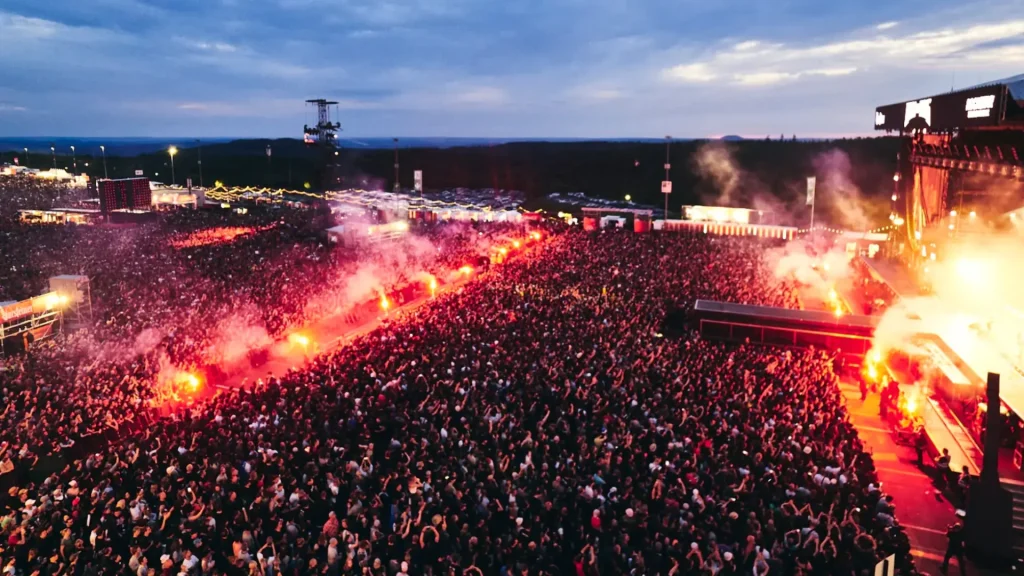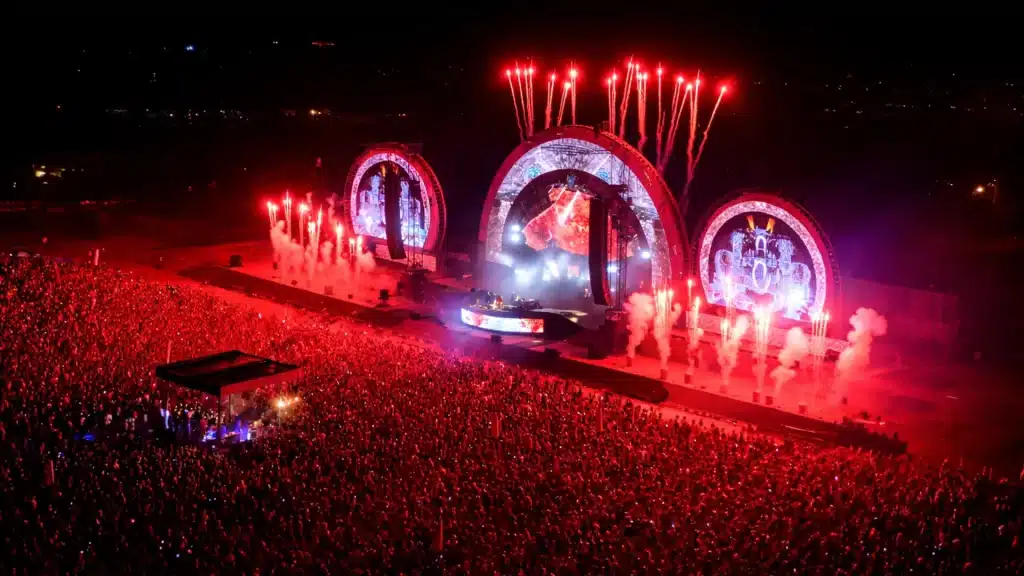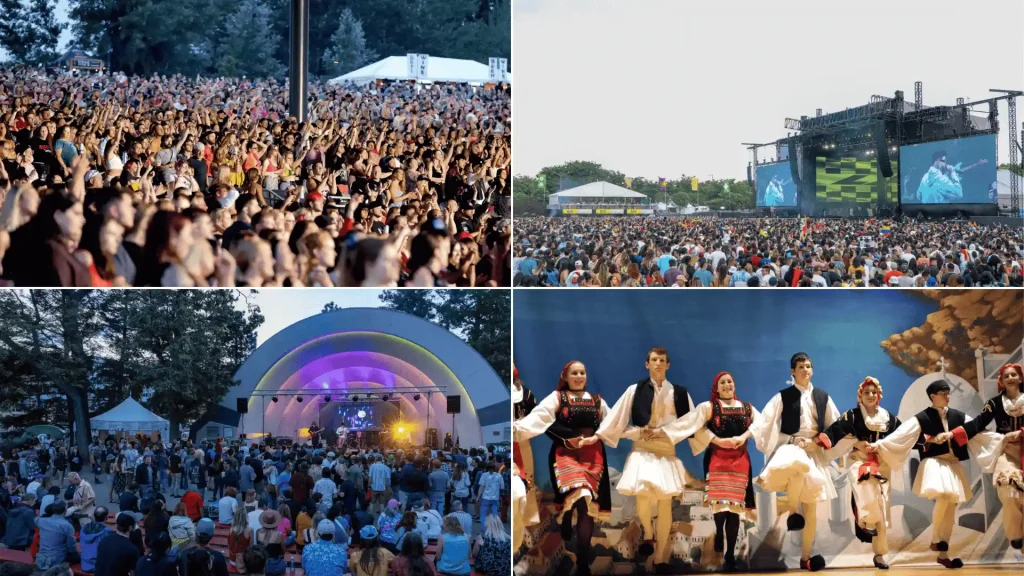
Some concerts fill stadiums, but a few rare ones take over an entire city.
Music history has seen many packed arenas and sold-out tours. Some concerts come close to the largest crowd event in history, but one event still stands far above the rest.
When millions of fans gather in one place for a performance, the line between concert and cultural celebration blurs.
Live music has always been about shared energy. Loud speakers, familiar songs, and strangers singing together can turn an ordinary night into something unforgettable.
But every once in a while, a show grows far beyond the limits of a normal venue.
This blog discusses the largest live-music crowd event in history, the story behind it, and what actually made it possible.
Rod Stewart 1994: The Record-Breaking Night
On December 31, 1994, Rod Stewart didn’t just play a show; he took over the Copacabana Beach with a free New Year’s Eve concert that still holds a legendary place in live music history.
The British rock icon took the stage in Rio de Janeiro for a free public show while promoting his album A Spanner in the Works.
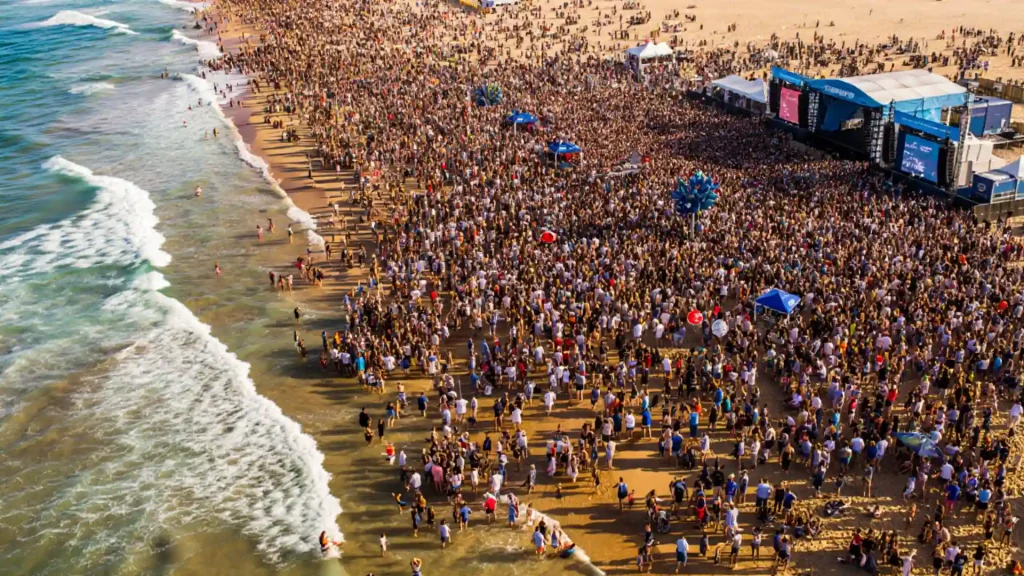
Fans packed nearly 5 kilometers of the beach to hear classics like “Maggie May” and “Sailing,” with fireworks lighting up the sky at midnight.
Guinness World Records officially logged the crowd at 3.5 million, making this the largest crowd event in history for any concert.
It wasn’t just a gig, it was a full-on cultural moment that no stadium has ever matched.
In the pre-Instagram days, word-of-mouth hype alone pulled in locals, tourists, and music lovers from across Brazil.
Largest Concert Crowd Events in History
Rod Stewart’s Copacabana night still leads the conversation, though other events also appear in lists of Live Concerts With the Highest Crowds in the world, each drawing audiences that pushed live music into record-breaking territory.
| Rank | Artist / Event | Location | Year | No. of Attendees |
|---|---|---|---|---|
| 1 | Rod Stewart | Copacabana Beach, Rio | 1994 | ~3.5 Million |
| 2 | Jean-Michel Jarre | Moscow, Russia | 1997 | ~3.5 Million |
| 3 | Tuca Ferretti (Brazil Carnival) | São Paulo, Brazil | 2006 | ~2 Million |
| 4 | Garth Brooks | Central Park, New York City | 1997 | ~980,000 |
| 5 | Monsters of Rock | Moscow, Russia | 1991 | ~500,000–1 Million |
What Actually Made It the Largest Crowd Event in History?
A rare mix of timing, location, and open access turned Rod Stewart’s Copacabana show into a record-breaking gathering that stadium concerts still struggle to match.
- Free Public Access: The concert had no ticket price and no entry gates. Anyone in Rio could simply walk onto the beach and join the celebration.
- New Year’s Eve Timing: The performance took place during Rio’s massive New Year’s Eve festivities. Millions were already gathering along Copacabana for midnight fireworks.
- No Capacity Limits: Instead of a stadium, the concert used nearly 5 kilometers of the beach. With no walls or seating restrictions, the coastline became a giant gathering.
- Rio’s Global Tourist Magnet: Rio de Janeiro attracts huge holiday crowds at the New Year’s.
- Traditional Media Buzz and Local Hype: News coverage, radio stations, and word of mouth helped spread the news weeks in advance.
- Classic Songs: Rod Stewart’s biggest hits were widely loved at the time. Familiar songs brought in massive crowd participation.
- Strong Event Organization: Large-scale staging, security, and infrastructure enabled the safe accommodation of an enormous audience.
Open Air Shows vs Stadium Shows

Rod Stewart’s Copacabana concert stands apart because it followed a completely different event model than traditional stadium shows.
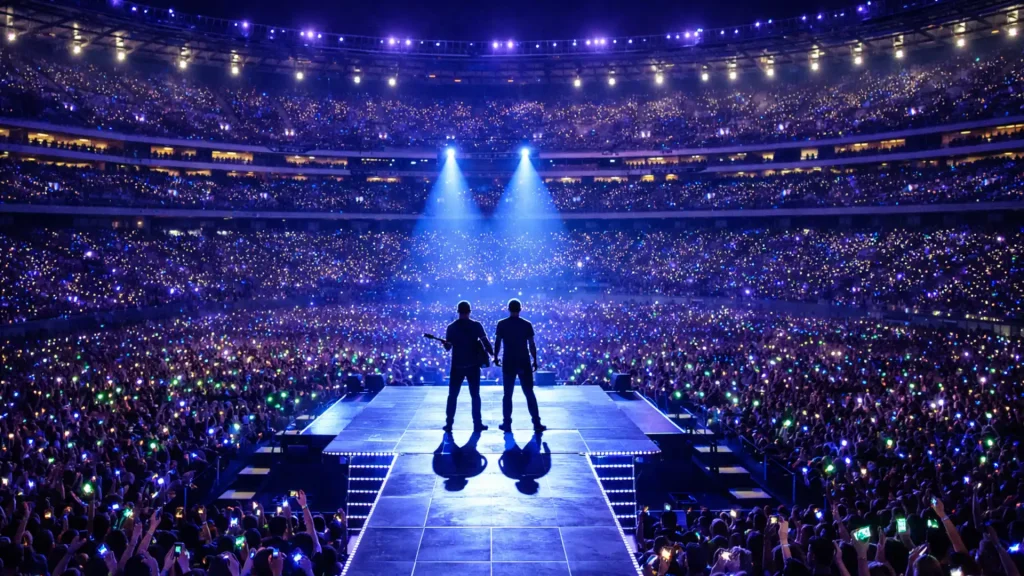
Ticketed concerts operate within strict capacity limits set by the venue, safety regulations, and ticket availability.
Even the largest modern stadiums rarely exceed 80,000 to 100,000 attendees for a single performance. Every seat is counted, entry is controlled, and promoters rely on ticket scans.
Open public concerts work very differently. When a performance takes place in a large public space such as a beach or city square, there are no fixed seating plans.
People gather across a much wider area, and the crowd expands naturally as more fans arrive throughout the evening.
That is why modern tours often compete for records like the most tickets sold for a concert, unlike Rod Stewart’s Copacabana show, which wasn’t limited by venue capacity.
Pro Tips for Surviving the Largest Crowd Events
Being prepared makes a huge difference at large crowd events and helps you stay safe while enjoying the experience without distractions.
- Always Pack a Portable Phone Charger: Phones drain quickly at concerts with photos, videos, and messages, so a small power bank becomes a must-have.
- Wear Comfortable Shoes: Blisters and sweat ruin even the best concert nights.
- Never Lose Your Squad in Crowds: Agree on a simple meeting point before the show starts so everyone knows where to reconnect.
- Bring Earplugs and Strong Sunscreen: Save your ears and skin from hours of loud beats.
- Download Offline Maps and Crowd Apps: Cellular signals often slow down in packed venues. Offline maps help locate exits, transport routes, and nearby streets.
- Plan Your Exit Strategy Early: Know the layout so you can leave without the rush.
- Hydrate Every Hour: Crowds, heat, and excitement can quickly lead to dehydration. Staying hydrated keeps energy levels steady during long concerts.
Conclusion
Live music is a constantly evolving domain with growing stadium tours, more advanced production, and artists continuing to chase bigger crowds.
The Copacabana concert remains the largest crowd event in history, proving that when timing, location, and music align perfectly, an event can grow far beyond the limits of a traditional venue.
What makes this event remarkable is not just the number of people gathered on the beach, but the shared experience created that night.
Millions of strangers singing the same songs at the same time turned a concert into something closer to a citywide celebration.
Events like this remind us why live music holds such great power.
Which concert crowd moment do you think deserves legendary status next? Share your top recommendations in the comments below!