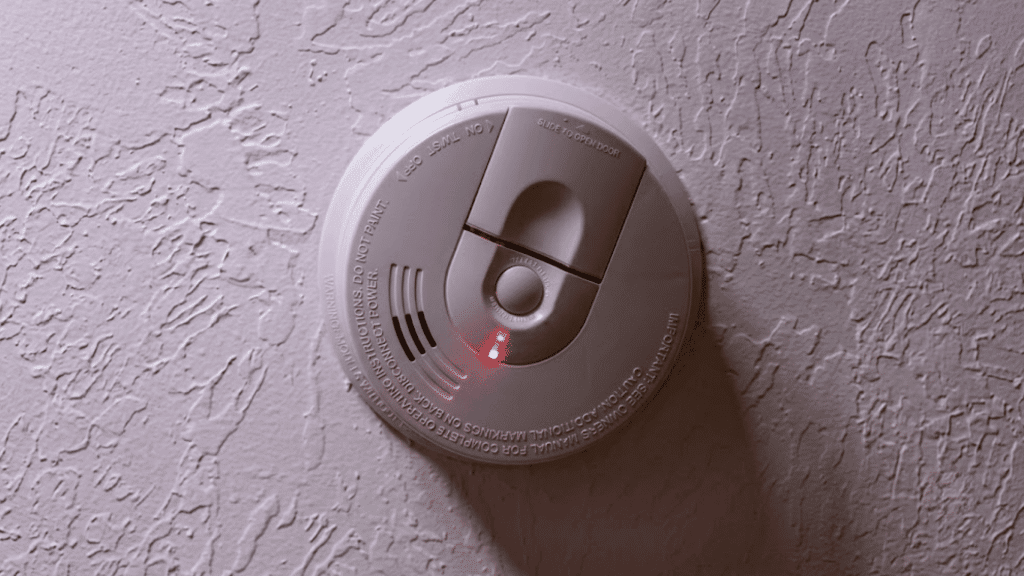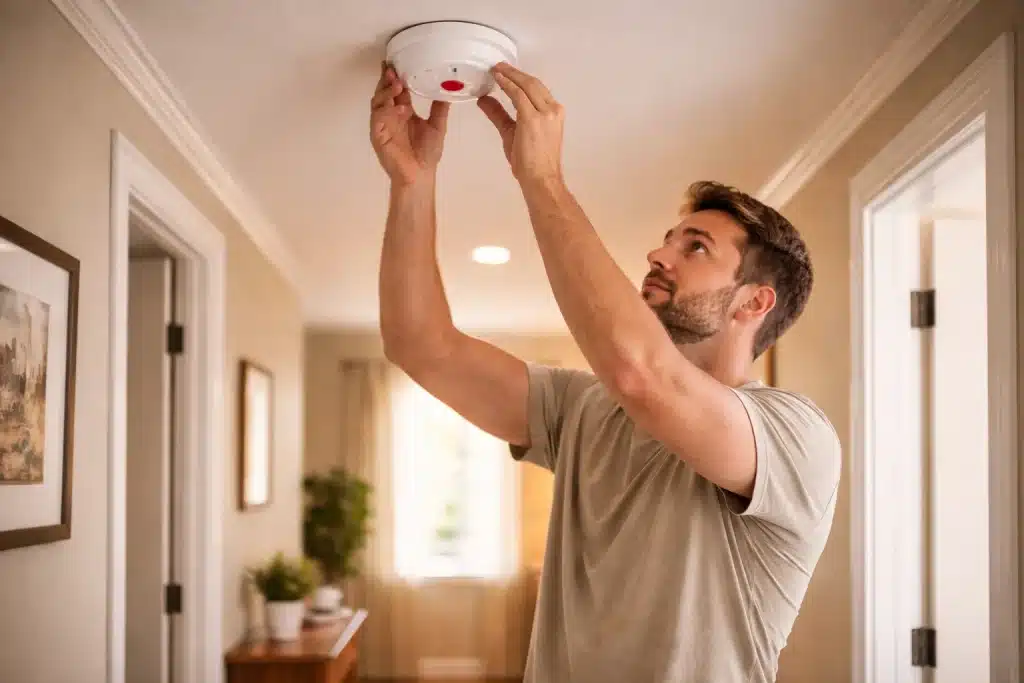
Most people own at least one smoke detector, but the real question is whether they have enough of them and if any are in the wrong spots.
Working in home security, one of the most common things I hear is: “I have one in the hallway, I think we’re fine.” Sometimes that’s true.
But more often, there are gaps. A bedroom on the far end of the house. A finished basement no one thought about. A garage right next to where the kids sleep.
Getting the number right isn’t about being paranoid. It’s about giving yourself time, because in a house fire, the first few minutes are everything
What the NFPA Actually Says?
The National Fire Protection Association (NFPA) is the standard most U.S. homes follow.
Its guidance is clear: every bedroom needs a smoke detector, every hallway outside a sleeping area needs one, and every floor of the home, including the basement, needs at least one.
That’s the baseline. No exceptions, no matter how small your home is.
So if you’re wondering “how many smoke detectors do I need?” the simplest formula is:
Number of bedrooms + number of floors + number of sleeping-area hallways = your minimum count
A one-bedroom apartment on a single floor? You need at least two: one in the bedroom and one outside it. A two-story home with three bedrooms?
You’re looking at a minimum of six. Add a finished basement to that picture, and you’re at seven.
Interconnected systems are usually hardwired, so if you’re not familiar with what those wires actually do, that’s a reasonable starting point before calling an electrician or attempting installation yourself.
Breaking It Down by Home Size
Here’s where most guides stop at a table and call it a day. But layout matters more than square footage alone.
A long, narrow ranch home with bedrooms on opposite ends needs different coverage than a compact two-story with a central hallway.
|
Home Type |
Minimum Detectors |
|
Studio / 1-bed apartment |
2 |
|
2-bed, single story |
4–5 |
|
3-bed, two-story |
6 |
|
3-bed, two story + basement |
7+ |
|
Large home, 4+ beds, multiple floors |
9-12+ |
If that feels like a lot, consider what’s at stake. A detector in the wrong place, or simply absent from a key room, won’t buy you those critical extra minutes.
Where Not to Put Them?
Placement mistakes are just as common as having too few units. A detector in the wrong spot will either miss a real fire or go off constantly for no reason.
Keep detectors at least 10 feet from the kitchen. Cooking fumes and steam will trigger false alarms. Frequent false alarms train people to ignore the sound, which is the last thing you want.
Stay out of bathrooms. Shower steam has the same problem. Mount detectors at least three feet from any bathroom with a shower or tub.
Avoid vents, ceiling fans, and windows. Airflow disrupts how smoke travels to the sensor. A detector near a ceiling fan may never “smell” a fire on the other side of the room.
Don’t install in dead-air corners. Smoke rises and spreads horizontally across the ceiling before it drops.
For pitched ceilings, the NFPA recommends placing detectors within 3 feet of the peak, but at least 4 inches below it.
The Rooms People Forget
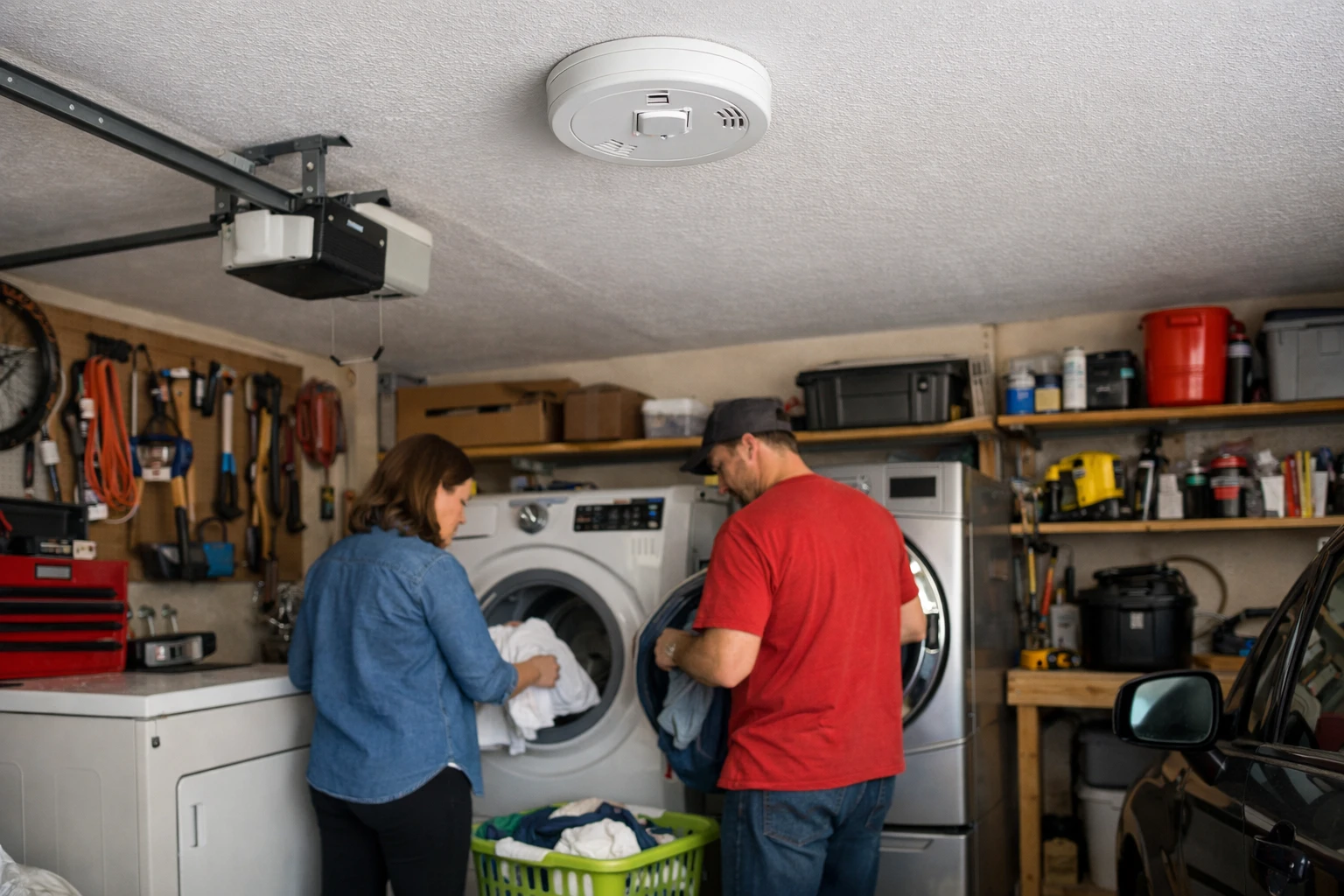
You remember the usual spots, bedrooms, hallways, and floors, but skip the rooms where fires actually start.
- Basement: Finished or not, it needs a detector. Mount it on the ceiling near the bottom of the stairs so the sound carries upward.
- Attached garage: Fuel, chemicals, and appliances make this a real fire risk. Place a detector just inside the door connecting to the house, not deep inside the garage, where car exhaust will trigger constant false alarms.
- Laundry room: Dryers are a leading cause of residential fires. If your laundry room is a separate enclosed space, it deserves its own detector.
- Home office or workshop: If you have heat-generating equipment, power tools, or a lot of electronics concentrated in one room, that room warrants coverage.
Should You Go Beyond the Minimum?
When in doubt, adding one more detector is rarely a bad call.
Installing fire alarms in rooms like a loft, home gym, or basement den isn’t on the NFPA’s required list, but if your family spends real time there, they deserve coverage.
You know how your home gets used better than any code does.
If you have hardwired alarms but a few spots feel thin, a battery-powered unit is a quick, affordable fix that needs no rewiring.
The upgrade most worth prioritizing is an interconnected system. When the basement detector picks up smoke at 2 a.m., you want every alarm in the house sounding, not just the one nearby.
In a larger home, that’s not a bonus feature; it’s the whole point.
Conclusion
Smoke detectors are a system, not a single purchase, and the gaps matter as much as what you already have.
Start with the NFPA baseline, then walk through your home and look for what didn’t make that list: the laundry room, the garage entry, the finished basement.
Those are the spots that get skipped most often.
Getting the count right is only half the work. Placement and interconnection shape how effective your setup actually is. A home with eight detectors in the wrong positions is still vulnerable.
Are you planning to install or upgrade your smoke detectors? Tell us how many detectors you are using and if your setup covers every key area. Share with us in the comments below!
Frequently Asked Questions
Do Smoke Detectors Need to Be on the Ceiling or Wall?
Ceiling is preferred. If wall-mounting, keep it no more than 12 inches below the ceiling; any lower, and you’re losing early detection time.
Can One Combination Smoke and CO Detector Cover Both Needs?
Yes. Just make sure its position works for both, ceiling-adjacent for smoke, and within 10 feet of bedroom doors for CO.
How Do I Know if My Existing Detectors Are Still Working Beyond Pressing the Test Button?
Use a detector test spray; it tests the sensor itself, not just the electronics. And check the manufacture date on the back; anything over 10 years old should be replaced.