There are thousands of professional events held every day, and every single one of them requires an attentive, specific, and comprehensive plan to prevent and curb risks. And, this isn’t something that you can make up as you go along! Everything must be in place before your first guest walks in.
When the doors finally open, the checks you carried out during your final walkthrough can make all the difference between a seamless experience and a chaotic one.
You have spent months planning the logistics, but the last sixty minutes are the most critical for safety. This guide covers the essential venue safety checks your team must perform to ensure a secure environment. Let’s get started.
Start By Assessing The Risks Specific To Your Event
According to official crowd management guidance, it is essential to carry out a thorough risk assessment of your event. But since every gathering is unique, it is essential to understand how people arrive, move around the venue, and eventually disperse.
You should also consider specific audience profiles, such as the age of attendees and the type of performance. Don’t underestimate the importance of an ad hoc approach.
Even if you have run events before, plans are vital, risks are unique, and a tailored approach may be necessary to identify and prevent unexpected incidents.
Validate Every Badge Reader
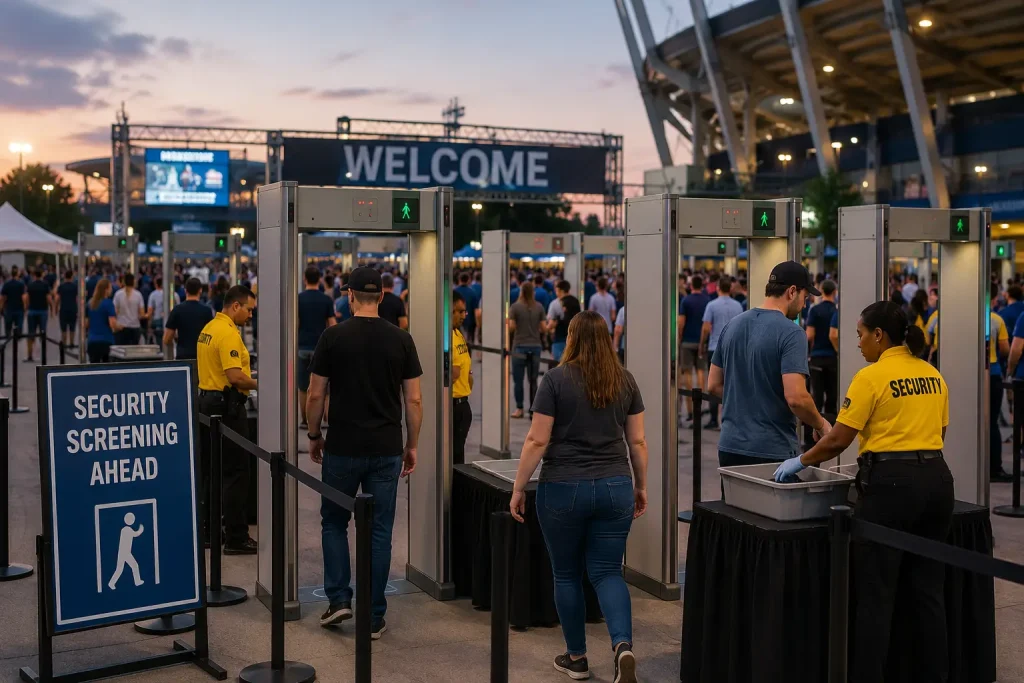
Electronic access control is only useful if the hardware communicates perfectly with your database. You should physically tap a test badge on every reader at the main entrance and VIP zones to check if your readers are as efficient as you’d want them to be.
Check for the green light and ensure the software logs the entry in real-time. If a reader lags, it could create a massive bottleneck during the morning rush.
Some events may rely on manual verification. This is often the case for smaller or community events, where the budget may be limited or expected attendance reduced.
In these cases, you can improve security by using a dual-verification system where one staffer checks IDs while another crosses names off a master list.
Confirm Total Camera Coverage
Blind spots are a security team’s biggest nightmare during a high-traffic event. Fortunately, you can prevent these issues by simply checking how your CCTV system is working across the venue.
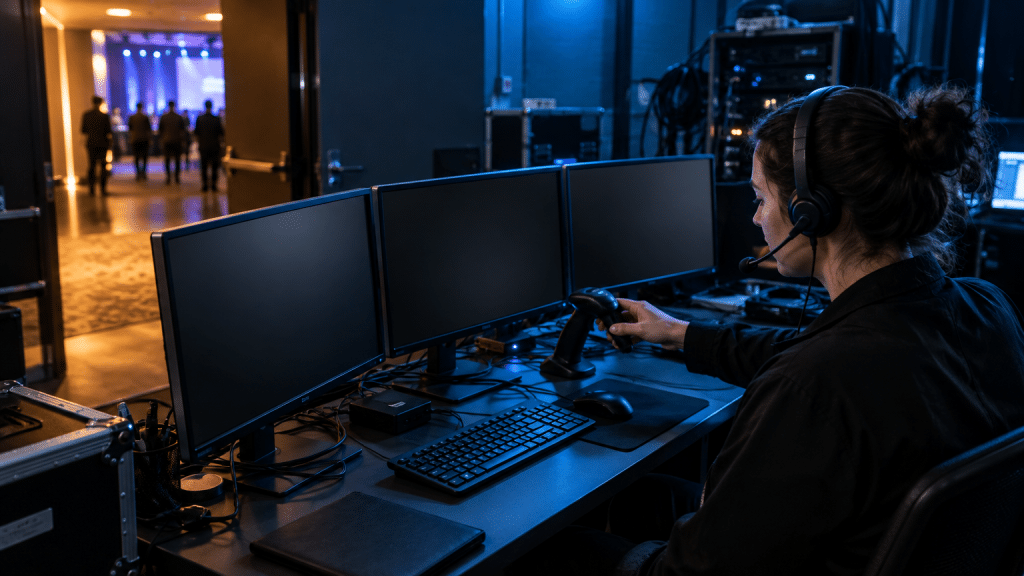
To do so, head to the command center and pull up every live feed to ensure no lenses have been bumped or obstructed. In particular, you’ll want to check that you can see clear sightlines of the registration desks and all emergency exits.
However, you may not be able to monitor cameras and all other security features as your events unfold. Here’s where partnering with a specialized company providing full security services can help.
Not only do they help you upgrade your surveillance, they also provide access to tailored security systems and high-resolution cameras that are essential for post-event incident logging and liability protection.
Stress Test the Check-In Network
A crowded room full of smartphones can instantly degrade a weak Wi-Fi signal. To make sure your systems can withstand such high use volumes, run a speed test specifically on the dedicated VLAN used for your registration tablets.
If the ping is too high, your staff will struggle to process attendees, leading to frustration and security issues.
Rehearse Your Emergency Evacuations
Every staff member needs to know exactly where the nearest exit is located from their specific post. This is essential for their own safety, as well as to lead guests towards a safe meeting point should an emergency occur.
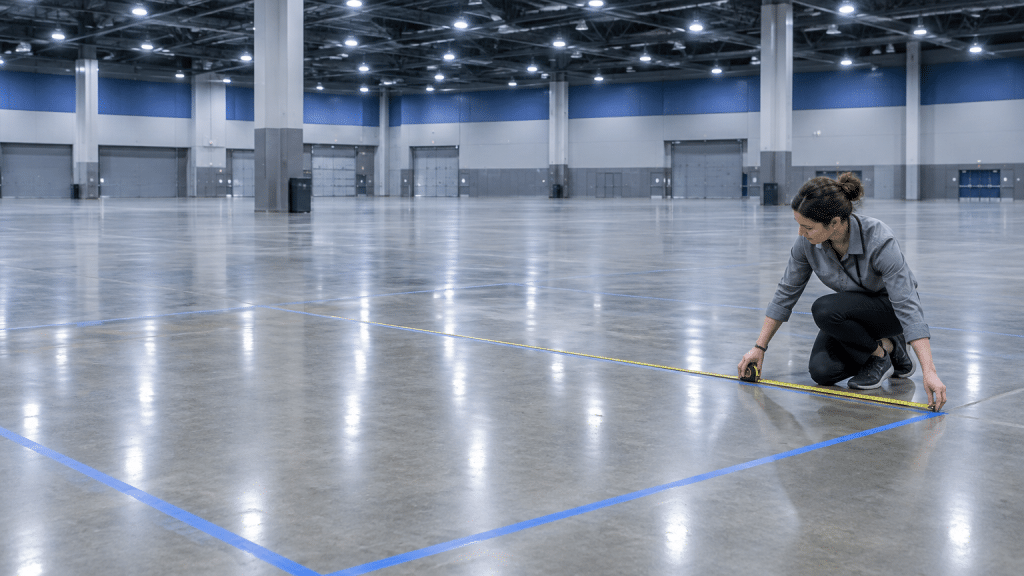
Aside from regular drills, make sure to walk the path yourself to ensure that there are no blockages in the way. Also, confirm that all “Push to Exit” bars are functioning and that doors are not chained shut. These are small details that can save lives.
Verify Radio Dead Zones
Radio communication is essential to manage events, especially large ones. However, communication quality can break down quickly in concrete structures or basement-level ballrooms.
To check these areas, send two team members to opposite ends of the venue to perform a radio check and identify any “dead zones” where the signal drops or becomes distorted. If you find a gap, reposition a staff member to act as a human relay for critical messages.
Secure Every Back of House Entry
Unsecured kitchen doors or loading docks are the easiest ways for uninvited guests to slip inside. Walk the perimeter of the “Back of House” areas and ensure every door is either manned or locked.
If you are employing temporary staff or vendors, check that they are wearing high-visibility credentials to prevent disruptions or safety issues.
Inspect All Privacy Signage
Transparency is a major part of modern event security and data compliance. Ensure that “Notice of Filming” or “CCTV in Operation” signs are posted clearly at every public entrance.
These signs should be at eye level and easy to read from a distance. Proper signage reduces legal friction and sets clear expectations for your attendees regarding their privacy.
Strengthen the Public Wi-Fi
During large events, especially when industry updates or critical stats are bound to be released, cybersecurity attacks become a real risk. Hackers may target large gatherings by setting up “evil twin” hotspots to steal attendee data.
Work with the venue IT team to ensure the guest network uses client isolation. This prevents users on the same network from seeing each other’s devices. You should also check that the landing page for WiFi sign-in includes basic terms of service agreement.
Improve Your Event Security Standards
Managing a secure environment requires comprehensive risk assessments, constant vigilance, and the right technology.
By following these steps and investing time in a thorough walkthrough before the event starts, you can significantly reduce the risk of technical failure or physical security breaches.
For more tips on managing large-scale gatherings, browse our recent guides on event management to keep your next gathering running smoothly.