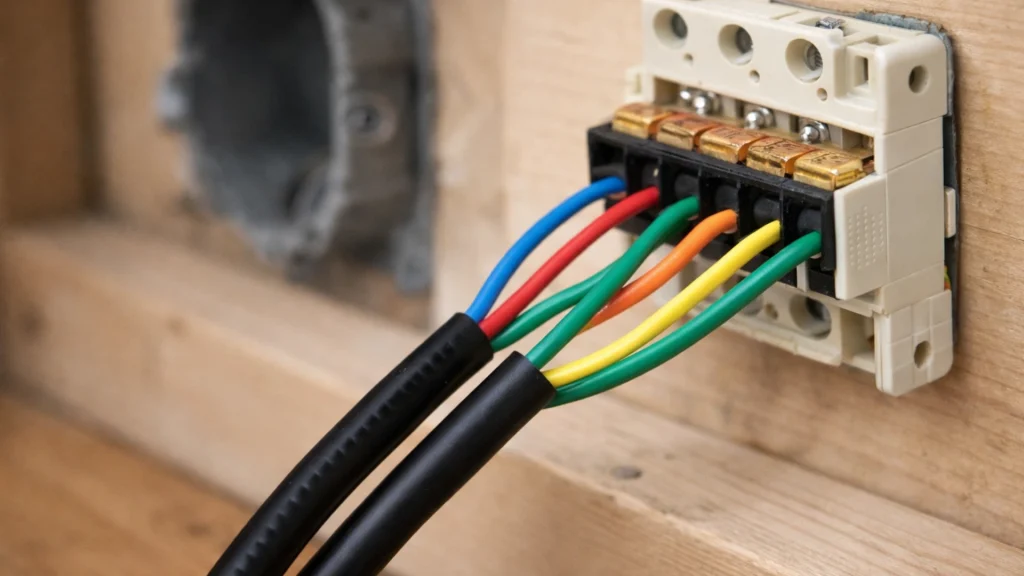
Opening a thermostat and seeing a tangle of colored wires can be confusing at first.
I have been there, staring at reds, whites, greens, and blues with no idea which one does what. The truth is, thermostat wire colors follow a system.
Each color connects to a specific part of the heating and cooling setup, and mixing them up can cause real problems.
A wrong connection can stop your heat in the middle of winter or keep your AC from kicking on during summer. Even a single loose wire can throw the whole system off.
I put this post together so you can understand what each wire does without needing an HVAC background.
With the right knowledge, checking connections, planning an upgrade, or talking to a technician becomes much easier.
What Are Thermostat Wire Colors?
Thermostat wire colors are used to identify each wire’s role in heating and cooling systems.
These wires connect the thermostat to HVAC equipment, carrying low-voltage signals that control heating, cooling, fan operation, and power delivery.
A standard color code speeds up installation, repairs, and troubleshooting, making it easier to match wires to the correct terminals.
However, not all systems adhere to these conventions; older homes or modified setups may have different wiring.
Therefore, relying on terminal labels alongside wire colors is essential for accurate connections. Understanding how these wires function together helps prevent costly mistakes during replacement or repair.
Common Thermostat Wire Colors and Their Functions
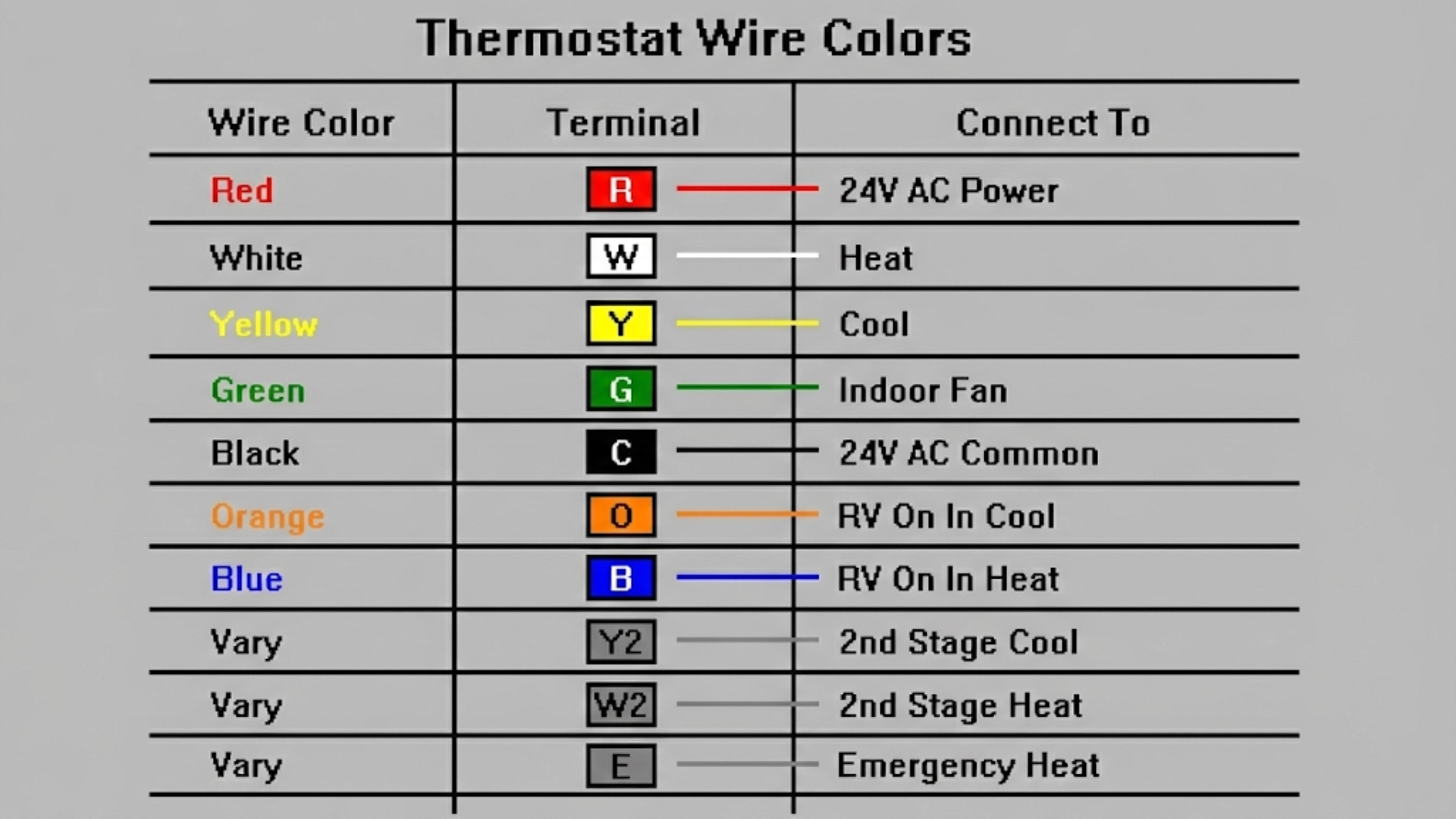
Here’s a closer look at each wire, what it controls, and why proper connections matter for safe and reliable system operation.
1. Red Wire (R, Rc, Rh)
The red wire is the main power wire in thermostat systems, carrying 24-volt power from the HVAC transformer to the thermostat.
It typically connects to the R terminal, but systems with separate heating (Rh) and cooling (Rc) transformers may have split connections.
A jumper wire connects Rc and Rh when a single transformer powers both functions; if removed, one may stop responding.
A loose red wire can shut down the entire system, as no other wire functions without power.
2. White Wire (W)
The white wire controls the heating system by signaling the furnace or heating elements when the thermostat detects a drop in indoor temperature.
It connects to the W or W1 terminal on the thermostat and the HVAC control board, activating only during heating cycles.
A faulty or disconnected white wire can prevent the system from blowing hot or cool air. In heat pump systems, it may activate auxiliary or emergency heat.
Always check the equipment manual for accuracy.
3. Yellow Wire (Y)
The yellow wire controls the cooling system by sending signals to the air conditioner’s compressor when the thermostat calls for cooling.
It connects to the Y or Y1 terminal and, with the red power wire, completes the circuit. A loose or damaged yellow wire can prevent the air conditioner from starting or cooling effectively.
In dual-stage systems, a second yellow wire (Y2) connects to a second compressor stage for added cooling capacity.
4. Green Wire (G)
The green wire connects to the G terminal on the thermostat and controls the indoor blower fan, which circulates conditioned air throughout the home.
It operates automatically during heating or cooling, but can also run independently by setting the thermostat to “On.”
A disconnected green wire won’t stop heating or cooling, but it prevents air circulation, leading to uneven temperatures and reduced comfort.
Proper fan operation is also essential for air quality, as it helps filter dust and allergens.
5. Blue or Black Wire (C)
The blue wire, or sometimes black, is the common wire (C wire) that completes the 24-volt circuit back to the HVAC transformer.
While older battery-operated thermostats may not require it, modern smart thermostats need a constant power supply from the C wire.
Without it, these thermostats may lose power, restart, or show errors. If there’s no C wire in the existing setup, an adapter kit or new thermostat cable may be needed for an upgrade.
6. Orange Wire (O)
The orange wire in heat pump systems controls the reversing valve, switching between heating and cooling modes.
It typically connects to the O terminal on the thermostat, which activates the cooling valve. Some brands, like Rheem, use the B terminal for heating.
Incorrect wiring of the orange wire can cause the heat pump to cool when it should heat, which can confuse homeowners.
Always check the manufacturer’s documentation to confirm if the O or B terminal is the correct connection
7. Brown Wire (W2 or Y2)
The brown wire connects to a second-stage heating or cooling system (sometimes purple or tan), activating the HVAC unit when the first stage cannot reach the desired temperature.
In two-stage furnaces, it connects to the W2 terminal; in two-stage cooling systems, to the Y2 terminal.
These dual-stage setups enhance energy efficiency by operating primarily at a lower output and engaging the second stage only when necessary.
The brown wire is only relevant for multi-stage systems, as single-stage units lack W2 or Y2 terminals.
8. Dark Blue or Tan Wire (E)
The dark blue or tan wire connects to the E terminal on the thermostat, activating emergency heat in heat pump systems by using backup heating sources, like electric resistance heat strips.
This mode is for situations when the heat pump fails or cannot operate, especially during extreme cold.
While effective, relying on emergency heat increases energy consumption significantly and should be a temporary solution until repairs are made.
Not all systems have an E terminal, as it’s specific to heat pump configurations.
Safety Approaches for Thermostat Wiring
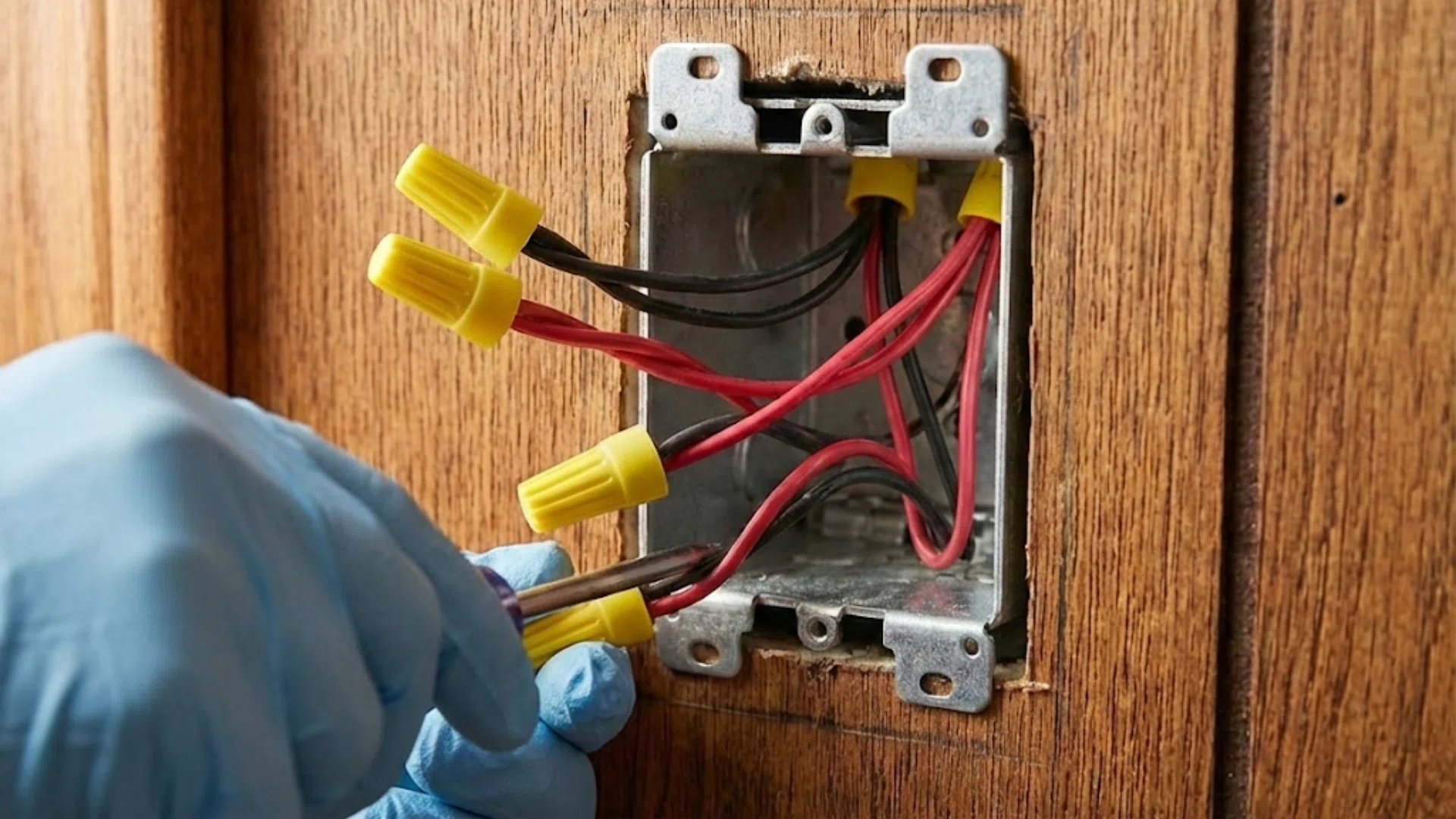
When working with thermostat wiring, it’s crucial to pay close attention to detail and prioritize safety.
A solid understanding of low-voltage wiring is important for both your own safety and the longevity of your HVAC system.
Before getting started, always turn off the power at the breaker to prevent accidents and avoid damage to equipment.
It’s also a good practice to take a clear photo of the existing wiring layout and check the terminal labels on both the thermostat and the HVAC control board. This will help ensure proper connections.
By handling thermostat wiring carefully and preparing adequately, you can minimize the risk of errors and hazards, resulting in a smooth and efficient installation.
Quick Thermostat Wire Color Chart
Here’s a quick-reference table showing each thermostat wire color, its terminal letter, and the function it performs inside a standard HVAC system.
| Wire Color | Terminal | Function |
|---|---|---|
| Red | R / Rc / Rh | Power (24V from transformer) |
| White | W / W1 | Heating (furnace, boiler, or heat pump) |
| Yellow | Y / Y1 | Cooling (air conditioner compressor) |
| Green | G | Fan (blower motor) |
| Blue or Black | C | Common wire (continuous power) |
| Orange | O / B | Reversing valve (heat pump systems) |
| Brown | W2 / Y2 | Second-stage heating or cooling |
| Dark Blue or Tan | E | Emergency heat (heat pump backup) |
Common Thermostat Wiring Mistakes to Avoid
Simple wiring errors can cause system issues, and understanding thermostat wire colors helps prevent damage, safety risks, and heating or cooling failures.
- Ignoring Terminal Labels: Connecting wires by color instead of matching terminal letters can lead to system malfunctions.
- Skipping Power Shutoff: Working on thermostat wiring without turning off power increases the risk of electrical damage or injury.
- Misconnecting the C Wire: Placing the standard wire on the wrong terminal can prevent modern thermostats from powering on.
- Loose Wire Connections: Poorly secured wires may cause intermittent system operation or complete failure.
- Assuming Colors Are Standard: Older or modified systems may not follow typical color patterns, leading to wiring errors.
- Forgetting Jumpers: Removing or misplacing jumper wires can stop heating or cooling from working correctly.
Conclusion
Every thermostat wire color matters, whether its the red power line to the emergency heat connection used in heat pump systems.
One wrong connection on any of these wires is enough to shut down heating, cooling, or both, and fixing the damage often costs more than the original repair.
Always match every wire to the terminal letter printed on the thermostat base and the HVAC control board before tightening anything down.
This one habit prevents the majority of wiring problems homeowners run into.
If you are planning a thermostat swap or troubleshooting a wiring issue right now, drop your questions in the comments below.
Frequently Asked Questions
What Color Wire is Used for Heating on a Thermostat?
The white wire is commonly used for heating. It signals the furnace or heating system when heat is needed.
What Does the C Wire Do in a Thermostat?
The C wire provides constant power to the thermostat. It is required for smart thermostats with screens and Wi-Fi features.
Can Thermostat Wire Colors Be Different in Older Homes?
Yes, older homes may use different color patterns or reused wires. Terminal labels are more reliable than color alone.
Is It Safe to Connect Thermostat Wires by Color Only?
No, color should not be the only guide. Always check terminal letters to avoid wiring mistakes or system damage.
What Happens if a Thermostat Wire is Loose?
A loose wire can cause heating or cooling to stop working, run unevenly, or trigger error messages on the thermostats.