
A single cyber attack can shut down hospitals, freeze company systems, and expose private data before anyone understands what is happening.
That fear is why many teams now look beyond basic security and focus on a cyber resilience strategy that keeps work moving during real attacks.
Cyber resilience helps people and organizations prepare for failure, respond faster, recover systems, and improve after damage instead of panicking.
I will be telling you about how organizations build cyber resilience using a clear framework, a practical cyber resilience plan, and proven actions.
You will also see how tools support recovery and why strong preparation protects trust and growth.
I’ll explain what a cyber resilience strategy is and why organizations now treat it as a core part of long-term planning.
What is a Cyber Resilience Strategy?
A cyber resilience strategy explains how a person or organization continues work when cyber attacks, data loss, or system failures happen without warning.
It focuses on staying functional, recovering quickly, and learning after incidents instead of only trying to stop every possible attack.
This approach accepts that cyber problems can happen anytime, so teams prepare clear responses and recovery steps in advance.
It connects people, processes, and technology so actions during incidents feel planned, calm, and easier to manage.
Importance of cyber resilience:
- Reduces downtime and financial loss by helping systems return faster after attacks that usually pause business operations completely.
- Protects trust by showing customers, partners, and users that recovery plans exist and services will resume safely.
- Supports legal and compliance needs by preparing organizations for data protection and system availability requirements.
- Builds team confidence by training people to respond correctly instead of reacting with panic during cyber incidents.
Strong cyber resilience turns stressful cyber events into manageable situations and helps organizations stay steady, prepared, and reliable even during disruptions.
Core Components of Cyber Resilience
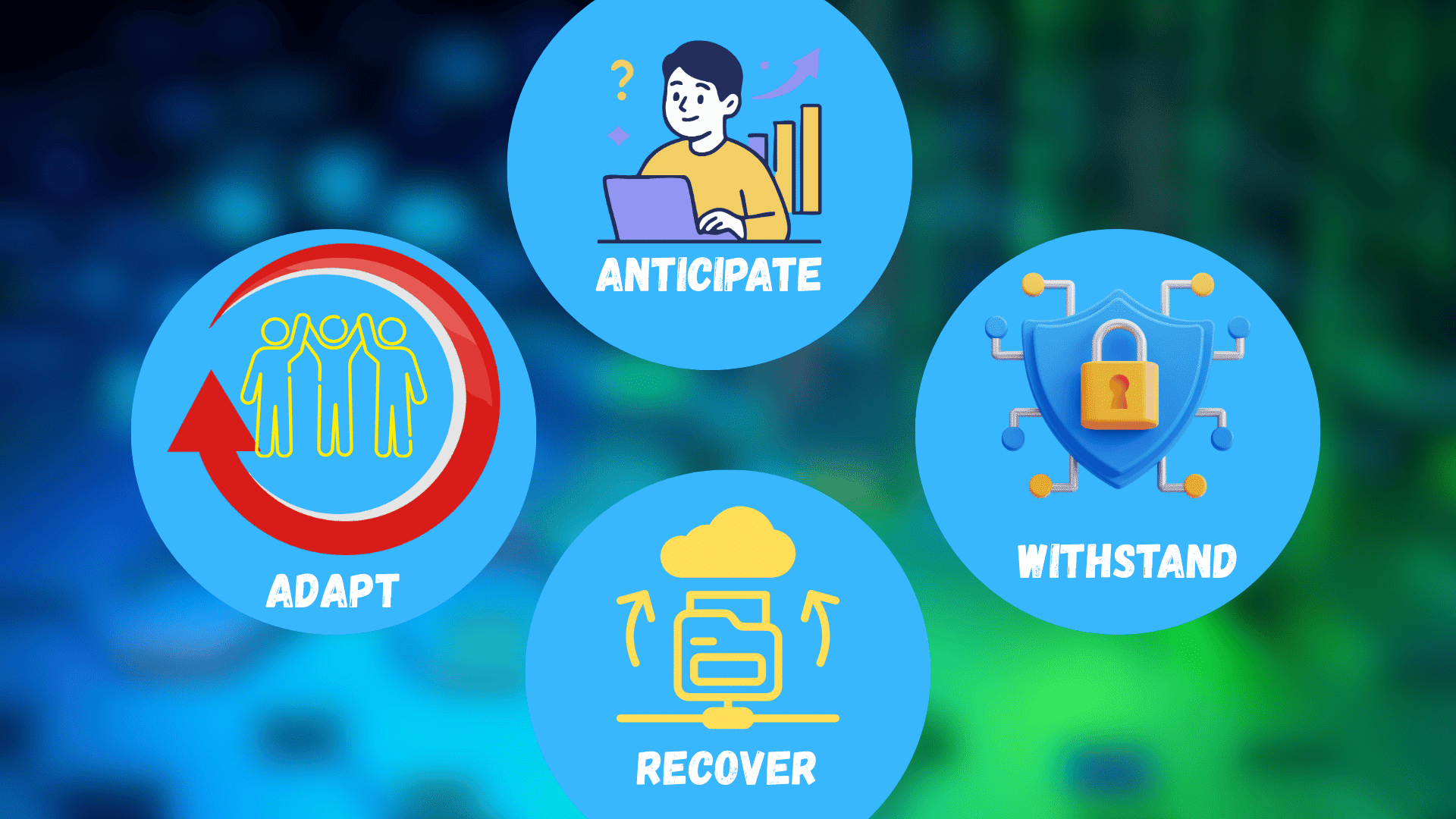
Cyber resilience is built on a few key components that help organizations prepare for cyber risks, handle incidents smoothly, and improve response over time.
1. Anticipate
Anticipation focuses on identifying cyber risks early before they affect systems, data, or normal business operations across the organization.
Teams monitor threat trends, review past incidents, and assess system weaknesses to understand where attacks are most likely.
This work includes checking third-party access, outdated software, and common attack techniques seen across similar industries.
Strong anticipation helps organizations set priorities early and avoid rushed decisions during real cyber incidents.
2. Withstand
Withstanding means keeping systems usable and operations running while a cyber incident is actively occurring.
Organizations apply access controls, network separation, and data protection to prevent issues from spreading across systems.
Redundant systems and trained staff help maintain essential services during stressful attack situations.
This component slows attackers and gives response teams enough time to contain damage without stopping operations completely.
3. Recover
Recovery focuses on restoring systems, data, and services quickly after a cyber incident is contained to limit disruption and resume normal operations.
Organizations rely on tested backups, clear recovery steps, and defined roles so teams act fast without confusion or delays during restoration efforts.
Business-critical systems are restored first using recovery goals that help prioritize services that customers and employees depend on for daily operations.
Strong recovery planning reduces downtime, limits financial impact, and supports trust by showing stakeholders the organization can return quickly after disruption.
4. Adapt
Adaptation focuses on improving cyber resilience by learning from real incidents, response actions, and recovery outcomes across the organization.
Teams carefully review what worked well, what failed, and where delays or confusion occurred after recovery activities finish.
Based on these findings, policies, tools, and training programs are updated to address gaps and improve future response quality.
This ongoing learning process helps organizations stay prepared as threats change and prevents resilience plans from becoming outdated.
Cyber Resilience Strategy Framework for Organizations
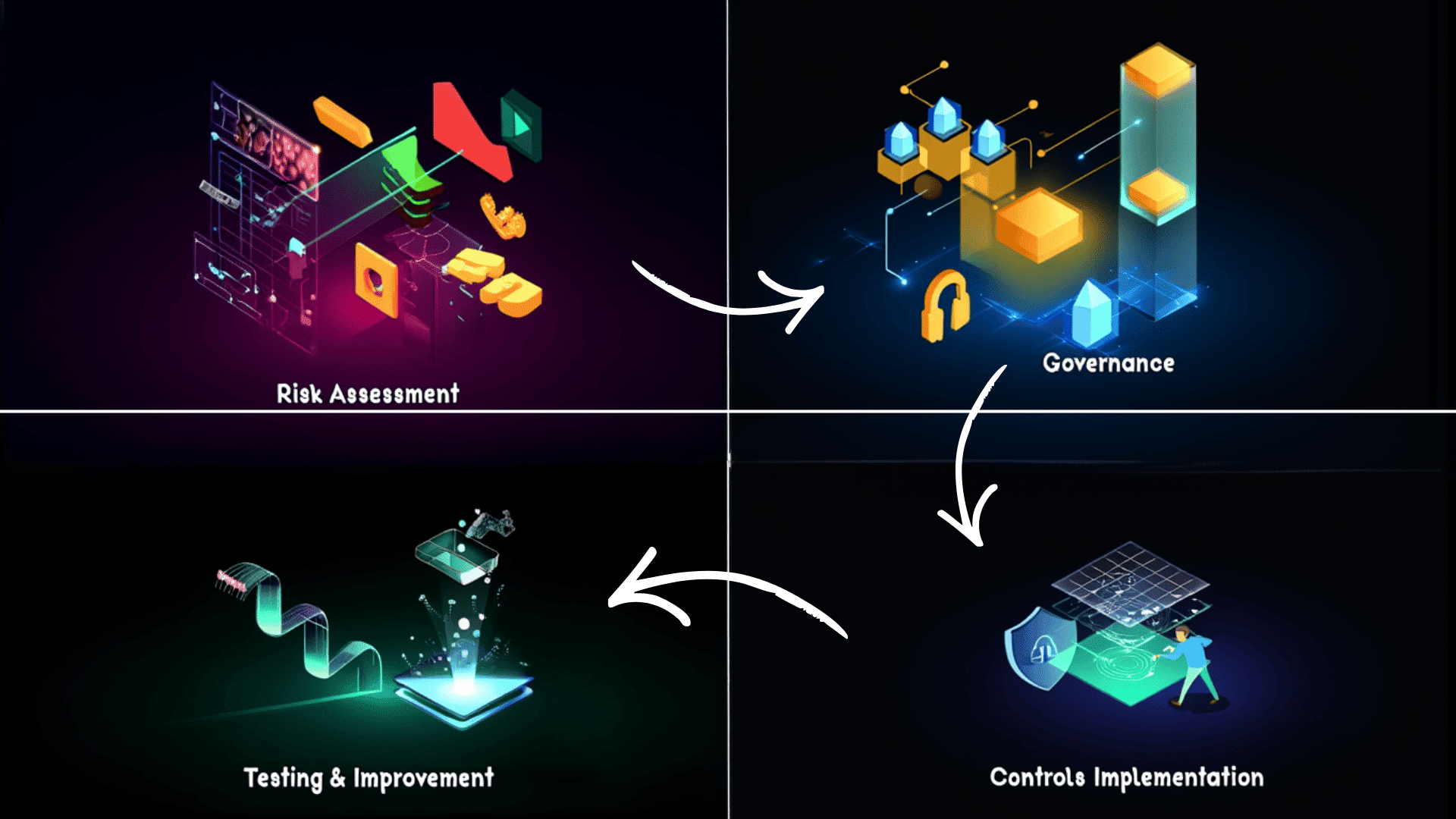
This framework helps organizations follow a clear path to prepare for cyber incidents, respond effectively, recover faster, and improve over time through structured planning.
Step 1: Conduct a Comprehensive Risk Assessment
This step focuses on identifying critical systems, sensitive data, and business processes that would cause serious disruption if compromised.
Teams analyze threat types, review past incidents, and assess weaknesses across internal systems and third-party dependencies.
Business impact analysis helps estimate downtime effects on revenue, safety, and customer trust.
This step ensures organizations focus resources on high-impact risks instead of spreading effort across low-value areas.
Step 2: Define Clear Objectives and Governance
Organizations set measurable recovery and response goals that match business priorities rather than purely technical targets.
Leadership assigns ownership, escalation paths, and decision authority to avoid delays during cyber incidents.
Governance structures connect cyber resilience efforts with enterprise risk management and executive reporting.
Clear objectives and accountability help teams act confidently instead of debating responsibilities during high-pressure situations.
Step 3: Design and Implement Practical Controls
This step focuses on putting real protections in place that teams can rely on during everyday work and actual cyber incidents.
Organizations select controls based on earlier risk findings, making sure tools and processes match real threats and system importance.
This includes setting up secure backups, access controls, monitoring alerts, and clear response steps that teams can follow easily.
Controls should be tested during normal operations so failures are found early, not during live cyber emergencies.
Step 4: Test, Review, and Improve Continuously
This step ensures the cyber resilience strategy works in real situations, not just in planning documents or policy reviews.
Organizations run drills, simulations, and recovery tests to check how teams respond under pressure and time constraints.
Test results help identify gaps in tools, communication flow, decision authority, and recovery speed across departments.
Based on these findings, teams update plans, training, and controls to strengthen future response and reduce repeat mistakes.
Building and Applying a Cyber Resilience Plan

Building and applying a cyber resilience plan means turning strategy into daily actions that teams actually follow during real incidents.
Organizations must connect planning with real workflows, decision-making, and ownership so responses feel natural during pressure situations.
A well-applied plan reduces confusion, speeds recovery, and helps teams act with confidence when systems or data are affected.
Key actions to apply a cyber resilience plan
- Align the plan with business continuity and disaster recovery efforts so cyber incidents are handled alongside other operational disruptions.
- Assign clear roles and decision authority, so teams know who leads response, communication, and recovery without delays.
- Use automation where possible to speed detection, response, and recovery tasks during high-pressure cyber incidents.
- Review and update the plan regularly based on testing results, system changes, and new threat patterns.
Applying the plan consistently helps organizations move from reactive behavior to controlled response and makes cyber resilience part of everyday operations.
Tools That Support Cyber Resilience
Cyber resilience tools enhance preparation, response, and recovery by addressing risks, improving detection, and managing incidents, ensuring minimal downtime and maintaining system security.
1. Backup and Recovery Tools

Backup and recovery tools help restore systems and data after cyber incidents like ransomware, system failure, or accidental deletion.
Tools such as Veeam, Cohesity, and Rubrik focus on secure backups that cannot be changed or deleted by attackers. These tools differ in speed, storage design, and how quickly systems can be restored.
Strong recovery tools reduce downtime and help organizations return to normal work without paying ransom or losing critical data.
2. Threat Detection and Response Tools
Threat detection tools help teams notice suspicious activity early and respond before damage spreads across systems.
Platforms like CrowdStrike, SentinelOne, and Microsoft Defender use behavior tracking instead of only known threat signatures.
They differ in response automation, alert quality, and integration with other security systems.
Early detection gives response teams more time to contain incidents and protect important systems.
3. Identity and Access Management Tools
Identity and access management tools control who can enter systems, what data they can see, and which actions they are allowed to perform daily.
Tools such as Okta, Entra ID, and Ping Identity help reduce misuse by enforcing strong login and access rules.
Strong identity controls stop attackers from moving freely inside systems and help organizations maintain accountability during cyber incidents and recovery efforts.
These tools differ in user management, access visibility, and support for remote or third-party users.
4. Risk and Incident Management Tools

Risk and incident management tools help organizations track cyber risks, manage active incidents, and document actions taken during response and recovery.
Tools such as ServiceNow, Archer, and Jira help teams assign tasks, record timelines, and maintain visibility across departments.
These tools differ in reporting detail, workflow control, and how well they connect cyber incidents to business impact.
Using these platforms supports learning after incidents and helps improve future response plans instead of repeating the same mistakes.
Cyber Resilience vs Cybersecurity
Cyber resilience and cybersecurity are closely related, but they focus on different goals, and understanding the difference helps organizations plan better and respond smarter during cyber incidents.
| Aspect | Cyber Resilience | Cybersecurity |
|---|---|---|
| Primary focus | Keeping operations running and recovering quickly during and after cyber incidents | Preventing cyber attacks and stopping threats before they cause damage |
| Approach | Assumes incidents will happen and prepares response and recovery plans | Tries to block attacks using security controls and defenses |
| Scope | Covers people, processes, technology, and business operations together | Focuses mainly on technical systems and security tools |
| Success measure | Recovery speed, system availability, and business continuity | Detection rates, blocked attacks, and reduced vulnerabilities |
| Incident handling | Emphasizes recovery, learning, and improvement after incidents | Emphasizes containment and removal of threats |
| Business impact | Supports long-term stability and adaptability | Reduces immediate security risks |
Both cyber resilience and cybersecurity work best together, helping organizations stay protected while also being ready to recover and continue operations when incidents occur.
Common Cyber Resilience Challenges
Many organizations struggle with cyber resilience because planning looks simple on paper, but becomes difficult when real attacks, limited resources, and human behavior enter the picture.
- Rapidly changing threats make it hard forteams to keep plans updated as attackers use new tactics, tools, and techniques.
- Skill shortages slow response because trained security and recovery experts are hard to hire, retain, and train consistently.
- Budget limits force teams to delay tools, testing, and training that directly support faster recovery during incidents.
- Siloed teams are confused when IT, security, and business units do not communicate clearly during cyber events.
- Complex rules and regulations add pressure, especially when organizations operate across regions with different compliance needs.
- Employee resistance reduces effectiveness when staff view resilience controls as extra work or unnecessary restrictions.
Understanding these challenges early helps organizations plan realistic strategies, set better expectations, and strengthen cyber resilience step by step over time.
Real-World Cyber Resilience Strategy Use Cases

Real incidents show how cyber resilience works outside planning documents and policies, helping organizations survive serious attacks, restore operations, and improve future readiness.
1. Health Service Executive Ransomware Attack, Ireland
Source:hhs.gov
In 2021, Ireland’s Health Service Executive faced a ransomware attack that shut down hospital systems and delayed patient care nationwide.
The organization isolated infected networks quickly and relied on manual procedures to keep essential medical services running.
Although full system recovery took weeks, early isolation and prioritization of critical services prevented total operational collapse.
After the incident, the organization invested heavily in backups, access controls, and staff training, showing how recovery and learning strengthen long-term resilience.
2. Colonial Pipeline Cyber Incident, United States
Source: cisa.gov
The Colonial Pipeline cyber incident in 2021 disrupted fuel delivery across several U.S. states and created shortages that affected businesses and everyday consumers.
The company shut down operations as a safety measure while assessing system impact and preventing further spread.
Recovery relied on predefined response plans, offline backups, and coordination with external agencies.
Although the shutdown caused short-term disruption, the ability to restore operations within days reduced long-term damage.
This case shows how recovery planning and clear decision-making support continuity during high-pressure cyber incidents.
3. Maersk NotPetya Cyberattack, Denmark
Source:BBC
The NotPetya attack in 2017 severely impacted Maersk by wiping out systems across global shipping, logistics, and port operations.
Thousands of servers and workstations were rendered unusable within hours, stopping booking and cargo tracking worldwide.
Maersk recovered by rebuilding systems from clean backups and using strict recovery controls instead of paying ransom.
Operations resumed within 10 days, despite the scale of disruption.
This case highlights how strong recovery preparation and adaptation help organizations regain control after widespread cyber damage.
4. Riot Games LCK Spring DDoS Attacks (2024)
Source:eSports.gg
In February 2024, Riot Games’ League of Legends Champions Korea (LCK) Spring Split faced persistent DDoS attacks from Week 5
It caused ping disruptions, match cancellations, and delays during high-viewership games, peaking at 2.6 million.
LCK responded by deploying offline servers at LoL Park for isolated gameplay and pre-recording matches for live broadcast, ensuring continuity.
This swift withstanding and recovery preserved event integrity.
Subsequent adaptations included enhanced mitigation plans, reducing future impacts, and strengthening esports resilience.
Conclusion
Cyber threats will keep changing, but the need to stay prepared will always remain important for people and organizations handling digital systems.
A cyber resilience strategy helps you stay steady during trouble, recover faster, and improve after incidents instead of feeling stuck or overwhelmed.
I believe resilience works best when planning, people, and tools support each other, not when security is treated as a one-time task.
What matters next is how you apply these ideas in daily operations, team habits, and decision-making before the next disruption appears.
Strong resilience grows over time, and small steps taken now often prevent much bigger problems later.
How prepared do you feel your organization is for a serious cyber incident right now? Tell us and share your thoughts with us in the comments below.