Seeing RSVP on an invitation can leave many people unsure about what’s expected of them.
This blog will break down the origins of RSVP and explain why it is essential for both hosts and guests.
Understanding this simple but important request can help avoid confusion and ensure smooth event planning.
In this, we will also cover the significance of timely responses, common misconceptions about RSVP, and the etiquette surrounding it.
Attending a wedding, party, or corporate gathering, knowing how to properly RSVP is important.
In this post, I’ll guide readers through the process, helping to ensure that everyone involved is well-prepared and informed for any occasion.
What Does RSVP Stand For?

RSVP is an acronym derived from the French phrase Répondez s’il vous plaît, which translates to “Please respond” in English.
It is commonly used on invitations to request that invitees confirm whether they will attend an event.
This simple yet essential request helps hosts plan the event efficiently, ensuring there is enough food, seating, and accommodations for everyone.
Although RSVPs are often seen in formal invitations, what does RSVP mean can also apply to casual settings where accurate attendance numbers are necessary.
This has become widely recognized in both personal and professional contexts.
By responding to an RSVP, guests show respect for the host’s efforts and help maintain order and preparation for the event.
Properly understanding and following this request plays a crucial role in event planning.
Why Is RSVP Important?
RSVP plays a crucial role in event planning by helping hosts manage attendance and ensure proper arrangements.
When receiving an invitation with the request for an RSVP, the host relies on accurate responses to plan for food, seating, and other logistics.
Without a proper RSVP, it becomes challenging to accommodate all guests effectively, potentially leading to shortages or over-preparation.
For larger events, such as weddings or corporate functions, knowing the exact number of attendees is especially vital for catering, seating, and other services.
Furthermore, responding to RSVPs demonstrates respect for the host’s efforts and helps ensure a smooth, enjoyable experience for everyone involved.
Reviews & Discussions from Reddit on RSVP
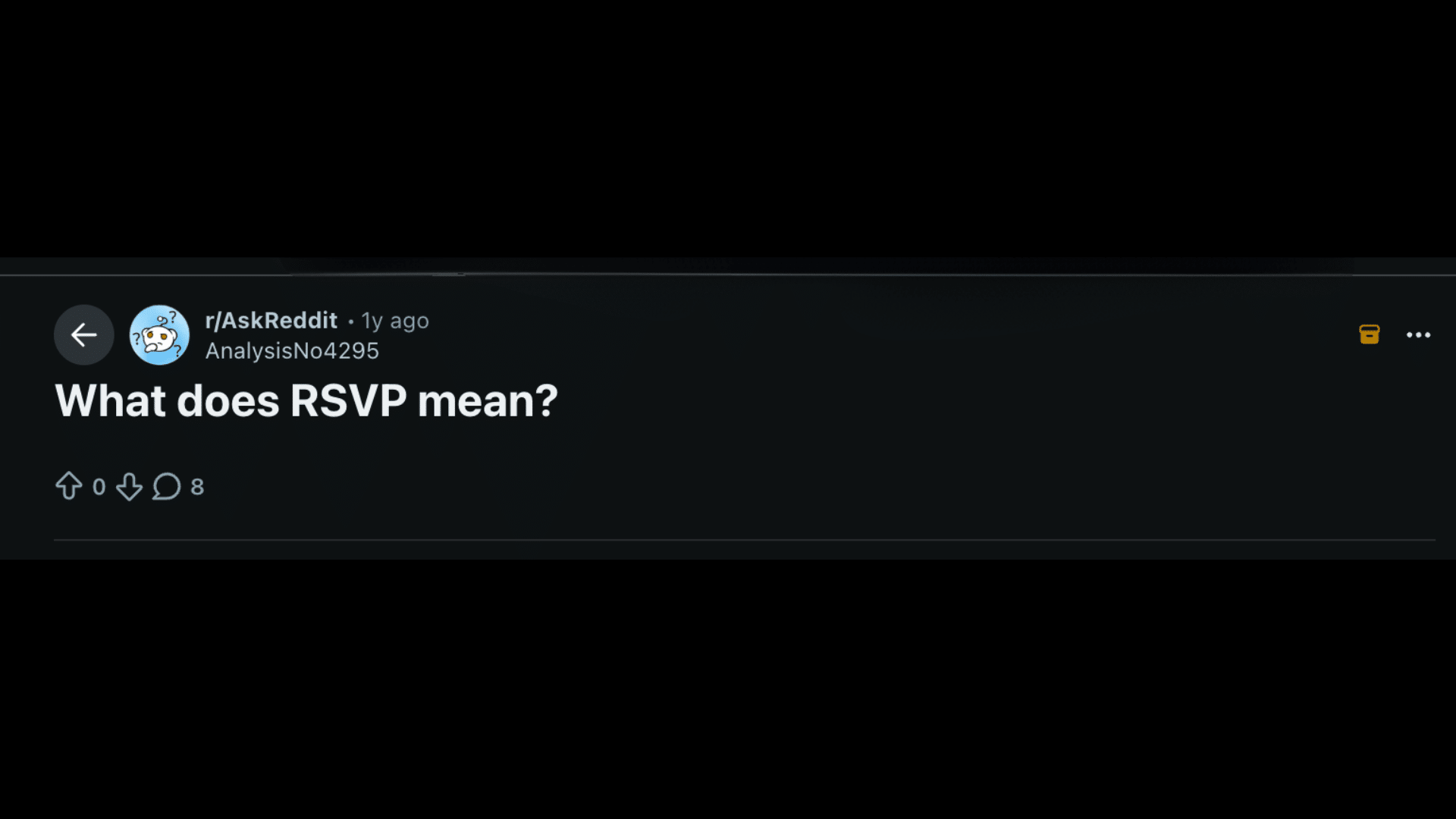
Community discussions on Reddit about “What does RSVP mean?”, multiple community members explain that RSVP is simply a request for a reply from guests invited to an event.
One top response clarifies that it means “please respond.”
Noting it comes from the French phrase Répondez s’il vous plaît, which directly translates to “respond if you please.”
Another commenter emphasizes that while the literal translation is “respond if it pleases you,” modern usage focuses on the polite ask for someone to confirm attendance.
A few humorous replies attempt joke interpretations, but the consensus remains that RSVP is not meant as a formal command but as an invitation courtesy.
This Reddit thread highlights how everyday users break down the meaning and share perspectives on RSVP in a conversational way.
Common Misunderstandings About RSVP
Many people misinterpret RSVP, which leads to confusion and unnecessary issues when planning events.
- RSVP Means “I’m Coming”: Some think RSVP automatically means they’ll attend, but it’s just a request to confirm.
- No Response Means “No”: Not replying doesn’t always mean a “no”; hosts expect a clear response either way.
- It’s Only for Formal Events: RSVP is used for any event where confirming attendance is needed, not just formal ones.
- RSVP is Optional: Failing to respond to what RSVP means can complicate the host’s planning.
- RSVP Only Applies to Large Events: RSVP is helpful for managing guest lists at both small and large events.
How to Respond to an RSVP Correctly?
Properly responding to an RSVP ensures smooth event planning and avoids confusion for the host.
When invited, review the RSVP instructions carefully, whether on a paper invitation, email, or digital invite.
If the invitation asks for a specific response, such as by a certain date, make sure to reply within the given timeframe.
Always provide a clear “yes” or “no” regarding attendance. If attending, include any requested details, like dietary restrictions or special accommodations.
If unable to attend, it’s polite to inform the host as early as possible.
Remember, what RSVP means in this context is simply confirming attendance, helping the host prepare effectively.
How to Handle Last-Minute Changes to Your RSVP?
Sometimes, unexpected situations may arise after RSVPing, requiring a change in plans.
If attending an event and a last-minute conflict comes up, it’s important to notify the host as soon as possible.
Whether it’s a sudden work commitment or a personal reason, providing a clear explanation and apologizing for the change is crucial.
If declining after initially accepting, it’s best to give the host ample notice and explain the situation.
Similarly, if attending despite initially declining, informing the host early on helps with accommodations.
SVP Etiquette and Best Practices
Responding to an RSVP shows respect for the host and helps the event run smoothly. Here are some key best practices to keep in mind when responding to an invitation.
- Be Prompt: Reply as soon as possible within the stated timeframe.
- Be Honest: Give a clear yes or no to help with planning.
- Provide Necessary Details: Share any requested information, such as meal choices.
- Follow the Instructions: Respond using the method specified on the invitation.
- Respect the deadline: Late responses can disrupt seating, catering, and scheduling plans.
- Respond even if declining: Not replying at all is more disruptive than a polite decline.
- Limit plus-ones: Only bring additional guests if the invitation clearly allows it.
Conclusion
Understanding and responding to an RSVP is an essential part of event etiquette.
It ensures that hosts can plan and prepare properly, avoiding any last-minute surprises or shortages.
Whether it’s a formal gathering or a casual get-together, a timely and clear response shows respect for the host’s efforts.
I’ve found that when guests fail to RSVP or do so incorrectly, it can create unnecessary challenges.
Knowing what RSVP means and following proper etiquette makes the event planning process much smoother.
An RSVP is a simple but important way to contribute to the success of any event, large or small.
Have any RSVP stories or tips to share? Whether it’s a funny experience or helpful advice, drop a comment below!
Frequently Asked Questions
What is the Best Way to Respond to An RSVP?
The best way to respond is promptly, providing a clear “yes” or “no” along with any additional details requested by the host.
Is It Okay to Decline an RSVP?
Yes, it’s perfectly acceptable to decline, but make sure to inform the host as soon as possible so they can plan accordingly.
Should I Always Respond to An RSVP, Even for Casual Events?
Yes, responding to an RSVP is a courtesy, even for informal gatherings, to help hosts with their preparations.