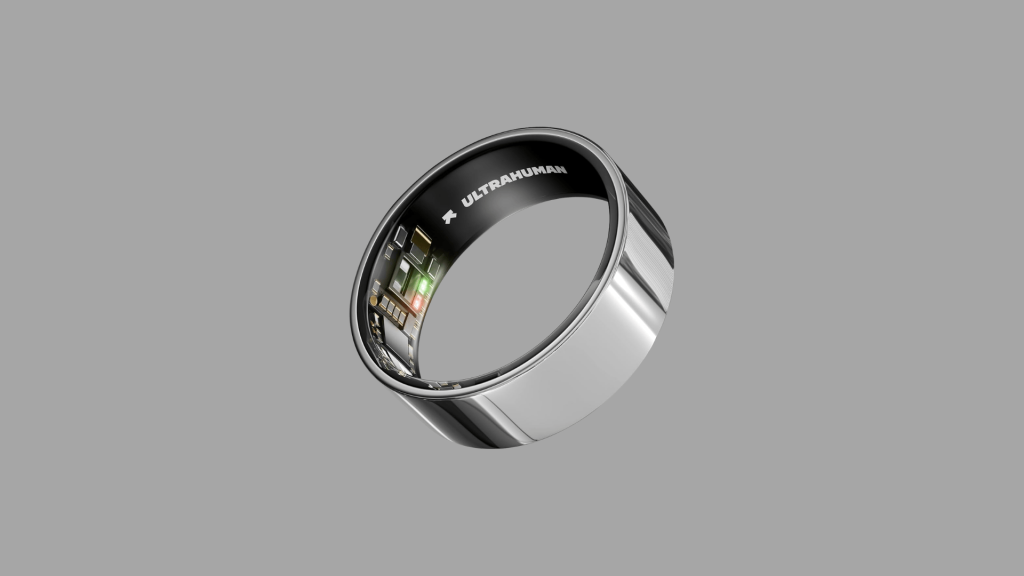
Smart rings are slowly replacing bulky fitness trackers. They are small, light, and sit on your finger all day without getting in the way.
Many people now prefer them because they track sleep, activity, and recovery without the look of a smartwatch.
The Ultrahuman Ring Air is one of the newest options in this space. It focuses heavily on sleep tracking, recovery insights, and metabolic health.
The design is simple, but the features aim to give detailed health data in a very small device.
This ultrahuman ring air review looks at how the ring performs in everyday use and whether the data it provides actually helps improve daily habits.
In the sections ahead, this blog post covers the ring’s design, health tracking features, battery life, accuracy, and app experience.
What is the Ultrahuman Ring Air?
The Ultrahuman Ring Air is a wearable health tracker designed in the form of a ring. Instead of wearing a watch or fitness band, the device sits on the finger and quietly collects health data throughout the day and night.
It connects to a smartphone app that displays all the information and insights.
The device belongs to the category of smart rings, which are compact wearables that track health and fitness metrics without the bulk of a smartwatch.
The main purpose of the Ultrahuman Ring Air is to help users understand their bodies through continuous health tracking.
It measures sleep patterns, heart rate, movement, stress levels, and skin temperature, then converts that data into insights about recovery, activity, and overall wellness.
The Ultrahuman Ring Air was also affected by a patent-infringement ruling issued by the ITC in October 2025, which restricted new imports and sales in the United States.
Existing users, however, continue receiving updates, support, and warranty services.
Ultrahuman Ring Air: Design and Build Quality
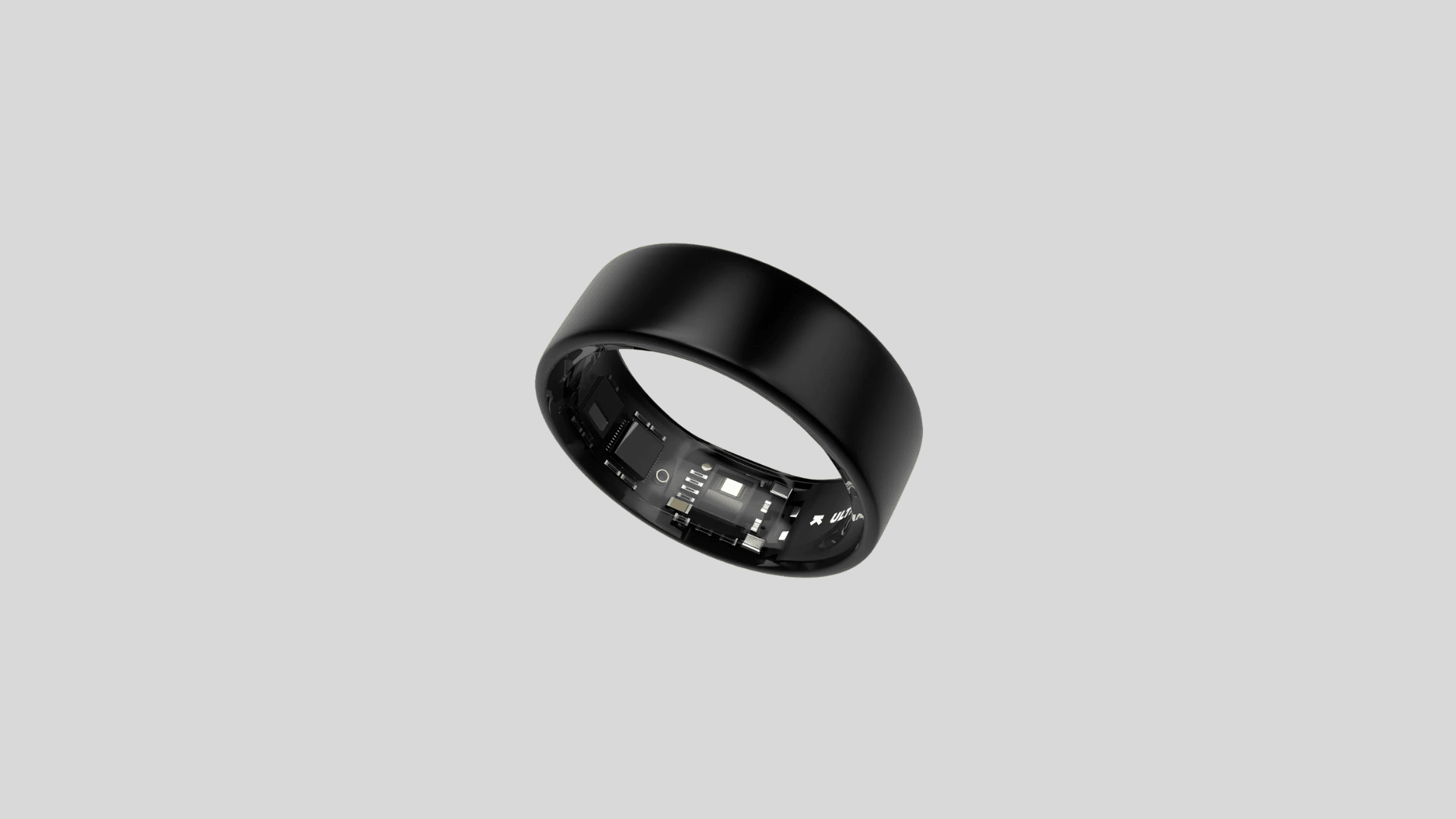
The Ultrahuman Ring Air features a clean, minimal design that feels more like a normal ring than a tech device.
The outer shell is made of fighter-jet-grade titaniumand reinforced with a tungsten carbide coating. This combination makes the ring strong while keeping it very light for everyday use.
Comfort is one of the strongest parts of the design. The inner surface is smooth and shaped to sit naturally on the finger, so it does not feel bulky during daily tasks or while sleeping.
Many users wear it all day without noticing it much. The ring is extremely lightweight, usually between about 2.4 and 3.6 grams, depending on the size.
It is available in multiple sizes, so most users can find a comfortable fit. Durability is also solid thanks to the titanium body and scratch-resistant coating.
The ring has an IP68 rating, meaning it is water-resistant to depths of around 100 meters & is dust-tight, so it can handle showers, swimming, and everyday exposure to water.
Ultrahuman Ring Air Features
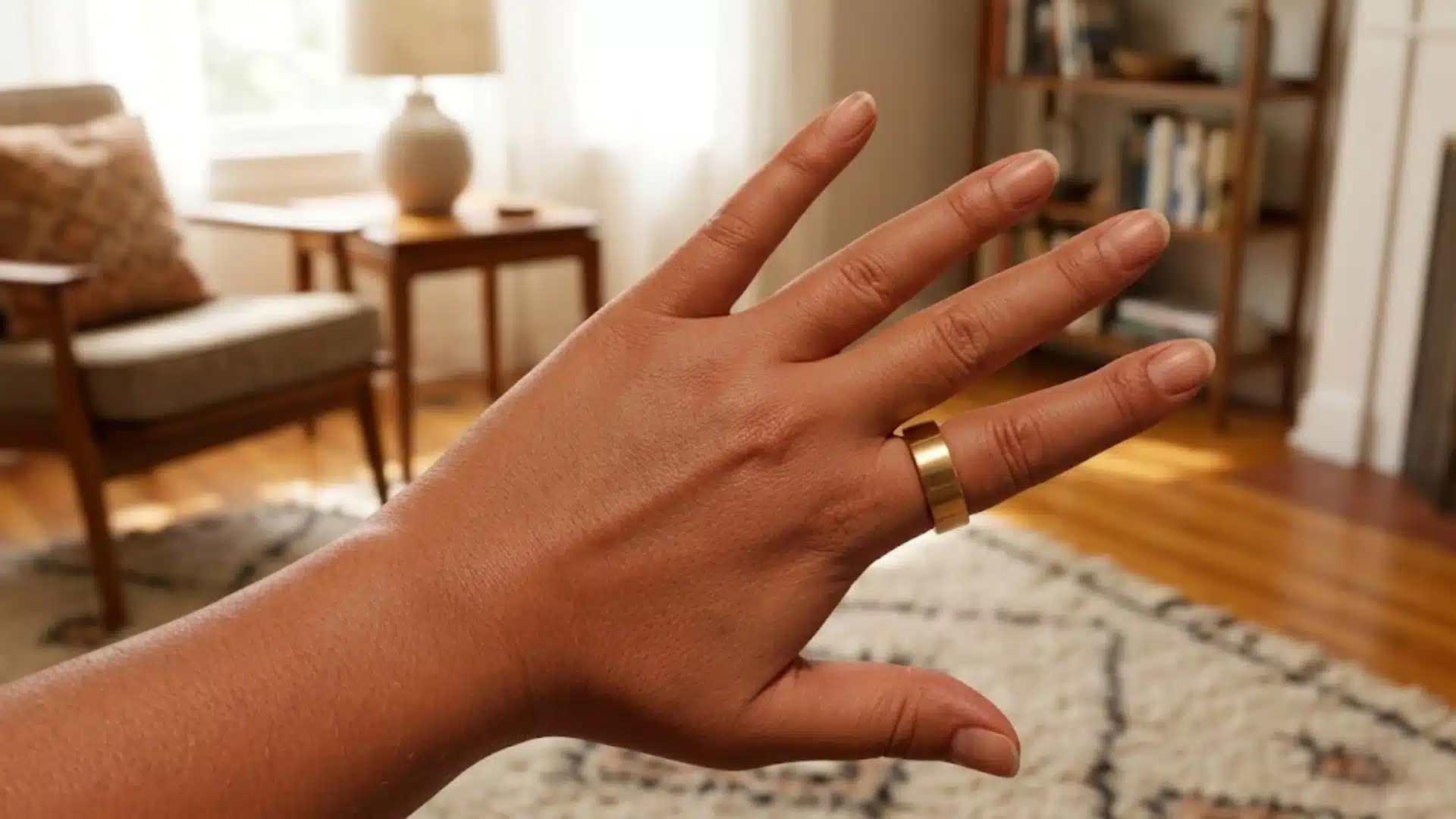
The Ultrahuman Ring Air focuses heavily on health insights rather than simple step counting. It collects body data throughout the day and converts it into clear scores and trends inside the app.
1. Sleep Tracking
Sleep tracking is one of the strongest features of the ring. It monitors different sleep stages such as light sleep, deep sleep, and Rapid Eye Movement (REM) sleep to show how the body recovers overnight.
The app also provides sleep insights like sleep efficiency, bedtime consistency, and total sleep time.
These metrics help users understand whether their rest is actually restorative. Accuracy is generally considered strong for a wearable of this size.
2. Activity Tracking
The ring tracks daily movement throughout the day using built-in motion sensors.
Instead of focusing only on step counts, the system calculates a movement or activity score based on intensity and duration of movement.
This provides a broader view of how active the day actually was. Users can also see basic activity metrics like steps and overall activity levels in the app.
Some exercises, such as walking or simple workouts, can be detected automatically, while other workouts can be logged manually.
3. Recovery Tracking
Recovery tracking focuseson how well the body is handling stress, workouts, and sleep quality.
Each morning, the app generates a readiness or recovery score based on several metrics collected overnight.
These include heart rate variability, sleep quality, and activity levels. The score gives a quick idea of whether the body is ready for intense activity or if rest might be a better choice.
Many users find this feature useful because it combines sleep, stress, and activity into a single, easy-to-understand number.
4. Heart Rate and Temperature Monitoring
The ring also tracks heart rate and skin temperature continuously using built-in sensors. These measurements help identify patterns related to stress, recovery, and sleep quality throughout the day and night.
Heart rate and heart rate variability are especially important because they indicate how the nervous system responds to stress and recovery.
Temperature tracking adds another layer of health insight, helping the app detect changes in the body that may affect sleep, metabolism, or overall wellness.
Ultrahuman Ring Air: Setup and App Experience

Setting up the Ultrahuman Ring Air is a simple process and usually takes only a few minutes.
After receiving the ring, the first step is to place it on the charging dock and download the Ultrahuman app from the Android or iOS app store.
The app then guides the user through the setup steps, including creating an account and entering basic health details like height, weight, and activity level.
Pairing the ring with the app is done via Bluetooth. Once the ring is detected, the app connects to it automatically and starts syncing data.
The interface inside the app is fairly simple, with dashboards that show sleep, movement, and recovery scores in a clear format.
The Ultrahuman app works on both Android and iOS devices, so users on either platform can access the same tracking features and insights.
Ultrahuman Ring Air: Battery Life and Charging
The Ultrahuman Ring Air offers solid battery life for a device this small.
On a full charge, the ring usually lasts around 4 to 6 days, depending on how often features like continuous tracking and syncing are used.
This means it does not need to be charged every day like most smartwatches. In everyday use, the battery performance feels reliable.
Many users only need to charge the ring once or twice a week, which helps avoid gaps in sleep or health tracking.
Even with continuous monitoring of sleep, heart rate, and movement, the battery tends to last several days without major drops.
Charging the ring is fairly quick; a full charge usually takes around 90 minutes to 2 hours, depending on the battery level and battery health.
The ring comes with a compact charging dock that connects through a USB-C cable. The ring sits securely on the dock, making the charging process simple and convenient for daily use.
Ultrahuman Ring Air Review: Real User Experiences

Reddit users sharing their Ultrahuman Ring Air reviews online report a positive experience in the first few weeks of use.
One user who bought the ring from Amazon said it worked smoothly from the start, even after trying two different sizes, with no issues in performance or fit.
Another user found the temperature tracking very helpful because it helped monitor intermittent fevers without manually checking and logging body temperature.
Longer use feedback also shows stable performance. One user who bought the ring in early 2024 initially encountered a small issue, but the company replaced the device quickly, and the ring has worked fine since then.
The only common complaint in some Ultrahuman Ring Air review discussions is the frequent app notifications, which cannot be easily customized yet.
Ultrahuman Ring Air: Pros and Cons
A quick overview of the main strengths and limitations of the Ultrahuman Ring Air to help understand its design benefits, health tracking features, and possible drawbacks.
| Pros | Cons |
|---|---|
| Minimal look that feels like a normal ring rather than a tech device. | Costs more than many basic fitness trackers. |
| Lightweight titanium build makes it easy to wear all day and during sleep. | Focuses more on recovery and sleep than on detailed workouts. |
| Provides detailed sleep stages and useful rest insights. | Some users report too many notifications. |
| Lasts around four to six days on a single charge. | Health scores and insights may take time to understand. |
| App converts health data into clear recovery and movement scores. | All data must be viewed in the mobile app. |
Ultrahuman Ring Air: Price and Value for Money
The Ultrahuman Ring Air is priced around $340 to $360, depending on the finish and retailer. Most listings list the standard price at about $349, putting it in the premium smart ring category.
Considering the features, the price can feel reasonable for users who want detailed health insights in a small wearable.
The ring tracks sleep stages, recovery, heart rate, temperature changes, and daily activity, all without requiring a monthly subscription fee.
This makes it appealing compared to some competing smart rings that charge ongoing fees for data access.
The ring is best suited for people who care about sleep tracking, recovery insights, and long-term health data rather than intense workout tracking.
Users who prefer a lightweight wearable instead of a smartwatch may also find it a good investment for everyday health monitoring.
Conclusion
The Ultrahuman Ring Air stands out as a compact health tracker that focuses more on recovery and sleep insights than typical fitness devices.
Its lightweight design, comfortable fit, and detailed health metrics make it easy to wear throughout the day and night.
The app also presents data in a way that helps users understand daily habits and body signals without feeling overly technical.
In the middle of this ultrahuman ring air review, it becomes clear that the ring works best for users who value passive health monitoring rather than detailed workout tracking.
However, people who mainly want advanced sports tracking or a screen may prefer a smartwatch instead. The price may also feel high for casual users.
What do you think about smart rings replacing traditional fitness trackers? Share your thoughts or experiences in the comments below.