There are 129 workplace back injuries reported every hour in the United States. For the event production industry, where “load-in” involves moving literal tons of steel and glass, this isn’t just a statistic. It is a constant threat to your project timeline and your most experienced lead technicians.
OSHA Standards for Event Load-ins
Compliance is the floor, not the ceiling, for protecting your crew during high-stakes setups. OSHA requires that employers provide a workplace free from recognized hazards, which in the AV world translates to proper lifting equipment and mandatory breaks.
When a lead technician goes down with a herniated disc, the financial impact ripples through the entire production. You lose the institutional knowledge of that specific rig, often resulting in costly delays or sub-hire fees for emergency replacements.
Advanced Recovery and the Financial Impact of Downtime
The medical reality of the event tech sector is that repetitive heavy lifting often leads to chronic spinal issues. Fortunately, modern medical interventions have evolved to match the fast-paced needs of the industry.
To reduce recovery time and get key personnel back to the job site, many specialists now recommend a microdiscectomy over traditional open-back procedures. This approach allows technicians to return to their roles much faster than older, more invasive surgeries.
Practical Steps for Long-Term Crew Health
Supporting your team requires more than just insurance; it requires a culture of physical accountability. Implementing small changes in how gear is packed can save thousands in medical leave.
Consider these three primary methods for reducing onsite strain:
- Transitioning all heavy rack cases to high-quality casters
- Mandating two-person lifts for any item over forty-five pounds
- Providing ergonomic lumbar support harnesses for lighting leads
Ergonomic Standards for Long-term Physical Sustainability
There are 3,400 technical specialists every day who risk career-shortening injuries due to improper gear handling. While individual strength is often celebrated in the production world, relying on muscle alone is a failing strategy for agency longevity.
Standardizing the height of work surfaces during onsite assembly prevents the micro-tears in muscle fiber that lead to major failures. When your crew is forced to hunch over lighting consoles or cable trunks for ten hours, the resulting fatigue increases the likelihood of a catastrophic mistake during the high-pressure load-out.
Protect the spine, load is shifting, specialized gear provides the only real safety. Modern production houses are now investing in automated lifts and customized grip kits to ensure that no single technician is carrying the weight of the entire show.
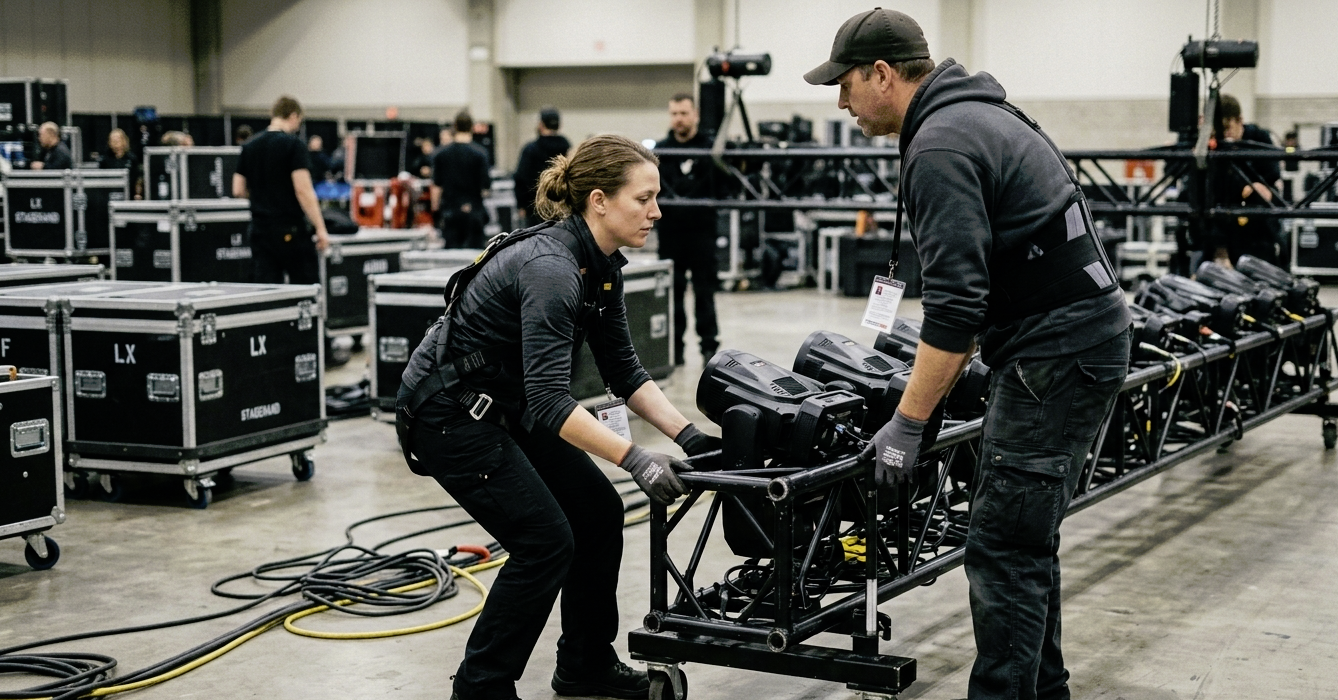
The Financial Impact of Lead Technician Downtime
The sudden loss of a technical director during a busy season can cost a firm upwards of twenty thousand dollars in lost efficiency and emergency sourcing. This financial drain often stems from the “hero culture” where senior staff take on the heaviest physical burdens to lead by example.
By shifting the culture toward mechanical assistance and early medical intervention, you preserve the mental capital of your most experienced employees. Keeping these veterans on the show floor requires a commitment to their physical well-being that extends beyond the standard first-aid kit.
It works, demand is rising, health offers real safety.
High-level production is a marathon, not a sprint, and your ROI is directly tied to the physical readiness of the people behind the curtain. So, if you’re already investing in the latest event tech, puting money behind the health of your people is just as important.
Investing in the Longevity of Production Teams
Protecting your crew is an investment in the quality of your shows. By prioritizing ergonomic safety and supporting modern recovery options, you ensure your best talent stays on the floor rather than on the sidelines.
Explore our internal blog for more guides on managing technical event personnel effectively.