I get a lot of questions about how electric cars work, and one of the most common is about their transmissions.
If you’ve wondered how an EV moves without the usual shifting you feel in a gas car, you’re not alone.
I’ll walk you through what really happens under the hood so you can understand it without sorting through confusing tech terms.
In this blog, you’ll learn:
- If electric cars have transmissions
- How an EV’s drivetrain works
- Why EVs feel smoother on the road
I keep things simple, clear, and based on facts you can trust. By the end, you’ll know exactly how EV power works and why it’s different from what you may be used to.
This will help you feel more confident, whether you already drive an electric car or you’re thinking about switching.
Do Electric Cars Have Transmissions?
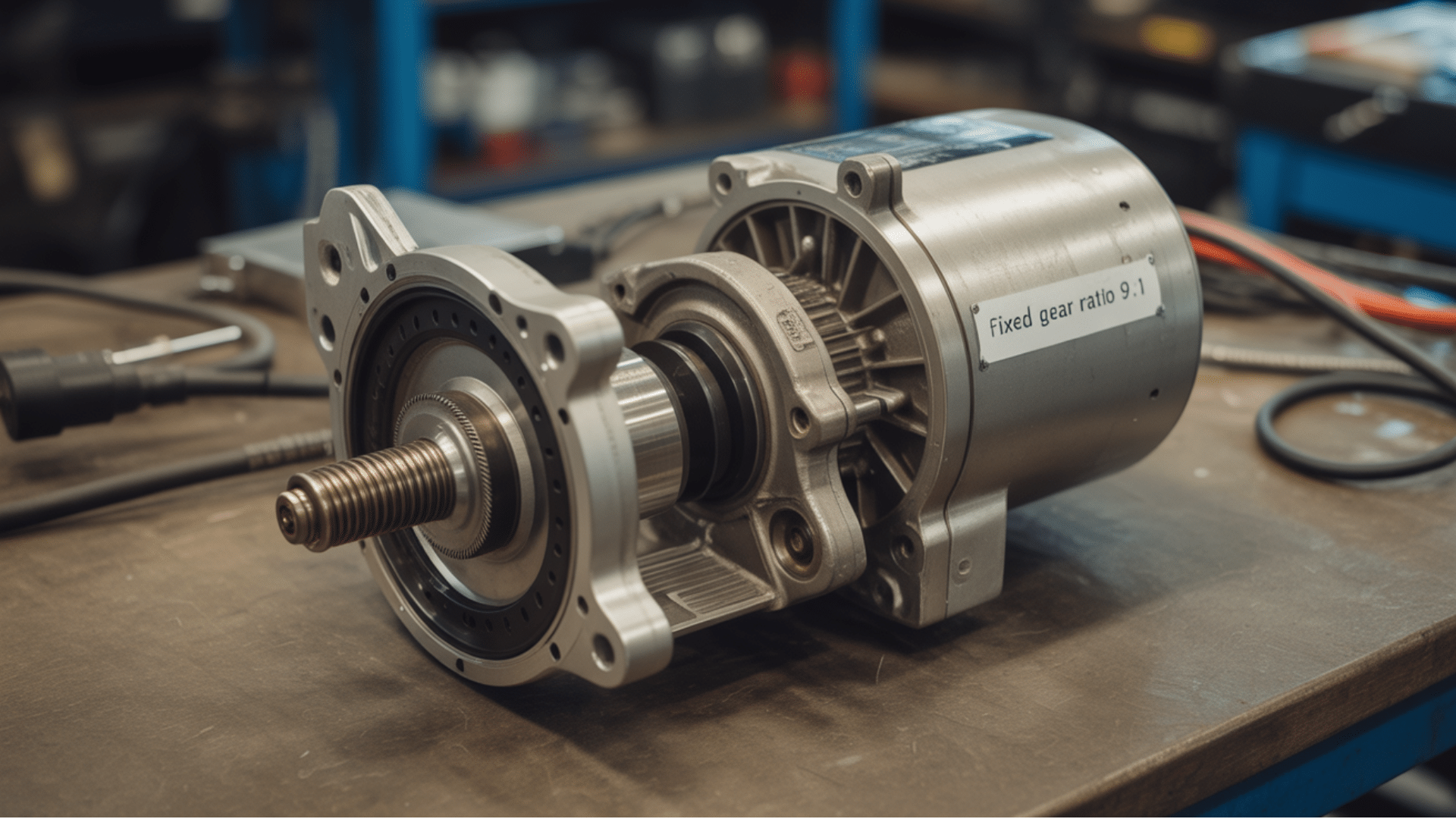
Electric cars do have transmissions, but they are not like the ones in gas cars. Most EVs use a single-speed transmission, which means there’s only one gear.
The electric motor can make power right away, so it doesn’t need multiple gears to speed up.
This is why an EV feels smooth when you press the pedal. You won’t notice shifting because there isn’t any. A few performance EVs use two-speed systems, but this is rare and mainly helps with high-speed efficiency.
For daily driving, one gear is enough. The design is simple, and there are fewer parts to worry about.
That also means less maintenance and fewer repairs over time.
When you drive an electric car, the transmission works quietly in the background, giving you steady power without the extra steps that a gas engine needs.
Why Electric Cars Don’t Need Many Gears?
Electric cars don’t need many gears because their motors work differently from gas engines.
An electric motor can make strong torque the moment it starts spinning, so it doesn’t need lower gears to build power.
This lets the car move smoothly without any shifting. The motor also works well across a wide range of speeds, which removes the need for extra gears to stay efficient.
A single gear is enough for daily driving, hills, and quick acceleration.
With fewer parts, the system stays simple and reliable. There’s no clutch, no gear changes, and no delay when you press the pedal.
This design also reduces maintenance because there’s less that can wear out over time.
Most EVs use one gear because it delivers steady power without the extra steps a gas engine requires.
Single-Speed vs. Multi-Gear EV Systems
Electric vehicles use different transmission setups depending on their purpose. This table gives you a simple comparison to show how each system works.
| Feature | Single-Speed EV System | Multi-Gear EV System |
|---|---|---|
| Number of Gears | One fixed gear | Two or more gears |
| Common Use | Most everyday EVs | High-performance EVs |
| Power Delivery | Smooth and instant | Optimized for speed ranges |
| Complexity | Simple with fewer parts | More complex and costly |
| Maintenance | Lower due to fewer components | Higher because of added parts |
| Efficiency | Strong across most speeds | Better at high speeds |
| Driving Feel | Steady and quiet | Sharper acceleration control |
| Purpose | Daily driving and comfort | Performance and top speed optimization |
How an EV Transmission Works?
Electric cars use a simpler setup than gas cars, and the transmission plays a big role in that. Below is a clear look at how the system works and why it feels smooth and easy on the road.
1. Single-Speed Setup
Most electric cars use a single-speed setup that sends power straight from the motor to the wheels.
The motor can create strong torque right away, so it doesn’t need multiple gears to build speed. This keeps the system simple and steady while you drive.
With fewer moving parts, there’s less wear, fewer repairs, and an easier ownership experience.
The single-speed design also helps the car stay smooth in traffic, on hills, and during daily trips.
2. Direct Power Delivery
An electric motor delivers power the moment you press the pedal.
That power moves through the single gear and rotates the wheels without delay, giving you quick response and a quiet ride.
Since there are no gear changes, the drive feels consistent from start to finish. This direct flow of energy also helps the car handle stops, starts, and slow speeds with ease.
Everything works in one motion, making the whole system feel predictable and easy to understand.
3. Rare Multi-Gear Systems
A few performance EVs use two-speed systems, but these setups are uncommon and mostly found in high-end models.
The extra gear helps the car stay efficient at high speeds or during powerful acceleration. For everyday drivers, this isn’t necessary because normal trips don’t require extra gears.
The added parts also make the system more complex and expensive.
Most EV makers choose a single-speed setup because it provides strong power, smooth driving, and simple maintenance for the average driver.
How EV Transmissions Affect Maintenance?
Electric car transmissions are simpler than gas systems, and that simplicity changes how much care they need. This is how the design impacts long-term upkeep.
- EVs have fewer moving parts, so there’s less mechanical wear.
- The single-speed setup removes clutches, belts, and shifting parts.
- EVs use fewer fluids, which means fewer checks and replacements.
- Less heat is generated, reducing the chance of overheating issues.
- The system stays consistent over time with fewer sudden failures.
- Most owners spend less on transmission-related maintenance overall.
EV Transmission Parts and Their Role
Electric car transmissions use fewer parts than gas systems. Each component plays a simple but important role in keeping the car moving smoothly.
1. Electric Motor
The electric motor is the main source of power, replacing the engine in a gas car.
It produces instant torque, which removes the need for multiple gears. The motor connects directly to the transmission, sending steady power to the wheels.
Its simple design reduces wear, lowers maintenance, and helps the car respond quickly in daily driving.
Most EV performance comes from how efficiently the motor delivers power.
2. Single-Speed Gearset
The single-speed gearset transfers power from the motor to the wheels using one fixed gear.
This setup works because the motor can operate across a wide speed range without shifting. With fewer parts, the gearset stays reliable and needs little maintenance.
It provides consistent power for city driving, highways, and quick starts.
Its simple layout also helps reduce noise, making the driving experience smoother and quieter.
3. Differential
The differential helps distribute power to the wheels while allowing them to rotate at different speeds.
This is important when turning or driving on uneven roads. In an EV, the differential works with the single-speed system to keep the drive smooth and stable.
It also supports traction and handling, especially at low speeds.
Although simpler than gas car setups, it still plays a key role in keeping the car balanced and easy to control.
Are EV Transmissions More Reliable?
EV transmissions are generally more reliable because they use a much simpler design than gas car transmissions.
Most EVs rely on a single-speed system with far fewer moving parts, which means there’s less that can break or wear down over time.
Without clutches, shift mechanisms, or multiple gears, the system stays steady and predictable through daily driving. EV transmissions also produce less heat, reducing the kinds of issues that come from heavy strain.
Since the motor delivers smooth power without shifting, the transmission doesn’t experience the same stress as a gas-powered setup.
This leads to fewer repairs, lower long-term maintenance costs, and a longer lifespan overall.
For most drivers, this simplicity makes EV transmissions one of the most dependable parts of the entire car.
Conclusion
Understanding how an EV transmission works can make the idea of switching to electric feel much less confusing.
Once you see why most EVs rely on a simple single-speed setup, it becomes clear how they deliver smooth power without the shifting you feel in gas cars.
Fewer parts also mean fewer repairs, which can make long-term ownership easier.
Whether you already drive an electric car or you’re still deciding, knowing how the transmission works gives you a better sense of what to expect on the road.
I’d really like to hear from you. Have you tried an EV, or are you thinking about it?
Share your experience or questions in the comments below.