The Outer Worlds is a sci-fi role-playing game that mixes story choices with action combat in a bright space setting.
Made by Obsidian Entertainment, the game focuses on player decisions, dialogue, and flexible character builds.
In this the outer worlds review, the goal is to explain how the game plays, how it looks, and how well everything comes together.
I aim to give a clear picture without overcomplicating things. This review looks at gameplay depth, visual style, story strength, and overall polish.
It also helps readers understand who the game is best for and what kind of experience to expect.
By breaking down each core part, this introduction sets the stage for a detailed, honest look at the game’s quality and lasting appeal for modern players.
What Is the Outer Worlds?
The Outer Worlds is a single-player sci-fi role-playing game set in the distant Halcyon colony, where large corporations control everyday life.
Players step into the role of a character awakened from cryosleep and drawn into conflicts that shape the future of the system.
This is the outer worlds review section, which explains the core idea of the game and how it is structured.
The experience blends first-person combat, dialogue-driven quests, and skill-based character progression.
Instead of one massive open world, the game uses several large planets that can be explored at different stages.
Choices matter throughout the story, affecting quests, companions, and endings.
This setup puts player decisions at the center, shaping the story and outcomes for those who enjoy strong narratives and meaningful consequences in an RPG.
What Players Say About the Outer Worlds
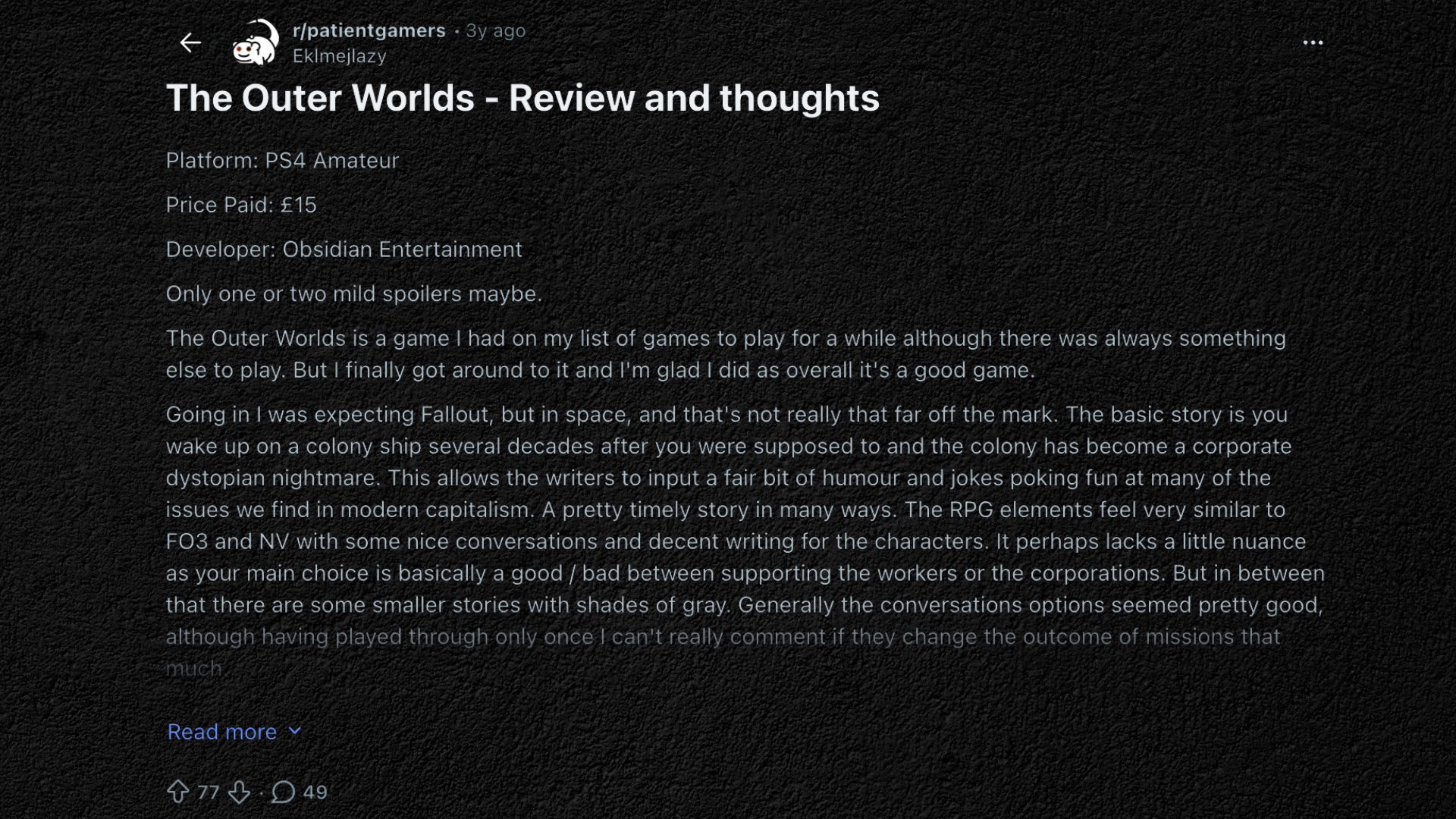
Reddit discussions offer a grounded view of how everyday players feel about The outer worlds after spending real time with it.
Many users praise the writing, humor, and dialogue choices, noting that quests often feel thoughtful and character-driven.
The smaller world structure is commonly viewed as a strength, keeping the story focused and easier to follow.
However, criticism appears around limited enemy variety and combat depth, which some players feel becomes repetitive.
Exploration is described as enjoyable but not surprising, with environments serving story needs more than discovery.
Technical feedback is mixed, as console players mention longer loading times and performance dips.
Overall, community opinion frames the game as solid and enjoyable, though not groundbreaking, appealing most to players who value narrative over scale and long-term replay interest levels.
Overall Gameplay, Visuals, Story, and Performance
This part of the the outer worlds review brings together the most essential elements that define the game’s quality and overall experience.
1. Gameplay and Player Experience
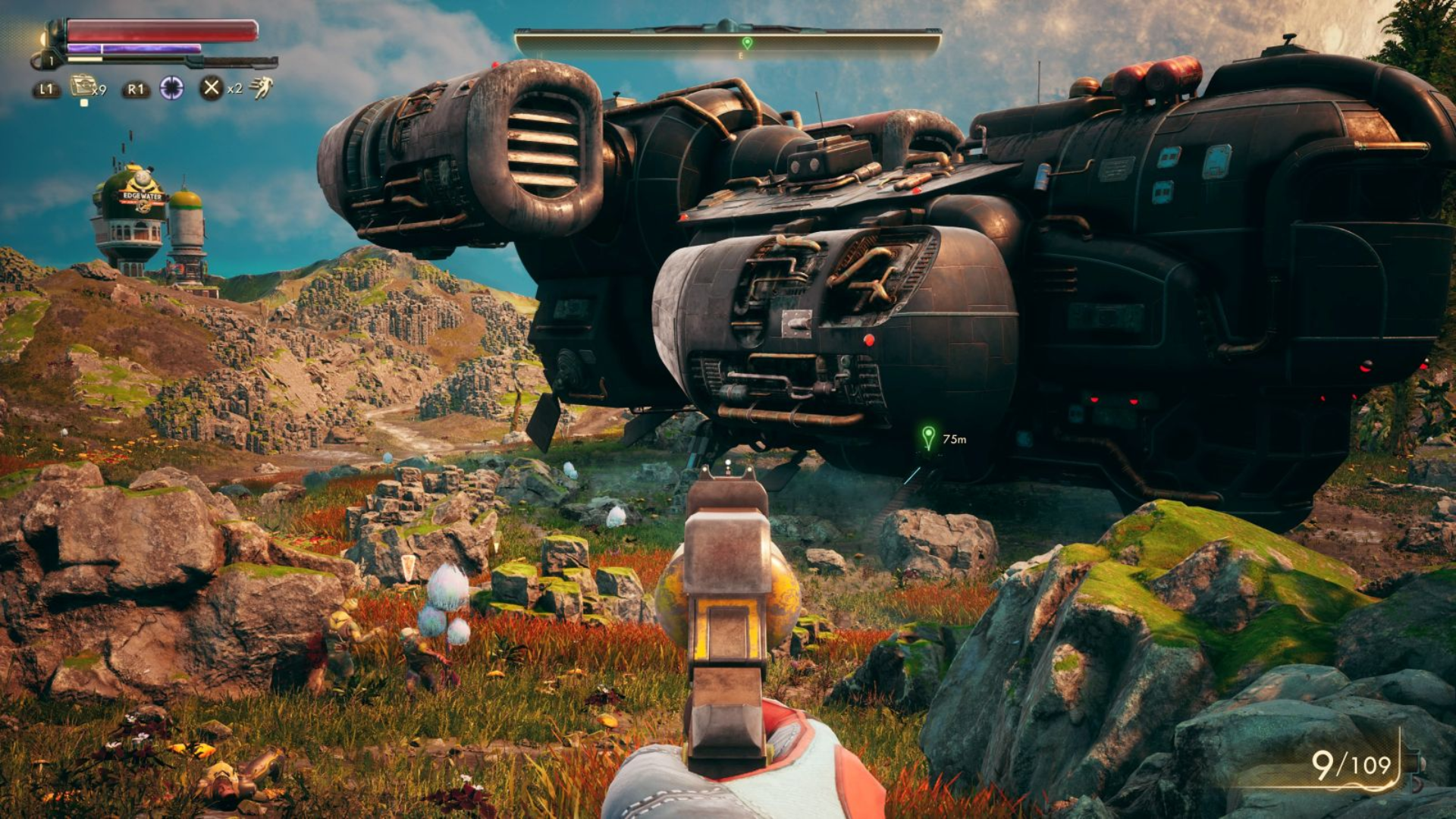
Gameplay blends action and role-playing systems that give players control over how challenges are handled.
Combat supports guns, melee weapons, and tactical abilities, while dialogue can often replace fighting altogether.
RPG progression relies on skills, perks, and combat strength and conversation options.
In this the outer worlds review, gameplay stands out for supporting different playstyles without forcing a single approach.
2. Graphics and Visual Presentation

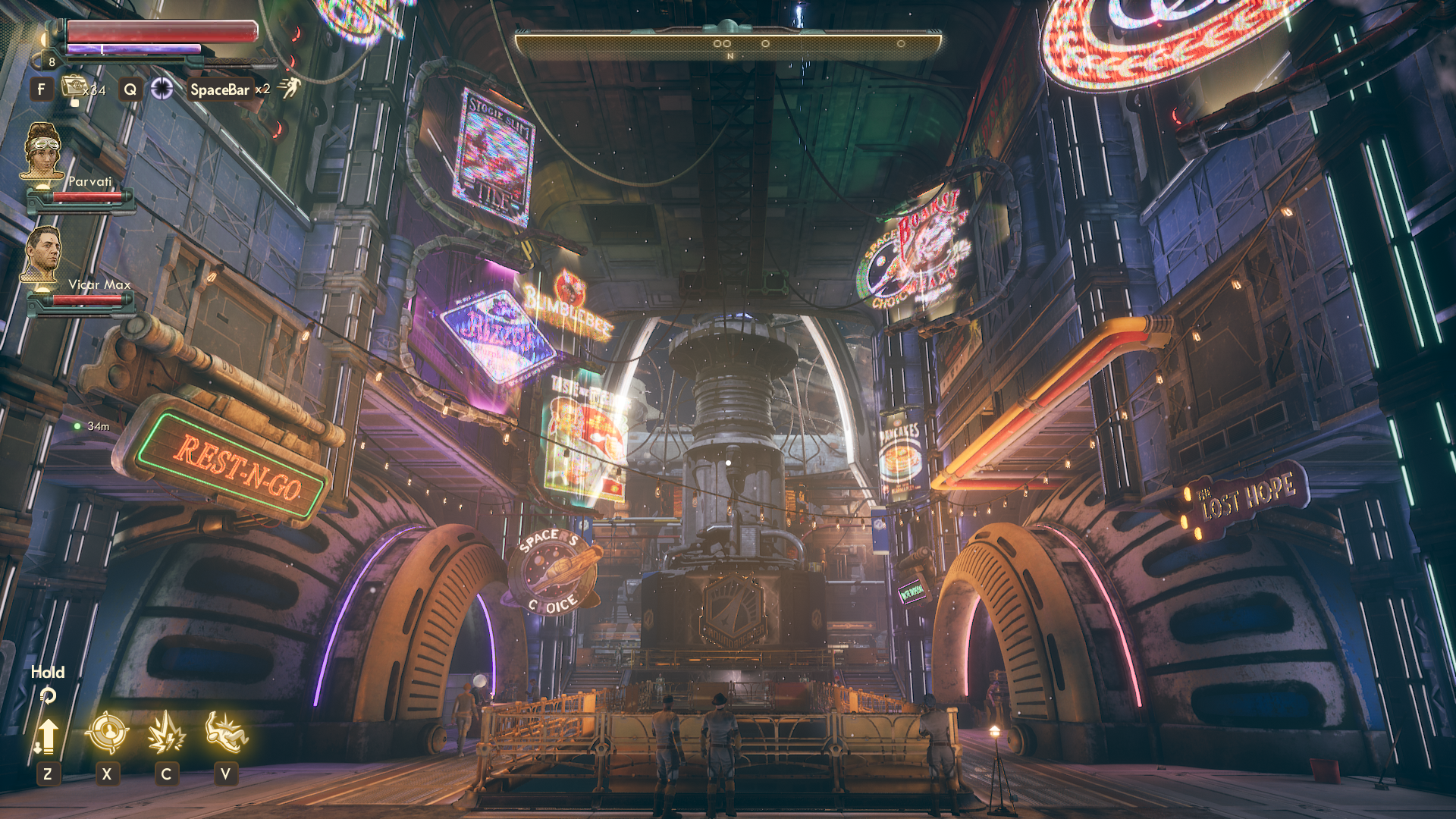
Visual presentation uses a colorful sci-fi style that favors clarity over realism.
Each planet features distinct lighting, architecture, and environmental design that help locations feel separate.
Character models are clean and readable, with facial animations that support dialogue scenes.
This section shows how art direction creates a cohesive look that supports storytelling without relying on high-end visual effects and maintains visual consistency throughout.
3. Story, Writing, and Characters
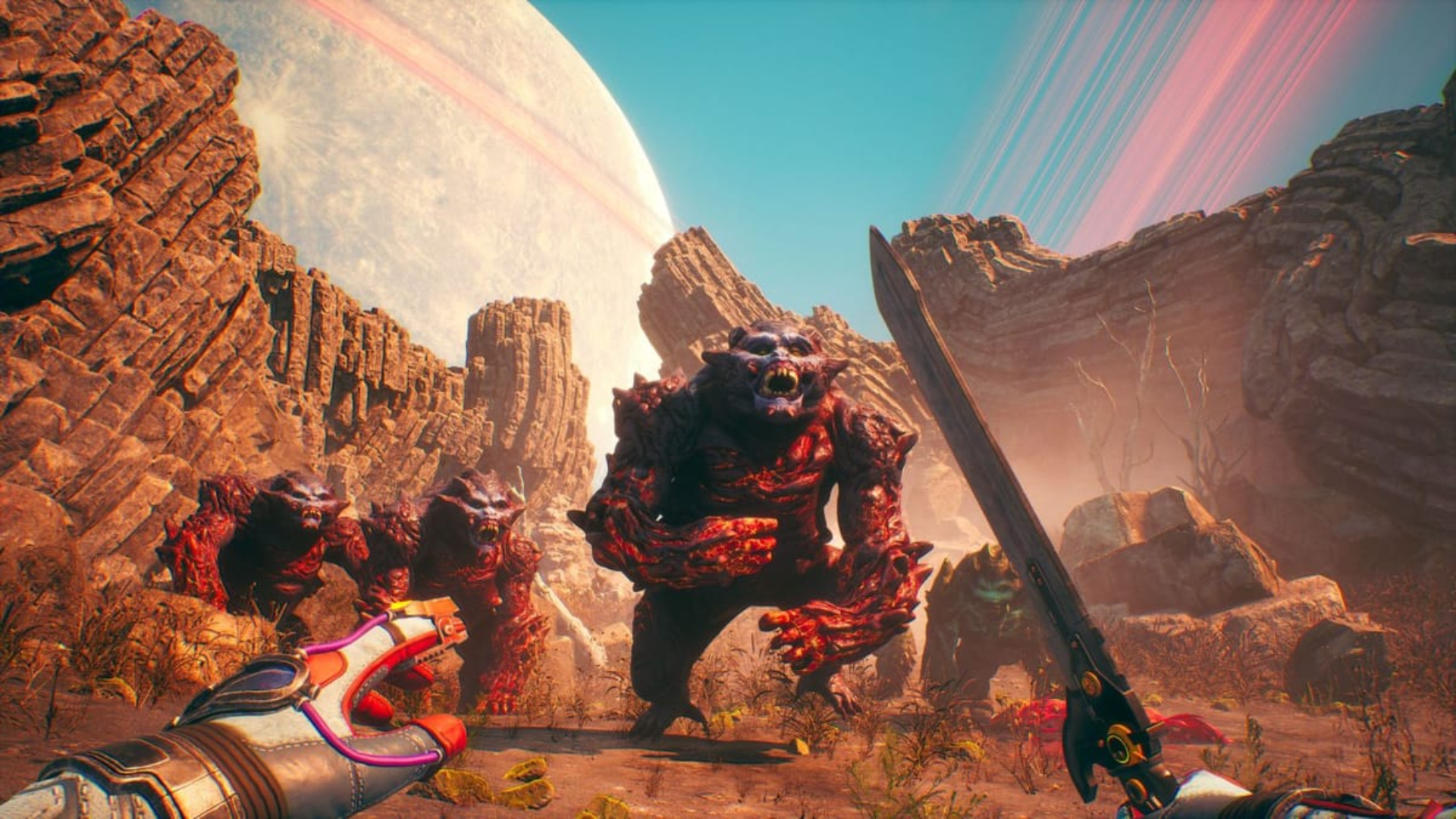
Storytelling focuses on choice-driven quests, sharp dialogue, and social satire aimed at corporate power.
Companion characters are well written, each offering personal missions and clear viewpoints that affect conversations.
Voice acting adds personality and emotional range to key moments.
This, the outer worlds review section, highlights how strong writing and characters keep the narrative engaging from start to finish.
4. Performance and Technical Quality
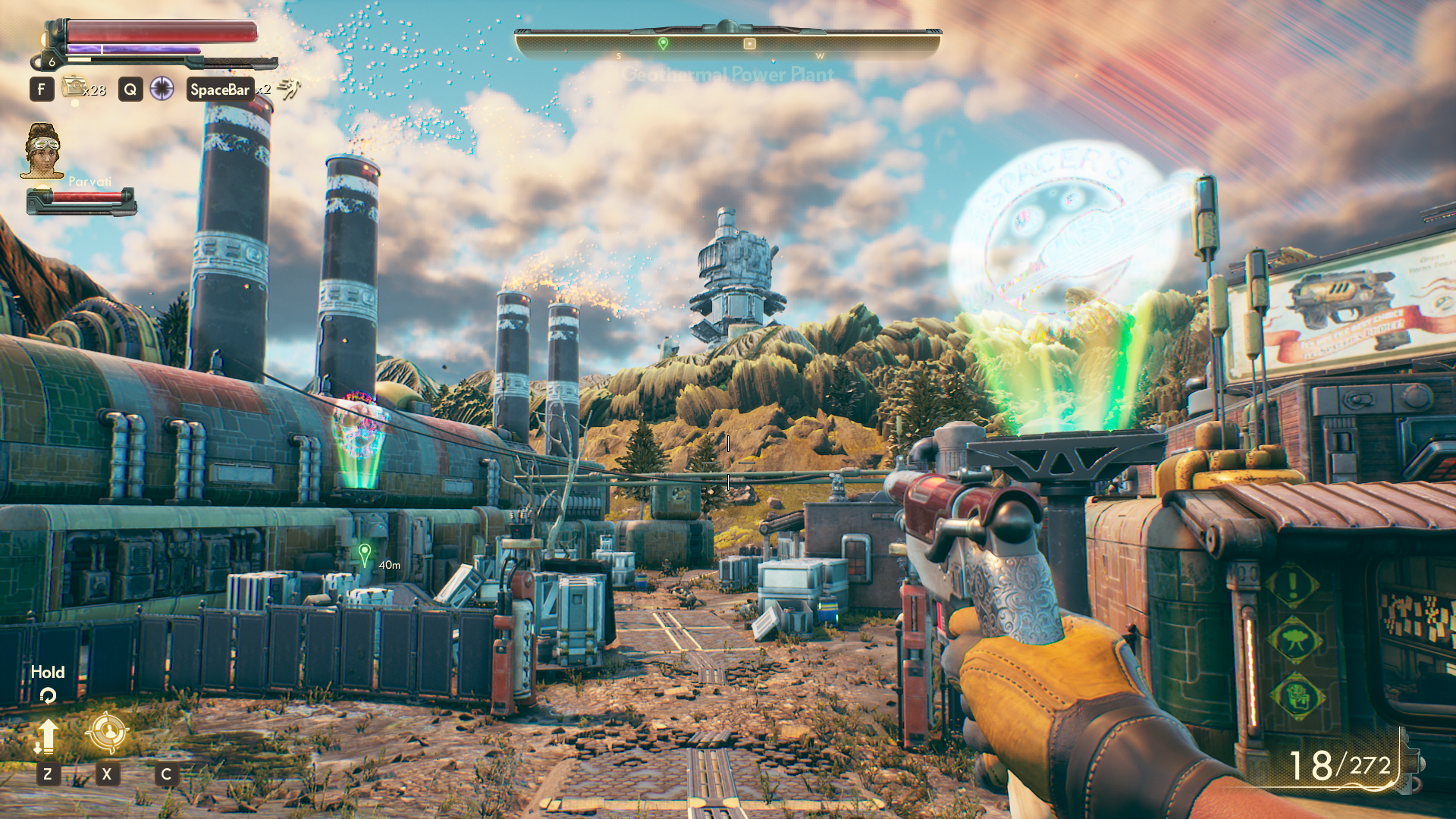
Technical performance remains mostly stable across platforms, supporting long play sessions without significant disruption.
Frame rates stay smooth during combat and exploration, with only occasional dips in busy areas.
Loading times are reasonable between planets and interiors.
Overall stability helps maintain immersion and reinforces the game’s polished and dependable feel for most players on supported systems.
Professional Critic Reviews and Reception
This part of the the outer worlds review summarizes how major gaming outlets responded to the game, highlighting shared praise and common criticism.
- IGN: Praised strong writing, meaningful player choices, and RPG depth, while noting that combat feels solid but familiar.
- GameSpot: Highlighted sharp storytelling and satire with impactful decisions, but pointed out limited enemy variety and scale.
- PC Gamer: Focused on narrative quality and character interaction, describing the experience as polished, though combat remains functional.
- Polygon: Appreciated the critique of corporate control and player agency, while noting modest technical ambition.
- Eurogamer: Praised sharp writing and meaningful choices, stating the smaller scope keeps the experience focused.
Pros and Cons of The Outer Worlds
Outer worlds review highlights the game’s key strengths and limitations to help readers make a clear judgment.
| Pros | Cons |
|---|---|
| Strong story writing | Combat feels basic |
| Meaningful dialogue choices | Limited enemy variety |
| Well-written companions | Small world size |
| Flexible RPG systems | Visuals feel dated |
| Smooth overall performance | Few standout combat moments |
Is The Outer Worlds Worth Playing?
The outer worlds review shows a role-playing game built around strong writing, meaningful choices, and flexible systems that support different playstyles.
Story-focused players may enjoy dialogue depth, companion interactions, and quests shaped by decisions.
Combat and visuals remain polished and consistent, though action-heavy players may find the mechanics familiar rather than bold.
A smaller world structure keeps pacing tight and goals clear, which helps maintain focus throughout the experience.
Players expecting a massive open world may feel limited by scale, but narrative clarity benefits from this approach.
Overall, the game works well for those who value character-driven stories, choice-based progression, and steady gameplay flow.
The game rewards thoughtful decisions and focused design, keeping each playthrough clear, purposeful, and engaging without feeling restrictive or overwhelming.
Conclusion
The Outer Worlds delivers a focused role-playing experience built around choice, writing, and player control.
Strong dialogue, well-written companions, and flexible RPG systems define the game, while combat and visuals remain steady and reliable.
The smaller scope keeps pacing tight and goals clear, even if exploration feels limited for some players.
In this the outer worlds review, I aimed to present a clear picture of what players can expect without exaggeration.
The game works best for those who enjoy story-driven progression, meaningful decisions, and character-focused quests.
Technical performance stays stable, helping long sessions feel smooth and consistent.
Overall, the experience favors thoughtful design over scale, rewarding players who value narrative depth and player agency.
If story-driven RPGs and meaningful choices matter, this game is worth considering for your next playthrough.