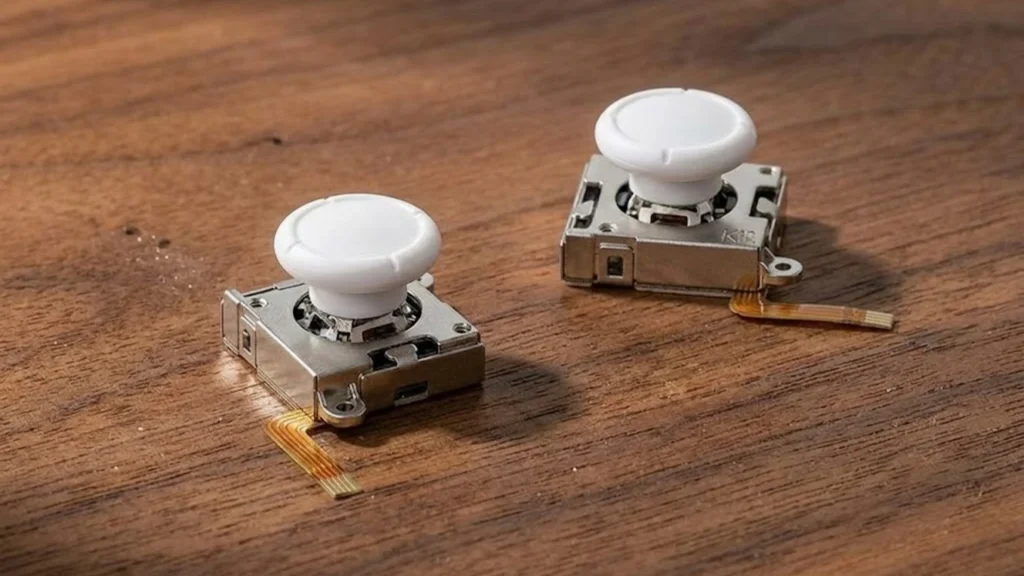
Have you ever noticed your game character moving even when you are not touching the controller stick?
That problem, called stick drift, happens because most joysticks use small parts that rub together and slowly wear out over time.
Now, many gamers are talking about the Hall-effect joystick, a newer design that operates differently and promises better control.
I will be telling you about what is hall effect joystick, how it works in simple terms, and why so many players and brands are paying attention to it.
But before we get into the details, let us first understand why traditional joysticks fail and what makes this new option worth knowing about.
What is the Hall Effect?
The Hall Effect is a physical principle that explains how a magnetic field can change the behavior of electric current inside a conductor.
It was discovered in 1879 by American physicist Edwin Herbert Hall while he was studying how electricity moves through thin metal sheets.
He found that when a magnetic field is applied at a right angle to the flow of current, the moving electric charges shift to one side of the material.
This shift creates a small voltage across the conductor, which can be measured.
This effect matters in modern electronics because it allows devices to sense position, speed, and movement without physical contact.
What is the Hall Effect Joystick?
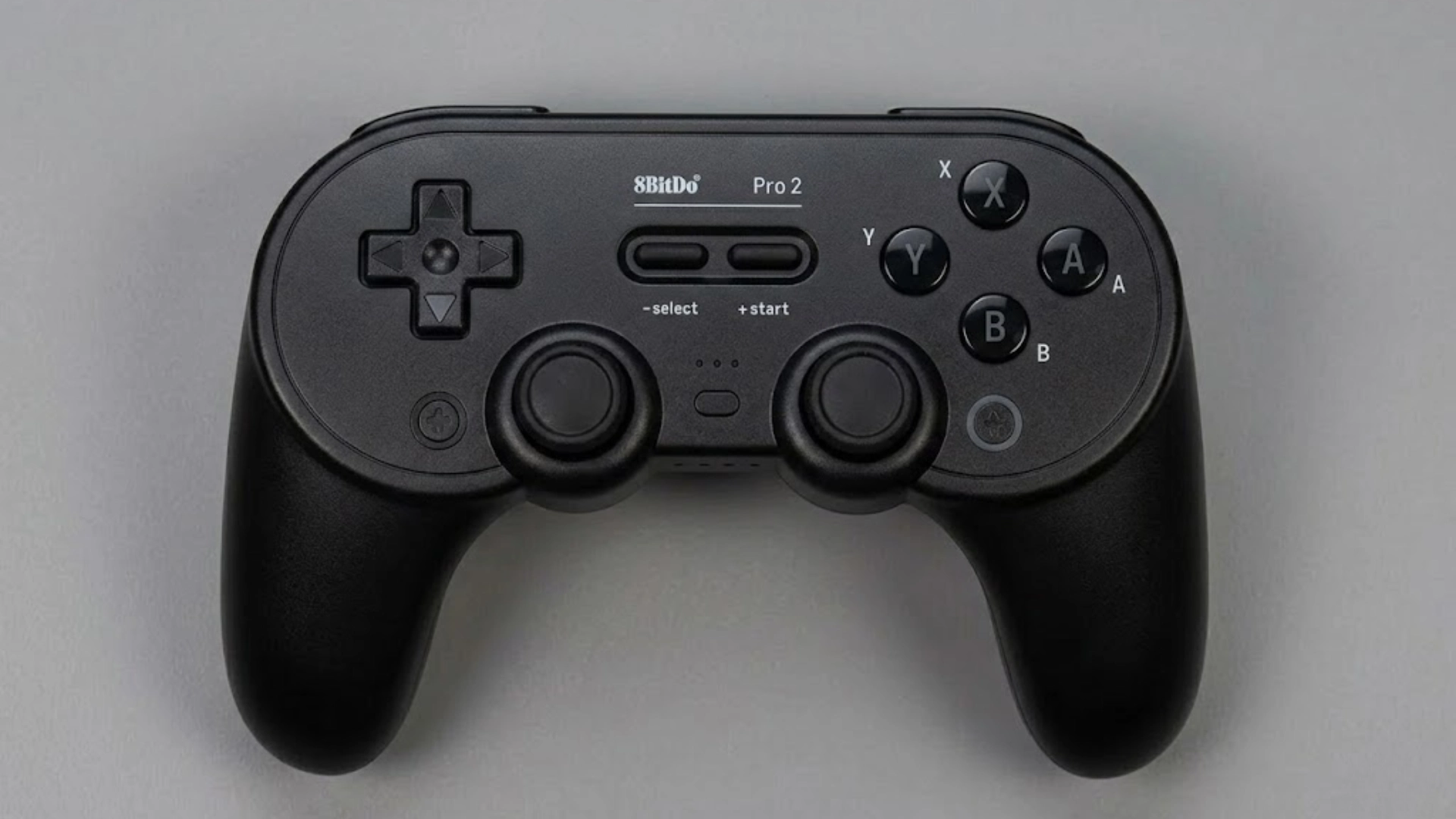
A Hall Effect joystick is a type of control stick that uses magnetic sensors to detect movement instead of relying on physical contact between internal parts.
In traditional designs, small components rub against each other to measure position, which slowly causes wear.
In this design, magnets replace those contact-based parts. Inside the joystick, a small magnet is attached to the moving stick.
When the stick is pushed in any direction, the magnet shifts slightly, and the sensor measures the magnetic field’s strength and direction more precisely via voltage variations
A Hall sensor placed nearby detects changes in the magnetic field. As the magnetic field changes, the sensor converts that change into an electrical signal.
The device then reads this signal to determine the exact position of the stick. Since there is no constant friction between key parts, the system experiences less mechanical wear over time.
Key Components of a Hall Effect Joystick
A Hall Effect joystick relies on a few core parts that work together to measure movement accurately without physical contact inside the system.
1. Hall Effect Sensor
The Hall Effect sensor is the main part that detects position. It measures changes in the magnetic field created by the nearby magnet when the joystick moves.
As the stick shifts in any direction, the magnetic field around the sensor changes slightly. The sensor converts these changes into electrical signals.
These signals represent how far and in which direction the stick has moved. Since it works without touching other moving parts, it reduces internal wear over time.
2. Magnet
The magnet is attached to the moving part of the joystick, usually near the base of the shaft. When the stick is pushed forward, backward, or sideways, the magnet moves along with it.
This movement changes the magnetic field strength and direction around the Hall sensor. The magnet does not need to touch the sensor to create a response.
Its position alone is enough to influence the sensor readings, which helps maintain accuracy even after long use.
3. Joystick Mechanism (Gimbal or Shaft)
The joystick mechanism includes the shaft that the user moves and the gimbal that allows smooth motion in multiple directions.
The shaft transfers physical movement from the user’s hand to the internal magnet. The gimbal supports the shaft and keeps movement controlled along two main axes.
It ensures that the stick returns to its center position after being released. This mechanical structure provides stability while allowing precise directional input for games or equipment controls.
4. Signal Processing Unit
The signal processing unit takes the electrical signals produced by the Hall sensor and converts them into usable data.
It reads the voltage changes and translates them into position values that a controller or machine can understand. This unit filters noise and ensures a stable output, allowing small magnetic variations to be measured correctly.
Once processed, the final signal is sent to the connected device, which responds based on the exact position of the joystick.
Hall Effect Joystick vs Traditional Joystick
Both joystick types serve the same purpose, but their internal design, durability, and long-term performance create noticeable differences in real-world use.
| Comparison Point | Hall Effect Joystick | Traditional Joystick |
|---|---|---|
| Working Principle | Uses magnetic field changes detected by a Hall sensor to measure position without physical contact | Uses potentiometers where physical contact between parts measures resistance changes |
| Internal Contact | No direct contact between sensing components | Constant physical contact between internal parts |
| Wear Over Time | Minimal internal wear because sensing is contactless | Gradual wear due to friction between moving parts |
| Stick Drift Risk | Lower risk since there is no rubbing sensor surface | Higher risk as worn potentiometers can cause unwanted movement |
| Accuracy and Consistency | More stable readings over long periods of use | Accuracy may decrease as internal parts wear out |
| Lifespan | Generally longer lifespan due to reduced mechanical damage | Shorter lifespan because of ongoing mechanical friction |
Hall Effect Joysticks in Mobile Equipment
Hall Effect joysticks are widely used in heavy machinery, such as forklifts, cranes, excavators, and other industrial vehicles.
These machines rely on smooth, accurate control to lift, move, and position heavy loads safely. In such environments, precision is not just about performance; it directly affects safety and productivity.
Even small input errors can lead to misalignment or unsafe movements.
Durability also matters in industrial settings where equipment faces dust, vibration, temperature changes, and long working hours.
Since this joystick design does not rely on constant internal contact, it handles wear better over time. The reduced mechanical friction helps maintain stable control signals even after extended use.
On the job, this means operators get consistent responses, fewer control failures, and lower maintenance needs, which can reduce downtime and improve overall efficiency.
Hall Effect Joystick in Gaming
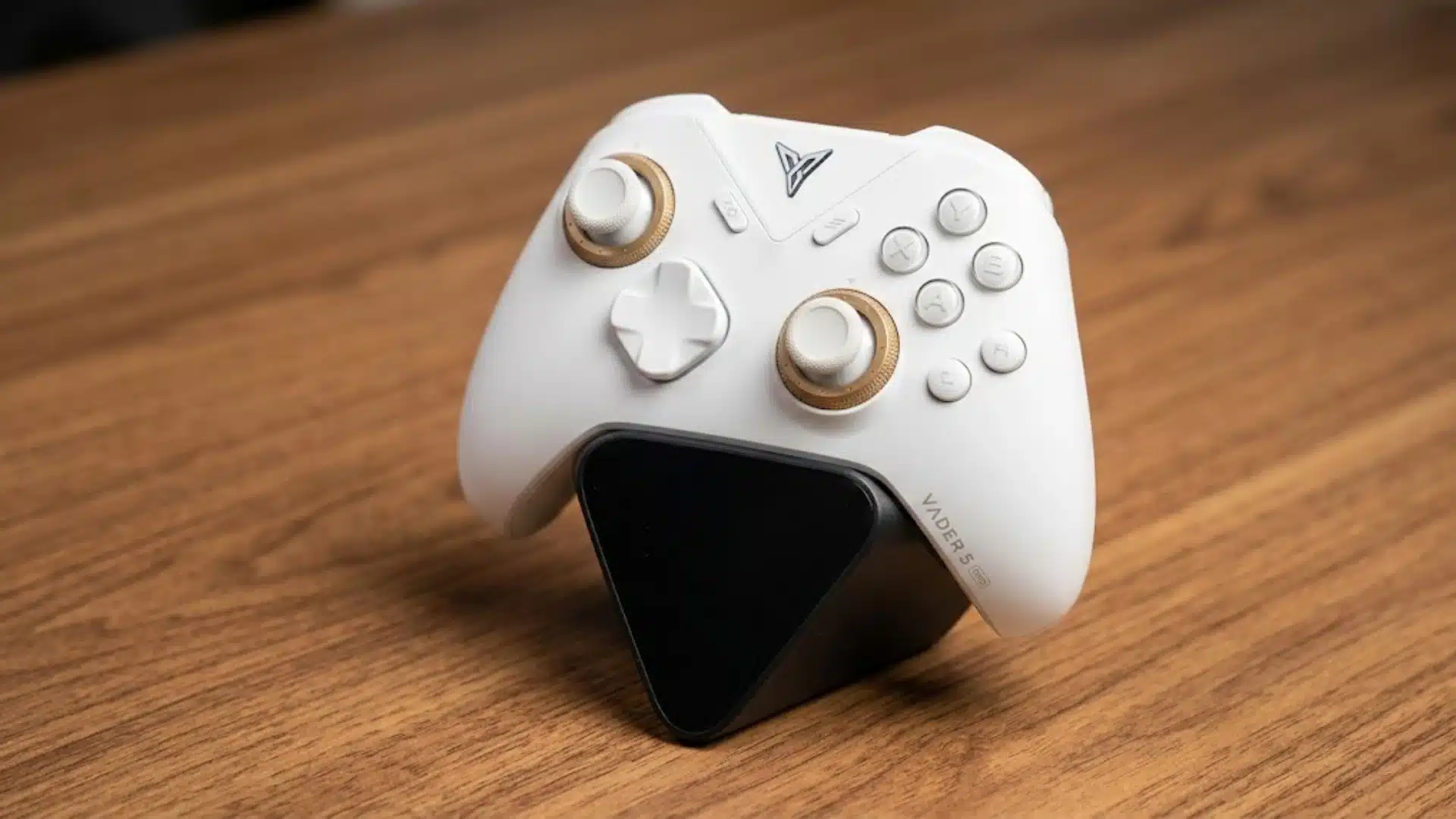
Hall Effect joysticks are now being used in modern console controllers for PC, Xbox, Switch, and even some PlayStation-compatible devices.
Instead of relying on traditional potentiometers, these controllers use magnetic sensing to track thumbstick movement more accurately.
This change has caught the attention of competitive and casual players alike. Many gamers are switching because of the stick drift problem.
In regular controllers, internal parts wear down over time, which can cause unwanted movement even when the stick is untouched.
Since Hall Effect designs reduce internal friction, the chances of drift are lower. This leads to a more stable aim and smoother movement across long gaming sessions.
Controllers from companies like 8BitDo, GuliKit, and some third-party pro-style gamepads now feature Hall Effect sticks, promoting longer lifespan and improved consistency.
Advantages and Disadvantages of Hall Effect Joysticks
Before choosing this technology, it helps to look at both the strengths and the trade-offs that affect cost, performance, and long-term use.
| Advantages | Disadvantages |
|---|---|
| Lower risk of stick drift due to contactless sensing | Higher cost compared to traditional joystick designs |
| Longer lifespan because of reduced internal wear | Limited availability in budget controllers |
| More consistent accuracy over time | Slightly more complex internal design |
| Smoother input response in gaming and equipment control | Replacement parts may be less common |
| Better performance in dusty or vibration-heavy environments | Not always necessary for casual users who do not use controllers heavily |
Conclusion
The hall-effect joystick has become a popular topic because people are tired of dealing with stick drift and short controller lifetimes.
You now understand what it is, why brands are talking about it, and how it fits into modern gaming and control systems.
This shift shows how small design changes can improve everyday devices without making them harder to use.
While traditional joysticks remain common, many players are turning to this newer option for better long-term reliability.
As more companies test and improve this design, you will likely hear even more about Hall effect joystick technology in the coming years.
Would you trust this joystick style for your next controller, or would you stick with the one you already use? Tell us, share with us in the comments below.