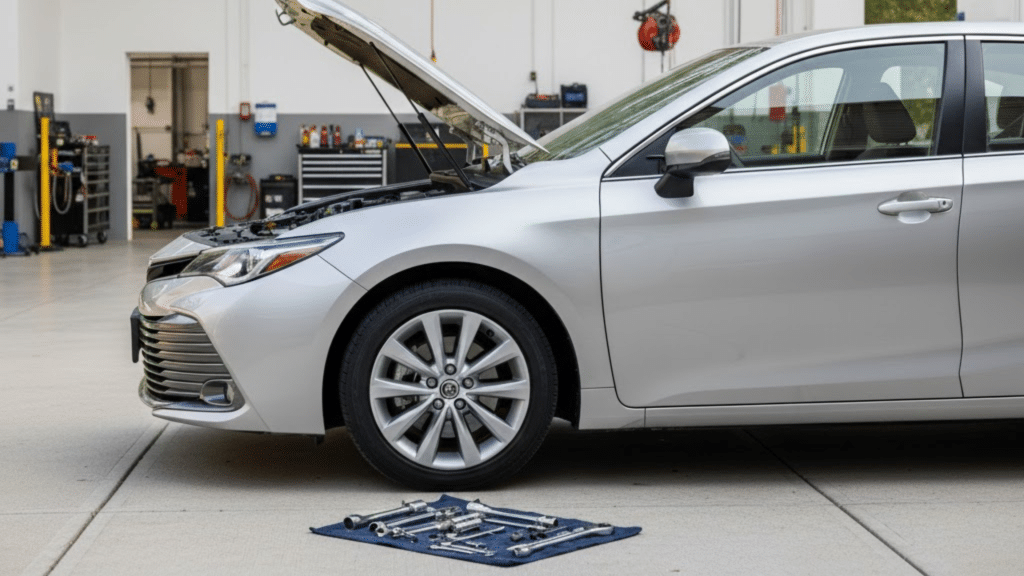
The Toyota car maintenance schedule helps you keep your car running smoothly without guessing what to do next.
If you drive a Toyota, you already know it is built to last, but even the best cars need regular care. Skipping small services can lead to bigger problems later.
I have learned that knowing what to check and when makes car ownership much easier. You do not need to be a car expert to follow a simple plan.
In this blog post, you will learn how Toyota sets its service timeline and why it matters. I will break down what maintenance is usually needed at different mile markers.
By the end, you will know how to stay on track and avoid stress at the shop.
What is a Toyota Maintenance Schedule?
A Toyota maintenance schedule is a simple guide that tells you when your car needs service.
It lists basic tasks like oil changes, tire checks, fluid top-offs, and part inspections based on mileage or time. Toyota creates this schedule using real testing and long-term driving data.
The goal is to help drivers know what their car needs without guessing. Toyota provides these schedules to prevent small issues from turning into big repairs.
When parts get checked on time, problems are easier to catch early. Following the schedule also helps keep the engine, brakes, and other systems working the way they should.
I have found that staying on schedule makes driving feel more reliable. Over time, regular care helps the car last longer and keeps repair costs more predictable.
Where to Find Your Toyota’s Maintenance Schedule?
Your Toyota’s maintenance schedule is easy to find once you know the right places to look. Toyota offers several official sources that match your vehicle’s details and driving needs.
- Owner’s Manual Location – The owner’s manual is the most reliable place to find your Toyota’s maintenance schedule. A printed copy is usually in the glove box, and digital versions are available online.
- Maintenance Details – The maintenance section lists service needs by mileage and time, based on your exact model and year.
- Toyota’s Official Website and App – Toyota’s website and mobile app let you check recommended services after entering your vehicle details.
- Service Reminders – The app can send alerts when maintenance is due, which helps if you forget dates or drive different distances each month.
- Dealership Resources – Toyota dealerships have access to official factory schedules for every model and year.
Toyota Car Maintenance Schedule Based on Mileage
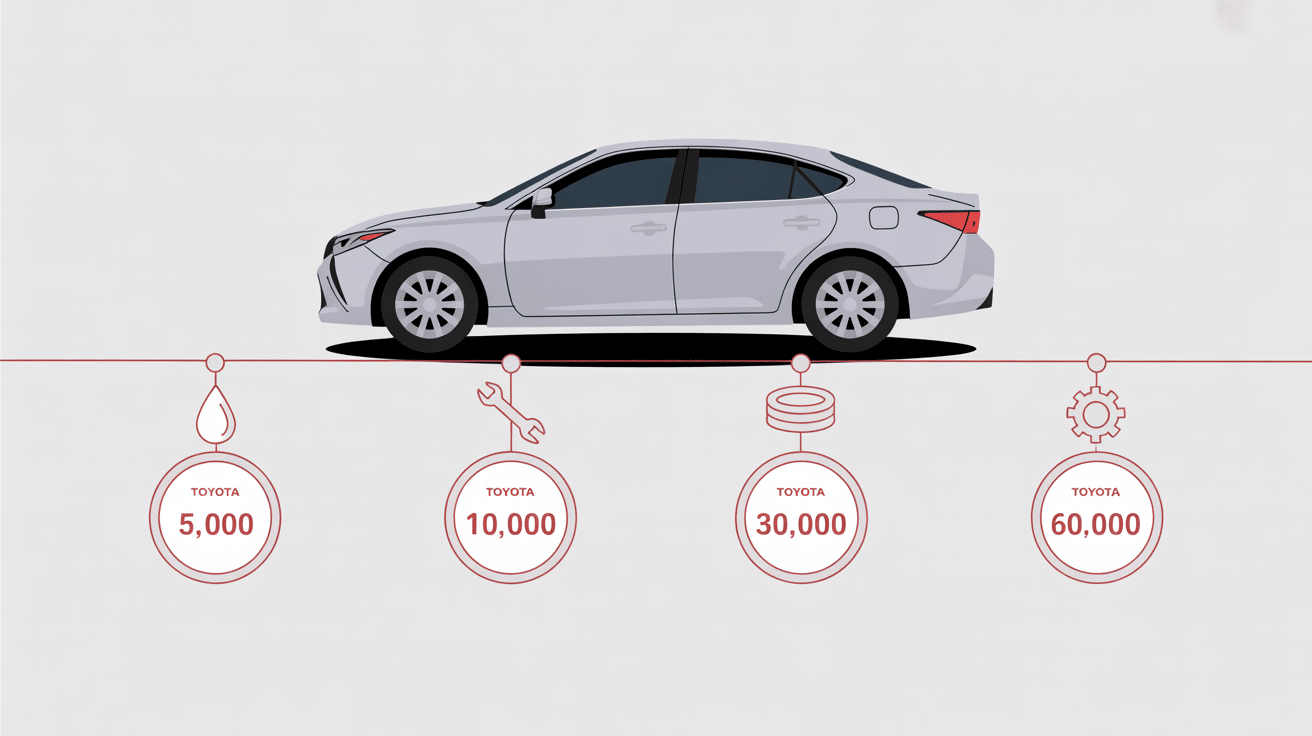
Toyota needs different care as miles add up. The number on your odometer helps you know when it’s time for certain services.
Each interval focuses on keeping key parts in good shape and avoiding surprise issues later.
1. Every 5,000 Miles Services
This is the service you will need most often. It usually includes an oil change and oil filter replacement to keep the engine clean.
Tires are rotated so they wear evenly and last longer. The technician will also check your brakes and look at fluid levels like coolant and washer fluid.
Some Toyota models may follow slightly different intervals, so the owner’s manual is important. This visit is quick and helps catch small problems early.
2. Every 10,000 Miles Services
At 10,000 miles, you get everything from the 5,000-mile service plus a more detailed inspection. The technician checks the engine air filter and cabin air filter to see if they need replacement.
The battery is tested for charge and signs of corrosion. Belts and hoses are inspected for cracks or wear. The exhaust system is also checked for leaks or damage.
This service helps prevent larger issues and keeps the car safe and reliable for daily driving.
3. Every 15,000–30,000 Miles Services
These visits include more detailed work on important systems. Air filters are often replaced during this range if they are dirty.
Brake fluid is inspected and may need replacement around 30,000 miles. Steering and suspension parts are checked closely for wear.
The coolant system is inspected for leaks or low levels. These services help keep major parts working well and reduce the risk of costly repairs later.
4. Major Services (60k, 90k, 120k Miles)
These are the bigger service visits where technicians inspect almost everything as part of the Toyota maintenance schedule.
Spark plugs often need replacement around 60,000 miles to keep the engine running smoothly.
Transmission fluid service becomes important to protect internal parts. Coolant may require a complete flush and replacement with fresh fluid.
Drive belts are checked and replaced if worn. Brake fluid is often changed to maintain strong stopping power. These services cost more, but they help protect the car as mileage gets higher.
Common Services in Toyota Schedules
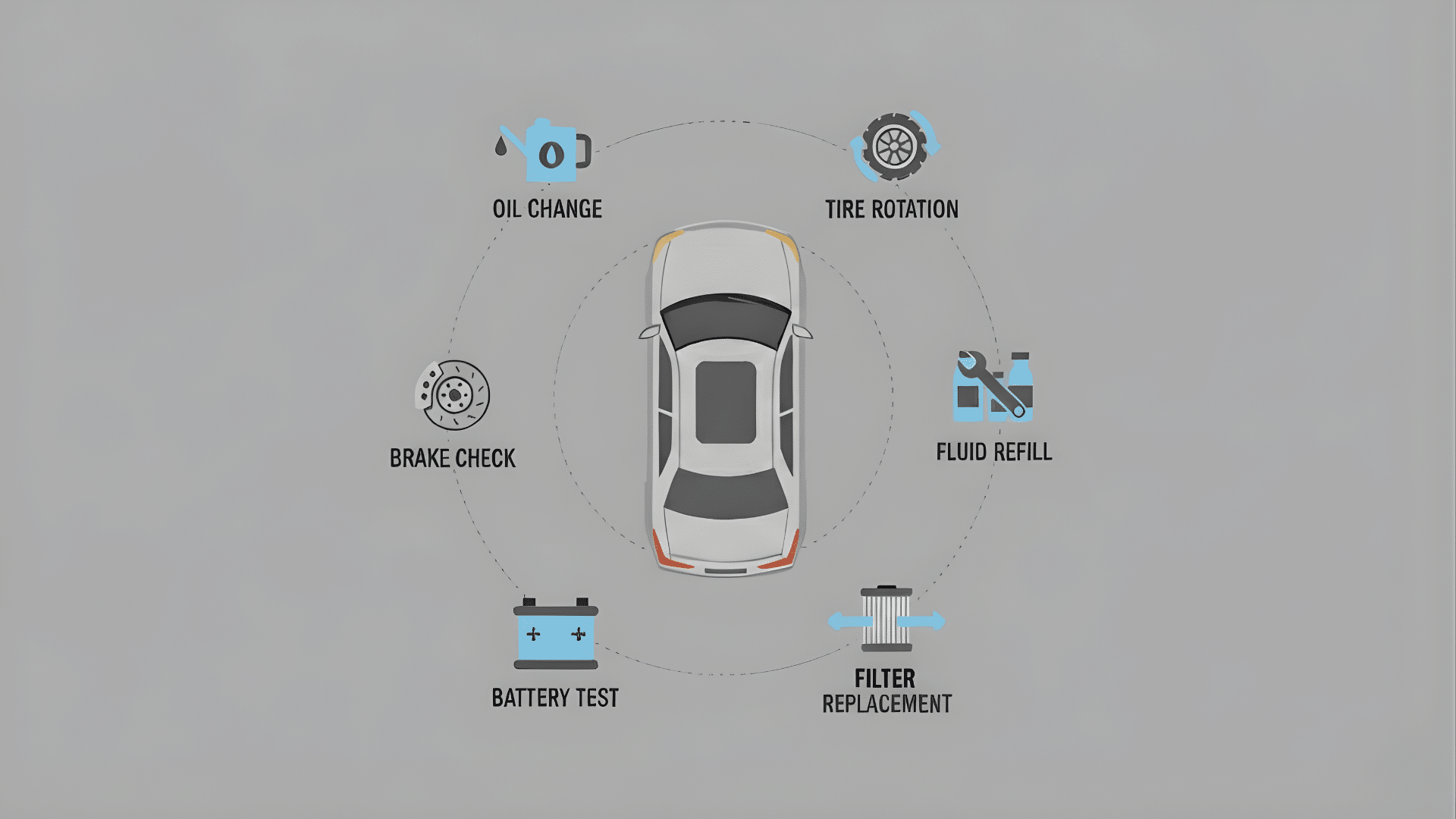
No matter which Toyota you drive, some services come up again and again. These basics help keep your car running well and avoid surprise issues later.
1. Oil Changes
Oil changes matter more than almost anything else for your engine. Clean oil keeps parts moving smoothly and helps control heat. Over time, oil breaks down and thickens.
Most newer Toyotas use synthetic oil every 10,000 miles. Some older models still need oil changes every 5,000 miles.
Your owner’s manual shows what your car needs. Skipping oil changes can lead to engine damage and may affect warranty coverage.
2. Tire Rotations
Tires do not wear the same on every corner. Front tires usually wear faster because they handle steering and most braking.
Rotating tires every 5,000 to 10,000 miles helps spread wear evenly. This makes tires last longer and improves handling.
It also helps the car feel more stable on the road. Many shops include tire rotation with oil changes at no extra cost.
3. Brake Inspections
Brakes need regular checks to stay safe. During an inspection, technicians measure brake pad thickness and look at the rotors.
They also check brake lines for leaks and review fluid levels. Worn pads can cause noise or a longer stopping distance.
Catching brake wear early helps avoid damage to other parts. These checks usually happen during oil change visits.
4. Fluid Checks and Replacements
Your Toyota relies on several fluids to work properly. Coolant helps control engine temperature. Brake fluid supports stopping power.
Power steering fluid helps with turning. Transmission fluid protects internal gears. Washer fluid keeps your windshield clear.
Over time, fluids can break down or leak. Regular checks help spot issues early and prevent damage to costly components.
5. Filter Replacements
Filters help keep dirt out of important systems. The engine air filter blocks dust from entering the engine.
When it gets dirty, performance and gas mileage can drop. The cabin air filter cleans the air inside the car. A clogged one affects heating and cooling.
Oil filters trap particles during oil changes. Most filters need replacement every 15,000 to 30,000 miles.
6. Battery Checks
The battery powers more than just starting the car. It supports lights, electronics, and charging systems.
During checks, technicians test the battery charge and look for corrosion on terminals. They also check how well the alternator is charging.
Most Toyota batteries last three to five years. Extreme heat or cold can shorten that lifespan. Testing helps avoid sudden failure.
7. Spark Plug Replacements
Spark plugs help fire the engine by creating small sparks inside each cylinder. Over time, they wear down and lose efficiency.
This can cause rough idling or poor fuel use. Many Toyota models need new spark plugs around 60,000 miles.
Some engines use plugs that last up to 120,000 miles. Replacing them on schedule helps keep the engine running smoothly.
Does Driving Style Affect Your Schedule?

Driving style can change how often your Toyota needs service, even when following the Toyota maintenance schedule.
Toyota sets maintenance schedules based on normal driving, which includes steady speeds and regular trips.
Severe driving conditions put extra stress on the car and may require more frequent service. This does not mean something is wrong, just that the car works harder.
Severe driving includes short trips, stop-and-go traffic, extreme heat or cold, dusty roads, and towing. Driving in the city every day or idling for long periods also counts.
These conditions can cause faster wear on fluids, brakes, and tires. If your driving falls into the severe category, adjusting your schedule helps prevent issues.
Oil changes, tire rotations, and inspections may need to happen sooner. Checking your owner’s manual helps you follow the right timing for how you actually drive.
Benefits of Following the Schedule

Following your Toyota’s maintenance schedule may feel like extra work. But staying on track brings clear benefits that save money and reduce stress over time.
1. Warranty protection: Following the service schedule helps keep your Toyota warranty valid and avoids denied claims.
2. Higher resale value: A full maintenance history makes buyers more confident and helps the car sell for more.
3. Fewer breakdowns: Regular service catches small problems early and reduces surprise repairs.
4. Lower long-term costs: Routine maintenance costs less than major repairs and helps the car run efficiently.
5. Peace of mind: Up-to-date maintenance means less stress, better reliability, and confident driving.
Tips for Staying on Top of Maintenance
Staying on top of car care can feel hard when life gets busy. A few simple habits can help you keep maintenance from slipping through the cracks.
- Service reminders: Use your phone or car app to set alerts based on mileage or time
- Service records: Keep receipts in one folder or save digital copies for easy access
- Mileage checks: Check your odometer once a month to see what service is coming up next
- Missed services: If you miss a service, schedule it as soon as possible and do not wait longer
- Simple DIY tasks: Basic jobs like air filter changes are fine to do yourself
- Professional services: Oil changes, brakes, and fluid services are usually safer
Even small steps make a big difference over time. Staying organized and acting early helps your Toyota run well and reduces stress later on.
Conclusion
The Toyota car maintenance schedule gives you a clear plan to keep your vehicle running well without guesswork.
When you know what service is due and when, car care feels more manageable, following the recommended schedule helps prevent small issues from turning into costly repairs.
It also supports steady performance, better fuel use, and longer vehicle life. I have found that staying consistent with maintenance makes driving feel more reliable and less stressful.
Even if you miss a service once, getting back on track quickly still makes a difference. Every oil change, inspection, and fluid check adds up over time.
If you have questions, tips, or your own experience with Toyota maintenance, share it in the comments below. Your input could help other drivers stay on track, too.