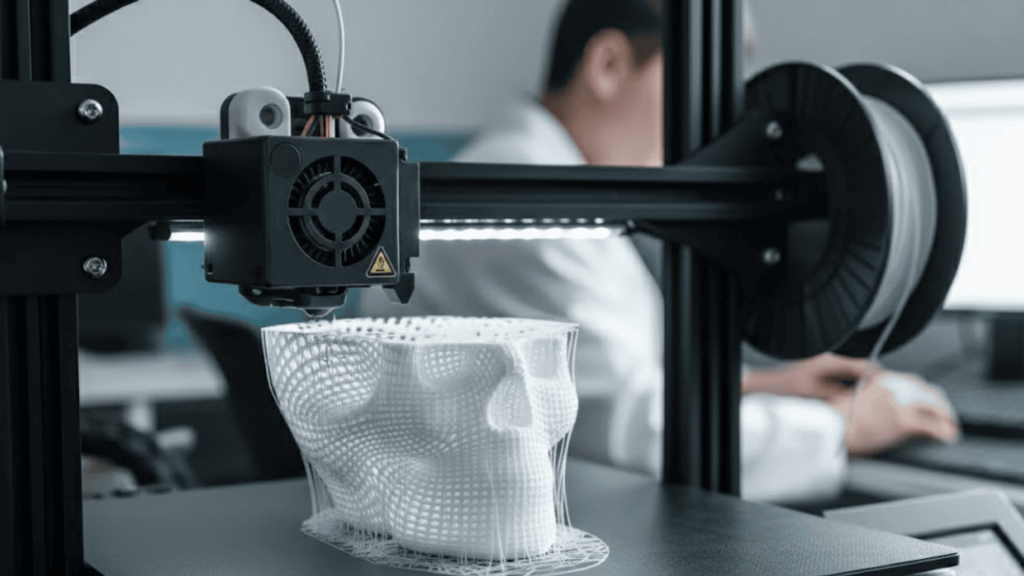
I’ve been watching the growth of 3D printing advancements in manufacturing for years, and it’s clear the technology has moved far beyond simple prototypes.
Today, companies use it to make real parts, speed up production, and solve problems that once slowed factories down.
As you look ahead, the future of this technology matters even more. It affects how products are made, how supply chains run, and what skills workers will need next.
In this article, I’ll walk you through where 3D printing is heading and what these changes mean for you.
You’ll see how new tools, smarter software, and better materials are shaping the next stage of manufacturing.
You’ll also get a clear view of the opportunities, challenges, and long-term impact on industries around the world. This guide will help you understand what comes next and why it’s worth paying attention.
How 3D Printing Has Evolved in Manufacturing?
3D printing started as a tool for making quick prototypes, but it soon found real use in major industries.
Early on, it helped teams test ideas without waiting for long production times.
As the technology improved, new materials made printed parts stronger and more reliable. Printers also became faster and more precise, which opened the door for wider adoption.
Today, automotive, aerospace, medical, and consumer goods companies use 3D printing to create parts, reduce waste, and speed up production.
You now see it used for custom car parts, lightweight aircraft components, medical implants, and even everyday products.
This shift shows how far the technology has come. It’s no longer limited to testing ideas. It’s a real manufacturing tool that helps teams work smarter and meet new demands.
Key Technologies Driving Next-Gen 3D Printing

New tools and smarter materials are pushing 3D printing into a faster and more reliable stage. These changes help manufacturers produce stronger parts with better consistency.
1. Metal Printing, Resin Systems, and Composite Materials
New metal printing methods create parts that handle high stress, making them useful for tough jobs.
Resin systems now cure faster and give smoother results. Composite materials mix fibers with plastics to add strength without extra weight.
These options help teams choose the right material for each job. They also make 3D printing more flexible for industries that need durable parts.
This progress lets manufacturers rely on printed parts for real-world use, not just testing.
2. Better Hardware Designs and Faster Printing Methods
Modern printers come with improved motors, stronger frames, and better temperature control. These upgrades help machines run longer and produce cleaner results.
Faster printing methods, like multi-laser systems and continuous printing, reduce wait times.
This lets companies make more parts in less time. Better hardware also lowers the chances of failed prints.
With these improvements, manufacturers can trust their machines to deliver steady output and handle large projects that once took too long to complete.
3. Software Innovations Supporting Accuracy and Repeatability
Smarter software helps printers plan each layer with better accuracy. It checks designs for errors and adjusts settings to avoid issues during printing.
New tools can predict problems before they happen, which saves time and material.
Software also keeps prints consistent by tracking data from each job. This helps teams produce the same part again without guesswork.
These improvements make the whole process smoother and more reliable for factories that need steady, high-quality results.
How AI and Automation Improve 3D Printing?
AI and automation make 3D printing easier, faster, and more dependable. AI tools help improve designs by finding weak spots and fixing them before printing begins.
Automated workflows handle tasks like setting up prints, adjusting settings, and organizing job queues, which saves time and reduces manual work.
Predictive maintenance tools watch for signs of machine issues and alert teams early, so printers stay running longer.
Quality checks powered by AI scan each layer to catch problems right away. These systems reduce errors, limit wasted material, and keep production moving.
With fewer interruptions and smarter controls, 3D printing becomes more efficient for both small teams and large factories.
How 3D Printing Will Affect Future Employment and Skills?
3D printing will reshape future jobs by shifting what workers do and the skills they need.
Many traditional manufacturing roles will change as more tasks move to automated systems, and workers will spend more time managing machines instead of doing manual production.
There will be a growing need for digital skills, such as understanding CAD design, preparing 3D files, and operating advanced printers.
Engineering teams will also need stronger design knowledge to create parts made specifically for additive manufacturing.
As automation increases, some routine jobs may decline, but new roles in maintenance, programming, quality control, and materials management will grow.
The workforce will need ongoing training to keep up with these tools, and companies will rely on people who can combine technical skills with problem-solving.
Overall, the shift brings challenges but also opens the door to new career paths.
Benefits for Large-Scale Manufacturing
3D printing gives manufacturers new ways to save time, cut costs, and respond to customer needs. These benefits make it a strong option for companies working at high volumes.
1. Cost Savings Through Reduced Waste
3D printing uses only the material needed to build a part, which helps lower waste compared to traditional cutting methods.
This reduces material costs and makes production more efficient.
Manufacturers also save money by avoiding large molds and tooling. Since prints can be adjusted without major setup changes, teams spend less on rework.
These savings add up, especially in industries that use expensive metals or custom materials.
2. Faster Prototyping Cycles and Flexible Production Lines
Prototypes that once took weeks can now be made in hours, helping teams test ideas quickly. This speed supports faster development cycles and shorter approval times.
Production lines also become more flexible because printers can switch between designs without long setup periods.
This helps companies keep up with changing demands and produce small batches without waste. The ability to move from prototype to final part in the same system improves overall workflow efficiency.
3. Customization Options for Mass Production
3D printing makes it easier to create customized parts while still meeting high-volume needs.
Manufacturers can adjust shapes, sizes, or features without rebuilding tools or slowing production.
This is useful for industries like medical, automotive, and consumer goods, where customers want items tailored to their needs.
The technology supports mass customization by keeping costs stable even when designs change. It gives companies a way to offer variety without sacrificing speed or quality.
How 3D Printing Will Change the Future of the Supply Chain?
3D printing is set to reshape the supply chain by making production more flexible and efficient.
With on-demand printing, companies can create parts only when they’re needed, which reduces storage costs and lowers the risk of holding excess inventory.
Lead times also get shorter because parts can be printed closer to where they’ll be used, cutting out long shipping routes.
Localized manufacturing helps teams respond faster to changes in demand.
This shift brings clear benefits for global logistics, but it also introduces new challenges, such as managing digital files, ensuring printer quality, and coordinating production across multiple locations.
As more companies adopt these tools, the supply chain will become more responsive and less dependent on large centralized factories.
How 3D Printing Will Evolve in the Future?

3D printing is moving toward faster, larger, and more advanced systems that support complex manufacturing needs.
These improvements will shape how companies build products in the coming years.
1. Expected Breakthroughs in Speed, Size, and Material Diversity
Future printers will handle bigger parts, print at much higher speeds, and work with a wider mix of materials.
These changes will help manufacturers produce stronger components and combine different material properties in one print.
Faster systems will reduce wait times and support large-scale production.
Expanded material options, like advanced metals, ceramics, and flexible composites, will open new possibilities for industries that need durable or specialized parts.
These improvements will make 3D printing a more practical choice for everyday manufacturing.
2. Potential Shift Toward Fully Automated 3D Printing Factories
Many companies are exploring automated factories where printers run with minimal human input.
Robots could load materials, remove finished parts, and prepare machines for the next job. Automated systems will also manage scheduling, quality checks, and maintenance tasks.
This approach reduces downtime and increases output. It also allows factories to run around the clock.
As automation becomes more common, manufacturers may rely on smaller, decentralized facilities instead of large centralized plants, making production more flexible.
3. How Industries May Adopt New Workflows
As 3D printing improves, industries will adjust their workflows to match its advantages.
Designers may create parts specifically for additive manufacturing, using shapes and structures not possible with traditional methods.
Production teams could shift to on-demand manufacturing instead of mass-producing items far in advance.
Supply chains may change as companies print parts closer to customers. These new workflows will help businesses save time, reduce waste, and respond quickly to market needs.
What Challenges and Opportunities Lie Ahead for 3D Printing?
3D printing is growing quickly, but it still faces limits that shape how far it can go. At the same time, these gaps create room for new ideas and fresh business models.
- Some materials still lack the strength needed for heavy-duty parts, and printing large components can be slow or difficult.
- Speed remains a challenge, especially for high-volume production, where traditional methods still move faster.
- Many industries must follow strict regulations, and getting 3D-printed parts certified can take time and testing.
- These limits open the door for innovation in stronger materials, faster machines, and better quality-control tools.
- New business models may emerge, such as distributed printing networks, on-demand part production, and specialized design services.
Why Some People Claim 3D Printing Is Overhyped?
Some people believe 3D printing is overhyped because early predictions made it sound like a quick fix for every manufacturing problem.
Many expected printers to replace traditional factories overnight, but real-world production is more complex. Misconceptions about speed also add to the debate.
While 3D printing can create detailed parts, it’s not always the fastest option for large batches.
Scalability is another concern since many systems still struggle with high-volume output. People also confuse current abilities with long-term potential.
Today, 3D printing works best for prototypes, custom parts, and small runs, not full-scale mass production.
The technology is improving, but it hasn’t reached the level some expected.
These gaps between expectations and reality make some think the industry is overstated, even though progress continues.
Conclusion
3D printing is clearly moving toward a future where production becomes faster, smarter, and more adaptable.
You can already see how new materials, better machines, and advanced software are shaping the next stage of manufacturing.
Even with challenges like speed limits and certification hurdles, the technology continues to open real opportunities for companies of all sizes.
Its mix of flexibility and efficiency makes it a strong part of the global manufacturing landscape.
As the tools improve, the impact will only grow. If you’ve used 3D printing in your work or explored it for a project, I’d love to hear your experience.
Share your thoughts in the comments below so others can learn from your journey, too.