When people talk about smart home technology, the conversation almost always lands on the same things: voice assistants, automated lighting systems, and connected thermostats. The furniture in the room (like the sofa, the chair, and the lamp) tends to be treated as a passive backdrop, something static that the tech works around. But that idea is becoming outdated.
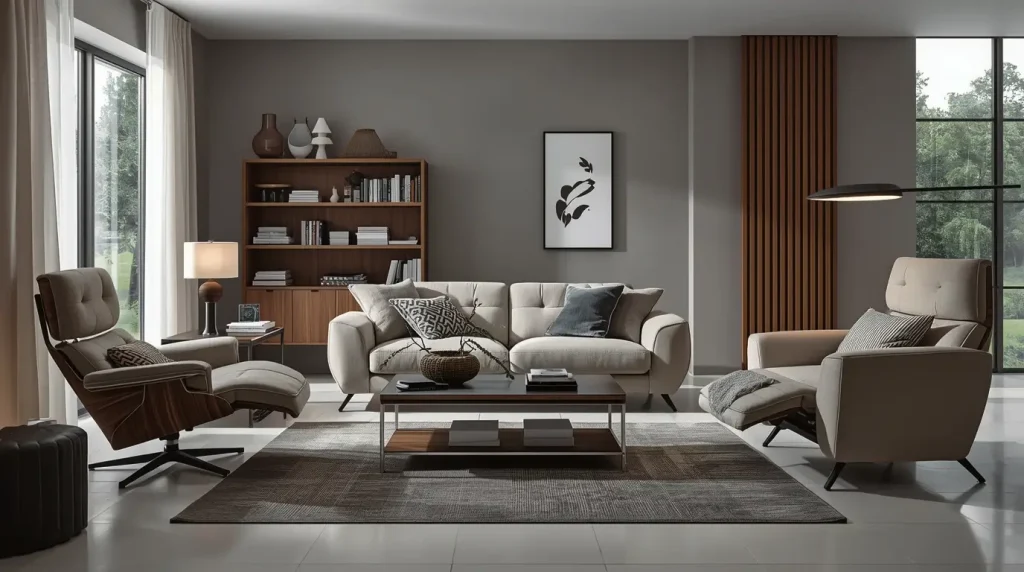
Over the past two decades, some of Europe’s most established design brands have been quietly embedding advanced engineering, adaptive mechanisms, and performance-driven systems directly into their products as a way to make furniture more responsive to the body and to everyday life. The Edra Standard Sofa is one of the clearest examples of this shift: a well-upholstered sofa with a patented internal joint system that allows the cushions to be reshaped by hand. The technology is invisible. The comfort is immediate.
1. When Comfort Adapts: The Smart Cushion of the Edra Standard Sofa
Designed by Francesco Binfaré, the Edra Standard Sofa is built around what the brand calls the Smart Cushion. This system of articulated joints is hidden inside the backrest and armrest cushions, allowing each element to be raised, lowered, reclined, or angled with minimal pressure. There are no buttons, hinges, or visible hardware. The system reacts directly to touch, making the sofa feel adjustable without ever looking mechanical. Paired with Gellyfoam®, a material patented by Edra in 2004, the Standard Sofa goes beyond conventional softness: instead of resisting the body, it adapts to it. The Standard Sofa effectively recalibrates itself around whoever is sitting on it.
2. When the Backrest Responds to the Body: The Poltrona Frau Bayonet Mechanism
This approach to embedded mechanics is not unique to Edra. Poltrona Frau applies a similar logic in the Blisscape Sofa, designed by Ludovica Serafini and Roberto Palomba, which uses a concealed bayonet mechanism in each backrest cushion that allows for independent height adjustment of every element. The analogy to sleep technology is deliberate.
Poltrona Frau’s research and development process explicitly borrows from an industry that has spent decades studying how the human body distributes weight and heat over extended periods of rest. In this sense, the sofa behaves less like a fixed object and more like an ergonomic system.
3. When the Chair Moves With You: The FlowMotion by Vitra
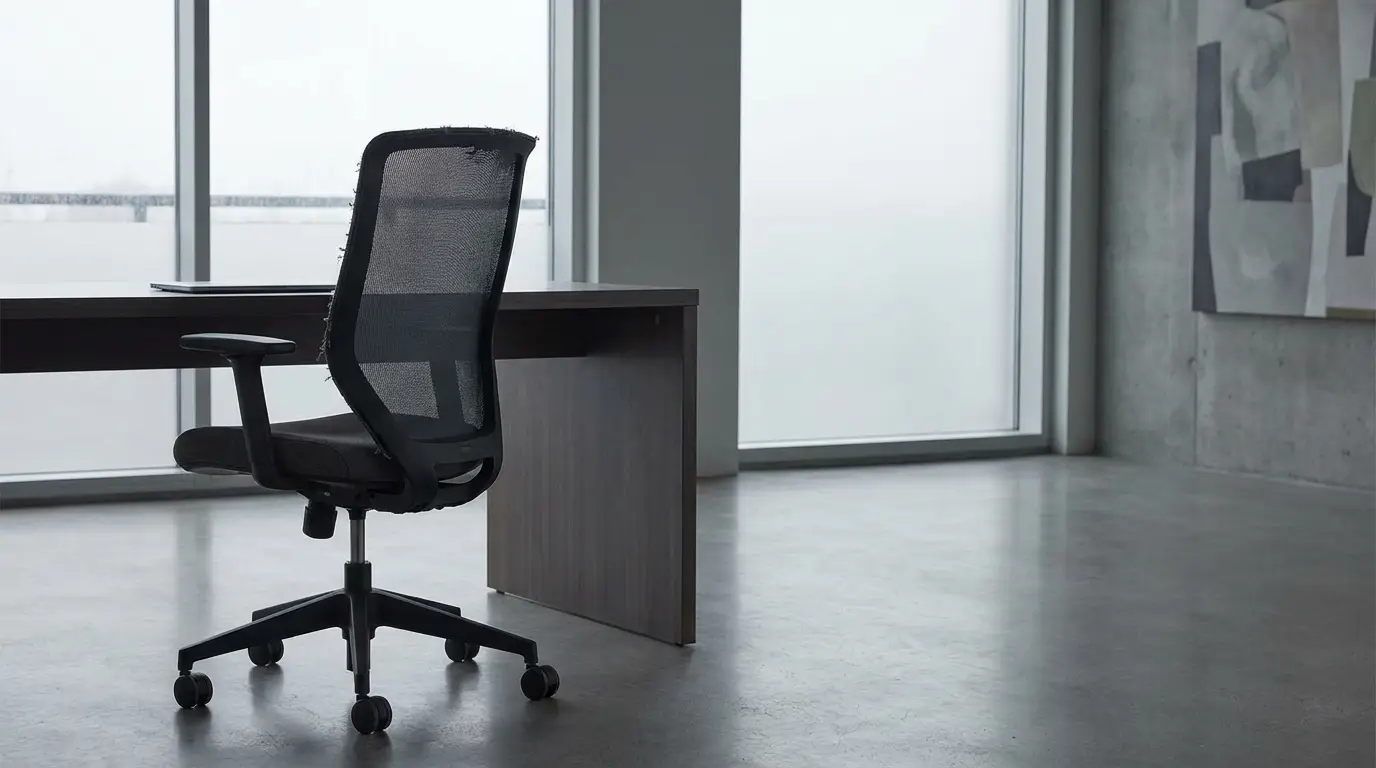
The conversation about ergonomics in office seating has a long history, but few brands have pursued it as rigorously as Vitra. Developed with Antonio Citterio between 2010 and 2012, the ID Chair Concept is built around a patented mechanism called FlowMotion. This system supports movement not only in the backward tilt that most office chairs accommodate but also in the forward tilt. That detail may sound minor, yet it has major consequences for daily use.
Research by the Institute of Biomechanics at ETH Zurich confirmed that FlowMotion’s synchronous forward inclination activates the lower back musculature and simultaneously sets all lumbar segments in motion. For the user, this does not translate into a dramatic visible effect, but into something more valuable: better support, more natural movement, and less strain over time. This level of engineering investment is rarely visible to buyers. It exists entirely within the chair and is felt mainly as the absence of fatigue and discomfort during long working sessions.
4. When a Bicycle Chain Changed the Cassina Maralunga Sofa
Not all hidden technology is new. The Cassina Maralunga Sofa, designed by Vico Magistretti in 1973, contains one of the most remarkable mechanisms in Italian furniture design history: a bicycle chain embedded in the foam cushioning that allows the headrest to be raised or lowered with the push of a hand. The chain transfers the movement from one part of the cushion to another without any exposed hardware, visible joints, or levers. The brilliance of the mechanism lies in its simplicity. To anyone sitting on the Maralunga Sofa for the first time, the adjustable headrest feels almost accidental, as if the cushion moves on its own.
Cassina has produced the Maralunga Sofa continuously for over fifty years without modifying the mechanism. That longevity says something important about innovation in furniture design: not every smart solution has to be digital, connected, or new. Sometimes, the most intelligent technology is the one that was perfected decades ago and never needed replacing.
5. When a Lamp Does More Than Illuminate: Artemide INTEGRALIS®
The technology embedded in design objects is not limited to mechanics or ergonomics. In some cases, it expands into environmental performance. Artemide‘s INTEGRALIS® platform is in a category of its own. Integrated into multiple products across the Artemide collection, the INTEGRALIS® system combines standard lighting performance with UV-C sanitation capability. This is the same wavelength used in hospital and laboratory environments to neutralize airborne pathogens. What makes the system especially interesting in a smart living context is that it adds an extra layer of function without changing the object’s visual identity or disrupting domestic routines.
The significance of INTEGRALIS® is not simply the fact that it uses UV-C technology, since that technology is already well established in industrial and healthcare environments. What matters is the way Artemide integrates it into products intended for refined residential or architectural spaces. A lamp that helps sanitize the surrounding air while providing light does not announce that function through its appearance. It remains visually discreet, even while performing a task that goes far beyond illumination.
Beyond Screens: A Different Idea of Smart Living
These products are connected not by a shared technology, but by a shared logic: the most effective innovation in the home is often the one that disappears into everyday use. A sofa cushion that can be reshaped by hand. A chair that supports muscular activity without the user constantly noticing it. A headrest that moves through a hidden chain. A lamp that contributes to air sanitation while doing its primary job. None of these objects asks the user to learn a new interface, check an app, or manage a stream of notifications.
This is a very different philosophy from the one that drives much of mainstream consumer tech, where features are often designed to be visible, updated, and continuously advertised. By contrast, the brands working in this space are not trying to make furniture that looks technological. They are integrating technology in ways that make furniture feel more natural, more intuitive, and more responsive.
For anyone designing, renovating, or simply rethinking a home through the lens of smart living, this distinction matters. The smartest object in a room may not be the one with a screen, a sensor, or a voice command. It may be the one that quietly improves the way the body sits, moves, rests, or breathes, without ever demanding attention.