There’s absolutely no denying how smart climate controls have quickly become some of the most impactful home upgrades in recent years, and this has a lot to do with these controls improving long-term energy efficiency.
And by combining thoughtful décor with smart climate controls, today’s homeowners are now significantly reducing their overall energy consumption—all while simultaneously creating more visually cohesive, comfortable spaces!
How Modern Homes Are Being Changed By Smart Climate Controls
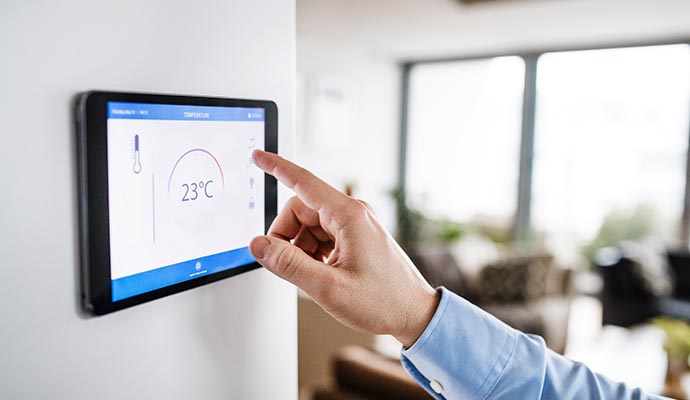
Climate sensors and smart thermostats have come a long way in recent years to completely transform how properties regulate indoor temperatures.
Instead of running these systems on fixed schedules like in the past, these cutting-edge programs are capable of learning a household’s daily pattern and automatically making proper adjustments.
A good example of this is when systems lower heating while a home is completely empty to then only restore the indoor comfort shortly before occupants return.
A lot of these tech-savvy HVAC Systems are also capable of dividing homes into unique zones, which can allow certain rooms to be independently cooled and heated. This helps prevent energy wasting and consistent comfort between rooms.
However, there’s only so much technology can do when it comes to combatting a home’s physical realities. Issues like poorly insulated floors, drafty hallways, and various heat-absorbing materials can all combine together to reduce overall efficiency—which is exactly why décor choices can often be the big difference-maker in today’s smart home world!
Window Treatments That Support Heat Loss Reduction
By far one of the biggest sources of heat transfer in any home are windows, and this is particularly an issue during the winter months when warm air escapes through glass. However, even in summer this same dilemma will typically lead to heightened indoor temperatures.
This is why many of today’s homeowners are now investing in layered window treatments, which include features like cellular shades, thermal curtains, and lined drapery that insulates vulnerable areas.
And when homeowners integrate these types of window treatments with smart blinds, they subsequently benefit from automated openings and closings based on time of day and sunlight levels.
Airflow & Furniture Placement Matter
It’s also crucial for homeowners to understand how disruptive large furniture pieces can be when they’re positioned directly near or over radiators or vents. This situation will impede a room’s airflow, which then forces the HVAC system to work much harder than it’s meant to.
The good news is that the beauty of smart climate control is largely oriented around consistent air circulation, which means that the basis of the system is to balance temperatures across various household zones.
Keeping furniture arrangements away from vents allows for more open airflow pathways, which then gives the climate system more effective performance. Even the tiniest of décor adjustments like moving a sofa slightly away from a vent can create significant efficiency and circulation improvements.
Breathable materials like wood and natural textures alongside open layouts also go a long way to help households maintain steady indoor temperatures.
Improving Comfort & Reducing Heat Loss With Runner Rugs
Another overlooked décor element that noticeably improves a home’s climate efficiency is the use of runner rugs. These area rugs tend to work great in entryways, hallways, kitchen alleys, and all sorts of other transitional spaces that typically have exposed flooring.
What a lot of homeowners don’t realize is that exposed flooring typically allows heat to escape, and this is particularly the case on hardwood, tile and concrete floors. But by adding runner rugs in these areas, homeowners can benefit from an added insulation layer that retains warmth during the cold winter season.
The good news for today’s home décor enthusiasts is that browsing high-quality runner rugs online has never been easier, which means obtaining this enhanced comfort now only requires a few clicks.
It’s also important to keep in mind that runner rugs have an uncanny ability to stabilize indoor temperatures by reducing drafts, and this is particularly the case when they’re made of dense fibers like wool or cotton.
Décor Materials That Support Indoor Temperature Stability
There are also certain home décor materials that naturally support the regulation of indoor climates, and this includes natural fibers like linen, wool, and cotton that allow for both airflow and insulation.
Wood décor elements also help retain warmth much better in comparison to glass or metal, and layering textiles always goes a long way to stabilize any room’s temperature.
Even wall décor can play a substantial role in a home’s energy efficiency. Features like tapestries, fabric panels, and large textile art pieces are all widely known to provide insulation benefits—all while also improving a property’s comfort and acoustics.
Creating A More Holistic Approach To Smart Home Living
Smart climate controls undoubtedly represent a huge step forward in the world of home efficiency, but the overall effectiveness of these controls still relies heavily on environment.
This is why it’s still essential for today’s homeowners to take their décor choices seriously and intentionally by investing in efficient window treatments, insulating area rugs, and all sorts of airflow-friendly layouts that support the maximum performance of these cutting-edge systems.
There’s absolutely no denying how the future of smart home living isn’t just about the most tech-savvy devices, because it’s also about creating households in which design and technology coincide seamlessly together to improve comfort, reduce energy usage, and ultimately support more sustainable lifestyles!