You bring home that new TV, hold it against the wall, and suddenly pause. How high should I mount my TV so it actually feels comfortable every night?
It seems like a small decision, yet one wrong move can leave you staring upward with a stiff neck during your favorite show.
Many people search for how high a TV should be mounted only after realizing something feels off in their space.
Maybe the couch is lower than expected, or the bed completely changes your viewing angle. That moment of doubt is common, and it matters more than most expect.
A TV should feel natural to watch, not like a compromise. The right height creates balance, comfort, and a space that feels thoughtfully set up from the very first movie night.
Does TV Mount Height Matter?
Yes, mounting a television at the wrong height can slowly affect your physical health & quality of life over time.
When a TV is placed too high, the neck stays extended upward for long periods, which can lead to neck stiffness, muscle fatigue, and tension headaches.
A screen mounted too low forces the head downward, increasing strain on the cervical spine and upper back.
Poor placement can also contribute to shoulder tightness and lower back discomfort due to an awkward sitting posture.
Eye strain is another common issue, especially when the viewing angle is unnatural.
Over time, these habits may worsen posture and create ongoing discomfort.
According to Mayo Clinic Health System, poor posture strains the neck and shoulders, causing tech neck from prolonged forward head positioning.
How High Should I Mount My TV?
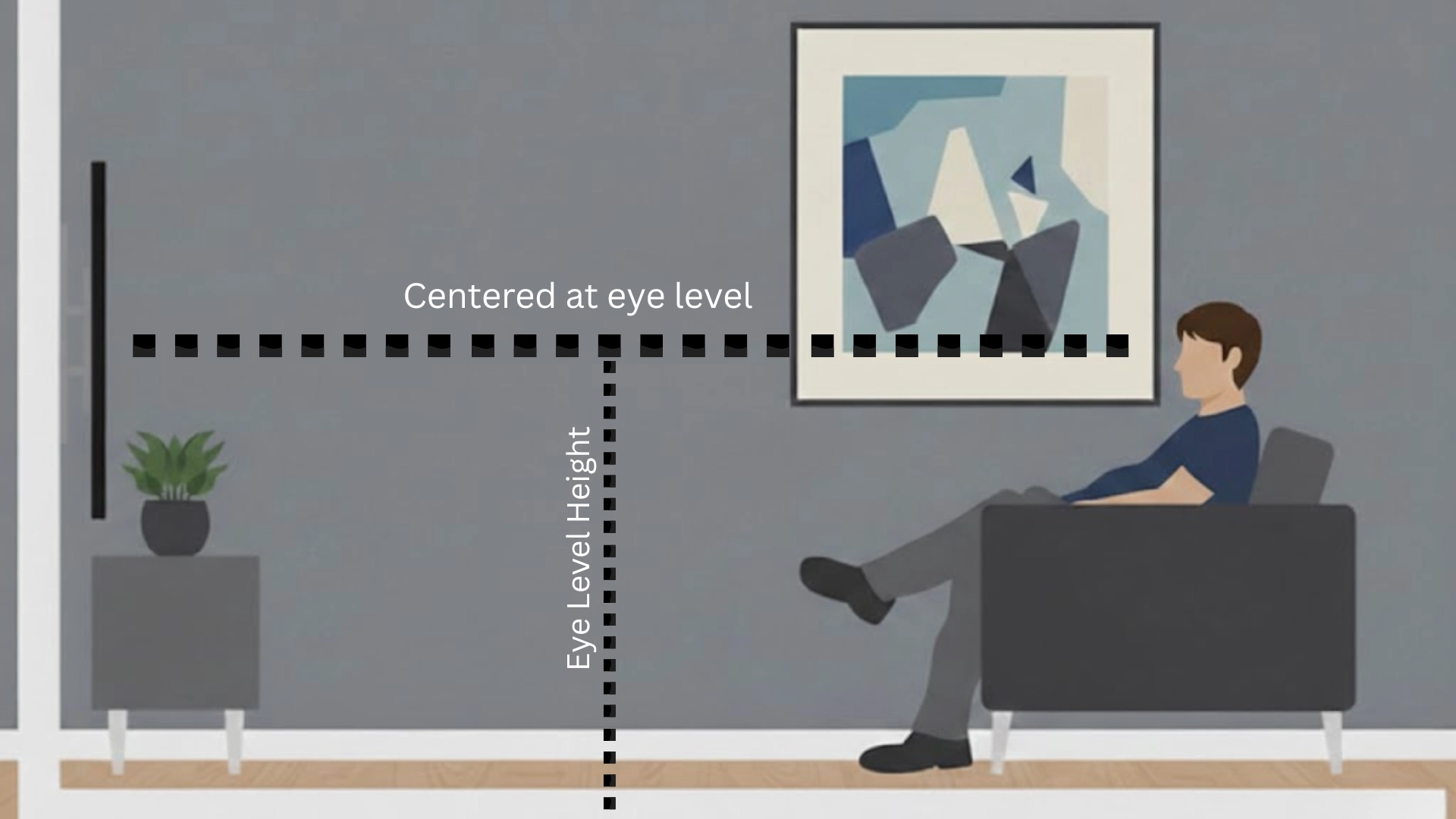
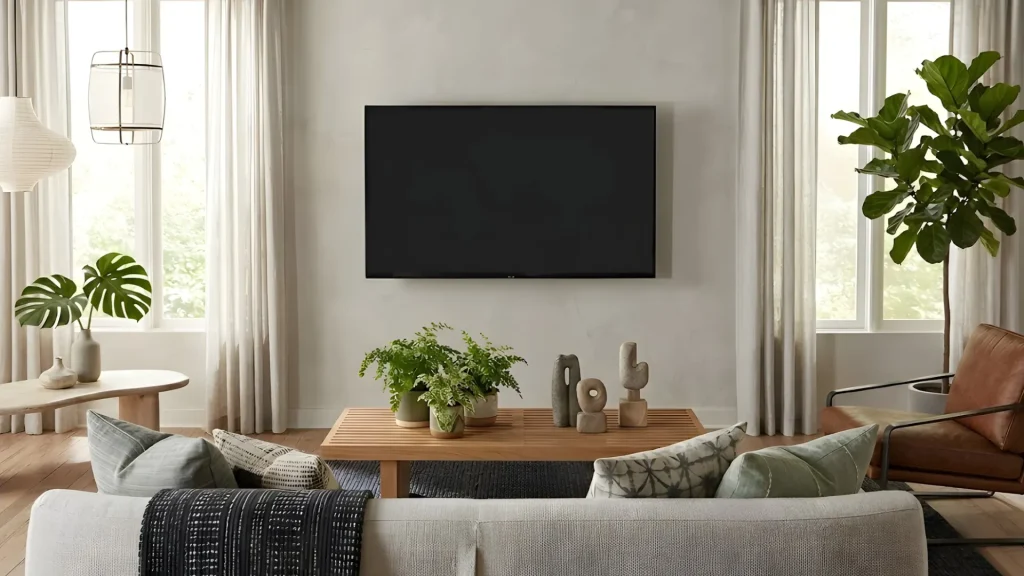
The standard rule of thumb says the center of the television should align with seated eye level for comfortable daily viewing.
In most living rooms, this usually places the TV center about 42 to 48 inches from the floor. Many people test within this range before final mounting to find what feels most natural.
To measure correctly at home, sit exactly where you watch television most often without adjusting your posture. Use a measuring tape to record the distance from the floor to your natural eye line.
According to Sony, the ideal TV height keeps the center of the screen close to your natural seated eye level, helping reduce neck strain.
This simple method works better than relying only on general height charts found online.
Personal eye-level measurements account for sofa height, body posture, and room layout, giving you a placement that truly feels comfortable.
Room-Specific Mounting Heights
TV mounting height is not the same for every room; a small bedroom does not need the same setup as a large living room. The goal is to keep the screen easy to view without neck strain.
1. Living Room TV Mount Height
In most living rooms, the best position keeps the center of the TV close to seated eye level. For a 55-inch or 65-inchTV, the center usually sits about 42 to 48 inches from the floor.
Viewing distance should be around 7 to 9 feet for a 55-inch screen and about 8 to 10 feet for a 65-inch screen.
If you have a larger 75-inch TV, aim for a distance of 9 to 12 feet. Sofas and sectionals should allow a relaxed posture without tilting the head upward.
2. Bedroom TV Mount Height
Bedroom TVs are often mounted slightly higher than living room setups. People usually watch while lying down or reclining against pillows.
For a 43-inch or 55-inch TV, the center may sit around 48 to 55 inches from the floor.
The ideal viewing distance is about 6 to 8 feet for a 43-inch screen and 7 to 9 feet for a 55-inch screen. If mounting across from the bed, consider a gentle downward tilt for easier viewing.
Always test by sitting and lying down in your usual position before drilling into the wall. Comfort should guide the final height decision.
3. Other Common Rooms
In kitchens, TVs are often smaller and mounted higher for visibility while standing.
A 32-inch or 43-inch TV works well at a viewing distance of 4 to 6 feet. In home offices, a 40-inch to 50-inch screen usually sits at seated eye level, about 5 to 7 feet away.
Home theaters are more focused on screen size and immersion.
A 65-inch to 85-inch TV may require a viewing distance of 8 to 13 feet. In these spaces, comfort, clear sightlines, and proper wall support all matter equally.
Factors that Influence the Best Height of The Television
Choosing the right TV height for mounting depends on more than a general rule because a height that works perfectly in one room may feel uncomfortable in another.
- Seating Height: The height of your sofa, recliner, or bed directly affects where your eye level falls while watching television.
- Viewing Distance: The space between your seating area and the TV impacts both screen size choice and comfortable mounting position.
- TV Size: Larger screen models may need slight height adjustments for balanced viewing.
- Viewing Angle: Sitting upright, reclining, or lying down changes the ideal center alignment of the screen.
- Wall Placement: Mounting above furniture, fireplaces, or in corners can limit placement and require tilt adjustments.
TV Wall Mount Height Calculator
A TV wall mount height calculator helps remove guesswork and gives a more precise mounting position based on your setup.
Instead of relying solely on general rules, these tools use details such as TV size, viewing distance, and seated eye level to suggest the ideal center height.
For example, websites like Inch Calculator and Omni Calculator allow you to enter the screen size and how far you sit from the TV.
Some tools also require eye-level measurements to improve accuracy. After entering the numbers, the calculator provides a recommended mounting height from the floor.
Using a calculator gives a starting point, but always double-check by sitting in a normal position before final installation.
Real User Experiences on TV Mounting Heights
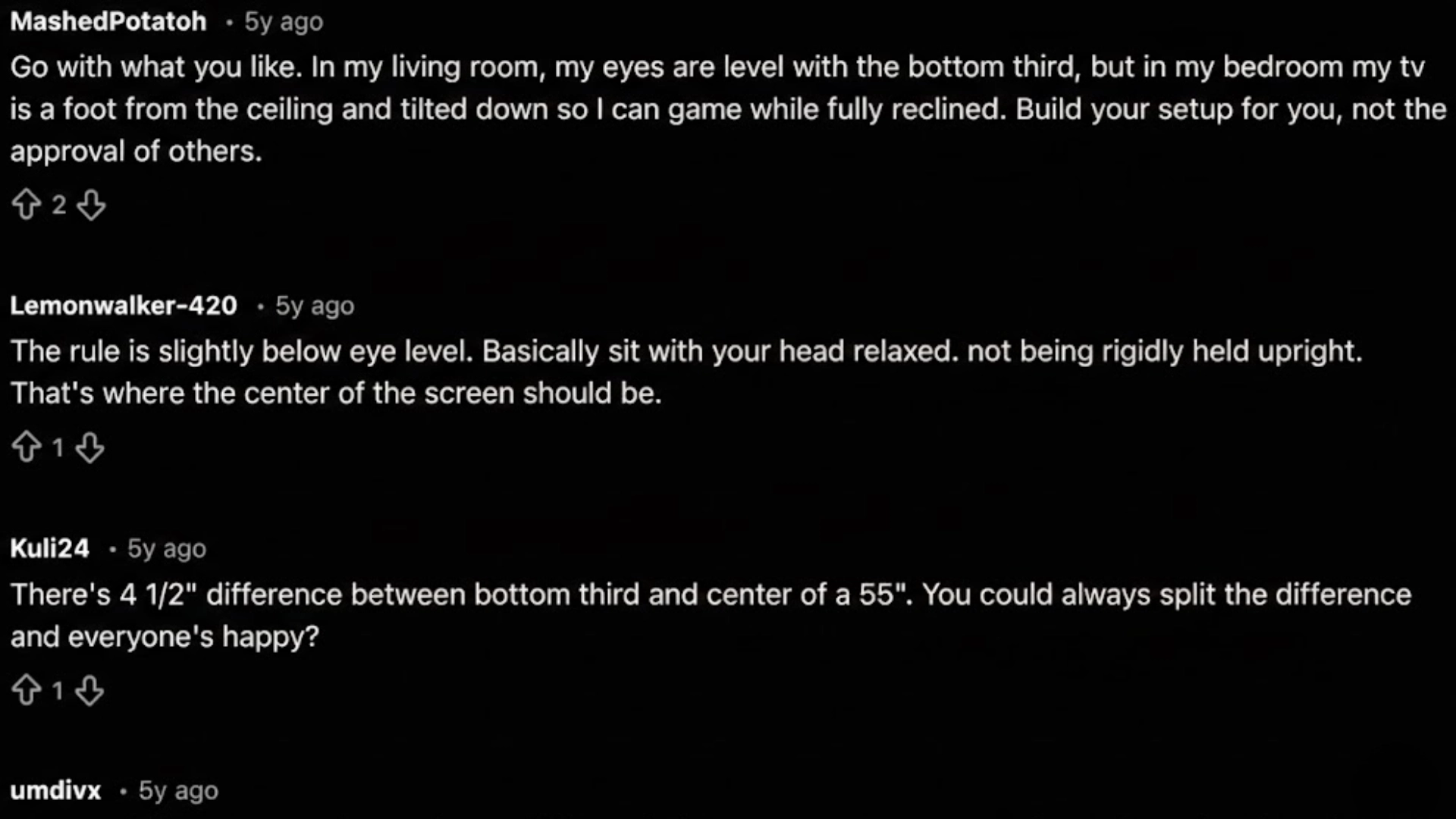
Reddit users are split, but most agree that comfort matters more than strict formulas.
In a popular thread on mounting a 55-inch TV, many users suggested placing the center of the screen slightly below eye level when seated.
The idea is simple: sit naturally, relax your neck, and mount the TV where your eyes fall.
Several commenters warned against mounting a TV too high, saying it can cause neck strain over time. A common way was to keep the bottom of the screen about 22 to 28 inches from the floor.
Others mentioned adjusting based on room layout or recliner position, or adding a center channel speaker to a surround sound setup.
A few users joked about complicated measurement methods, but the overall takeaway was clear.
Measure your seated eye level first, then mount the TV for your comfort, not trends.
Common TV Mounting Errors to Avoid
Many TV mounting issues arise because small details are overlooked, leading to discomfort that becomes noticeable only after extended daily viewing sessions at home.
- Mounting Too High: Placing the TV well above eye level may look fine at first, but it often leads to neck pain and strained viewing over time.
- Choosing Wall Space Over Comfort: Mounting the TV based on available wall space instead of eye level can result in awkward angles and reduced viewing comfort.
- Ignoring Seating Height: Deep couches and recliners lower the natural eye level, so failing to adjust the TV height can make viewing feel uncomfortable.
- Skipping a Test Setup: Installing the mount without testing the height using tape or a temporary setup increases the chance of needing adjustments later.
- Copying Store Displays: TV heights in showrooms focus on display appeal, not long-term comfort in a real home setting.
Conclusion
Finding the right answer to how high I should mount my TV makes a noticeable difference in everyday comfort and long viewing sessions.
A good starting point is to align the screen with your natural seated sightline rather than guessing.
From there, small adjustments based on posture, furniture height, and how you actually watch television can improve the experience.
Every room has different needs, especially when comparing a living room setup to a bedroom wall.
Taking a few minutes to measure properly can prevent neck strain and future remounting work. It is always smart to simulate placement before making permanent holes in the wall.
Have you mounted your TV in any of the rooms? Share your setup and measurements in the comments below so others can learn from your experience.