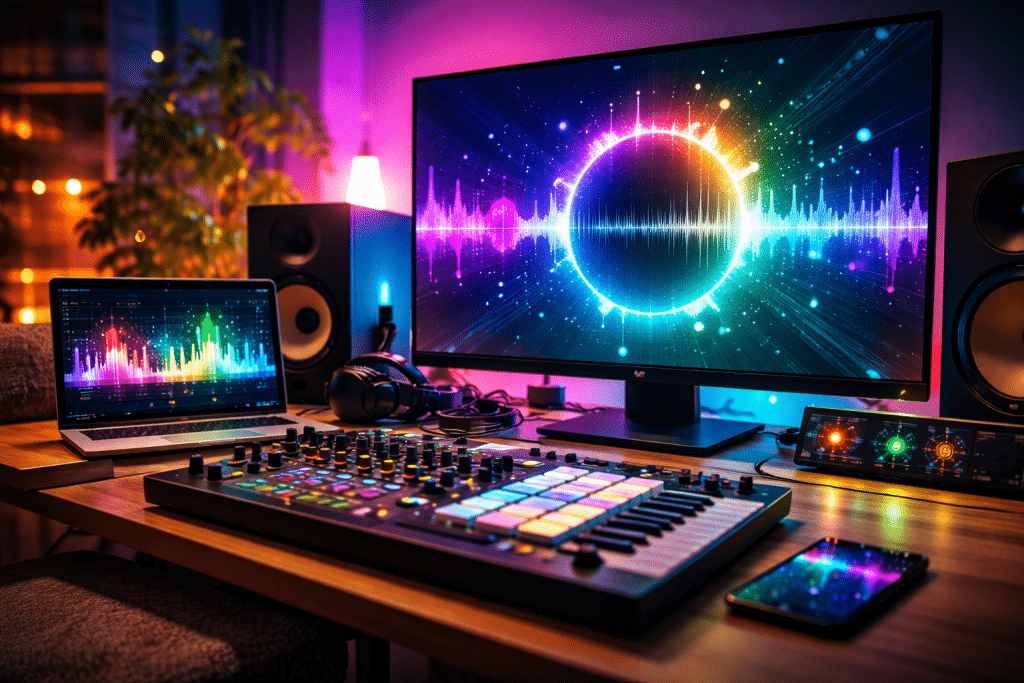
Music visualizer software has evolved far beyond its early role as a novelty feature in media players. Today, it is a versatile digital tool used across industries to translate sound into engaging visual experiences.
By responding dynamically to rhythm, frequency, and intensity, music visualizers help users see sound in ways that enhance interaction, understanding, and enjoyment.
From personal entertainment to gaming, education, fitness, and wellness platforms, music visualizer software has become part of everyday digital experiences.
What Music Visualizer Software Does
At its core, music visualizer software analyzes audio input and converts it into animated visuals. These visuals respond in real time to elements such as beats, tempo, bass, and melody. The result is synchronized motion that reflects the structure and energy of the sound.
Modern visualizers offer a wide range of templates, including waveform displays, spectrum bars, geometric animations, particle effects, and ambient motion graphics. This flexibility allows visualizers to be used across many different applications.
Personal Entertainment and Content Creation
One of the most common everyday uses for music visualizer software is personal entertainment. Many people use visualizers to enhance music listening at home, create engaging background visuals, or add visual interest to shared content.
Music visualizers are frequently used for:
- Background visuals on TVs or monitors during music playback
- Creating simple music or instrumental videos
- Enhancing playlists, livestreams, or social media posts
Accessible tools such as an audio visualizer make it easy for users to turn songs into visually engaging content without design or animation experience. Ready-made templates allow creators to choose styles that match the mood of the music, from energetic and bold to minimal and atmospheric.
Applications in Gaming
In gaming, music visualizers are used to enhance immersion and interactivity. Rhythm-based games rely heavily on audio-reactive visuals that guide player timing and movement.
Visual feedback tied to sound helps players anticipate changes and feel more connected to gameplay.
Beyond rhythm games, visualizers are also used in game menus, loading screens, and live-stream overlays. Many streamers incorporate audio-reactive visuals to make broadcasts more dynamic and engaging for viewers.
Educational Uses of Music Visualizers
Music visualizer software plays a growing role in education, particularly in music theory, audio production, and sound design. Visual representations of sound help students grasp abstract concepts such as frequency ranges, amplitude, and rhythm patterns.
In classrooms and online learning platforms, visualizers support:
- Demonstrations of how instruments occupy different frequencies
- Lessons on rhythm, tempo, and structure
- Introductory audio engineering concepts
By pairing visual and auditory learning, educators can improve comprehension and engagement for a wider range of learners.
Fitness and Workout Applications
Fitness and workout platforms often use music visualizers to boost motivation and maintain energy. Music is central to exercise, and visuals that move with the beat can help users stay in rhythm and engaged throughout a session.
Visualizers are commonly used in home workout videos, dance-based programs, and virtual cycling or running environments. The combination of sound and movement creates a more immersive workout experience that encourages consistency.
Wellness and Mental Health Platforms
In wellness and mindfulness applications, music visualizers take on a calmer role. Instead of sharp movements, visuals often feature slow transitions, flowing shapes, or gentle color changes that respond subtly to sound.
These visualizers are used in meditation apps, breathwork sessions, sleep aids, and ambient sound platforms. Customizable templates allow developers to align visuals with emotional goals such as relaxation, focus, or stress reduction.
Templates and Customization Options
A major advantage of modern music visualizer software is the variety of templates available. Templates allow users to quickly select a visual style suited to their purpose.
Common template styles include:
- Spectrum and waveform displays
- Abstract or geometric animations
- Cinematic and atmospheric scenes
- Minimalist designs for professional use
Customization options often include color schemes, motion intensity, layout, and typography, making visualizers adaptable across platforms and audiences.
Where Music Visualizers Are Used
Music visualizer software can be deployed across many environments, including websites, mobile apps, streaming platforms, live broadcasts, fitness studios, and events. Visualizers can run in real time or be exported as video files, making them easy to integrate into existing workflows.
Conclusion
Music visualizer software has become a practical, everyday tool rather than a novelty. Its use in personal entertainment, gaming, education, fitness, and wellness highlights its versatility and growing relevance.
By offering flexible templates and easy customization, music visualizers help transform audio into engaging visual experiences that enhance understanding, motivation, and enjoyment across many aspects of daily digital life.