Many businesses benefit from an access control system when they face risks like unauthorized entry, employee turnover, or the need to protect sensitive areas. Traditional keys often fall short due to loss, duplication, and costly rekeying.
Modern solutions offer better protection, easier management, and detailed tracking. Whether your operation is small or large, consider factors such as size, industry, and security concerns to decide if upgrading makes sense. The right choice strengthens safety while improving daily operations.
Introduction
Picture this: a busy office where employees come and go at all hours, contractors drop by unexpectedly, and valuable equipment sits behind closed doors. One lost key or a disgruntled former staff member could create real headaches. Traditional locks simply cannot keep pace with modern workplace demands.
An access control system changes the game by allowing precise management of who enters where and when. Businesses turn to these solutions to replace outdated keys with smarter options like cards or codes. For those exploring reliable ways to handle entry, professional guidance often proves invaluable in matching the right setup to specific needs. access control system
Beyond basic entry, such systems provide logs of movement, quick revocation of permissions, and integration possibilities with other security tools. As threats evolve and teams grow, many owners find themselves weighing the switch from mechanical methods to electronic controls. The decision often comes down to balancing protection, convenience, and long-term costs.
Evaluating Security Risks Without Proper Door Controls
Relying solely on mechanical keys and standard locks leaves businesses exposed in ways that become painfully obvious only after an incident occurs. The vulnerabilities pile up quietly until something goes wrong, and by then the damage – financial, reputational, or worse – has already happened.
Modern workplaces deal with far more moving parts than they did twenty years ago. Employees come and go, vendors visit regularly, temporary staff cycle through, and shared spaces host multiple tenants or contractors. Each person who receives a physical key represents a potential weak link.
Here are the most common security gaps that arise when businesses skip commercial access control:
- Lost or stolen keys: A single misplaced key can grant unrestricted access indefinitely. Replacing all locks after a loss quickly becomes expensive.
- No audit trail: Without records of who entered and when, investigating theft, vandalism, or unauthorized access turns into guesswork.
- Delayed response to departures: When someone leaves the company, collecting keys often fails. Former employees or contractors may retain access long after they should have been cut off.
- Key duplication: A key can be copied in minutes at any hardware store, creating uncontrolled duplicates that circulate without anyone’s knowledge.
- Limited control over restricted areas: Sensitive spaces such as server rooms, cash offices, or storage containing valuable inventory remain vulnerable to anyone who gains entry to the main building.
- After-hours access issues: Cleaning crews, maintenance workers, or late-shift staff may need entry at odd hours, yet traditional locks make it difficult to grant time-limited or location-specific permissions.
These risks compound in larger operations. A small retail store might lose a few hundred dollars to petty theft. A mid-sized office or warehouse could face data breaches, equipment theft, or liability issues if unauthorized individuals access client information or hazardous materials.
Many owners underestimate how frequently these problems occur until they happen on their own premises. A single breach can cost tens of thousands of dollars in direct losses, legal fees, insurance deductibles, and lost business – far more than the upfront investment in a proper system.
The good news is that most of these vulnerabilities disappear the moment access control security takes over. Permissions become granular, revocable in seconds, and fully trackable. The decision to upgrade often comes down to recognizing that the cost of inaction usually outweighs the cost of action.
Exploring Types of Modern Entry Management Solutions
Once you recognize the limitations of traditional locks, the next natural question becomes: what options actually exist today? Supreme Security offers a range of solutions, each suited to different business sizes, budgets, and security priorities. Understanding the main categories helps narrow down what might fit best without getting overwhelmed by technical jargon.
Keypad-Based Systems
The simplest electronic approach uses numeric keypads mounted at doors. Users enter a personal code to gain entry. These work well for smaller operations with limited staff – think small retail shops, community centers, or single-location offices. Installation stays relatively inexpensive, and codes can be changed quickly when someone leaves. The main drawback appears with shared codes: if one person writes it down or tells others, security weakens fast.
Proximity Card and Fob Systems
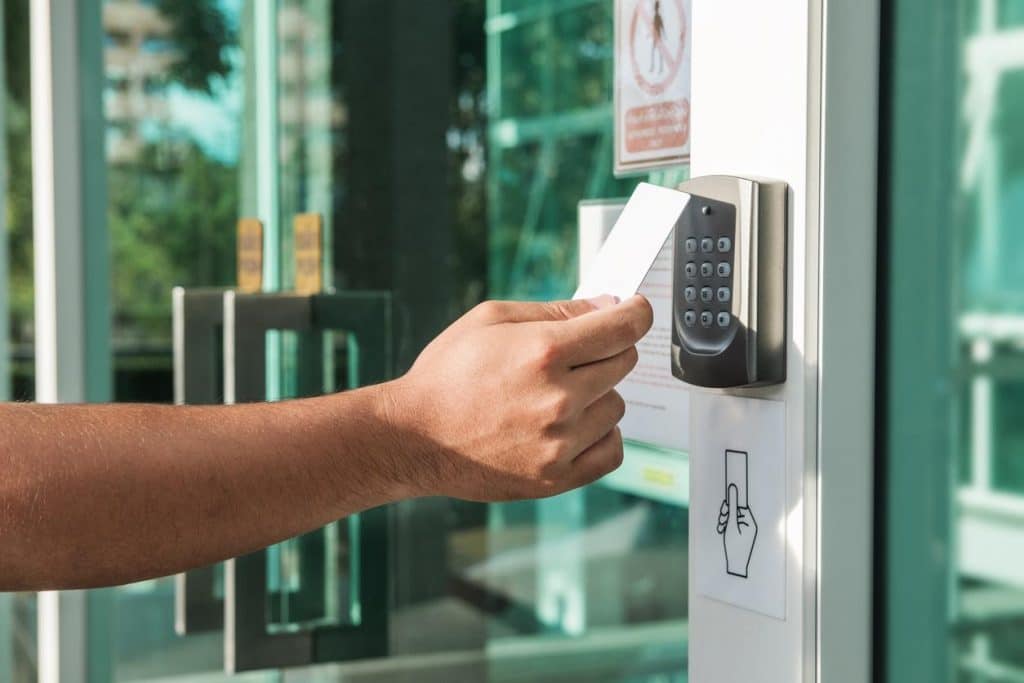
Card access systems remain one of the most popular choices for mid-sized businesses. Employees carry a small card or key fob that communicates with a reader using radio frequency – usually just a quick tap or wave.
Readers can be mounted discreetly, and the system logs every successful (and failed) attempt. Cards prove easy to issue, deactivate, or replace, and many businesses already use similar technology for employee badges. Lost credentials can be voided instantly, eliminating the old rekeying headache.
Biometric Solutions
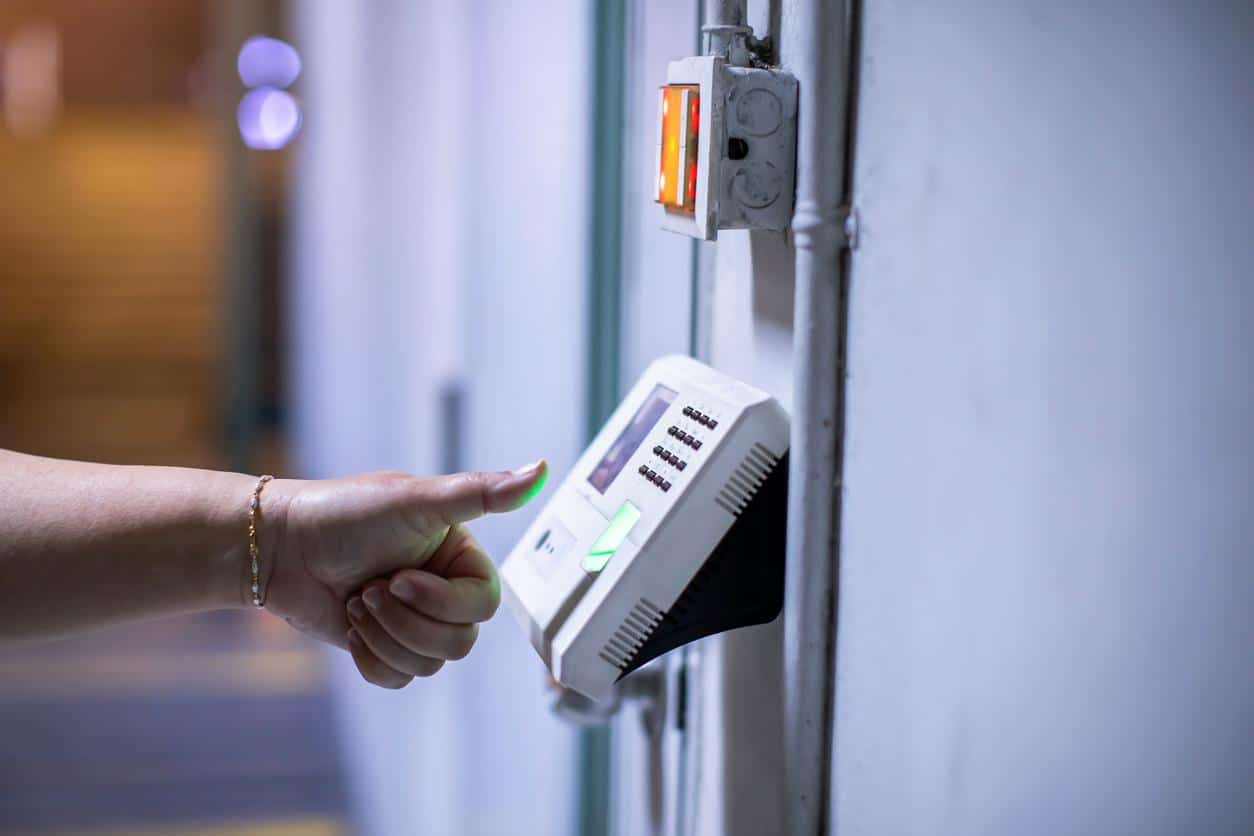
When higher security matters most, fingerprints, facial recognition, or iris scans enter the picture. These methods tie access directly to a person rather than something they carry or remember. Setup costs more upfront, and occasional issues arise with dirty hands, lighting changes, or minor injuries affecting scans. Still, the convenience of never forgetting your “credential” appeals to many.
Mobile Credential Systems
The newest wave lets employees use their smartphones as the access device. Through a secure app, the phone generates a digital credential that communicates with door readers via Bluetooth or NFC.
This approach eliminates physical cards entirely, reduces lost-item headaches, and allows temporary guest passes to be sent via text or email. Cloud integration means administrators manage everything remotely, which suits businesses with multiple sites or hybrid workforces.
Hybrid and Scalable Platforms
Many organizations mix approaches: keypads at low-risk exterior doors, card readers inside, and biometrics guarding server rooms. Cloud-based software ties it all together, offering centralized control, real-time alerts, and easy expansion as the business grows.
Choosing the right mix depends on your current risks, number of users, and plans for the next few years. The beauty of these systems lies in their flexibility – start simple and layer on features as needs evolve.
Key Advantages for Operational Efficiency and Safety
Modern entry management tools do far more than keep doors locked. They reshape how businesses handle daily routines, respond to incidents, and protect what matters most. The advantages become clearest when you look at real-world improvements in both security posture and operational flow.
Stronger, Smarter Protection
Electronic controls turn security from a static barrier into an active, rule-based system. Permissions can be set by time of day, department, or individual role.
For instance, maintenance staff might receive access to utility rooms only between 8 a.m. and 5 p.m. on weekdays. Executive suites stay off-limits after hours unless specific overrides apply. The system automatically enforces these boundaries, removing human error from the equation.
Everyday Workflow Improvements
Beyond protection, these solutions quietly make operations smoother and less frustrating.
- Quick credential presentation replaces fumbling with keys during busy arrivals
- Temporary passes for vendors or guests expire automatically – no follow-up required
- Remote credential management allows instant updates from anywhere
- Entry and exit logs provide clear records for audits or incident reviews
- Many platforms connect with time clocks, eliminating separate punch-in hardware
Emergency Preparedness
In critical moments, a fast response saves lives and limits damage. Authorized administrators can lock down sensitive areas or unlock all egress paths with a single command. Fire services often request this capability during inspections because it supports safe, orderly evacuation.
Long-Term Cost and Scalability Benefits
Initial costs vary, yet most organizations see payback relatively quickly. Locksmith visits drop dramatically. Theft incidents tend to decrease. Many insurance carriers offer premium reductions when electronic controls are documented.
Expansion also becomes painless. Adding a new office, department, or group of employees requires only additional readers and software adjustments – no widespread lock changes or rekeying campaigns.
Deciding When to Upgrade to Modern Access Controls
Businesses face a simple reality: outdated keys and basic locks often create more problems than they solve. From unauthorized access risks and lost credentials to inefficient daily operations and rising long-term costs, the limitations become clear over time.
Electronic entry management addresses these issues head-on. It delivers precise permissions, instant revocation, detailed tracking, and seamless scalability. Whether protecting sensitive areas, streamlining workflows, or preparing for emergencies, the right solution adapts to how your organization actually functions.
Many owners realize the switch pays for itself through fewer incidents, lower administrative burdens, and improved overall safety. If your current setup feels outdated or unreliable, an access control system frequently emerges as the practical next step toward smarter, more dependable protection.