Ever walked into a crowded store and fumbled with heavy doors while balancing bags and kids?
When entrances are slow, difficult to open, or unsafe, foot traffic quickly turns into frustration for customers, employees, and visitors, especially in busy places.
Businesses also face practical challenges. High-traffic entrances wear out quickly, and accessibility requirements must be met to create an inclusive environment.
That’s where commercial automatic doors step in, turning chaotic entries into hands-free systems that keep traffic moving smoothly.
In this blog, I’ll explain what commercial automatic doors are, how they work, and list all available types.
By the end of this blog, you will know whether installing an automatic door is right for your business and which type may work best.
What Are Commercial Automatic Doors?
Commercial automatic doors are motor-powered entrance systems designed for busy commercial spaces such as retail stores, hospitals, offices, hotels, and airports, providing smooth entry and exit.
Instead of being opened manually, these doors operate via sensors and electric motors that open the door panels automatically.
Over time, automatic doors have evolved from basic mechanical setups to advanced systems that improve user experience.
Many businesses install commercial automatic doors to improve accessibility. These doors help meet the accessibility standards of the Americans with Disabilities Act (ADA).
Such doors are widely used in retail, hospitality, and education because they efficiently manage heavy foot traffic while creating a modern, welcoming entrance.
How Do Commercial Automatic Doors Work?
First, the sensors detect someone approaching. Sensors near the entrance detect movement and trigger the door to open.
Once a sensor detects a person, it sends a signal to the door system. The signal goes to a small computer called a control unit.
This unit decides when and how the door should open based on the sensor input. It then sends instructions to the motor that powers the door.
Based on these instructions, the motor makes the door panels slide, swing, or fold smoothly, based on the type of commercial automatic door installed.
The last component is the safety sensors, which monitor the doorway while the door is moving.
If a person, cart, or object is in the path, the door will stop or reopen automatically.
Many systems also allow manual opening during emergencies, ensuring a safe exit if power fails.
Types of Commercial Automatic Doors
Different types of commercial automatic doors support various entrance sizes, traffic volumes, and space limitations.
1. Automatic Sliding Doors
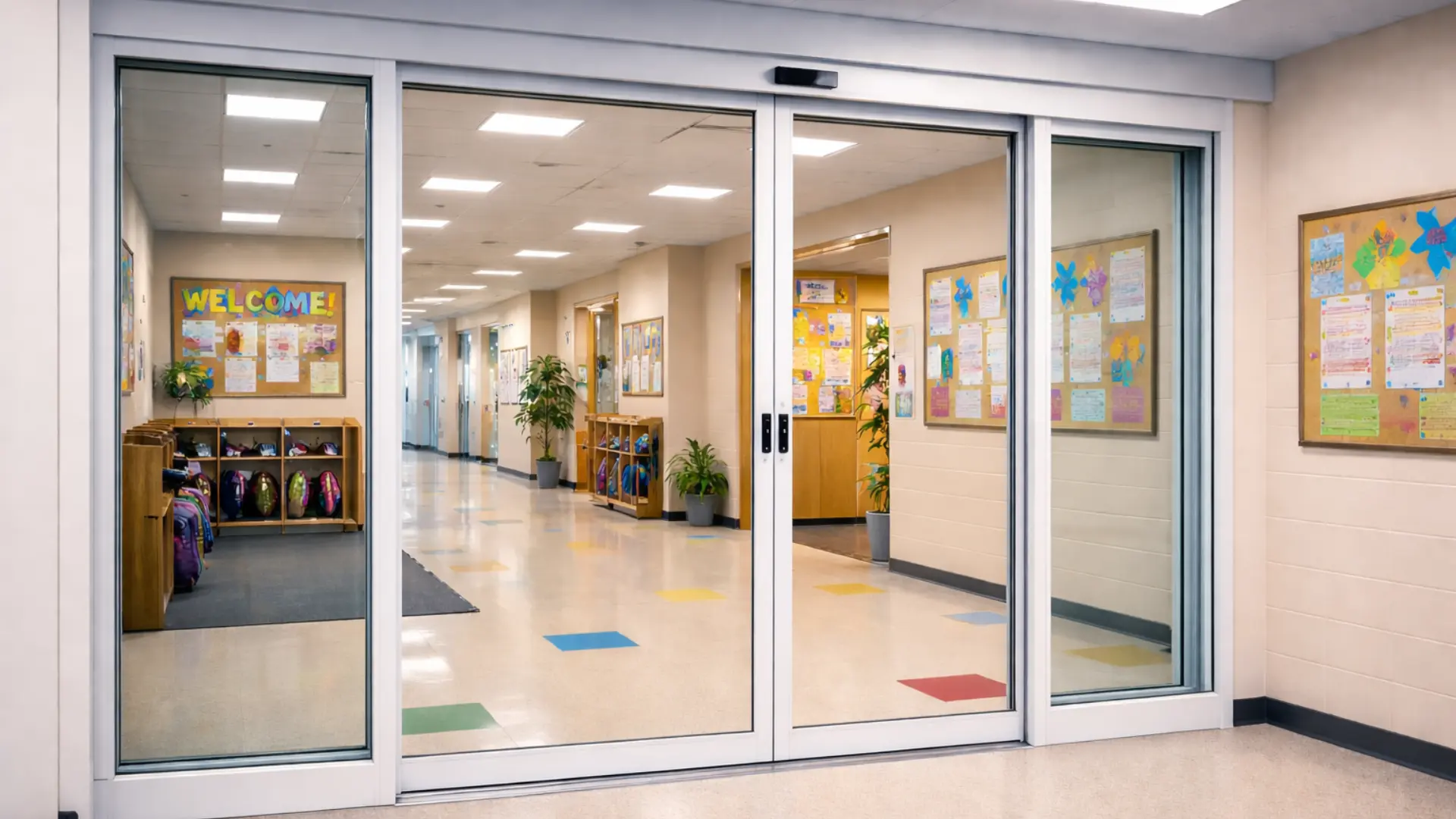
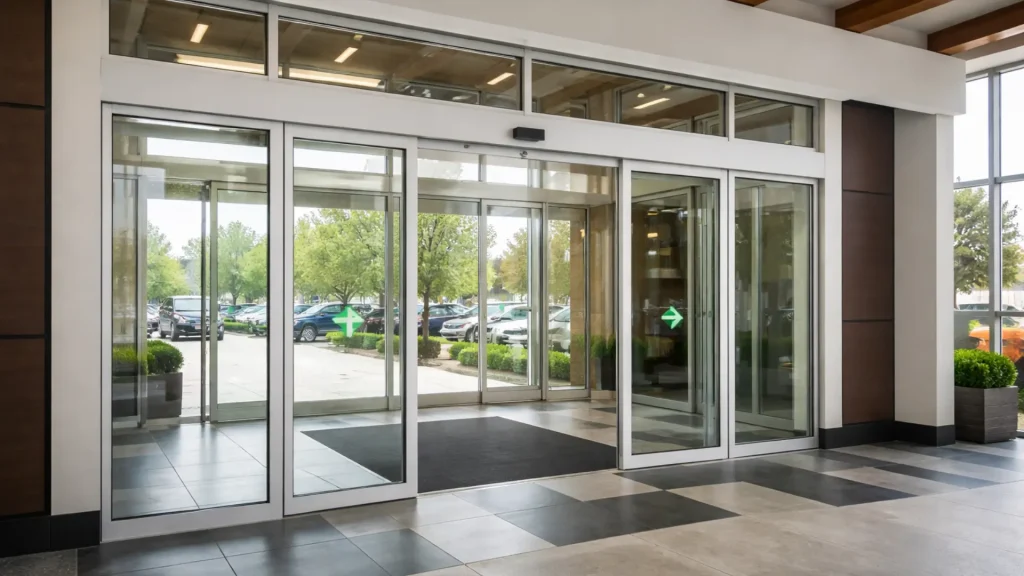
Automatic sliding doors move horizontally along tracks when sensors detect someone approaching.
Electric motors guide the panels smoothly, creating a wide, clear opening without physical contact. Most systems use large glass panels that improve visibility in the entrance area.
Tight seals around the frame help reduce air leakage, which supports better temperature control inside the building.
2. Automatic Swinging Doors
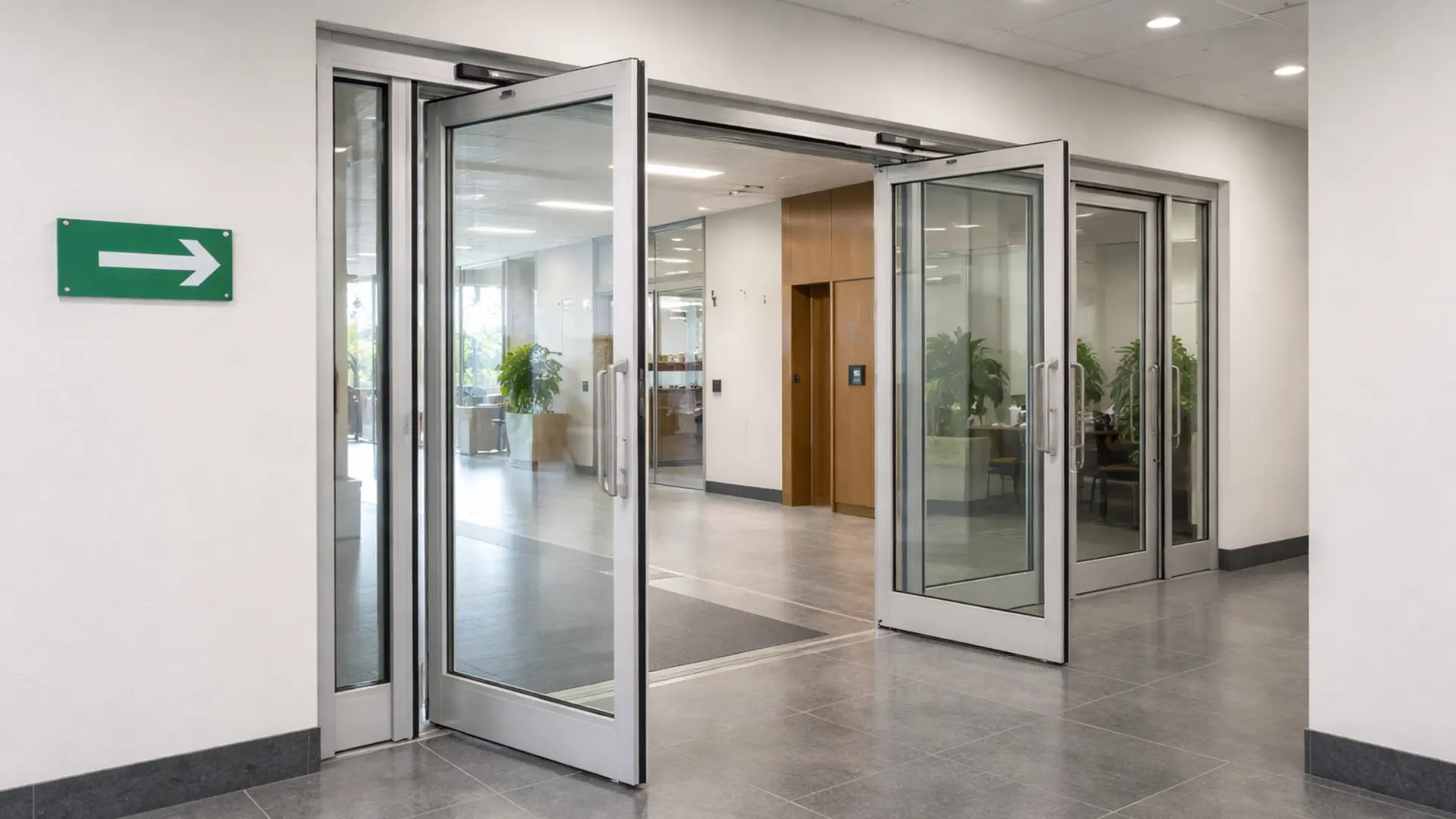
Automatic swinging doors operate on hinges, opening inward or outward when activated by sensors, push plates, or access controls.
A motorized door operator controls the opening and closing of the door at safe speeds. Many models can also connect with access control systems such as key cards or security panels.
These systems are often installed on existing door frames, which makes them easier to upgrade without replacing the entire entrance structure.
3. Automatic Revolving Doors
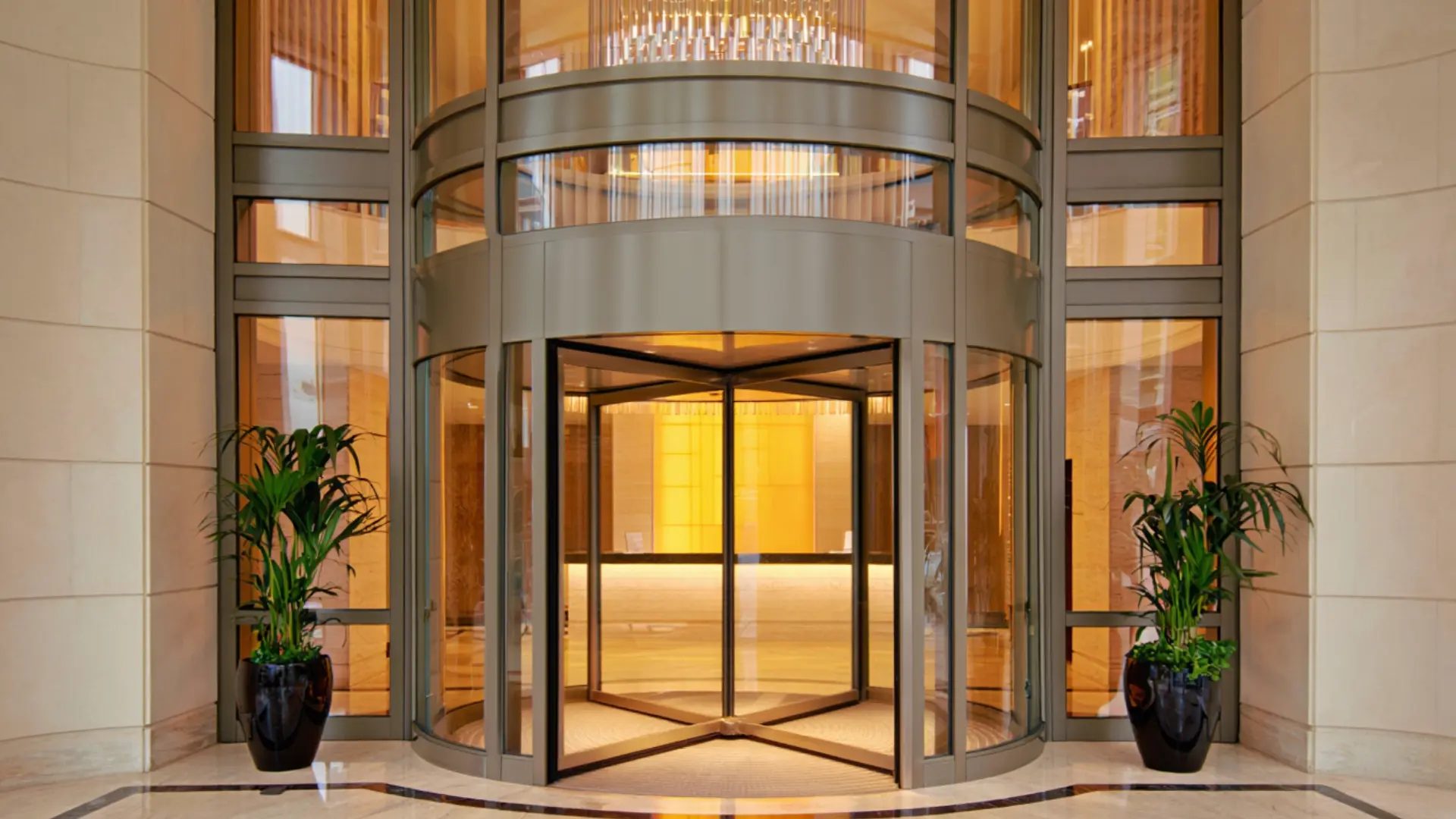
Automatic revolving doors rotate around a central shaft with multiple wings that create separate compartments for pedestrians.
As the door rotates, it allows people to enter and exit while maintaining a sealed environment between the inside and outside of the building.
Modern revolving doors include safety sensors, speed-control systems, and emergency breakout features that allow panels to open outward in emergencies.
4. Telescoping and Folding Automatic Doors
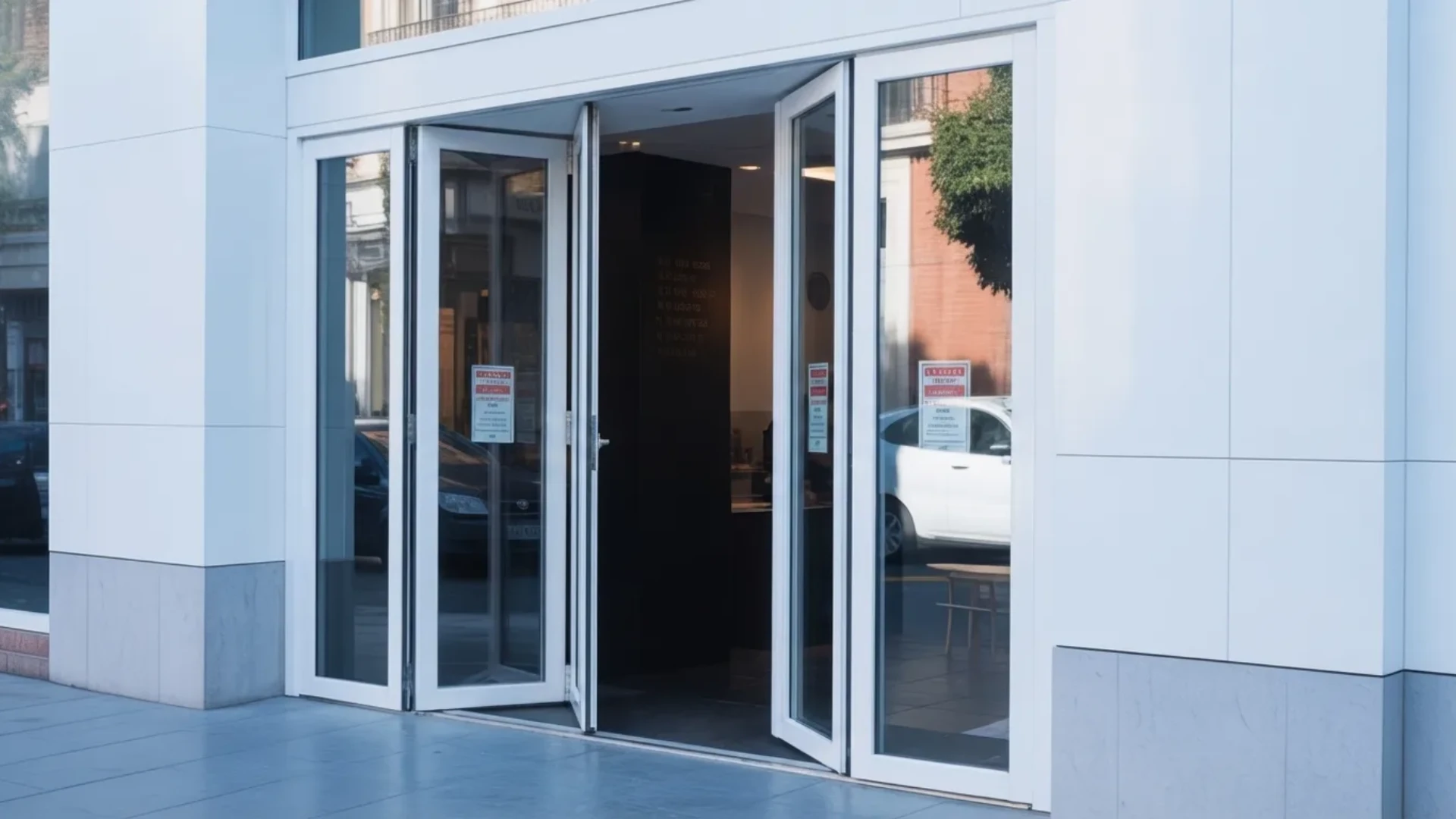
Telescoping and folding automatic doors are designed for entrances with limited space. They use multiple sliding panels that overlap and move together.
This design creates a wider opening than standard sliding doors. Folding doors use hinged panels that fold to the side as the door opens, similar to an accordion design.
Both systems allow wide access while requiring minimal wall space beside the entrance. They often use belt-driven motors for quiet operation and smooth movement.
Comparison of Commercial Automatic Door Types
A side-by-side comparison helps you choose the type of commercial automatic door that best suits your business environment.
| Type | Key Features | Best Commercial Uses | Cost Range |
|---|---|---|---|
| Sliding | High-speed, energy seals | Retail, Healthcare | $5,000-$15,000 |
| Swinging | Low-energy, easy retrofit | Offices, Schools | $3,000-$8,000 |
| Revolving | Airlock, premium aesthetics | Hotels, Lobbies | $10,000-$25,000 |
| Telescoping | Space-saving stack | Banks, Small Entrances | $6,000-$12,000 |
How to Choose the Right Commercial Automatic Doors?
Selecting the best commercial automatic doors involves matching your building’s needs with key features for safety, efficiency, and performance.
- Evaluate Entrance Size & Layout: Measure available space and opening width to pick sliding for wide areas or folding/telescoping for tight spots.
- Assess Traffic Volume: Choose high-durability models with fast cycles for busy retail/hospitals and low-energy options for offices/schools.
- Prioritize Safety Sensors: Look for infrared presence detectors and obstacle reversal to avoid accidents and meet ANSI/BHMA standards.
- Check Energy-Efficient Seals: Insulated panels and tight weatherstripping reduce air loss, cutting HVAC costs by 20-30% in climate-controlled buildings.
- Ensure ADA Compliance: Verify low-force operation, clear opening width, and accessible activation for inclusive entry.
- Consider Security Integration: Opt for systems compatible with key cards, biometrics, or locks to control access securely
- Factor in Budget & Maintenance: Balance upfront cost with long-term reliability. Choose reputable brands for easier servicing and warranties.
Benefits of Commercial Automatic Doors
Commercial automatic doors provide multiple advantages that improve daily operations, customer satisfaction, and long-term savings in business environments.
Hands-free entry allows people carrying bags or pushing carts to move through entrances easily, creating a smooth experience for visitors.
Properly installed automatic doors help buildings meet accessibility standards, ensuring safe, independent access for individuals with disabilities and the elderly.
Automatic doors are more energy efficient. Their quick opening and closing reduce the amount of outside air entering, helping heating and cooling systems work more efficiently.
Commercial automatic doors also improve hygiene by reducing the spread of germs on frequently touched surfaces, which is especially useful in healthcare settings.
Overall, these doors deliver practical value through convenience, compliance, cost savings, and a safer, more inclusive environment.
Maintenance Tips for Commercial Automatic Doors
Proper maintenance keeps commercial automatic doors safe, reliable, and long-lasting while preventing costly repairs and downtime.
- Perform Regular Visual Inspections: Check daily or weekly for loose screws, worn parts, unusual noises, or damage to panels and frames.
- Clean Tracks and Thresholds: Remove dirt, debris, and buildup weekly using a vacuum or mop to ensure smooth sliding and prevent jams.
- Wipe Sensors Gently: Clean motion and safety sensors with a soft cloth regularly to maintain accurate detection and avoid false triggers.
- Lubricate Moving Parts: Apply the recommended lubricant to rollers, hinges, and tracks to reduce friction and extend component life.
- Test Sensor Function and Safety: Walk-test activation and presence sensors often; verify doors reverse or stop if obstructed for compliance.
- Calibrate Speeds and Settings: Adjust opening/closing times and force periodically to match traffic needs.
- Schedule Professional Servicing: Arrange certified technician inspections at least twice yearly for thorough checks.
Conclusion
Commercial automatic doors play a practical role in modern buildings. They support smoother and more accessible entry, cutting out the small frictions that build up over a busy day.
Different door types serve different building needs, from sliding systems for busy entrances to folding options for smaller areas.
Beyond convenience, these systems contribute to safer entrances, better energy control, and improved accessibility for visitors and staff.
Understanding how these doors work and what each type offers helps building owners make more informed decisions when planning or upgrading commercial entrances.
Still have doubts about which of the commercial automatic doors is suitable for your business environment? Drop your queries below, and I’d love to help you out!
Frequently Asked Questions
What Warranties Come with Commercial Automatic Doors?
Most reputable brands offer 1 to 5-year warranties on motors and sensors, covering defects and parts, with extended plans that include labor coverage.
Can Automatic Doors Integrate with Smart Locks?
Yes, many connect via APIs to apps or systems like Kaba or ASSA ABLOY, allowing remote access and timed unlocks for added flexibility.
Can Automatic Commercial Doors Work During Power Outages?
Many systems include battery backup or manual breakout features, allowing doors to open safely during outages and emergencies while maintaining building access and exit safety.