Think about the difference between reading about a concept and actually interacting with it.
Traditional lessons often ask learners to imagine situations, which can make complex ideas harder to grasp.
Many students and professionals feel this gap when studying new skills or technical subjects.
Information may be clear, yet the experience often feels distant and difficult to connect with. This is where immersive learning begins to change the experience.
It helps close that gap by placing learners inside interactive digital environments. Instead of simply observing information, learners engage with it directly.
For many learners, this moment creates a shift in how knowledge is absorbed. When learning feels interactive and personal, motivation grows.
Suddenly, lessons feel less like tasks and more like experiences that invite participation, attention, and genuine interest.
What is Immersive Learning?
It is a teaching method that places learners in interactive digital environments so they can learn by doing rather than only reading or listening.
It uses technologies such as virtual reality, augmented reality, and interactive simulations to recreate real situations.
These environments allow students or trainees to practice tasks, observe processes, and make decisions as if they were in a real setting.
The system works by combining software, digital content, and devices that respond to user actions in real time.
When learners move, speak, or complete tasks, the system reacts instantly, creating a realistic training experience.
This method helps learners stay focused, understand concepts faster, and practice skills safely before applying them in real-world situations.
Key Technologies That Power Immersive Learning
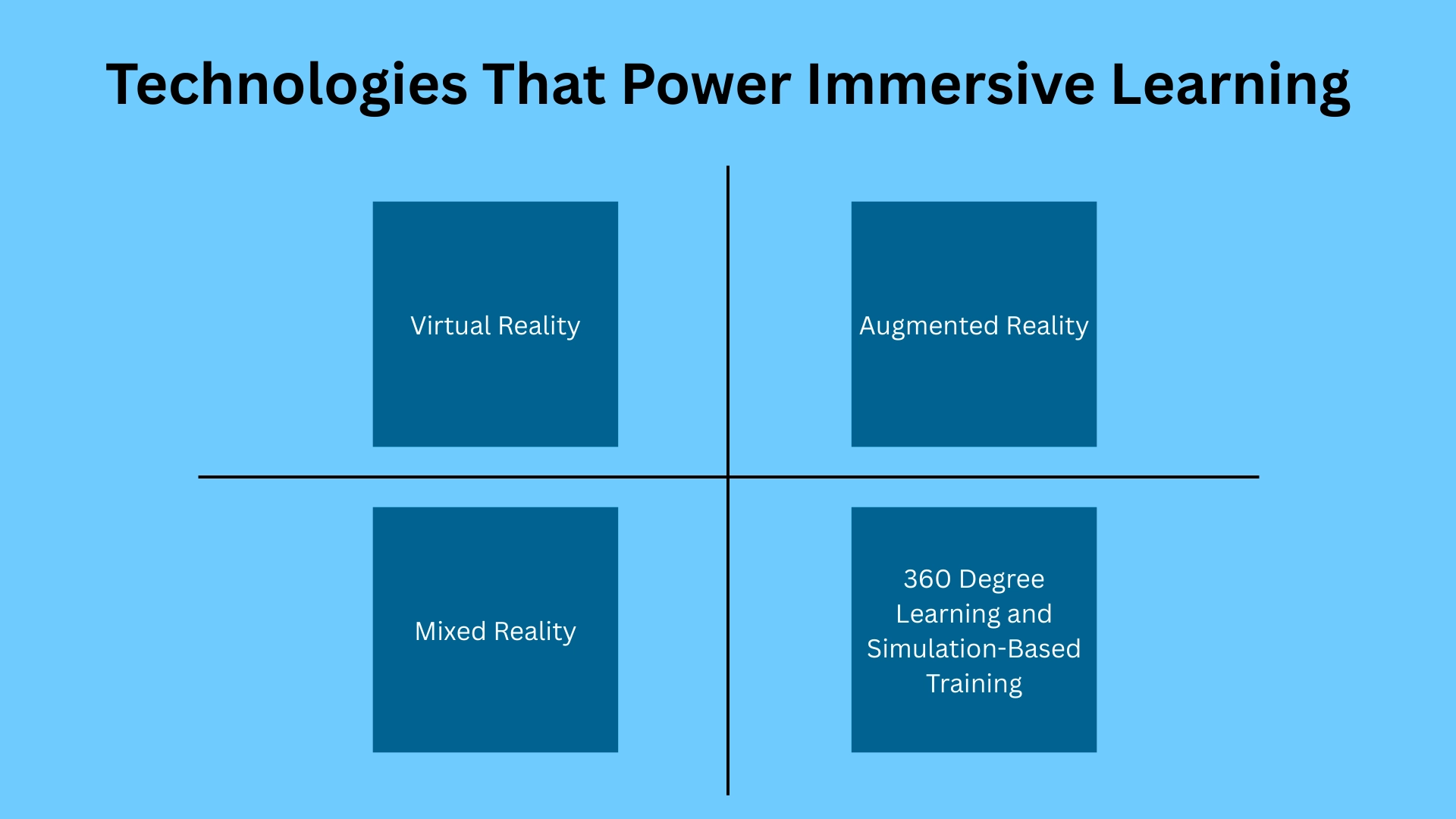
Learning environments depend on several advanced technologies that make lessons interactive and realistic. These tools allow students to interact with digital content.
1. Virtual Reality (VR)
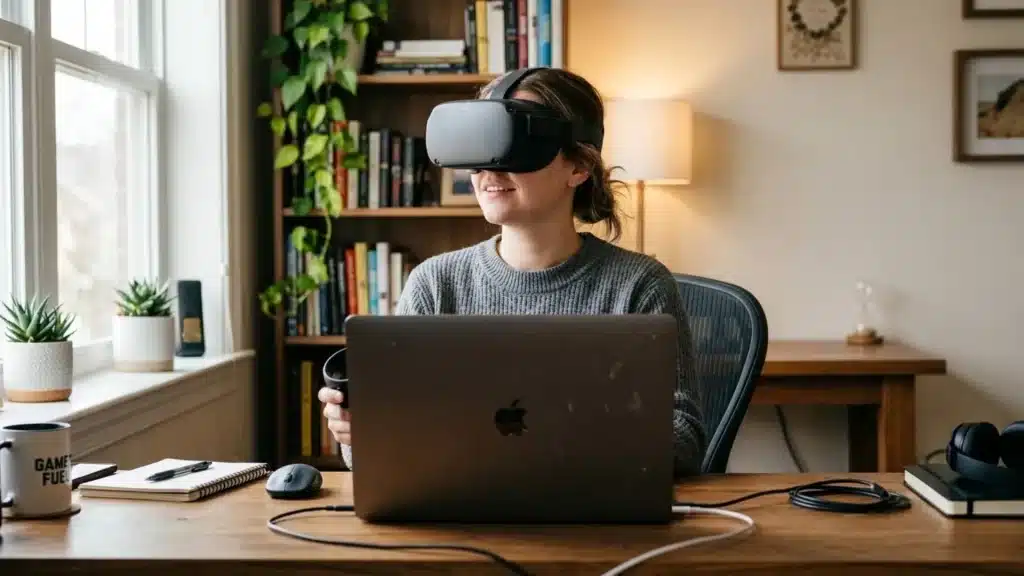
Virtual Reality is a technology that places users inside a completely digital environment using a specialized headset.
The headset displays 3-dimensional visuals that surround the user’s field of vision, creating the feeling of being inside a different space.
Motion sensors track head movement and adjust the view in real time, which helps maintain realism. Many systems also include handheld controllers.
Spatial audio adds another layer of realism by producing sound that varies with direction and distance.
2. Augmented Reality (AR)
Augmented Reality adds digital elements to the physical environment while allowing users to continue seeing the real world around them.
This technology uses devices such as smartphones, tablets, or smart glasses that display digital images, text, or animations over the physical surroundings.
The system uses cameras and sensors to understand the environment and position digital elements in the correct place.
These digital objects remain stable even when the user moves the device. AR systems often support interactive features such as tapping, rotating, or zooming objects.
3. Mixed Reality (MR)
Mixed Reality combines physical surroundings with digital elements in a way that allows them to interact.
Unlike systems that simply display digital content, MR technology allows digital objects to respond to the physical environment.
Sensors and cameras scan the space around the user and build a digital map of surfaces and objects. This mapping allows virtual elements to appear anchored to walls, tables, or floors.
Users can move around these objects and observe them from different angles. Interaction may include gestures, voice commands, or controllers.
4. 360 Degree Learning and Simulation-Based Training
It creates realistic visual spaces that surround the user from every direction.
A 360-degree environment is built using panoramic video or digital rendering, allowing users to look around freely as if standing inside the scene.
Simulations add interactive components that allow users to perform actions, make choices, and observe outcomes.
The system processes these actions in real time and adjusts the environment accordingly. Many simulations include detailed visuals, spatial sound, and interactive controls to increase realism.
Immersive Learning Platforms and Tools
These learning platforms provide the software and digital environments with ready-made learning modules, content libraries, and tools that help educators or organizations.
1. VR Learning Platforms for Education
VR learning platforms designed for education provide structured virtual environments where students can interact with lessons and digital objects.
Platforms such as ClassVR, ENGAGE XR, and Nearpod VR offer libraries of interactive content and tools for teachers to manage lessons.
These systems often include classroom controls, progress tracking, and interactive scenarios that guide students through digital activities.
2. Corporate Immersive Training Platforms
Corporate immersive training platforms help organizations create digital training environments for employee learning and practical skill development.
Platforms such as Strivr and Virti provide tools for building interactive scenarios that simulate real workplace situations and decision-making processes.
These systems often include performance tracking, training analytics, progress reporting, and customizable content that companies can adapt to their specific training goals and workforce needs.
3. Popular VR Education Apps
VR education apps provide immersive lessons through simple and accessible software designed for VR headsets and mobile devices.
Apps such as Mondly VR, VictoryXR, and Labster offer interactive learning experiences that place users inside digital environments.
These applications often include guided lessons, visual demonstrations, and interactive elements that help learners engage with educational content.
4. Medical and Healthcare
Immersive learning platforms used in healthcare education provide detailed digital environments designed for medical training and skill development.
Platforms such as Osso VR, Oxford Medical Simulation, and SimX provide interactive medical scenarios supported by high-quality visuals and responsive systems.
These platforms often include structured learning modules, guided instruction, and performance-tracking features.
Real World Case Studies of Immersive Learning
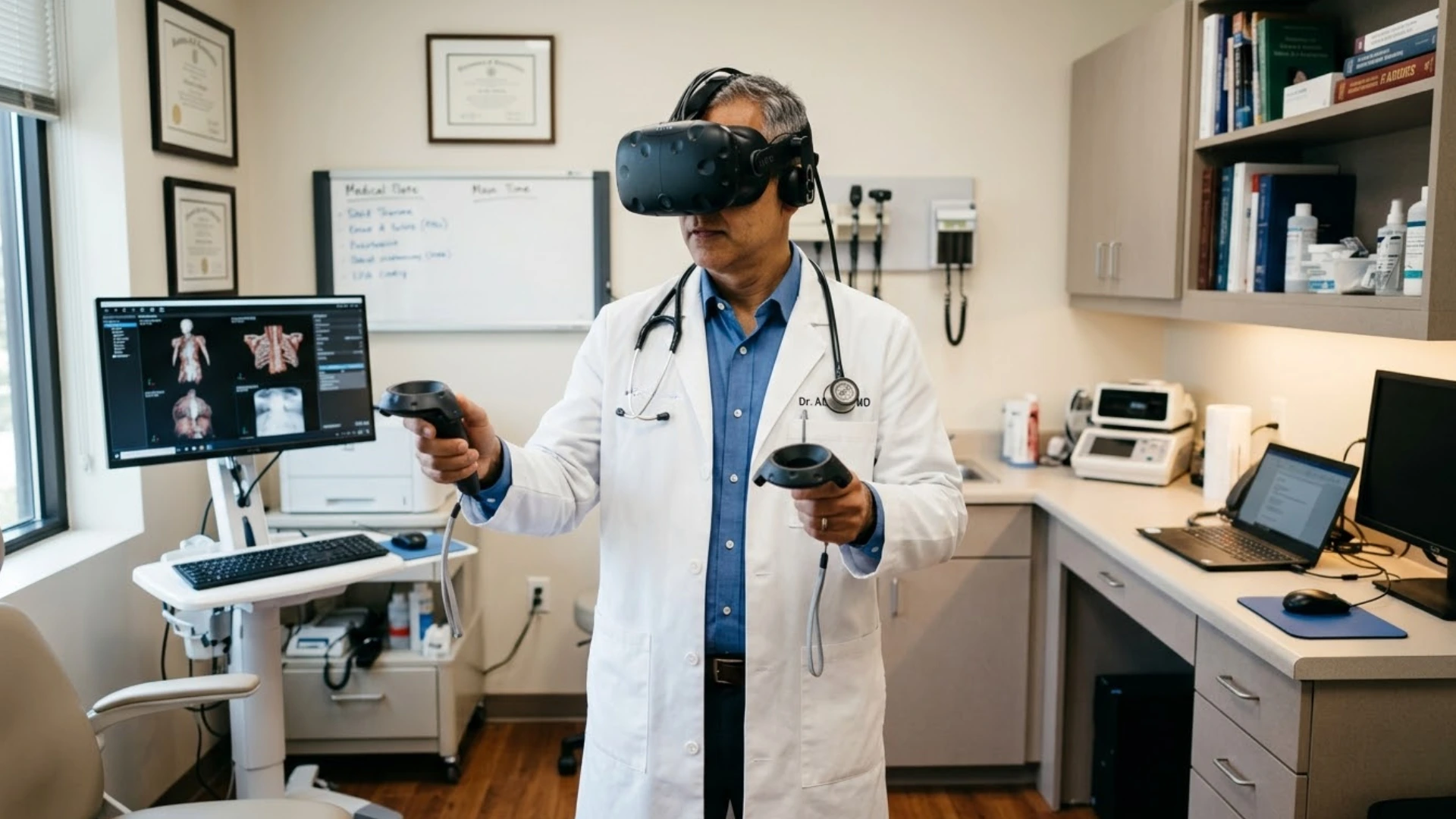
Leading organizations across industries have already put immersive learning to measurable use.
Walmart partnered with VR platform Strivr to train over one million retail associates across 4,700 locations.
By switching to immersive VR, Walmart reduced Pickup Tower training time from 8 hours to just 15 minutes, a 96% reduction.
VR-trained employees outperformed non-VR learners on post-training assessments 70% of the time.
PwC rolled out VR-based soft skills training across 12 U.S. locations, named “The Effectiveness of Virtual Reality Soft Skills Training in the Enterprise”.
VR learners completed the same training four times faster than classroom learners and felt 3.75 times more emotionally connected to the content.
Stanford University uses VR headsets in medical education, allowing students to explore congenital heart defects by viewing the inside of an infant’s beating heart.
These real-life examples show how important VR has become in immersive learning, making impossible things possible.
Benefits & Challenges of Immersive Learning
Understanding both the advantages and potential limitations helps educators and decision-makers evaluate how it fits within their training or educational strategy.
| Benefits | Challenges |
|---|---|
| Help learners stay focused and involved in the learning process. | VR headsets, specialized devices, and software systems may require a higher initial investment. |
| Visual and interactive experiences help improve memory. | Some institutions may need technical support and training. |
| Allow learners to practice skills in controlled conditions. | Can require ongoing technical management. |
| Instant feedback within digital environments. | Some users may need time to adjust to immersive technology. |
| Encourages active participation. | Device compatibility and system requirements may vary across platforms. |
How to Create an Immersive Learning Environment?
Creating such an environment requires thoughtful planning and the right combination of technology, content, and interaction that focuses on engagement and interactive experiences.
- Define clear learning objectives: Start by identifying what learners should understand or achieve.
- Use interactive digital content: Include VR environments, simulations, or interactive media that allow learners to move, observe, and interact with information.
- Design realistic learning scenarios: Create digital situations that reflect practical tasks and decision-making processes.
- Choose appropriate immersive technology: Select platforms or tools that support the learning experience.
- Provide feedback and progress tracking: Include systems that give learners immediate responses to their actions.
Immersive vs Experiential Learning
Immersive and experiential learning both focus on learning through active participation rather than passive instruction. However, they differ in how the experience is created.
| Immersive Learning | Experiential Learning |
|---|---|
| Uses digital environments such as VR and simulations | Focuses on real-world activities and hands-on tasks |
| Learners interact with virtual objects and environments | Learners gain experience through real practice |
| Often supported by technology and digital platforms | Usually guided by instructors through activities |
| Learning happens inside interactive digital scenarios | Learning happens through direct participation in tasks |
Conclusion
Immersive learning is changing how knowledge and skills are delivered in modern education and professional training.
Instead of passive lessons, learners interact with digital environments that encourage participation and deeper understanding.
Technologies such as simulations and interactive platforms make complex topics easier to grasp by placing learners inside structured digital experiences.
Many platforms, tools, and educational programs now support these environments, helping institutions and organizations deliver more engaging training.
As technology continues to improve, it will likely become a common part of digital education systems.
Educators, schools, and companies should review available platforms and choose solutions that support their content needs.
What are your thoughts on immersive learning? Share your opinions in the comments below.