Horse racing still looks like it belongs to another century. Silk colours flash in the sunlight, the horses circle the parade ring, and somewhere in the background you can usually hear the quiet murmur of bookmakers discussing prices. It feels traditional because much of it is. The sport moves to rhythms that have barely changed in generations.
But walk into a modern training yard early in the morning and you start to notice the difference.
Alongside the familiar routines of saddling and walking the horses out to the gallops, there are laptops open on stable desks. GPS trackers sit next to bridles.
Data from the morning’s work is being downloaded before the horses have even cooled down. Racing may still look traditional on the surface, yet behind the scenes it has become a quietly technological sport.
From Stopwatch to Sensor
Not long ago, a trainer’s most valuable tool was a stopwatch and a good eye. A horse galloped across the turf and someone stood at the rail timing the run with a small handheld watch. Afterwards the trainer would judge the horse’s condition from experience.
That instinct still matters enormously. But today many trainers also rely on devices that record far more information than a stopwatch ever could.
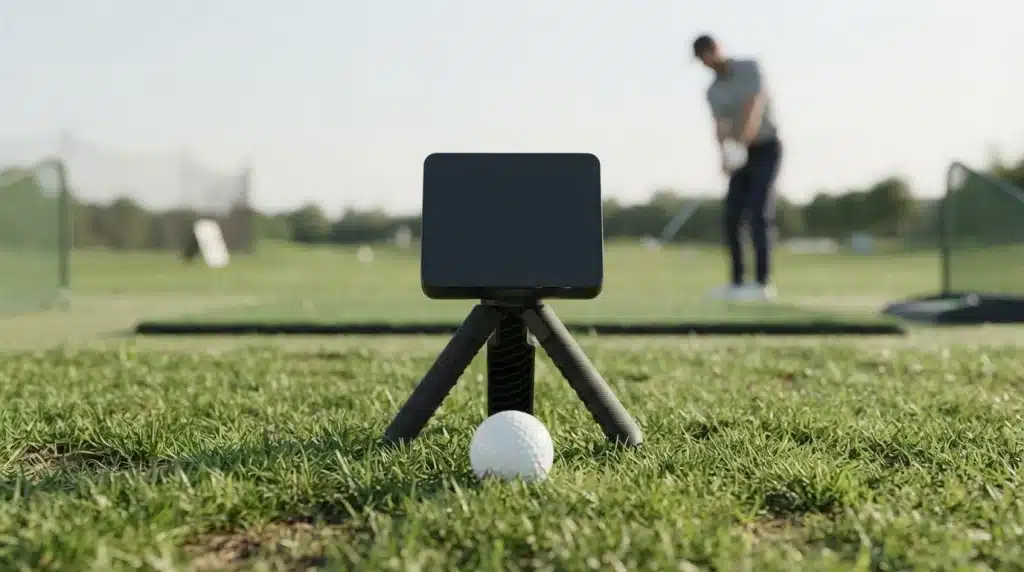
Small GPS units attached to a saddle cloth can track a horse’s exact speed during a gallop. Sensors measure stride length and acceleration. Heart-rate monitors show how quickly the horse recovers once the exercise is over.
Instead of one simple time recorded on a notepad, trainers now receive an entire data set describing the run.
What the Gallops Reveal
Those numbers may sound technical, but they often confirm things horsemen have always suspected. A horse that fades late in training may be working slightly too hard early in the gallop. Another that finishes strongly might be conserving energy better than expected.
With GPS tracking, trainers can see exactly where pace changes happen along the gallops.
Some yards in Newmarket and Lambourn now review that information almost immediately after training. The data can be downloaded to a tablet while the horse is still walking back toward the stable yard.
It doesn’t replace judgment, but it sharpens it.
The Rise of Race Data
Technology has also changed what happens once the horse reaches the racecourse. Modern race broadcasts often include sectional timing data that breaks a race into smaller segments. Analysts can see how quickly the leaders travelled through the first furlongs compared with the closing stages.
This kind of information helps explain races that once seemed mysterious.
A horse might appear to weaken in the final stretch when in fact it simply ran the early part of the race faster than the others. Another might look average on paper but actually produced a strong finishing section once the pace settled.
When Data Meets the Betting Market
All of this information inevitably shapes the way races are analysed before they begin. Statistical models now combine race history, sectional timing and performance data in ways that were impossible only a decade ago.
Analysts studying odds on horse racing increasingly factor these numbers into their assessments because the market often responds to patterns revealed through data rather than simple reputation.
The shift is subtle but important. Racing still values tradition, yet the conversation around form has become more analytical.
Protecting the Horse
Technology has also improved welfare in ways that are less visible to the public.
Motion analysis systems can also pick up changes in the horse’s gait that could mean it is getting tired or injured. High-speed cameras can capture the movement of the horse frame by frame. This means that veterinarians can examine the joints and tendons of the horse in an extremely detailed way.
This information is invaluable for the trainer. A small problem now can mean that a larger problem will not develop later on in the season. In an event where the condition of the horse is paramount, this information is extremely relevant.
The Modern Race Broadcast
Even the manner in which the fan watches the racing has improved.
Drones can be seen flying over the track, giving the viewer a perspective that in the past required a helicopter to achieve. The viewer can also see the speed of the cars as the race is happening, thanks to real-time graphics. Some races also show the viewer the progression of the pack around the track in digital form.
All of this helps the viewer better understand the progression of the race, especially in longer races where the strategy can change several times throughout the event.
It adds another level to the event without ever changing the excitement of the event.
Racing’s Digital Audience
The biggest transformation may actually be happening away from the racecourse. Racing fans today consume more information than any previous generation.
Mobile apps provide racecards, historical results and sectional timing within seconds. Data that once lived in specialist publications is now available to anyone with a phone.
The result is a fan base that increasingly enjoys analysing races as much as watching them.
Some study pace figures. Others compare track conditions or breeding records. The digital tools simply make that exploration easier.
Tradition Still Leads the Way
For all this talk of technology, it would be wrong to imagine that racing has become a laboratory experiment. Spend time around the sport and you quickly realise that intuition still matters.
Trainers still depend on how a horse feels during a morning gallop. Jockeys still talk about how a horse reacts under them during a race.
Technology can inform decisions, but it can never substitute for the experience of people whose lives are spent around these creatures.
A Sport Quietly Changing
What has happened to horse racing over the last decade is not a revolution, but a subtle change. Sensors, data analysis, and digital broadcasting have become part of racing almost unnoticed.
The horses still thunder down the turf exactly as they always have. The crowds still lean forward when the field enters the final furlong.
Yet somewhere behind the scenes, computers are quietly recording every stride.
The Digital Age of the Thoroughbred has arrived not with fanfare but with a collection of small tools that help the sport understand itself a little better.