Choosing the right microphone directly affects the clarity and impact of your recorded sound across music, podcasts, streaming, interviews, and video production.
With so many models available today, understanding how microphones differ in design, performance, and purpose becomes essential for making an informed decision.
Each microphone is built to handle specific environments, sound sources, and recording conditions, which is why selecting blindly often leads to poor results.
In this guide, I explain the different types of microphones, focusing on how they work, where they are commonly used, and which technical features shape audio quality.
You will learn about microphone technologies, pickup patterns, and key specifications that influence tone and accuracy.
By the end, you can confidently choose a microphone that aligns with your recording goals and delivers consistent, professional audio.
What is a Microphone and How Does It Work?
A microphone is an audio device designed to capture sound and convert it into an electrical signal that can be recorded, amplified, or transmitted.
It operates through a diaphragm, a thin, sensitive surface that vibrates when sound waves strike it.
These vibrations are then transformed into electrical signals using methods such as electromagnetic induction or variations in electrical charge.
The generated signal accurately represents the original sound’s pitch and volume.
Although the core working principle remains consistent, microphones are engineered differently to suit various environments and recording purposes.
This is why different types of microphones are used in studios, live performances, broadcasting, and content creation.
By understanding how microphones function, users can better appreciate their role in producing clear, detailed, and reliable audio across professional and everyday applications.
Types of Microphones Based on Technology
This section explains the different types of microphones by focusing on how their internal technology affects sound quality and usage.
1. Dynamic Microphones
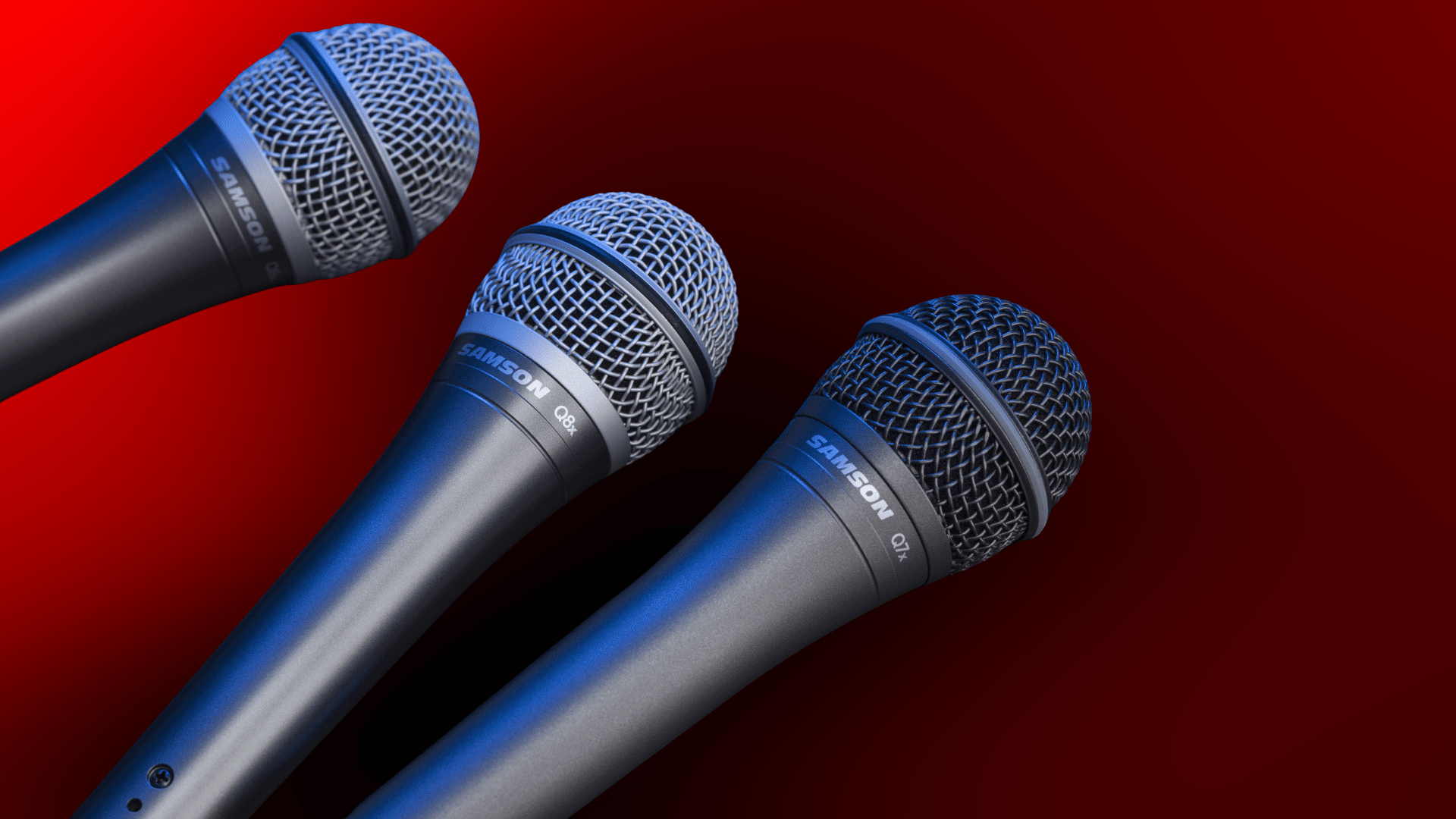
Dynamic microphones use a simple electromagnetic design where a diaphragm moves a coil within a magnetic field to generate sound signals.
They are known for durability and reliability, especially in high-volume environments.
These microphones handle loud sound sources without distortion and do not require external power.
Their rugged build and controlled sensitivity, dynamic microphones are commonly used for live vocals, drums, guitar amplifiers, and stage performances worldwide in professional audio setups.
2. Condenser Microphones
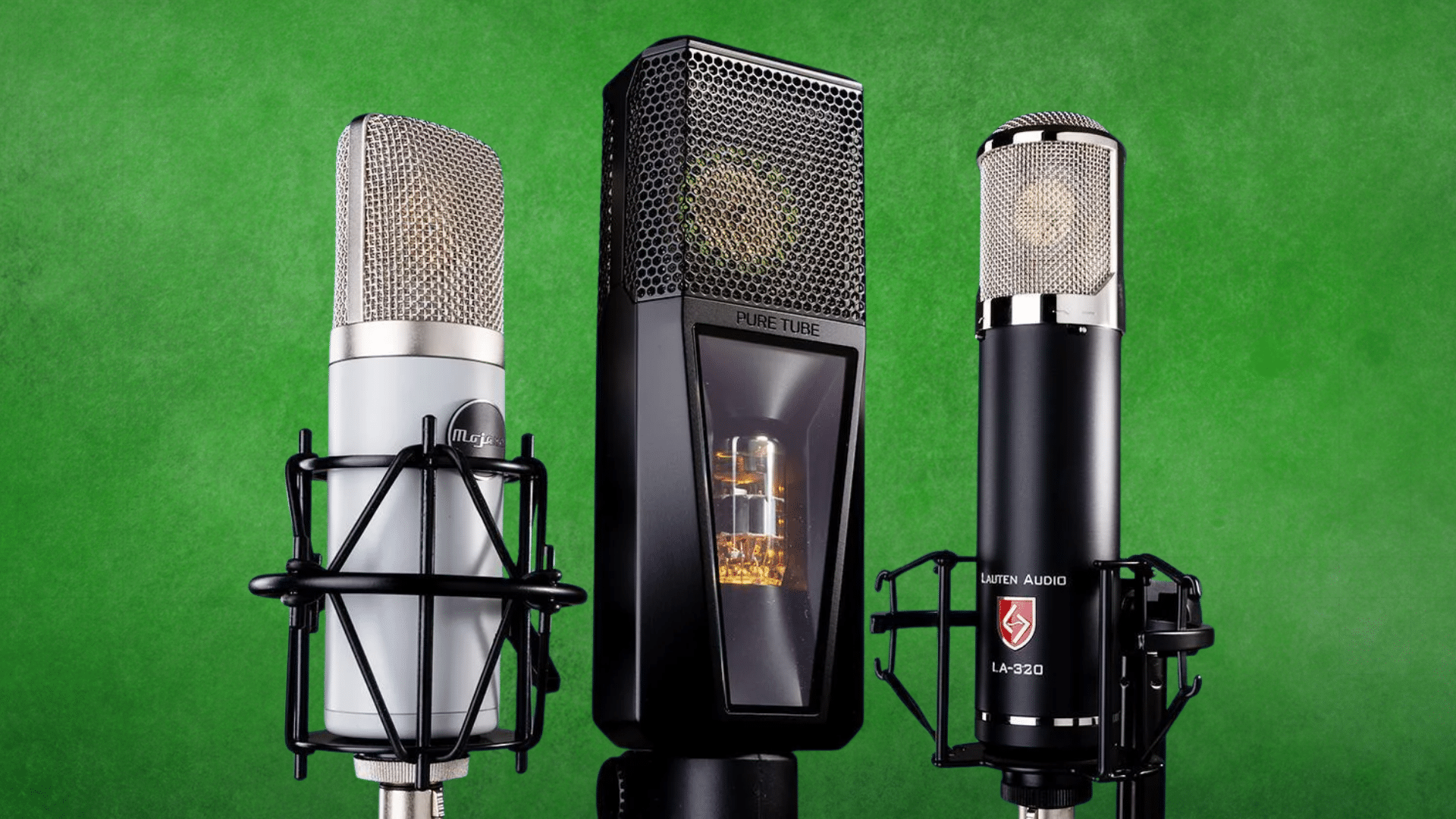
Condenser microphones operate using a charged diaphragm and backplate that react to sound vibrations with high sensitivity.
They require external power, usually phantom power, to function properly.
These microphones capture detailed audio with a wide frequency response, making them ideal for studio recording.
Among the different types of microphones, condenser models are preferred for vocals and voiceovers due to their clarity and precision.
3. Ribbon Microphones
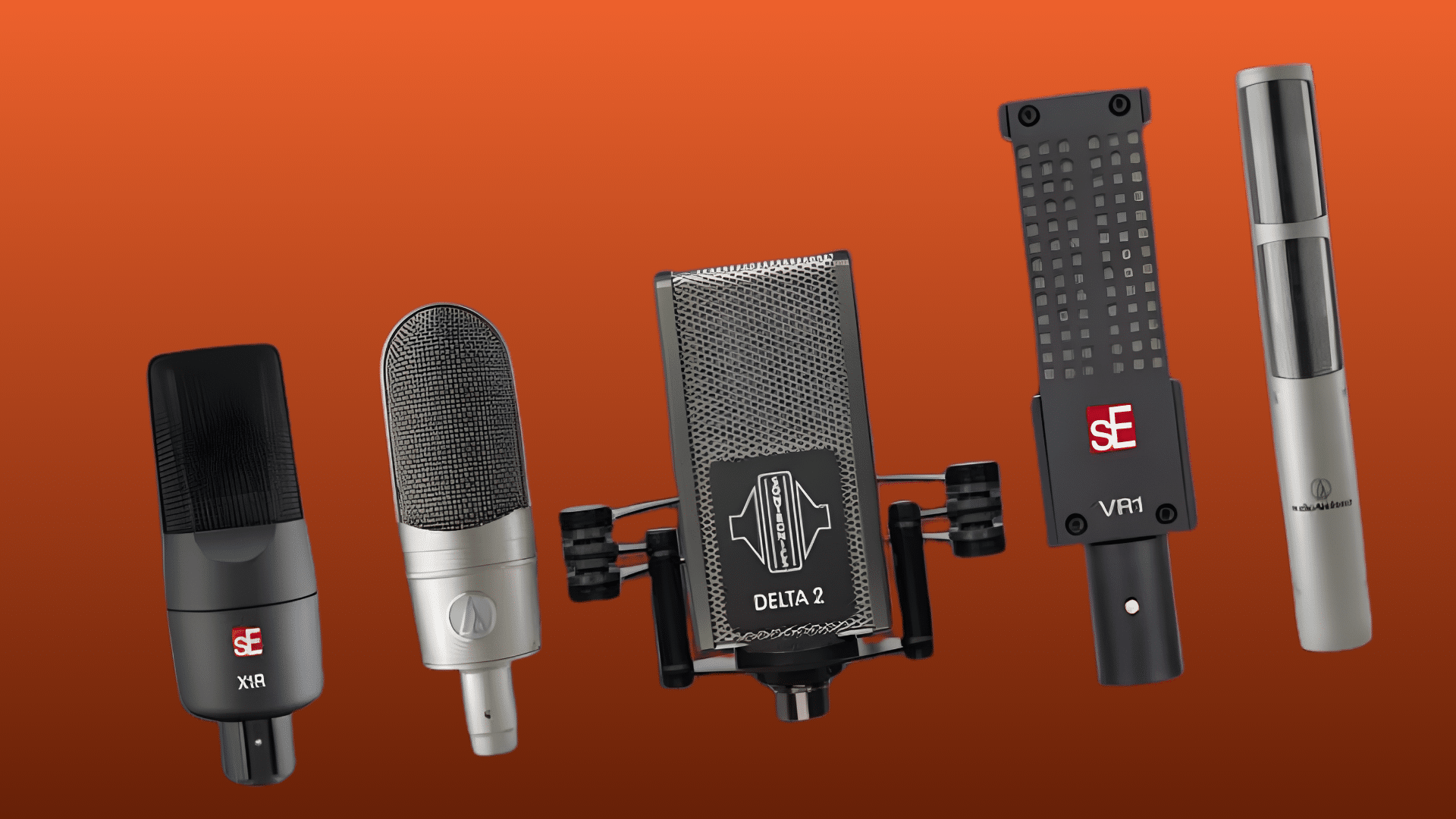
Ribbon microphones use a thin metal ribbon suspended between magnets to generate sound signals.
They are known for producing a smooth, natural, and warm sound character.
Ribbon microphones are more delicate than other types and require careful handling.
Commonly used in studios, they capture vocals, brass, strings, and guitar amplifiers with a warm, detailed, vintage-style sound.
Types of Microphones Based on Pickup Pattern
This classification explains how microphones pick up sound from different directions and control surrounding noise.
4. Cardioid Microphones
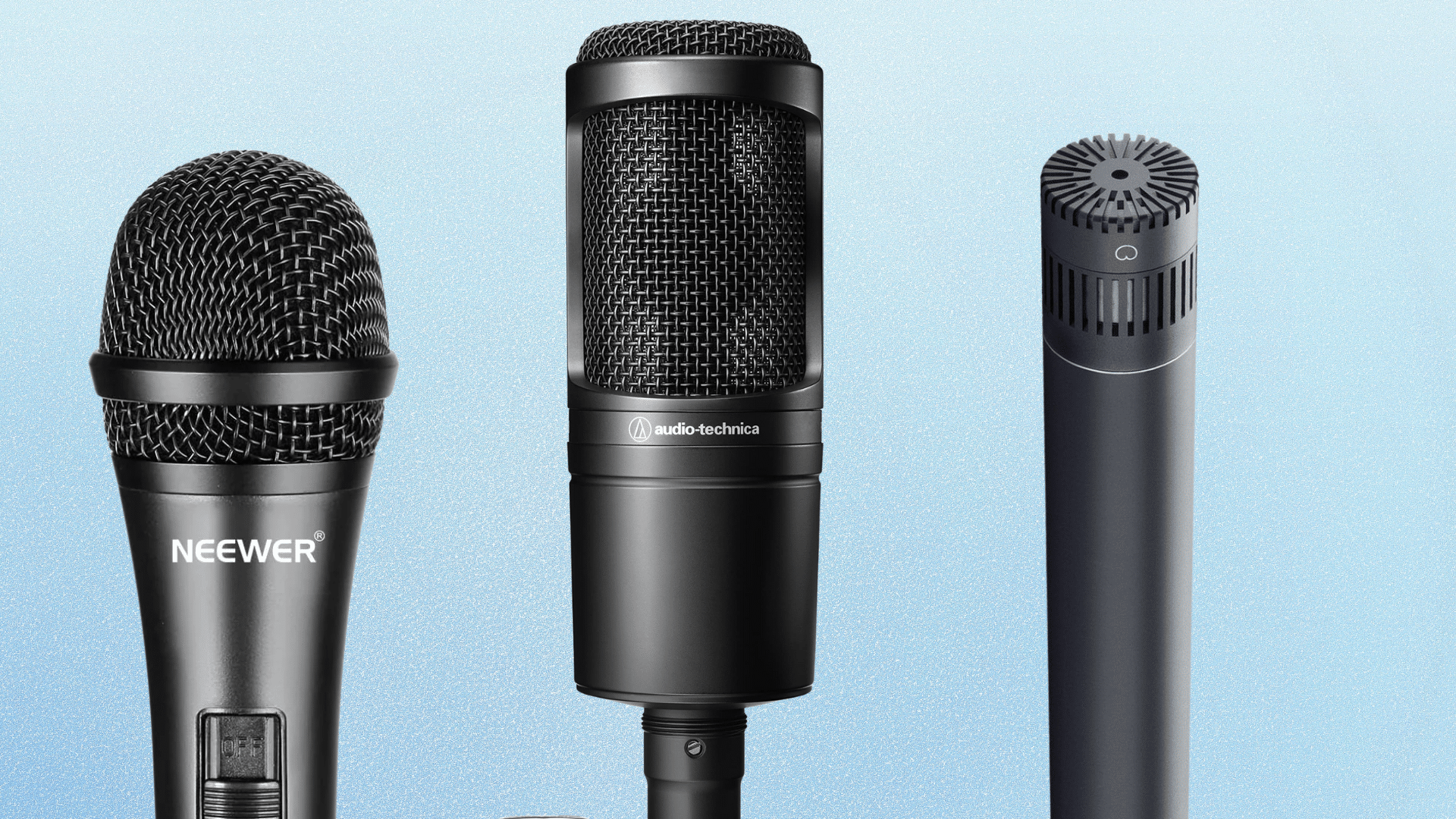
Cardioid microphones are designed to capture sound primarily from the front while rejecting noise from the sides and rear.
This directional pickup pattern makes them ideal for situations where background noise needs to be minimized.
They are widely used for vocals, podcasting, live performances, and studio recording.
By capturing sound from the front, cardioid microphones enhance clarity and reduce feedback in controlled recording environments.
5. Omnidirectional Microphones
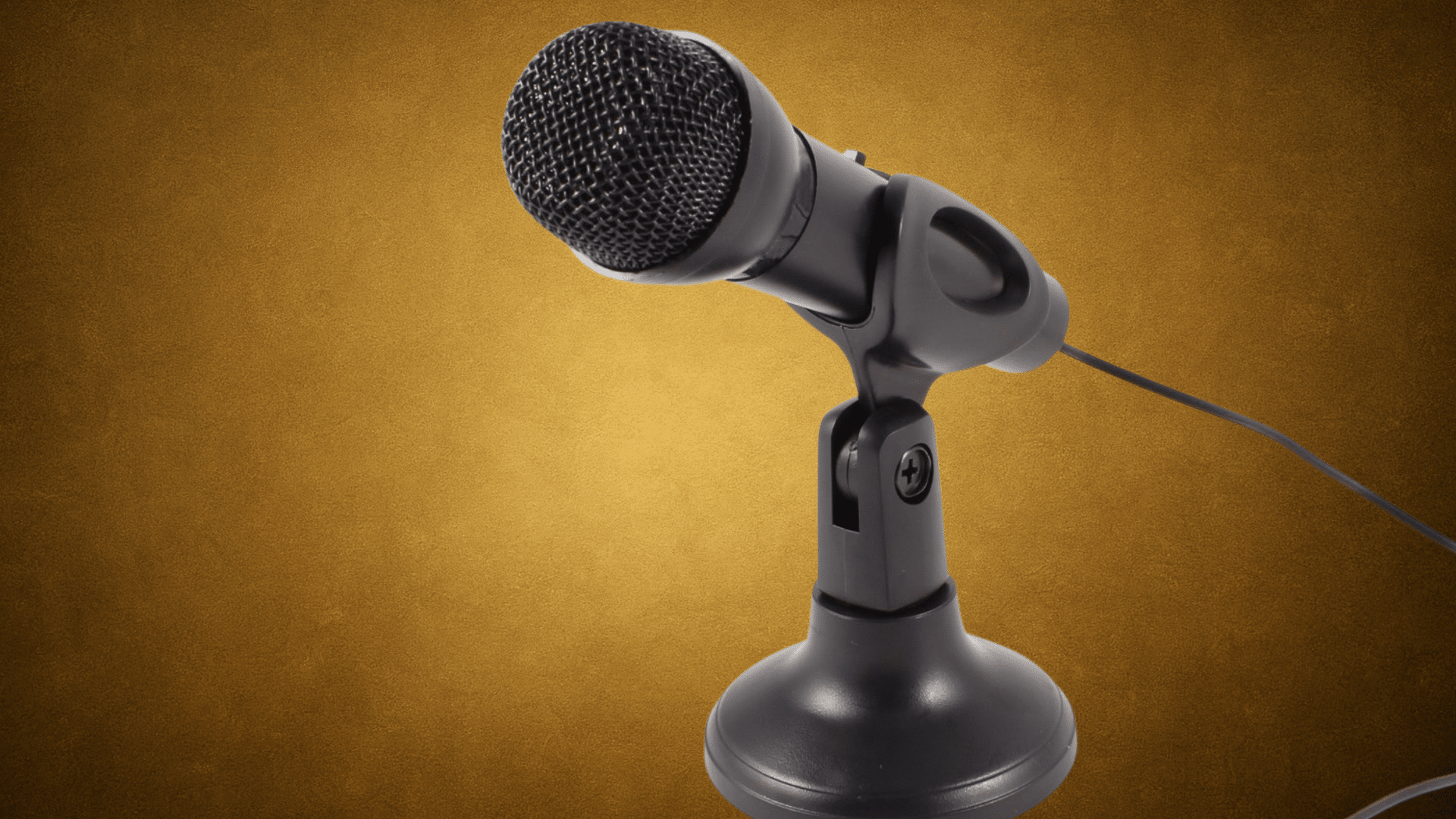
Omnidirectional microphones capture sound evenly from all directions, producing a natural and balanced audio result.
Among the different types of microphones, this pickup pattern is ideal for recording ambient sound, group discussions, and room acoustics where spatial accuracy matters.
Since they do not reject background noise, these microphones perform best in quiet, controlled environments.
They are commonly used for conferences, interviews, orchestral recordings, and realistic field recordings.
6. Bidirectional (Figure-8) Microphones
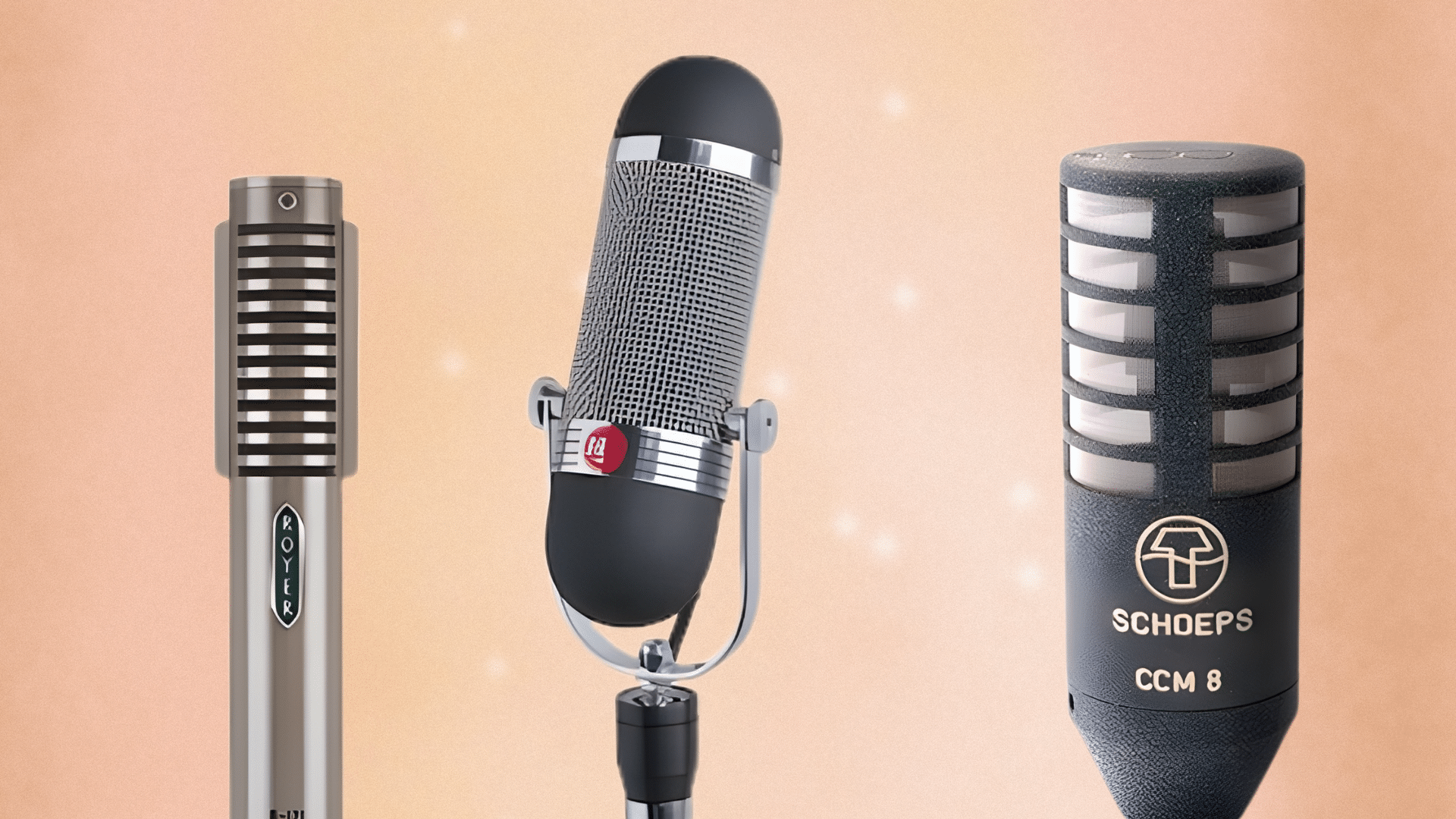
Bidirectional microphones capture sound from the front and rear while rejecting audio from the sides, forming a figure-eight pickup pattern.
This design is especially useful for face-to-face interviews, duets, and certain studio recording techniques.
They are also popular in mid-side recording setups.
By isolating side noise, bidirectional microphones offer clear separation between two sound sources, making them valuable for professional broadcast and studio applications.
7. Shotgun Microphones
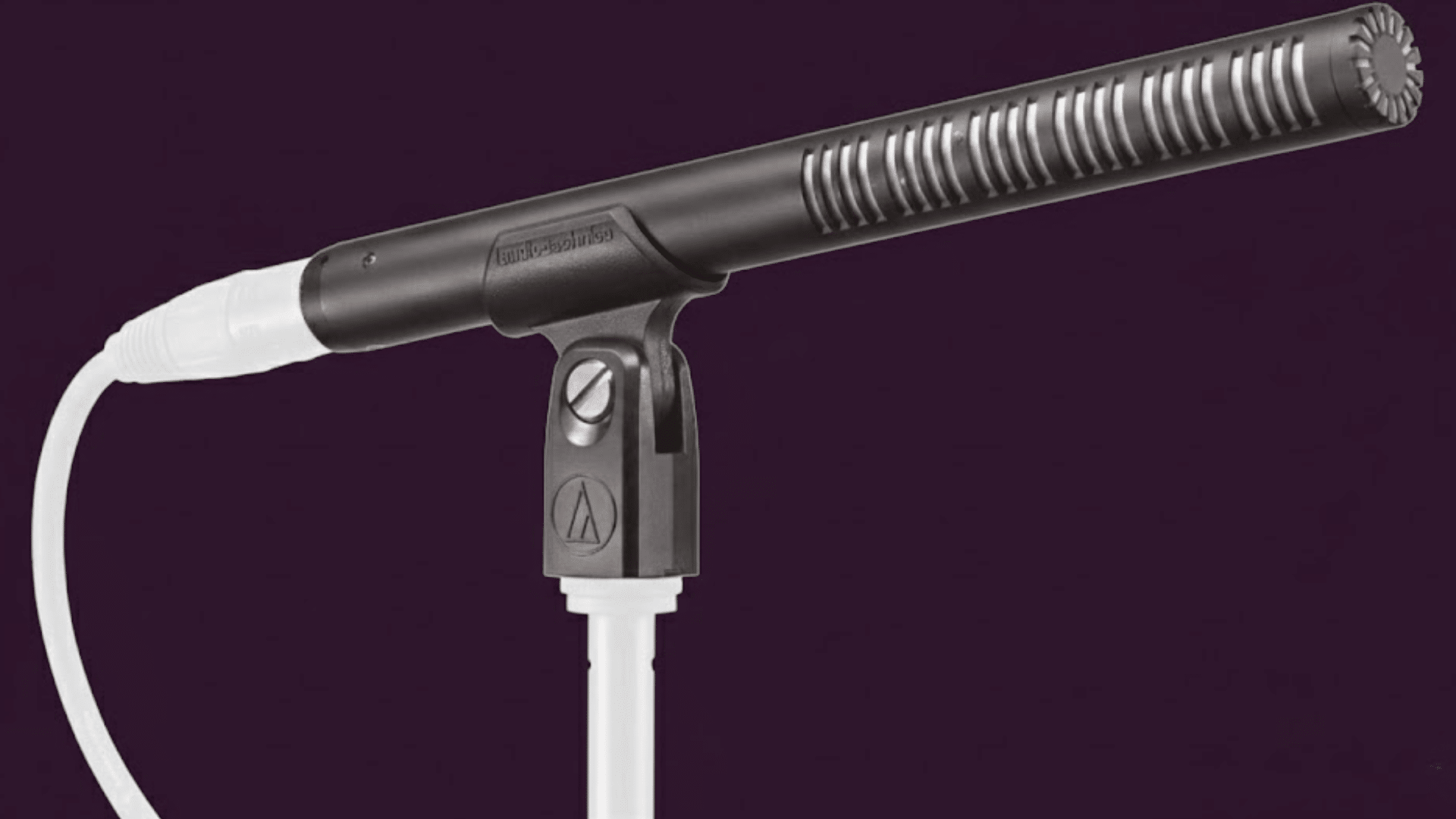
Shotgun microphones feature an extremely narrow and focused pickup pattern designed to capture sound from a specific direction over longer distances.
They are highly effective at isolating audio while rejecting surrounding noise.
Commonly used in filmmaking, broadcasting, and outdoor recording, shotgun microphones excel in uncontrolled environments.
Their directional accuracy makes them ideal for capturing dialogue clearly, even when the microphone cannot be placed close to the sound source.
Types of Microphones Based on Usage
This section categorizes microphones according to their primary recording and performance applications.
8. Studio Microphones
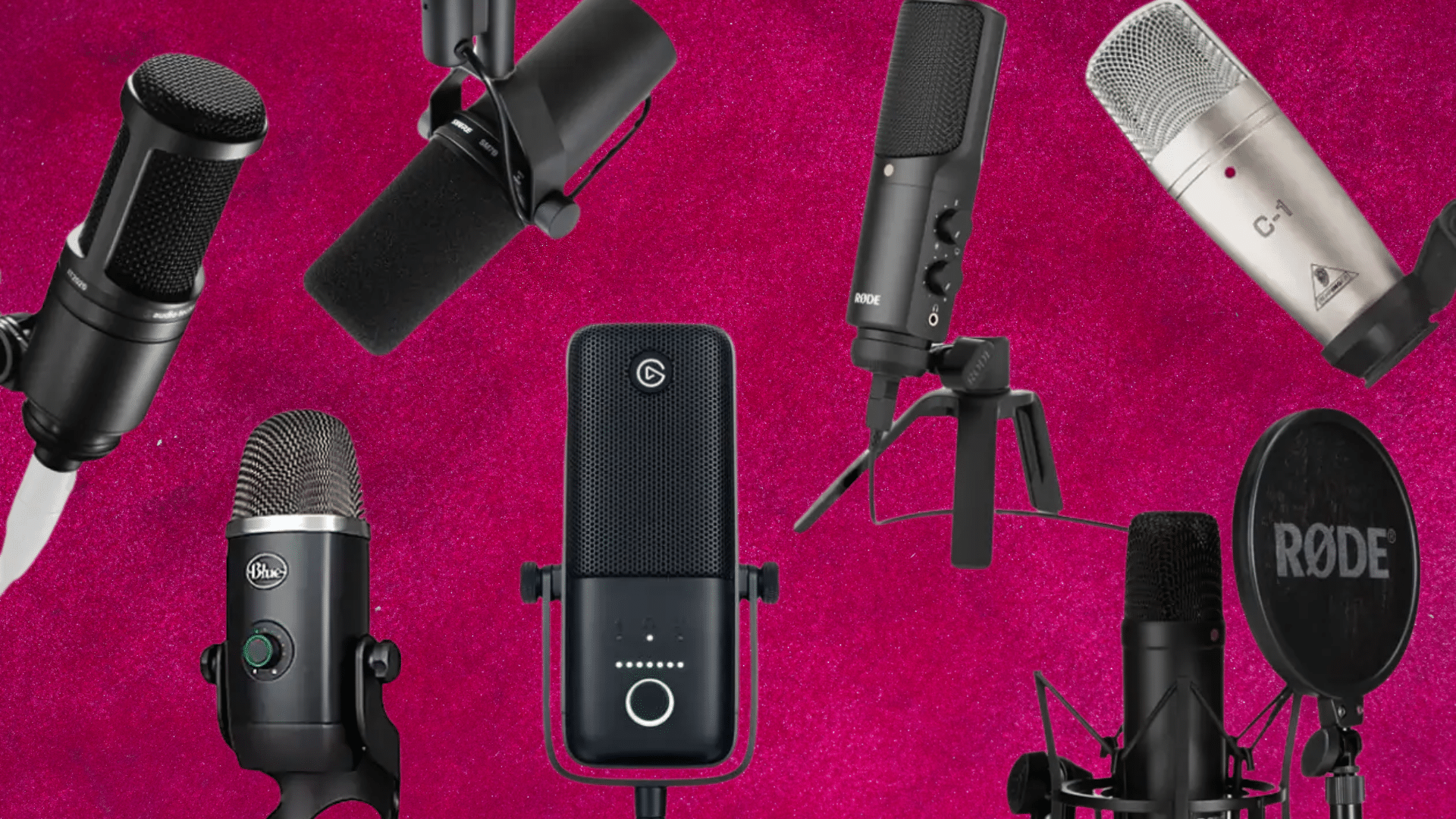
Studio microphones are designed to capture sound with high accuracy, detail, and minimal noise.
They are typically used in controlled environments where sound quality is the top priority.
These microphones often feature a wide frequency response and high sensitivity, allowing them to record subtle vocal nuances and instrument tones.
Studio microphones deliver clean, balanced audio for music production, voiceovers, and professional recording projects.
9. Live Performance Microphones
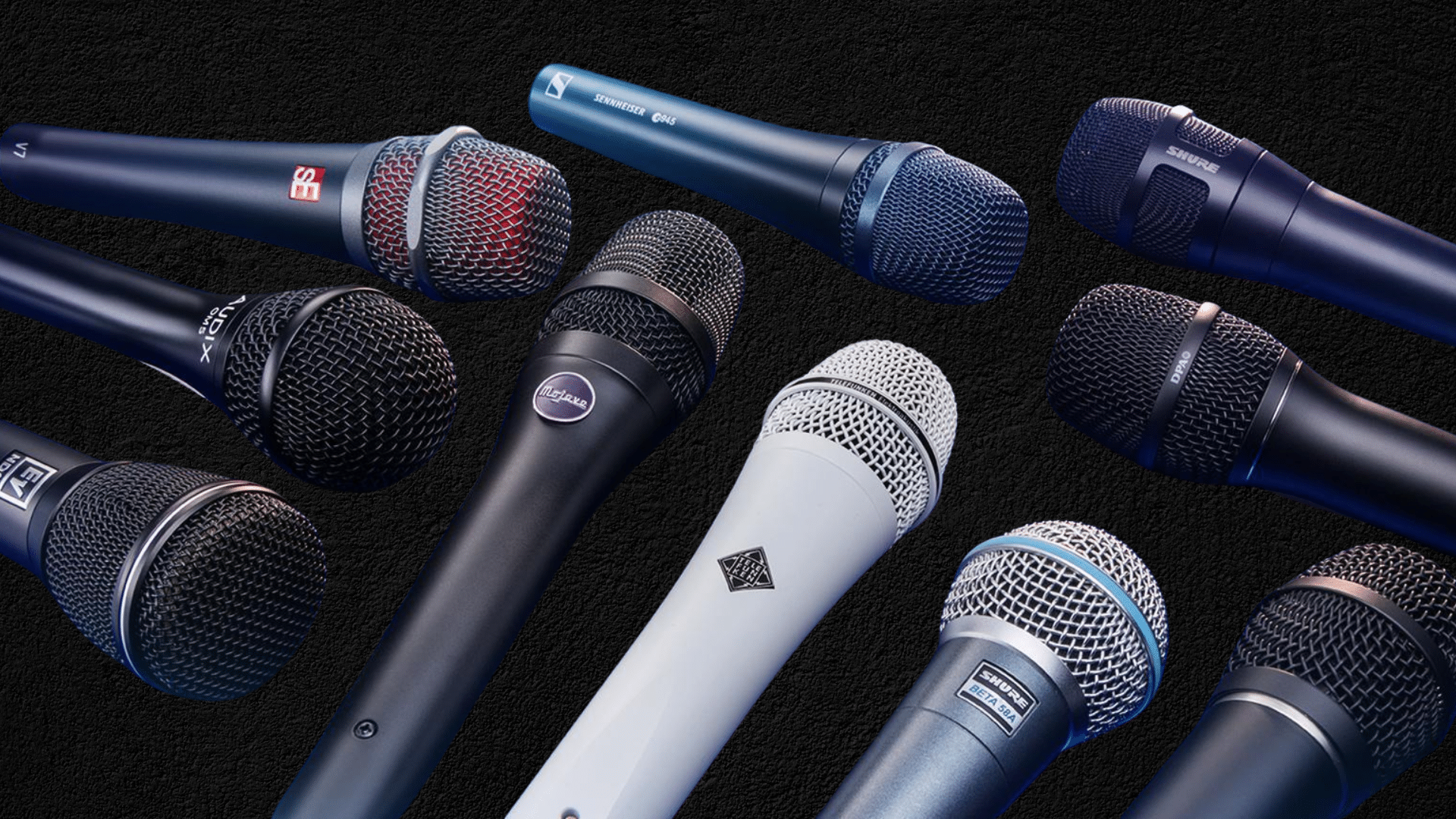
Live performance microphones are built for durability and consistent sound quality in demanding stage environments.
Among the different types of microphones, they are designed to handle high sound pressure levels while minimizing feedback and background noise.
These microphones are commonly used for live vocals, instruments, and public speaking events.
Their rugged construction makes them ideal for concerts and outdoor stage use.
10. Podcasting Microphones
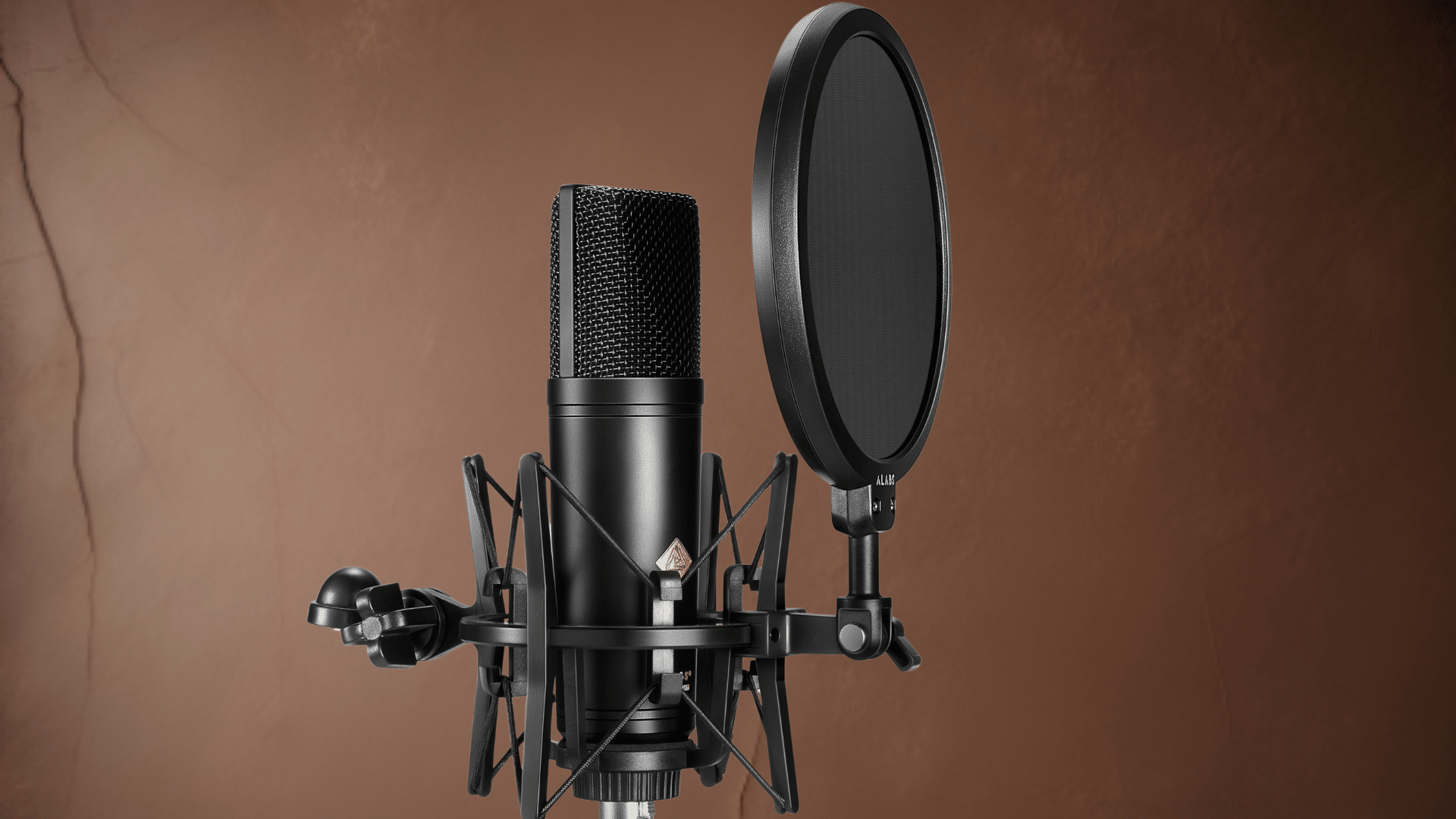
Podcasting microphones are designed to capture clear, natural voice recordings with minimal background noise.
They often feature directional pickup patterns that focus on the speaker’s voice while reducing room noise.
These microphones are widely used for podcasts, streaming, and online content creation.
Easy setup, consistent sound quality, and compatibility with recording software make podcasting microphones suitable for both beginners and professional creators.
11. Lavalier (Clip-On) Microphones
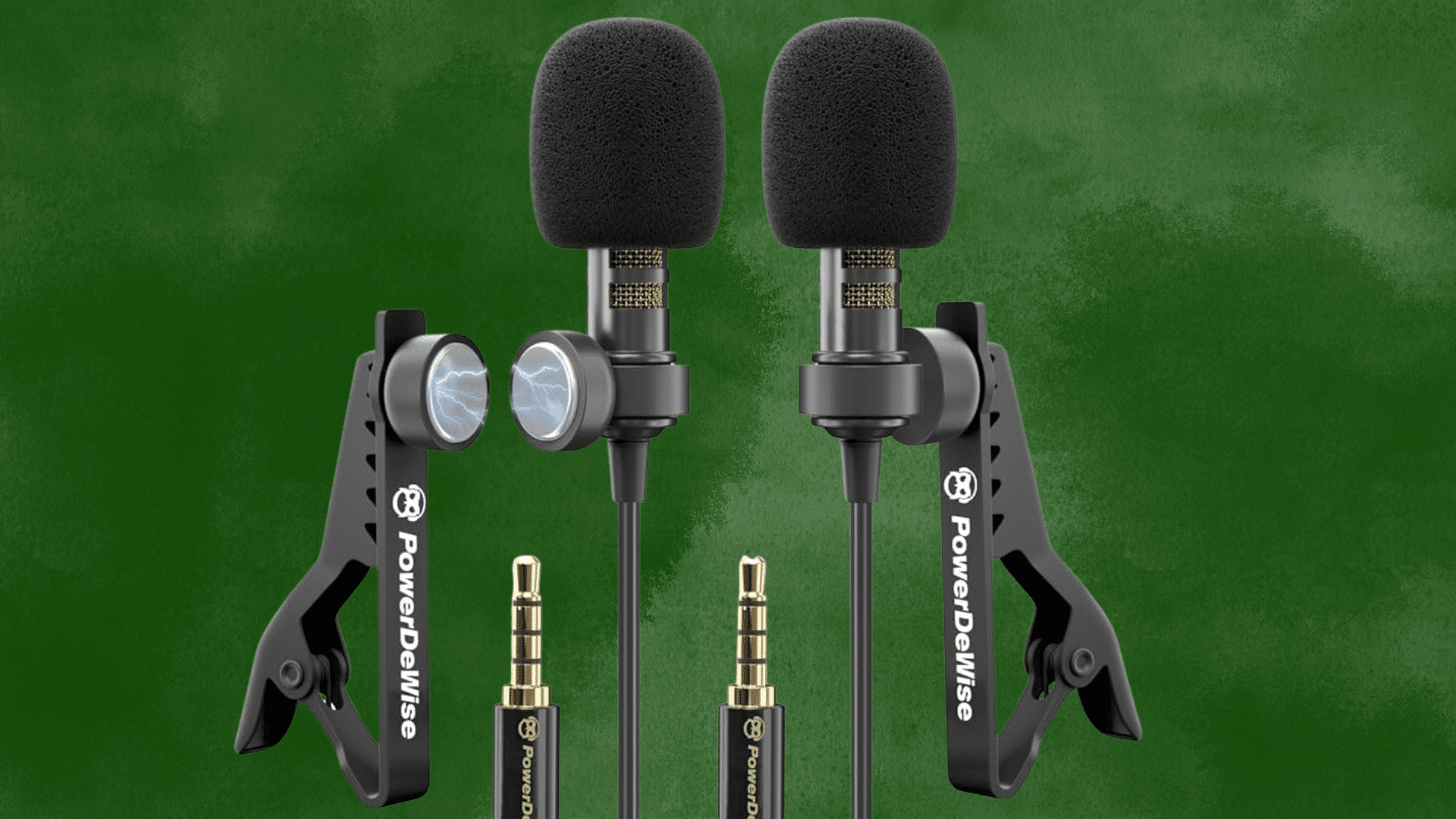
Live performance microphones are built for durability and consistent sound quality in demanding stage environments.
Among the different types of microphones, they are designed to handle high sound pressure levels while minimizing feedback and background noise.
These microphones are commonly used for live vocals, instruments, and public speaking events.
Their rugged construction makes them ideal for concerts and outdoor stage use.
12. USB Microphones
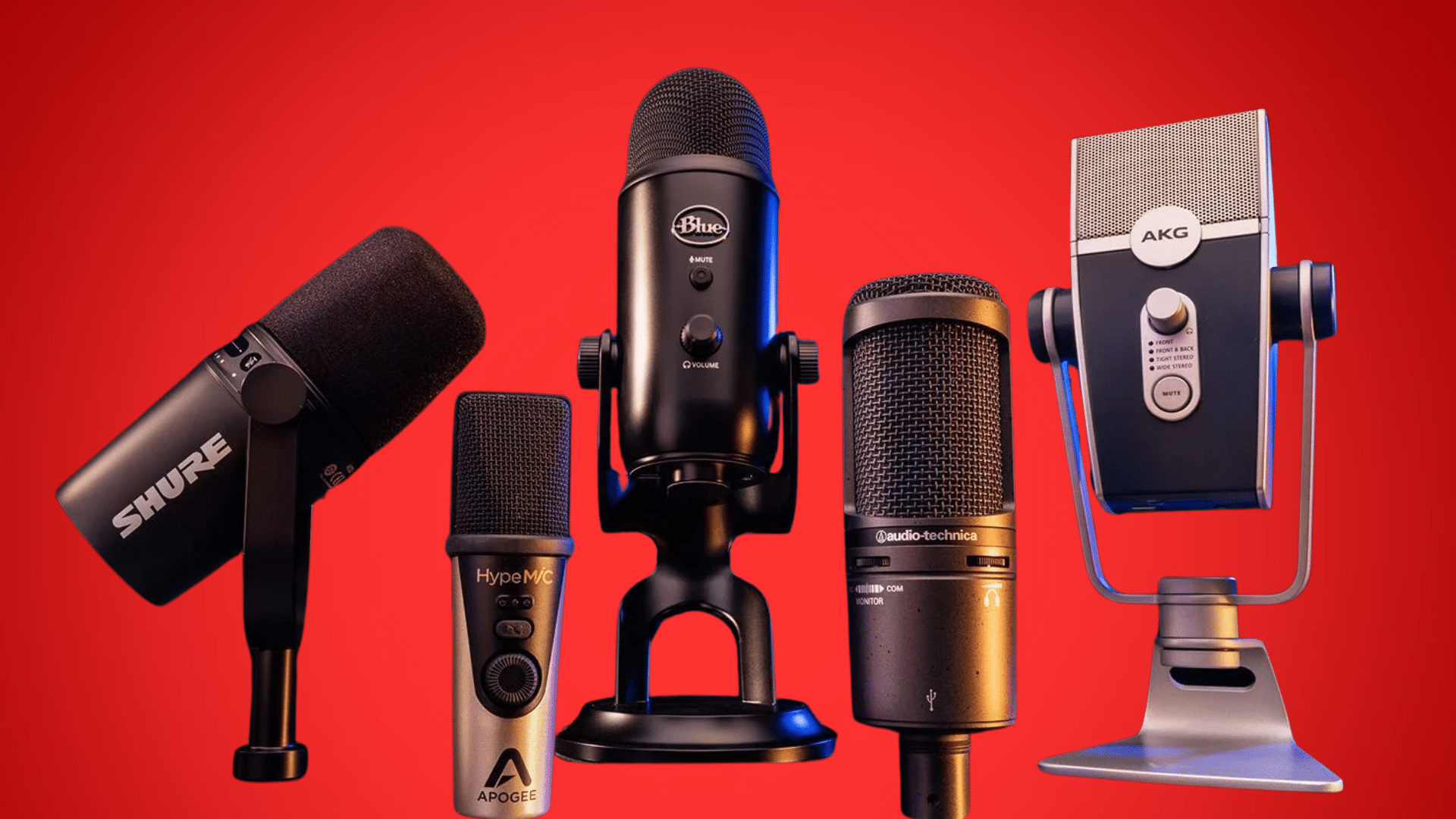
USB microphones connect directly to computers without the need for external audio interfaces or mixers.
They are popular for beginners due to their simple plug-and-play setup.
These microphones are commonly used for podcasting, streaming, voiceovers, and online meetings.
While they may offer fewer customization options than XLR microphones, USB microphones provide reliable sound quality and convenience for home studios and content creators.
Wired vs. Wireless Microphones: Key Comparison
This section compares different types of microphones by highlighting the key differences between wired and wireless models based on performance and usage.
| Feature | Wired Microphones | Wireless Microphones |
|---|---|---|
| Connection | Physical audio cable | Radio or Bluetooth signal |
| Audio Stability | Very stable sound | Possible signal drops |
| Movement | Restricted by cable | Full freedom of movement |
| Power | No batteries needed | Uses batteries or charging |
| Reliability | Consistent performance | Depends on signal and power |
| Best For | Studios and fixed setups | Stage and mobile use |
| Price Range | Budget-friendly | Higher cost |
Common Microphone Mistakes to Avoid
Avoiding these common mistakes helps improve sound quality and ensures better microphone performance in any recording setup.
- Choosing the Wrong Microphone Type: Leads to poor sound quality and excess noise.
- Ignoring the Recording Environment: Causes echo and unclear audio.
- Incorrect Microphone Placement: Affects clarity and volume balance.
- Overlooking Pickup Patterns: Captures unwanted background sounds.
- Skipping Essential Accessories: Reduces overall recording quality and stabilizes.
How to Choose the Right Microphone?
Choosing the right microphone starts with understanding your recording purpose, environment, and sound source.
Consider whether a microphone is required for studio recording, live performance, podcasting, or content creation, as each use demands different features.
The recording environment also matters, since noisy spaces require microphones with directional pickup patterns to reduce unwanted sound.
Budget plays an important role, but a higher cost does not always guarantee better results for every application.
Also, evaluate compatibility with existing equipment, such as audio interfaces or computers.
Among the different types of microphones, selecting the right model depends on balancing sound quality, durability, and ease of use.
By carefully matching these factors to your needs, you can achieve clear, reliable audio and improve overall recording experience.
Conclusion
Understanding microphones is essential for achieving clear and professional audio across different recording situations.
From studio sessions and live performances to podcasting and content creation, selecting the right microphone directly impacts sound quality and reliability.
By learning how microphone technologies, pickup patterns, usage types, and specifications differ, you can make informed decisions that suit your specific needs.
Among the different types of microphones, each serves a unique purpose, making careful selection important.
I believe that choosing the right microphone becomes easier when you focus on your recording environment, sound source, and budget.
With the right knowledge, you can confidently invest in equipment that delivers consistent performance and enhances your overall audio experience.
Share your thoughts in the comments and let us know which microphone type works best for your recording needs.