Modern electronics pack serious computing power into spaces smaller than ever before.
Smartphones that rival desktop performance, gaming laptops thinner than a notebook, and graphics cards pushing 4K resolution all generate substantial heat in tight quarters.
Without effective thermal management, these devices throttle performance, reduce lifespan, or shut down to protect components.
Vapor chamber cooling has emerged as a critical solution for managing heat in compact, high-performance hardware.
This passive cooling technology spreads thermal energy across a larger surface area more efficiently than traditional heat pipes.
This blog sections explain how vapor chamber systems work, where manufacturers use them, and how they compare to other cooling alternatives.
What is Vapor Chamber Cooling?
This technique is a passive thermal management technology designed to spread heat quickly and efficiently across a flat surface.
The system uses phase-change principles to transfer thermal energy from concentrated hot spots to cooler areas where it can dissipate effectively.
Unlike active cooling systems that require pumps or fans to move liquid, vapor chambers operate through natural thermodynamic processes without any moving parts or external power requirements.
The technology consists of a sealed, flat enclosure containing a small amount of working fluid and an internal wick structure that facilitates heat distribution across the entire chamber surface area.
This design allows the system to function as an advanced heat spreader in space-constrained applications.
How Does Vapor Chamber Cooling Work?
The vapor chamber consists of a thin, sealed metal enclosure with a porous wick structure lining its interior walls.
A small quantity of working fluid sits within this wick material at all times.
When heat contacts one area of the chamber surface, the liquid absorbs thermal energy and changes to vapor through evaporation.
This gas spreads rapidly throughout the chamber’s interior space, carrying heat to cooler regions with minimal resistance.
At these cooler spots, the vapor condenses back to liquid form, releasing thermal energy to the outer surface.
The wick structure draws the condensed liquid back to hot areas through capillary action, keeping heat movement continuous.
Types of Vapor Chamber Cooling
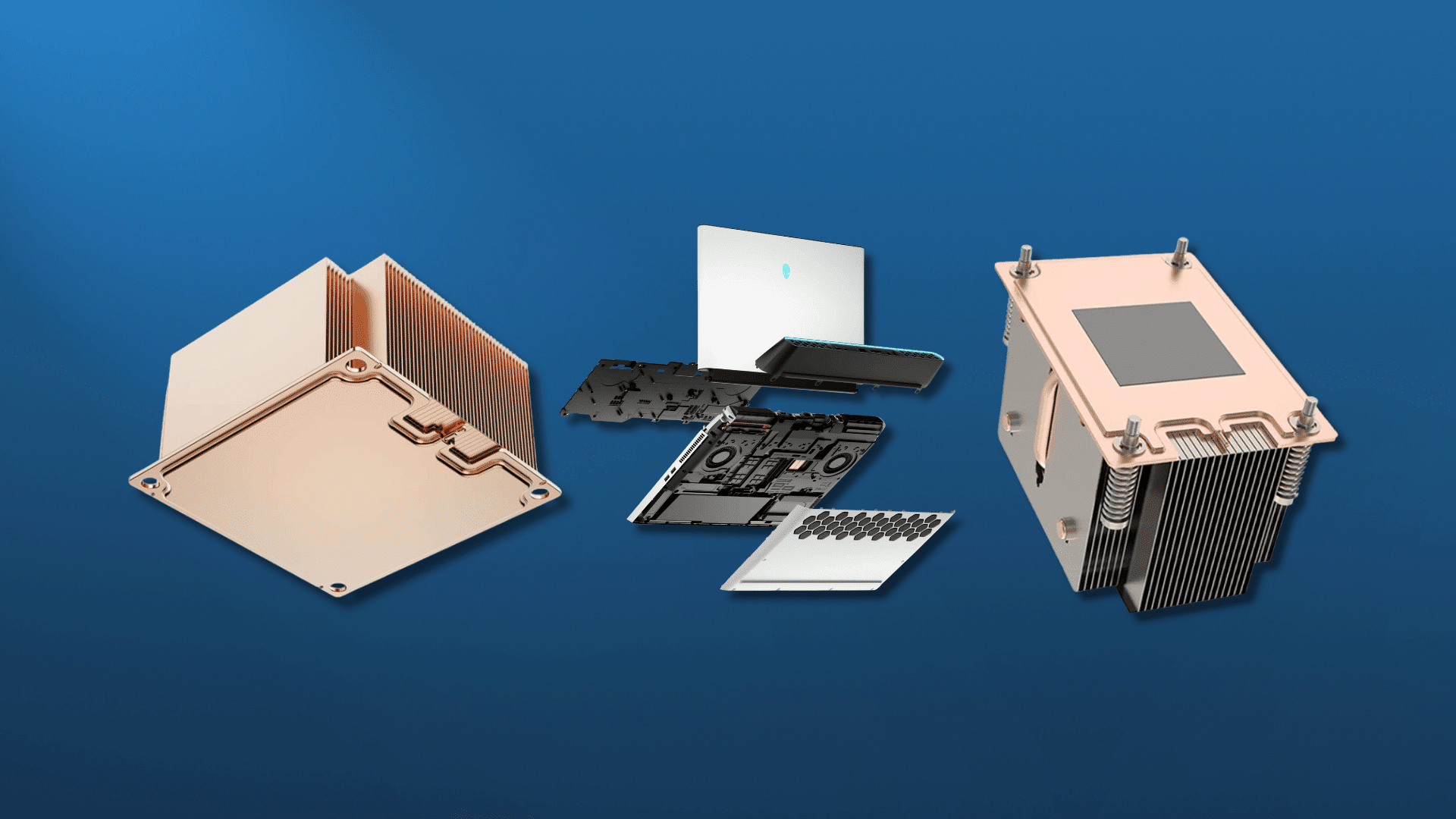
Vapor chambers come in different configurations optimized for specific device categories and thermal requirements.
1. Mobile Device Vapor Chambers
Mobile vapor chambers prioritize ultra-thin profiles, typically ranging from 0.4mm to 0.6mm in thickness to fit within smartphone and tablet constraints.
Vapor chamber cooling in iPhone models and flagship Android devices spreads heat across the back panel to prevent hot spots.
These chambers feature simplified wick structures using mesh or micro-grooved patterns that balance capillary action with space limitations.
Manufacturers optimize mobile vapor chambers for intermittent heat loads rather than sustained performance, matching typical smartphone usage patterns.
2. Laptop and Notebook Vapor Chambers
Laptop vapor chambers range from 0.8mm to 2.0mm thick, allowing more robust internal structures and higher thermal capacity than mobile variants.
Gaming laptops and performance ultrabooks use these chambers to manage CPU and GPU heat at the same time.
The increased thickness supports denser wick structures, typically sintered copper powder that provides superior capillary action.
These chambers handle sustained workloads better than mobile versions, maintaining consistent temperatures during extended gaming sessions or rendering tasks.
3. Desktop and Server Vapor Chambers
Desktop vapor chambers appear primarily in high-end graphics cards and enterprise server cooling solutions, with thickness ranging from 2.0mm to 5.0mm depending on thermal requirements.
These chambers handle very high heat loads from powerful GPUs and server processors.
Robust construction uses thicker copper walls and advanced wick structures, often combining multiple capillary technologies for enhanced liquid return rates.
Graphics card vapor chambers typically integrate directly with cooling fin arrays, maximizing surface contact while maintaining compact form factors.
Vapour Chamber Cooling vs Liquid Cooling
Both systems address thermal management through different approaches, each with distinct characteristics:
| Aspect | Vapor Chamber Cooling | Liquid Cooling |
|---|---|---|
| Operation | Passive system using phase change | An active system requiring a pump and power |
| Space Requirements | Flat, integrated design fits thin devices | Needs tubing, radiator, and reservoir space |
| Sustained Load Performance | Effective for moderate continuous heat | Superior performance under extreme sustained loads |
| Noise Level | Silent operation (no moving parts) | The pump generates an audible noise |
| Maintenance | Zero maintenance required | Periodic fluid checks and potential leaks |
| Cost | Moderate manufacturing expense | Higher component and installation costs |
Where Is Vapor Chamber Cooling Commonly Used?
Vapor chambers appear in several categories of high-performance electronics where space constraints and thermal demands create unique cooling challenges.
- Smartphones and tablets use thin vapor chambers to manage processor heat without adding bulk.
- Gaming laptops and ultrabooks rely on vapor chambers to cool powerful CPUs and GPUs in slim chassis designs.
- Graphics cards incorporate vapor chambers in their cooling solutions to handle intense thermal loads from high-end GPUs
- Server hardware employs vapor chamber technology to maintain consistent temperatures across densely packed components in data centers.
These applications share standard requirements, including limited space and high heat generation.
What Reddit Discussions Say About Vapor Chamber Cooling?
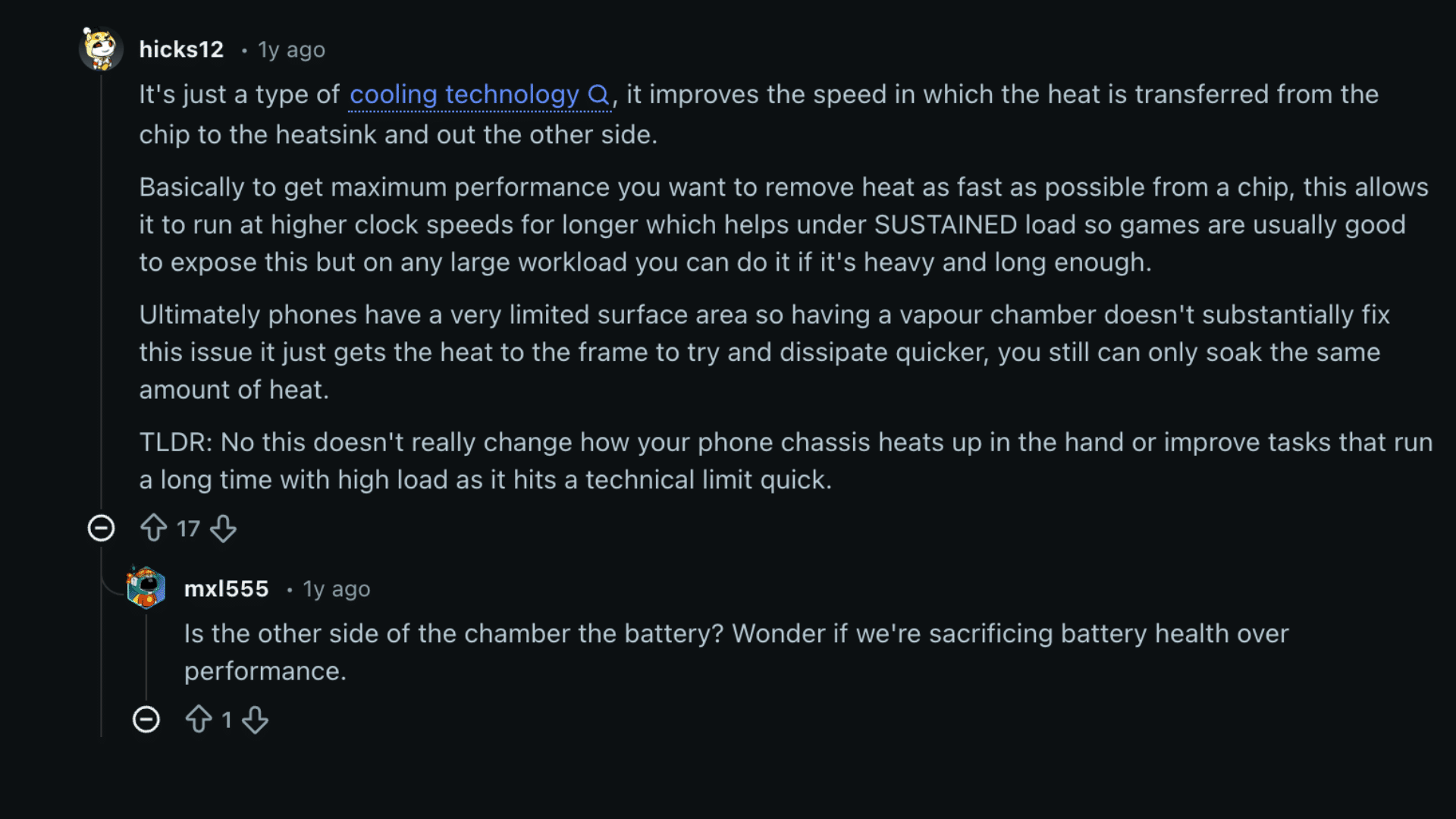
Reddit users often focus on how vapor chamber cooling performs in everyday situations rather than controlled benchmarks.
In a discussion, Reddit users mention that the technology shows its value during sustained tasks such as long video recording, navigation, hotspot use, or extended gaming sessions.
But several users point out that during light daily activities, phones can still feel warm because overall heat output and surface area remain limiting factors.
In another thread, Discussion participants describe vapor chambers as a method to spread heat more evenly across internal components, reducing localized hot spots and helping devices maintain stable performance for longer periods.
Overall, community feedback suggests the benefits are practical but depend heavily on usage patterns and device design
Advantages and Limitations of Vapor Chamber Cooling
Vapor chamber technology offers distinct benefits while facing certain practical constraints that affect its implementation across different device categories.
Advantages
- Distributes heat across a wider surface area than heat pipes, reducing hot spots
- Supports slim hardware profiles without sacrificing thermal performance
- Requires no maintenance throughout the device’s lifespan
- Operates silently with no moving components
Limitations
- Manufacturing costs remain higher than traditional heat pipe solutions
- Performance gains become less significant in low-power systems
- Depends on proper orientation and gravity considerations for optimal fluid circulation
The technology proves most valuable in premium devices where stronger thermal performance justifies the added expense. Budget-focused manufacturers usually choose simpler cooling methods that meet basic requirements.
Conclusion
Vapor chamber cooling stands out as a practical middle ground in thermal management, more effective than basic heat pipes and less complex than liquid cooling systems.
The sealed chamber design handles moderate heat loads silently, making it ideal for thin laptops, flagship smartphones, and high-end graphics cards where space comes at a premium.
For demanding workloads, liquid cooling still delivers superior performance.
For everyday use, vapor chambers provide enough thermal headroom without maintenance hassles or noise penalties.
Before paying extra, consider your actual usage patterns and whether your device will genuinely push thermal limits.
Have you noticed real performance differences, or does it feel like marketing hype?
Do not forget to drop your honest experiences below.