A single unauthorized entry can compromise years of careful security planning.
That’s why organizations now depend on commercial door access control systems as essential security infrastructure for their facilities.
Controlled entry is now standard across workplaces due to increasing security and compliance needs.
The technology continues to advance, offering businesses increasingly sophisticated ways to monitor movement, respond to security incidents, and maintain regulatory standards.
Managing who can access specific areas and when creates safer work environments while supporting efficient daily operations.
This blog explains system components, key features, implementation benefits, and practical considerations for selecting the right solution for a facility.
What are Commercial Door Access Control Systems?
Commercial door access control systems are electronic security systems that control who can enter or exit business premises.
Unlike traditional locks that rely on physical keys, these systems use digital credentials to verify user identity before granting access.
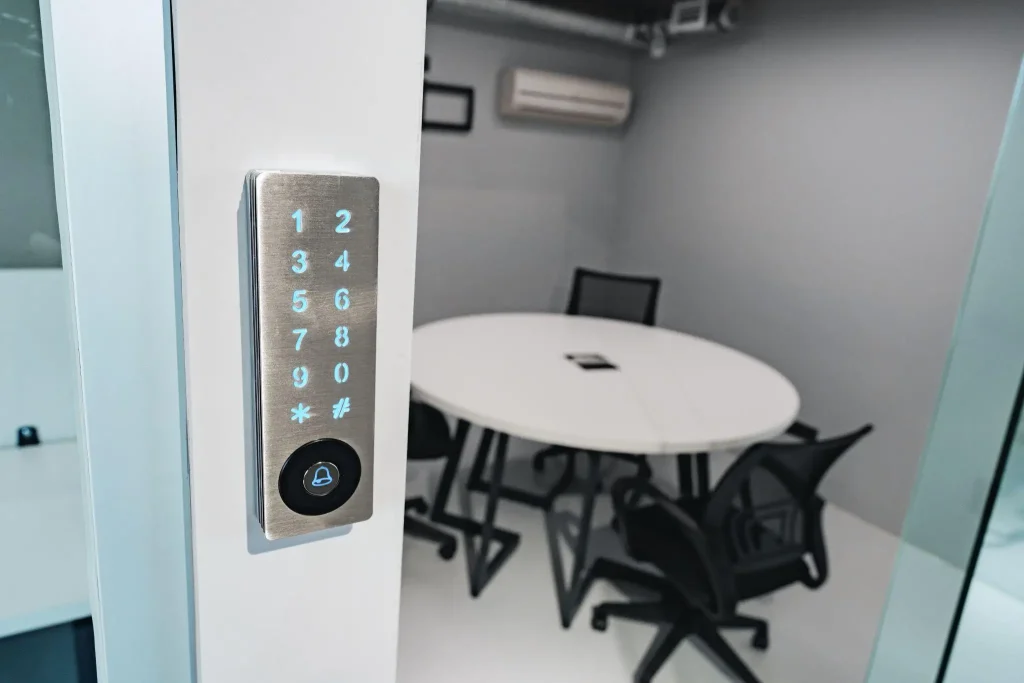
The core function involves authentication; employees present credentials such as key cards, fobs, or biometric data to readers installed at doors.
When valid credentials are detected, the system sends signals to electronic locks, allowing authorized individuals to enter while automatically denying access to others.
This approach reduces security risks by removing the need for physical keys, which can be lost, copied, or misused.
Features of Commercial Door Access Control Systems

Modern commercial access control systems offer comprehensive features that enhance security operations and administrative efficiency.
1. Role-Based Access Permissions
Role-based permissions assign access rights according to job functions and organizational hierarchy.
Employees receive entry privileges aligned with their responsibilities, ensuring sensitive areas like server rooms and executive offices remain restricted to authorized personnel only.
Access levels match department requirements, simplifying security management while reducing unauthorized access risks.
Organizations can adjust permissions quickly as employees change roles, providing flexibility without compromising security.
2. Centralized Access Management
Centralized management consolidates all access control functions into a single administrative platform.
Security teams can oversee multiple locations, manage thousands of users, and modify permissions from one dashboard.
Quick updates for access changes occur when employees join, leave, or change roles without navigating multiple systems.
Administrative efficiency improves significantly when all controls exist in one place, reducing time spent on routine security tasks.
3. Entry and Exit Activity Logs
Comprehensive logging creates detailed records of all door activity, including successful entries, denied access attempts, and door status changes.
These logs support internal investigations, compliance audits, and security reviews with timestamps and user identification.
Organizations can generate reports showing access patterns and identify potential security concerns before they escalate.
Regulatory standards requiring audit trails become easier to meet with automated record-keeping that captures every access event.
4. Time-Based Access Controls
Time-based restrictions limit access to specific hours, days, or date ranges based on operational requirements.
Organizations automatically enforce security policies that align with business hours while granting temporary access for contractors or visitors with automatic expiration dates.
Scheduled access by time or day matches business operations without manual oversight.
Access rights expire automatically without requiring manual intervention from security staff, preventing forgotten permissions from becoming vulnerabilities.
5. Remote Access Management
Remote management capabilities allow administrators to control access systems from anywhere using web-based or mobile applications.
Security teams can grant emergency access, lock down facilities, or respond to incidents without being physically present at the location.
Cloud-based access to system controls and monitoring dashboards provides real-time notifications for security events and unauthorized access attempts.
This flexibility becomes essential during emergencies or when managing multiple facility locations across different regions.
6. System Integrations
Integration capabilities connect access control with other security technologies for coordinated responses across all systems.
When access systems communicate with video surveillance, alarms, and building automation, organizations achieve comprehensive security coverage that responds intelligently to events.
Connections with alarm and surveillance systems enable coordinated monitoring during security events such as lockdowns or evacuations.
A unified security ecosystem responds more effectively to incidents than isolated systems.
Benefits of Using Access Control in Commercial Buildings
Implementing access control systems delivers measurable security improvements and operational advantages. Organizations gain better control over facility access while reducing security risks.
1. Reduced Unauthorized Access: Credential verification ensures only authorized personnel can enter, preventing security breaches and protecting sensitive areas.
2. Improved Movement Control: Track and manage staff and visitor movement throughout facilities with real-time monitoring and access restrictions.
3. Clear Access Records: Maintain detailed logs for compliance needs and audit requirements with timestamps and user identification for every entry.
4. Lower Key-Related Risks: Eliminate vulnerabilities from lost or copied keys that compromise building security and require costly lock replacements.
5. Scalability and Adaptability: Systems grow with your organization, accommodating additional doors, users, and locations as operations expand or restructure.
Common Applications in Offices and Commercial Spaces
Commercial door access control systems serve diverse facility types, each with specific security requirements and access patterns.
These systems help organizations manage entry permissions, reduce unauthorized access, and maintain consistent security across multiple locations.
- Office buildings and shared workspaces require department-specific access.
- Healthcare and medical facilities protecting patient areas and pharmaceutical storage
- Educational institutions are securing administrative spaces and research laboratories.
- Warehouses and industrial locations controlling inventory and equipment areas
- Retail back offices and restricted zones separate customer areas from operations
- Financial institutions protecting vault areas, server rooms, and confidential document storage
- Government buildings manage public access areas and secure administrative sections.
Effective access control supports safer operations, clearer access boundaries, and better oversight across commercial environments of all sizes.
It also improves accountability and helps organizations respond quickly to access changes or security incidents
Tips for Choosing the Right Commercial Door Access Control System

Selecting an appropriate access control system requires evaluating several practical factors that affect functionality and long-term value.
- Building Size: Assess the physical space to determine required control panels and readers for coverage.
- Number of Access Points: Count all doors requiring control to establish system capacity requirements.
- Credential Preferences: Choose between cards, mobile credentials, or biometric options based on your security needs.
- Integration Capabilities: Verify compatibility with existing security tools, including cameras and alarm systems.
- Scalability Requirements: Ensure the system can accommodate future expansion as your organization grows.
- Long-Term Costs: Evaluate software licensing, hardware replacement cycles, and technical support availability.
- Management Simplicity: Confirm the system allows easy addition, removal, and modification of user access.
- Compliance: Check that access to data storage and reporting align with applicable regulations and internal policies.
Conclusion
Commercial door access control systems serve as fundamental security infrastructure for modern office and building environments.
They help organizations manage entry points efficiently while supporting structured safety policies.
Such systems provide organizations with precise control over facility access while generating valuable records that support compliance and security operations.
As security needs change, access control technology adapts through stronger authentication and wider system integration.
These control systems provide lasting value by reducing security risks, improving efficiency, and supporting business growth.
Are your current security measures providing the level of control and visibility your organization requires?
Share your thoughts and experiences with access control systems in the comments below.